Affordable World-class Treatment - Accredited Hospitals - Free Treatment Plan in 24 Hrs

Share your details to receive a personalised treatment plan, estimated costs, hospital recommendations, and expert guidance, “completely free.”
Your information is protected with HIPAA-compliant security standards. We only share your details with hospitals after your consent.
The cost of Inguinal Hernia Repair in Tunisia is USD 1500 - USD 3000
However, this cost can vary depending on several factors, including the type and severity of the condition, treatment techniques chosen, the healthcare facility's location and reputation, the treating professionals' experience and specialisation, and the patient's overall health status.
Additionally, factors like the duration of treatment, the need for follow-up care, and the use of advanced technologies or specialised treatments can further influence the overall cost.
Inguinal hernia repair is a surgery in which an incision is made in the groin to push the hernia back into the abdomen and close the abdominal wall.
An inguinal hernia is a bulge that develops in the groin, which is the space between your thigh and lower abdomen. A weakening of the lower abdominal muscles is the cause of inguinal hernias. The type of surgery depends on the size, symptoms, and other medical issues. Small hernias may be monitored, while strangulated hernias are typically treated. Incarcerated or strangulated hernias may require emergency surgery.
| City | Cost (USD) | |
|---|---|---|
| Monastir | $1,350 – $2,700 | Explore More |
| Tunis | $1,500 – $3,000 | Explore More |

Alvina Hasan is a dedicated medical researcher and scientific writer with a strong foundation in pharmaceutical sciences. She holds a B.Pharm from Jamia Hamdard University and an M.Pharm in Quality Assurance from DIPSAR University.
With deep medical expertise and a strong interest in healthcare communication, she focuses on transforming complex clinical and scientific information into clear, engaging, and easy-to-understand narratives. She develops insightful healthcare articles and research-driven content designed to support both medical professionals and patients, helping bridge the gap between advanced medical knowledge and practical understanding.
Readers can explore her published research and articles here:

Our dedicated Medical Patient Advisors are here to answer your questions, help you compare treatment options, estimate costs, and guide you through every step of your healthcare journey.
An inguinal hernia occurs when soft tissue — usually part of the intestine — protrudes through a weak area in the muscle of the abdomen. The bulge that results may be painful, particularly when you cough, bend over, or lift a heavy object. Still, most people who have a hernia experience no pain.
An inguinal hernia is when intestinal or fatty tissues push through the weaker part of the abdominal wall, through the inguinal canals.
It serves an important purpose, as it is associated with the conveyance of the spermatic chords in males as well as the uterine ligament (round) in females. When a section of the abdominal wall becomes weakened, tissues in that area can bulge through, leading to significant pain and discomfort. This bulge is typically felt as a lump in the lower abdomen for most individuals, though it may not be as noticeable in those who are obese. In situations like these, addressing an inguinal hernia through surgical repair becomes imperative.
Inguinal hernias can cause significant pain and may disrupt daily activities. While painkillers may offer temporary relief, surgical intervention is typically the most effective treatment. Surgery is necessary because the hernia opening cannot be closed with medications or therapies alone and requires thorough sealing. Candidates are advised to prepare for surgery, which involves a pre-surgical evaluation to identify any chronic or terminal illnesses that could complicate the procedure. Inguinal hernia repair is crucial because if the protruding tissues are not addressed, they will continue to exert pressure on the abdominal opening, worsening the condition over time
Following are the types of Inguinal Hernia:
Inguinal hernia repair corrects a bulge or protrusion of the abdomen's contents (most often intestine or fat) through a vulnerable point in the lower abdominal wall, closer to the groin. It's done to avoid pain and complications such as strangulation or obstruction and enhance quality of life.
See a doctor if you have a groin lump that grows with activity or is straining and shrinking while lying down. Get immediate care if the lump hurts, gets hard, or can't be pushed back inside, or if you feel uneasy, vomit, or have trouble passing gas (symptoms of a potential incarcerated or strangulated hernia).
Before surgery, you will be given a physical examination, often including imaging, such as an ultrasound. You may require bloodwork and an ECG, especially if you have other underlying medical conditions. Quit smoking, don't eat or drink 6–8 hours before you have surgery, and follow instructions on any medications you may be changing.
Hernia repair may be achieved through open or laparoscopic (minimally invasive) surgery. In both, the doctor forces back the bulging tissue and repairs the abdominal wall with a piece of synthetic mesh. The decision on technique varies with the hernia size, type, and patient status.
The procedure typically lasts 30 minutes to 1 hour and is a daycare procedure, so you can go home the same day.
The operation alleviates symptoms, avoids potentially life-threatening complications, and enables a return to regular activity. Current mesh repairs also significantly decrease the risk of recurrence.
Recovery is typically rapid. Most patients can resume light activities in a matter of days and normal activities within 2–4 weeks. Heavy lifting should be avoided for approximately 4–6 weeks. Pain and swelling can occur, but they are generally controlled with medications. Follow-up is necessary to assess healing.
Repair of inguinal hernias is successful in more than 95% of cases.
Our experienced Medical Patient Advisors have supported 100,000+ patients across 120+ countries with personalised treatment plans, hospital recommendations, cost estimates, and travel assistance, all free.
✓ Free Consultation ✓ No Obligation ✓ Personalized Treatment Plan ✓ Response Within 24 Hours
Your medical info has is HIPAA-style confidential. We never share with hospitals without your consent.

Opinion & Option
We submit the most accurate opinion and options from one or more countries for your review
Consult Privately
Consult with a certified specialist privately on our telemedicine platform even before you decide to travel
Logistics
We handle flights, visas, transfers, and accommodation—so you can focus on your health.
Recovery
Our In-house rehabilitation service packages to better your recovery and treatment outcome

Nigerian national Mrs. Saadatu Muhammad, 48, suffered from severe abdominal pain that affected her quality of life.
The Inguinal Hernia Repair package cost in Tunisia varies from one hospital to another and may offer different benefits. The Inguinal Hernia Repair package cost usually includes all the expenses related to pre and post surgery expenses of the patient. The treatment cost usually includes the expenses related to hospitalization, surgery, nursing, medicines, and anesthesia. There are many things that may increase the cost of Inguinal Hernia Repair in Tunisia, including prolonged hospital stay and complications after the procedure.
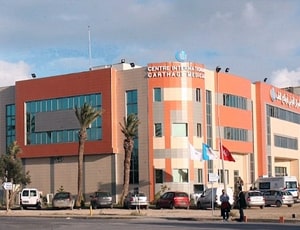
Many hospitals in Tunisia perform Inguinal Hernia Repair. For quick reference, the following are some of the leading hospitals for Inguinal Hernia Repair in Tunisia:
Upon discharge from the hospital after Inguinal Hernia Repair in Tunisia, the patients are advised to stay for about 15 days for recovery. During this time, the patient undergoes medical tests and consultations. this is to ensure that the treatment was successful and the patient us safe to return.
Apart from the Inguinal Hernia Repair cost, there are a few other daily charges that the patient may have to pay. These are the charges for daily meals and accommodation outside the hospital. The per day cost in this case may start from USD 50 per person.
Some of the best cities in Tunisia which offer Inguinal Hernia Repair are:
The patient is supposed to stay at the hospital for about 2 days after Inguinal Hernia Repair for monitoring and care. During the recovery, the patient is carefully monitored and control tests are performed to see that everything is okay. If required, physiotherapy sessions are also planned during recovery in hospital.
There are more than 3 hospitals that offer Inguinal Hernia Repair in Tunisia. The above mentioned clinics have the required infrastructure and a dedicated unit where patients can be treated. Also, these hospitals follow the necessary guidelines as required by the medical associations for the treatment of Inguinal Hernia Repair patients.
Have your reports reviewed by independent oncology experts to help you make a confident treatment decision, all online within 48 hours.
Upload Your Reports