Your Notifications
All done, no notifications

Plasmapheresis Cost in Spain

USD 500 - USD 1000

Affordable World-class Treatment - Accredited Hospitals - Free Treatment Plan in 24 Hrs

1
Days in Hospital
4
Post-Hospital
80 - 95%
Success Rate
Plasmapheresis
JCI/ISO 100,000+ Patients 24X7 Coordinator Visa & Travel handled
Your all-in-one medical travel platform for treatment, recovery & care.

Get Your Personalised Treatment Plan in Just 24 Hours.

Share your details to receive a personalised treatment plan, estimated costs, hospital recommendations, and expert guidance, “completely free.”

Required | alphabets and spaces
Required | A valid, working email address
Required | A valid contact
Connect with an Expert

Your information is protected with HIPAA-compliant security standards. We only share your details with hospitals after your consent.

Estimated Treatment Cost
USD 500 - USD 1000
All-inclusive • Hospital + Medications + Recovery Assistance + Dedicated Care Coordinator

International Quality. Affordable Care.

How Much Does Plasmapheresis Cost in Spain?

The cost of Plasmapheresis in Spain is USD 500 - USD 1000

However, this cost can vary depending on several factors, including the type and severity of the condition, treatment techniques chosen, the healthcare facility's location and reputation, the treating professionals' experience and specialisation, and the patient's overall health status.

Additionally, factors like the duration of treatment, the need for follow-up care, and the use of advanced technologies or specialised treatments can further influence the overall cost.

Factors Influencing the Cost of Plasmapheresis:

  • Type of Plasmapheresis: Autologous, Exchange and Donation.
  • Hospital and Location: Healthcare costs vary by location. Hospitals in urban areas or those with higher operating expenses may charge more than rural hospitals.
  • Pre-Treatment Tests: Blood tests can add to the cost.
  • Post-Treatment Care: Medications and follow-up consultations also impact the expenses.
  • Length of Hospital Stay: Hospital stays may become more expensive due to complicated surgeries or complications.

Plasmapheresis is a medical process that extracts plasma from blood. It is often performed to obtain donor plasma from healthy individuals, which healthcare providers use to treat specific medical conditions.

Blood consists of red and white blood cells, platelets, and plasma. Proteins and electrolytes (dissolved salts) make up the majority of plasma, which is water. Specific proteins in plasma protect humans from pathogens, viruses, fungi, and cancer cells, while others help control bleeding.

What's included in your Plasmapheresis quote?

Plasmapheresis treatment
Specialist fee, equipment, and consumables
Specialist consultations
Pre-treatment evaluation, treatment, and follow-up
Key: Day-care or 1-day hospital stay
Procedure, monitoring, and recovery observation
3–5-day in-country follow-up
Value: Blood tests, recovery assessment
Visa & medical-visa invite letter
Airport pickup & transfers

Cost of Plasmapheresis in Major Cities of Spain

City Cost (USD)
Madrid $500 – $1,000 Explore More

Plasmapheresis - Spain Vs the World

$0 - $0
$500 - $2k
$500 - $1k
$600 - $2k
$600 - $2k
$800 - $2k
$1k - $2k
$2k - $3k
$2k - $8k
$2k - $118k
Dr. Vihan Gautam
Author

BPT, MS in Healthcare Mgmt

4 Years of Experience

Last Reviewed - June 2026

Dr. Vihan Gautam is a distinguished Rehabilitation Specialist and Healthcare Management Professional, holding a Bachelor of Physiotherapy (BPT) from Rajiv Gandhi University of Health Sciences and a Master of Science in Healthcare Management (MSc) from the prestigious University of London, United Kingdom. With specialized clinical experience and his advanced medical knowledge in neuro-rehabilitation, musculoskeletal disorders, and evidence-based physiotherapy practices, enables him to develop patient-centered rehabilitation protocols and AI-driven care models that deliver measurable functional recovery outcomes. His diverse contributions across international rehabilitation programs, multidisciplinary care, and AI-driven healthcare initiatives uniquely position him as an emerging leader in neuro-rehabilitative care globally.
View More
Dr. Akash Khandelwal
Reviewer

Hematologist

9 Years of Experience

Last Reviewed - June 2026

Dr. Akash Khandelwal is a distinguished Hematologist, Hemato-oncologist, and Bone Marrow Transplant (BMT) Physician with extensive training from the prestigious AIIMS New Delhi. His expertise encompasses a wide range of specialized techniques in bone marrow transplantation, including autologous and allogeneic transplants such as matched sibling donors, matched unrelated donors (MUD), and haploidentical donor transplants. Dr. Khandelwal has personally supervised and conducted over 100 bone marrow transplants.
View More

Need Help Choosing the Right Treatment? Talk to a Medical Advisor

Our dedicated Medical Patient Advisors are here to answer your questions, help you compare treatment options, estimate costs, and guide you through every step of your healthcare journey.

15 min
Average response time

Serving Patients Worldwide in Multiple Languages.

Plasmapheresis is a medical procedure used to extract plasma from blood. It is often performed to obtain donor plasma from healthy individuals, which is used by healthcare providers in the treatment of specific medical conditions.

Various conditions require plasmapheresis. These conditions are

  • Hemolytic uremic syndrome,
  • Fulminant Wilson disease,
  • Autoimmune diseases,
  • Pancreatitis,
  • Thrombocytopenic purpura,
  • Hyperviscosity syndrome.

The efficacy and relief are determined by the condition's severity. In certain circumstances, patients find alleviation within 1-2 days of the surgery. In other circumstances, it may take many weeks before the patient's symptoms improve. In most circumstances, the patient requires a repeat of the surgery. The patients may also face certain negative effects. These symptoms include impaired vision, exhaustion, fainting, cramping, and cold. Some individuals are at higher risk of blood clotting, infection, and allergic responses. Plasmapheresis may not be recommended to patients who have hypocalcemia, are allergic to heparin, or are hemodynamically unstable.

Is it a painful Process?

Plasma exchange isn't painful, though you may experience discomfort during the insertion of intravenous lines in your arms. Some individuals may also notice mild sensations of numbness or tingling, nausea, lightheadedness, or a sensation of coldness during the procedure.

Types:

There are generally 3 types of plasmapheresis that can be distinguished:

Autologous therapy: it involves extracting a patient's blood plasma, treating it, and then reintroducing it into the same person.

In plasma exchange therapy (PE, PLEX, or PEX), a patient's plasma is removed and replaced with donor plasma, albumin, or a combination of albumin and saline. The discarded plasma is replenished with these chemicals.

Donation involves extracting a patient's blood plasma, separating its components, reintroducing some back into the patient, and donating the remainder as blood products for others in need.

Plasmapheresis is used to treat autoimmune illnesses and ailments that require the removal of harmful substances like antibodies from the blood plasma. Guillain-Barré syndrome, myasthenia gravis, lupus, and several kidney ailments are among the conditions for which it is frequently used.

See a doctor if you experience inexplicable numbness or weakness in your muscles or have trouble speaking or breathing. These might indicate a severe neurological or autoimmune disease.

In preparation for plasmapheresis, your physician might do blood tests, go over your medical history, and if your veins are difficult to reach, place a central line. You might be instructed to stay hydrated and to refrain from taking specific drugs.

A needle or catheter is used to remove blood from your body during plasmapheresis. The blood cells are combined with a substitute fluid and sent back into your body after a machine separates the plasma from them. The procedure may need several sessions and typically takes two to four hours.

Plasmapheresis usually takes about 2 to 4 hours per session.

  • Infection at the needle insertion site
  • Allergic reactions to the fluid replacement
  • Fatigue or dizziness
  • Numbness or tingling

  • Helps remove toxins and harmful substances from the body
  • Provide relief from symptoms of autoimmune diseases

For plasmapheresis, post-operative recovery includes relaxing, drinking plenty of water, and keeping an eye out for adverse symptoms like dizziness or bruises. Most patients can return to normal activities after a brief rest period.

The success rate of plasmapheresis varies by condition, with neurological disorders.

Explore Hospitals ( 1 )

Get Your Plasmapheresis
Plan in 24 hrs.

Our experienced Medical Patient Advisors have supported 100,000+ patients across 120+ countries with personalised treatment plans, hospital recommendations, cost estimates, and travel assistance, all free.

HIPAA-Compliant Data SecurityShared Only with Your Consent

Free Consultation No Obligation Personalized Treatment Plan Response Within 24 Hours

Required | alphabets and spaces
Required | A valid, working email address
Required | A valid contact

Your medical info has is HIPAA-style confidential. We never share with hospitals without your consent.

Process Involved for Plasmapheresis in Spain

  • Medical Evaluation that includes medical history, blood testing, and the diagnosis of any problems necessitating plasmapheresis.
  • Plasma Separation and filtration of blood components.
  • Replacement of removed plasma with donor plasma, saline or albumin depending upon the treatment type.
  • Vitals are monitored
  • Follow-up care
  • Autoimmune Disorders: Myasthenia Gravis, Guillain-Barré Syndrome (GBS), Chronic Inflammatory Demyelinating Polyneuropathy (CIDP), Systemic Lupus Erythematosus (SLE), Rheumatoid Arthritis (severe cases) & Goodpasture’s Syndrome.
  • Neurological Disorders: Multiple Sclerosis (MS) (severe relapses) , Lambert-Eaton Myasthenic Syndrome & Stiff Person Syndrome.
  • Metabolic & Toxic Conditions: Familial Hypercholesterolemia (severe cholesterol levels) & Drug Toxicity or Overdose.
  • Hematological (Blood) Disorders: Thrombotic Thrombocytopenic Purpura (TTP), Hemolytic Uremic Syndrome (HUS) & Hyperviscosity Syndrome.
  • Organ Transplantation: Antibody-Mediated Rejection (AMR) in organ transplant patients & ABO-Incompatible Transplant Preparation.
  • Individuals with Autoimmune Disorders like Myasthenia Gravis, Guillain-Barré Syndrome, Lupus (SLE), Multiple Sclerosis (MS), and Thrombotic Thrombocytopenic Purpura (TTP) are eligible.
  • Individuals with Neurological Disorders like neuromyelitis optica (NMO) and chronic inflammatory demyelinating polyneuropathy (CIDP).
  • Individuals with Hematological Conditions
  • In Case of Organ Transplantation
  • In case of Sepsis, drug overdose, or poisoning
  • Patients who are not responding too well to conventional therapies may be eligible.
  • Central Venous Catheter (CVC) Placement
  • Intravenous Immunoglobulin (IVIG) Therapy
  • Immunosuppressive Therapy
  • Hemodialysis (in Kidney-Related Conditions)
  • Plasma Replacement with Albumin or Fresh Frozen Plasma (FFP)
  • Extracorporeal Photopheresis (ECP)
  • Eliminates harmful substances from the body that contribute disease progression
  • Relief from random symptoms of flares-up or neurological disorders
  • It enhancesthe effectiveness of other treatments
  • Life-saving in critical conditions
  • Supports neurological recovery
  • Improves blood and plasma quality
  • Reduces dependency on long-term medication
  • Hematologist
  • Nephrologist
  • Neurologist
  • Immunologist
  • Fill out the inquiry form: Fill out the form to provide us with the relevant information about your condition.
  • Consult with Our Healthcare Expert: One of our qualified specialists will contact you for a consultation.
  • Receive a Detailed Treatment Plan: After examining your situation, we will provide you with a detailed treatment plan that includes expert views and cost breakdowns for various choices.
  • Choose your preferred option: Choose the treatment option that suits you the best.
Jenny Wilson
Your Dedicated Medical Patient Advisor
Treatment planning • Hospital coordination • Multilingual support • Response within 15 minutes.
Our Services to Better your Experience

Opinion & Option

We submit the most accurate opinion and options from one or more countries for your review

Consult Privately

Consult with a certified specialist privately on our telemedicine platform even before you decide to travel

Logistics

We handle flights, visas, transfers, and accommodation—so you can focus on your health.

Recovery

Our In-house rehabilitation service packages to better your recovery and treatment outcome

Patient Stories

Marsha Akatu, Bone marrow transplant
Marsha Akatu
Marsha Akatu:Bone marrow transplant

Marsha Akatu from Kenya was suffering from Sickle Cell Anaemia. She got her treatment done at Medanta Hospital, Gurgaon, India.

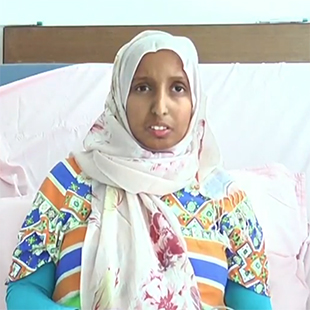
Bushra Masoud
Bushra Masoud
Bushra Masoud:Brain Tumor Treatment

Patient Testimonial: Bushra Masoud for Brain Marrow Treatment from Apollo Hospitals

Frequently Asked Questions

The Plasmapheresis package cost in Spain varies from one hospital to another and may offer different benefits. There are many hospital that cover the cost of pre-surgical investigations of the patient in the treatment package. The comprehensive Plasmapheresis package cost includes the cost of investigations, surgery, medicines and consumables. Extended hospital stay, complications after the surgery or new diagnosis may affect the overall cost of Plasmapheresis in Spain.

There are many hospitals that perform Plasmapheresis in Spain. The top hospitals for Plasmapheresis in Spain include the following:

  1. Jimenez Diaz Foundation University Hospital

Upon discharge from the hospital after Plasmapheresis in Spain, the patients are advised to stay for about 5 days for recovery. This duration of stay is recommended to complete all the necessary follow-ups and control tests to ensure that the surgery was successful.

Apart from the cost of Plasmapheresis, the patient is also required to pay additionally for daily meals and guest house accommodation. These charges starts from USD 50 per person.

Plasmapheresis in Spain is offered in almost all metropolitan cities, including the following:

  • Torrevieja
  • Madrid
  • Barcelona
  • Marbella

It is possible for patients to opt for video telemedicine consultation before they come for Plasmapheresis in Spain. Some of the surgeons offering this service include the following

DoctorCostSchedule Your Appointment
Dr. Luis MaderoUSD 670Schedule Now

After Plasmapheresis, the patient is supposed to stay for about 1 day in the hospital for recovery and monitoring. This phase is important to ensure that the patient is recovering well and is clinically stable. During this time, several tests are performed before the patient is deemed suitable for discharge.

There are more than 1 hospitals that offer Plasmapheresis in Spain. These clinics have propoer infrastructure as well as offer good quality of services when it comes to Plasmapheresis Apart from good services, the hospitals are known to follow all standard and legal guidelines as dictated by the local medical affairs body or organization.

Not Sure About Your Treatment Plan? Get a Free Second Opinion

Have your reports reviewed by independent oncology experts to help you make a confident treatment decision, all online within 48 hours.

Upload Your Reports
Free second opinion on your CAR-T plan