Your Notifications
All done, no notifications

Head & Neck Cancer Treatment Cost in Malaysia

USD 8500 - USD 20000

Affordable World-class Treatment - Accredited Hospitals - Free Treatment Plan in 24 Hrs

5
Days in Hospital
4-8 hrs
Procedure Time
70 - 90%
Success Rate
uploads/procedure/images/1772168625_42f03c956e928d1f51cd.png
JCI/ISO 100,000+ Patients 24X7 Coordinator Visa & Travel handled
Your all-in-one medical travel platform for treatment, recovery & care.

Get Your Personalised Treatment Plan in Just 24 Hours.

Share your details to receive a personalised treatment plan, estimated costs, hospital recommendations, and expert guidance, “completely free.”

Required | alphabets and spaces
Required | A valid, working email address
Required | A valid contact
Connect with an Expert

Your information is protected with HIPAA-compliant security standards. We only share your details with hospitals after your consent.

Estimated Treatment Cost
USD 8500 - USD 20000
All-inclusive • Hospital + Medications + Recovery Assistance + Dedicated Care Coordinator

International Quality. Affordable Care.

How Much Does Head & Neck Cancer Treatment Cost in Malaysia?

The cost of Head & Neck Cancer Treatment in Malaysia typically ranges between USD 8500 - USD 20000, based on various medical and non-medical factors. The final expense may vary based on hospital infrastructure, technology used, complexity and stage of the cancer, and the type of treatment approach required.The overall cost is also influenced by whether the patient needs surgery, radiation therapy, chemotherapy, targeted therapy, or immunotherapy, as well as the number of treatment sessions involved. Additional expenses may include diagnostic tests, imaging, treatment planning, hospital stay, medications, post-treatment care, follow-up consultations, and supportive therapies.Compared to single-modality treatments, combined or advanced therapies may increase the cost; however, personalised and stage-appropriate treatment planning helps optimise outcomes while balancing overall treatment expenses.

Factors Affecting the Cost of Head & Neck Cancer Treatment in Malaysia

  • Treatment required: The treatment strategy, such as surgery, radiation therapy, chemotherapy, targeted therapy, immunotherapy, or a combination (multimodal treatment), determines the overall cost. Combination treatments and advanced procedures typically raise the total cost.
  • Cancer stage and tumour location: The cost varies according to the cancer's stage and location, including the oral cavity, tongue, throat (pharynx), larynx, salivary glands, nasal cavity, etc. Treatment for advanced tumours is typically more involved and time-consuming, which raises expenses.
  • Technique for radiation therapy: If radiation is needed, the cost will vary depending on whether conventional radiation, IMRT, IGRT, stereotactic radiotherapy (SRT), brachytherapy, or proton therapy are employed. Because of their intricacy, highly accurate methods such as IMRT/IGRT are typically more expensive for treating head and neck tumours.
  • Number of radiation fractions/sessions: The total number of sessions needed has a big impact on the total cost. Radiation therapy for the head and neck is frequently administered over several weeks, and the total cost of treatment rises with the number of fractions.
  • Technology and equipment used: The precision and infrastructure needs of using modern technologies like robotic surgery (TORS), image-guided radiation devices, linear accelerators, PET/CT, and specialised surgical tools can increase treatment expenses.
  • Pre-treatment planning and investigations: Biopsy, histology, immunohistochemistry, HPV testing, CT/MRI scans, PET scans, dental examination before radiation, CT simulation, and dosimetry planning are among the possible costs.
  • Supportive care and rehabilitation: Treatment for head and neck cancer frequently calls for supportive services such as dental rehabilitation, tracheostomy care, speech and swallow therapy, nutritional support, feeding tube placement (PEG/Ryle's tube), and physiotherapy.

What's included in your Head & Neck Cancer Treatment quote?

Comprehensive tests and imaging
MRI, CT scan (if required), neurological or clinical assessment, routine blood tests
Multidisciplinary oncology team
Biopsy, PET-CT, CT scan, MRI, endoscopy, blood tests, molecular testing (if indicated)
Hospital stay + ICU as needed
Surgery (if required), post-operative care, pain management, nutritional support, and rehabilitation
Country stay monitoring
Imaging, cancer surveillance, speech and swallowing assessment, nutritional counselling, and rehabilitation
Visa & medical-visa invite letter
Airport pickup & transfers

Cost of Head & Neck Cancer Treatment in Major Cities of Malaysia

City Cost (USD)
Kuala Lumpur $8,500 – $20,000 Explore More

Head Neck Cancer Treatment - Malaysia Vs the World

$2k - $8k
$8k - $20k
$9k - $24k
$12k - $30k
$15k - $35k
$15k - $40k
$18k - $45k
$18k - $40k
$20k - $50k
$20k - $55k
$22k - $55k
$35k - $110k

Find the Right Destination for Your Head & Neck Cancer Treatment Journey

Dr. Shagufta Parveen
Author

Doctor of Pharmacy

3 Years of Experience

Last Reviewed - June 2026

Dr. Shagufta Parveen is a Clinical researcher and medical writer with expertise in clinical pharmacology and pharmacotherapeutics. She holds a B.Pharm and Doctor of Pharmacy (Post-Baccalaureate) degree from Teerthanker Mahaveer University, Moradabad.

During her clinical stint at BLK-Max Super Speciality Hospital and Indraprastha Apollo Hospital, she gained hands-on experience in the Clinical Pharmacology Department. Combining scientific knowledge with strong medical writing skills, Dr. Shagufta develops evidence-based healthcare content, treatment guides, and patient education resources.

Her work focuses on simplifying complex medical concepts while maintaining scientific accuracy, helping readers better understand healthcare advancements and treatment options.

In addition to her writing expertise, she is actively involved in scientific research and has contributed to peer-reviewed publications.

Her research work is accessible through the following links:

https://scholar.google.com/citations?user=lMVK1eIAAAAJ&hl=en

https://carcinogenesis.com/index.php/JOC/article/view/870

https://carcinogenesis.com/index.php/JOC/article/view/868

https://wjpsronline.com/abstract/0000000760

View More
Dr Prateek Varshney
Reviewer

Surgical Oncologist

15 Years of Experience

Last Reviewed - June 2026

Dr. Prateek Varshney is a renowned Surgical Oncologist. He has experience of more than 15+ years in surgical Oncology. He is currently practicing as a consultant at Metro Mass Hospital and Cancer Institute. He was also previously associated as a consultant with Sir Ganga Ram Hospital and as a professor at Gujarat Cancer Research Institute.
View More

Need Help Choosing the Right Treatment? Talk to a Medical Advisor

Our dedicated Medical Patient Advisors are here to answer your questions, help you compare treatment options, estimate costs, and guide you through every step of your healthcare journey.

15 min
Average response time

Serving Patients Worldwide in Multiple Languages.

Head and neck cancer treatment is done to remove or destroy cancer cells and prevent the cancer from spreading to other parts of the body. The goal is not only to treat the cancer but also to preserve vital functions such as speech, swallowing, breathing and appearance as much as possible.

You should consult a doctor if you experience a persistent lump or swelling in your neck, trouble speaking or swallowing, non-healing mouth sores, chronic hoarseness or sore throat, unexplained weight loss, or symptoms like ear pain or facial numbness, you should see a doctor.

Preparation includes detailed medical evaluations such as imaging scans and biopsies. Doctors may advise stopping smoking and alcohol,improving nutrition, and managing existing medical conditions.

Treatment depends on the cancer type and stage. It may involve surgery to remove the tumor, followed by radiation therapy or chemotherapy to destroy remaining cancer cells. In some cases, non- surgical treatments like radiation or chemoradiation alone may be used.

The duration of treatment varies: surgery lasts 2-6 hours, while radiation and chemotherapy might last several weeks, resulting in a total treatment time of a few weeks to months.

Possible risks & complications include:

  • Difficulty in swallowing or speaking
  • Temporary or permanent voice changes
  • Infection or bleeding
  • Fatigue and weakness
  • Dry mouth or taste changes

  • Head and neck cancer treatment aids in cancer control or cure, protects critical functions such as speech and swallowing, and increases survival and quality of life.

Recovery depends on treatment type. Patients may need speech, swallowing, and nutritional support. Most patients can gradually resume normal activities over 4-8 weeks, though complete recovery may take longer.

The success rate of head and neck cancer treatment is high when detected early. Early-stage cancers have a success rate of 70-90%, while advanced stages may require combined therapies for better outcomes.

70-90%

Successful disease control or remission, depending on cancer stage, location, and treatment approach

5-10 days

Typical hospital stay (for surgical treatment)

6 weeks- 6 months

Typical recovery period, depending on the treatment modality and rehabilitation needs
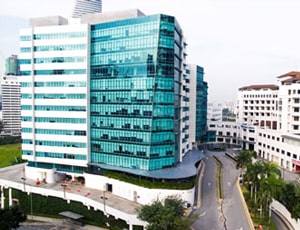
Explore Hospitals ( 3 )

Kuala Lumpur, Malaysia

499+ Beds · 296+ Procedures
JCI MSQH

Kuala Lumpur, Malaysia

724+ Beds · 278+ Procedures
ACHS
Starting
USD 15000

Kuala Lumpur, Malaysia

79+ Procedures
ISO

Get Your Head & Neck Cancer Treatment
Plan in 24 hrs.

Our experienced Medical Patient Advisors have supported 100,000+ patients across 120+ countries with personalised treatment plans, hospital recommendations, cost estimates, and travel assistance, all free.

HIPAA-Compliant Data SecurityShared Only with Your Consent

Free Consultation No Obligation Personalized Treatment Plan Response Within 24 Hours

Required | alphabets and spaces
Required | A valid, working email address
Required | A valid contact

Your medical info is kept HIPAA-style confidential. We never share with hospitals without your consent.

Process Involved for Head & Neck Cancer Treatment in Malaysia

  • Diagnosis and staging
  • Treatment planning
  • Active Treatment
  • Rehabilitation and follow-up
  • Oral cancer
  • Throat cancer
  • Laryngeal cancer
  • Nasal and sinus cancer
  • Salivary gland cancer
  • Surgical tumor removal: Is done to physically remove the cancerous tumor along with a small margin of healthy tissue to ensure that all cancer cells are cleared. In some cases, nearby lymph nodes may also be removed to prevent cancer spread.
  • Radiation therapy: Uses high-energy rays to destroy cancer cells or stop them from growing. It may be used alone in early-stage cancer or after surgery to eliminate any remaining cancer cells.
  • Chemotherapy: Involves anticancer medicines given by injection or in tablet form to kill cancer cells throughout the body. It is often combined with radiation therapy for better results in advanced cancers.
  • Targeted therapy: Focuses on specific molecules or proteins that help cancer cells grow. This treatment damages cancer cells while causing less harm to normal healthy cells.
  • Immunotherapy: Strengthens the body’s immune system so it can recognise and attack cancer cells more effectively. It is usually used in advanced or recurrent head and neck cancers.

Patients diagnosed with head and neck cancers of the mouth, throat, larynx, nose, sinuses, or salivary glands are eligible. Eligibility depends on cancer treatment goals.

  • Reconstructive Plates: These are metal plates used to rebuild or support facial bones after tumour removal, helping restore facial structure and stability.
  • Bone Grafts: Involves replacing removed or damaged bone with bone taken from another part of the body or a medical substitute, helping restore normal shape and function.
  • Soft Tissue Flaps: Are sections of skin, muscle, or tissue moved from one part of the body to repair areas affected by cancer surgery, improving healing and appearance.
  • Voice prosthesis valves (Post-laryngectomy patients): These valves are small medical devices placed after removal of the voice box(larynx). They help patients speak by allowing air from the lungs to pass into the food pipe, creating sound while preventing food and liquids from entering the airway.
  • Reconstructive surgery
  • Tracheostomy
  • Feeding tube placement
  • Speech and swallowing therapy
  • Cancer control or cure
  • Preservation of vital functions
  • Improved survival and quality of life
  • Most patients acquire tumour control after treatment.
  • Reduced pain, swelling, or trouble swallowing are examples of symptom relief.
  • Gradually resuming daily activities with appropriate rehabilitation and aftercare
  • Fill out the inquiry form: Fill out the form to provide us with the relevant information about your condition.
  • Consult with Our Healthcare Expert:One of our qualified specialists will contact you for a consultation
  • Receive a Detailed Treatment Plan:After examining your situation, we will provide you with a detailed treatment plan that includes expert views and cost breakdowns for various choices.
  • Choose your preferred option: Choose the treatment option that suits you the best.
Jenny Wilson
Your Dedicated Medical Patient Advisor
Treatment planning • Hospital coordination • Multilingual support • Response within 15 minutes.
Our Services to Better your Experience

Opinion & Option

We submit the most accurate opinion and options from one or more countries for your review

Consult Privately

Consult with a certified specialist privately on our telemedicine platform even before you decide to travel

Logistics

We handle flights, visas, transfers, and accommodation—so you can focus on your health.

Recovery

Our In-house rehabilitation service packages to better your recovery and treatment outcome

Patient Stories

Ms. Monica
Ms. Monica
Monica from Ghana for AV Malformation Treatment in India

Monica from Ghana suffered from AV malformation. She decided to look for options for medical treatment when she started experiencing…

Patient Testimonial: Mrs Henshaw from Nigeria underwent Cervical Cancer Treatment in India
Mrs. Affiong Uko Henshaw
Mrs Henshaw from Nigeria underwent Cervical Cancer Treatment in India

This was the case with a 60-year-old cervical cancer patient from Nigeria, Mrs. Affiong Uko Henshaw. She was diagnosed with…

Frequently Asked Questions

Initial recovery may take 2-4 weeks, while full recovery can take several months depending on treatment type. Recovery time varies depending on the type of treatment and the patient’s overall health.

In addition to the procedure cost, patients may incur:
  • Pre-treatment tests
  • Medications during recovery
  • Follow-up consultations
  • Hospital stay generally ranges from a few days to two weeks, depending on whether surgery is performed and how well the patient recovers after treatment

    Long-term care includes regular medical follow-ups, lifestyle changes, rehabilitation therapy, nutritional support, and monitoring to detect any recurrence early.

    Patients choose Malaysia because it offers high-quality cancer care, skilled specialists, advanced technology, and affordable treatment costs compared to many other countries.

    Common tests include biopsy, imaging scans such as CT or MRI, blood tests, and an overall health assessment to plan the most effective treatment.

    Yes, hospitals follow strict safety and hygiene standards and provide dedicated services for international patients, ensuring safe and comfortable treatment.

    The success rate depends on early diagnosis, cancer stage, and treatment type. Early-stage cancers have higher success rates, while advanced cases may require combined therapies.

    Not Sure About Your Treatment Plan? Get a Free Second Opinion

    Have your reports reviewed by independent oncology experts to help you make a confident treatment decision, all online within 48 hours.

    Upload Your Reports
    Free second opinion on your CAR-T plan