The cost of CyberKnife Treatment in Malaysia is USD 7000 - USD 15000
Additionally, factors like the duration of treatment, the need for follow-up care, and the use of advanced technologies or specialized treatments can further influence the overall cost.
CyberKnife on the other hand is a noninvasive radiation therapy that is capable of delivering radiation beams to cancerous cells and other conditions with a lot of precision. It makes use of a robotic system and then is capable of attacking the tumors from various directions thus reducing the levels of damage that are done to the health-related tissues. They are particularly useful in tumors in remote sites in the body like the brain, vertebral column, lungs, liver, and prostate gland. It monitors the growth of tumors in real time hence minimizing errors when treating them.
Usually, it is several treatment fractionated sessions as CyberKnife operation is used for patients who do not tolerate ordinary surgery. It comes with a lot fewer side effects and the benefits are many more with the patients requiring shorter recovery periods. However, many cancers and benign conditions can be treated; nevertheless, lifelong follow-up is necessary to evaluate response to therapy as well as look for reappearance.
| City | Minimum Cost (USD) | Minimum Cost (MYR) | Maximum Cost (USD) | Maximum Cost (MYR) |
|---|---|---|---|---|
| Kuala Lumpur | USD 7000 | 29680 | USD 15000 | 63600 |
| Country | Minimum Cost | Minimum Local Currency | Maximum Cost | Maximum Local Currency |
|---|---|---|---|---|
| India | USD 4500 | INR 385380 | USD 7500 | INR 642300 |
| Israel | USD 8575 | ILS 30356 | USD 16049 | ILS 56813 |
| Lithuania | USD 8000 | LTL 27366 | USD 15000 | LTL 51310 |
| Malaysia | USD 7000 | MYR 29680 | USD 15000 | MYR 63600 |
| Poland | USD 8000 | PLN 30080 | USD 20000 | PLN 75200 |
| Saudi Arabia | USD 10000 | SAR 37500 | USD 20000 | SAR 75000 |
| Singapore | USD 25000 | SGD 32250 | USD 50000 | SGD 64500 |
| Spain | USD 7178 | ESP 1055452 | USD 17000 | ESP 2499678 |
| Switzerland | USD 10000 | CHF 8300 | USD 20000 | CHF 16600 |
| Thailand | USD 10000 | THB 327100 | USD 15000 | THB 490650 |
| Tunisia | USD 5000 | TND 14900 | USD 10000 | TND 29800 |
| Turkey | USD 6520 | TRY 254671 | USD 9500 | TRY 371070 |
| United Arab Emirates | USD 5000 | AED 18350 | USD 10000 | AED 36700 |
| United Kingdom | USD 6000 | GBP 4440 | USD 8000 | GBP 5920 |
Need Help Planning Your Treatment Abroad?
Your 24/7 AI Health Assistant 
The CyberKnife system is a specialized machinery used for the non-invasive treatment of cancerous and non-cancerous tumors. It is sometimes used for the treatment of other conditions as well that are indicated to be treated with the help of radiation treatment.
CyberKnife technology is nowadays used for the treatment of lung, prostate, head and neck, spine, liver, kidney and pancreatic tumors. This form of treatment is used as an alternative for the tumors that cannot be operated or surgically excised and are complicated to handle.
The CyberKnife system comes with robotic precision that helps deliver accurate radiation doses to the area of the tumor. The treatment is usually concluded in one to five sessions – depending on the size, type and location of the tumor.
CyberKnife is a form of radiosurgery, that is, it delivers the results of a surgery but with the help of targeted radiation therapy.
Would you like some help? We are available.
Get Help
Kuala Lumpur, Malaysia
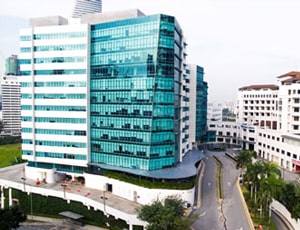
Prince Court is a private medical facility in the center of Kuala Lumpur that has 277 individual beds. Our dedication is to provide you with the best treatment possible from the time you arrive until you depart, healthier and happier. We are well-known for our top-notch facilities, cutting-edge technology, and friendly customer service.

Kuala Lumpur, Malaysia
Sunway Medical Centre has initiated a comprehensive expansion plan close to its current hospital facility to enhance its ability to provide services to the global market. The new Cancer Radiosurgery Center and Nuclear Medicine Center, which will also house additional Centers of Excellence like the Digestive Health Center and Dialysis Center, marked the completion of Tower C's first phase in October 2016.

Kuala Lumpur, Malaysia
In Kuala Lumpur, Malaysia, ParkCity Medical Centre is a 300-bed, cutting-edge, interdisciplinary private hospital that provides award-winning private healthcare in an environment of lush vegetation.

Kuala Lumpur, Malaysia
Subang Jaya Medical Center is renowned for pioneering radiation oncology treatments and infrastructure in Malaysia. The hospital also has a state-of-the-art Cancer Radiosurgery Centre (CRC), which is fully furnished with the latest medical technology for cancer detection, monitoring, and treatment.

Kuala Lumpur, Malaysia
As a tertiary care hospital, Bukit Tinggi Medical Centre (BTMC) is committed to providing high-quality, reasonably priced healthcare.
With a focus on patient care and a team of committed medical professionals and personnel, we want to realize our ambition of becoming Klang's go-to healthcare provider. Orthopedics, neurosurgery, cardiac surgery, obstetrics and gynecology, pediatrics and rehabilitation, aesthetic surgery, and other specialties are all part of our multidisciplinary team approach. Additionally, BTMC has a Health Screening Center that provides a range of health packages to meet the requirements of diverse patient types.
Need Some Advice From Our Experts?
Our team of healthcare experts would be happy to assist you

+99


Opinion & Option
We submit the most accurate opinion and options from one or more countries for your review
Consult Privately
Consult with a certified specialist privately on our telemedicine platform even before you decide to travel
Logistics
We handle flights, visas, transfers, and accommodation—so you can focus on your health.
Recovery
Our In-house rehabilitation service packages to better your recovery and treatment outcome
Our network connects you with the leading medical tourism destinations globally, offering a wide range of cities, top doctors, and flexible pricing options.


A. Cyberknife treatment in Malaysia is offered by multiple hospitals across the country. For quick reference, the following are some of the leading hospitals for CyberKnife Treatment in Malaysia:
A. The recovery of the patient may vary, depending on several factors. However, on average, a patient is supposed to stay for about 14 days in the country after discharge. This duration of stay is recommended to complete all the necessary follow-ups and control tests to ensure that the surgery was successful.
A. Apart from the CyberKnife Treatment cost, there are a few other daily charges that the patient may have to pay. These are the charges for daily meals and accommodation outside the hospital. The per day extra expenses in Malaysia per person are about USD 50 per person.
A. Cyberknife treatment in Malaysia is offered in almost all metropolitan cities, including the following:
A. The patient is supposed to stay at the hospital for about 1 day after CyberKnife Treatment for monitoring and care. This phase is important to ensure that the patient is recovering well and is clinically stable. During this time, several tests are performed before the patient is deemed suitable for discharge.
A. There are more than 4 hospitals that offer CyberKnife Treatment in Malaysia. These hospitals have proper infrastructure for the treatment of patients who require CyberKnife Treatment. Apart from good services, the hospitals are known to follow all standard and legal guidelines as dictated by the local medical affairs body or organization.
A. CyberKnife is therefore an excellent non-invasive very accurate external beam radiation therapy system for treating various kinds of Tumor and pathological conditions that affect human beings and are situated in obscure body regions. It employs robotic technology whereby a linear accelerator is employed in targeting the tumor with radiation. Unlike other conformal radiotherapy, CyberKnife does not involve making an incision or a reference to any surgical operation; thus, it is not an invasive surgery for certain tumors.
A. Yes, cyberknife radiosurgery involves the use of a robot armed with a linear accelerator that pinpoints a tumor and then rotates around it delivering intense radiation doses. This system has the capability of correcting movements of the tumor or any of the tissues around it so that the radiation gets to the exact position required irrespective of the breathing or movement of the patient. X-ray and CT scans are employed to locate the position of the tumor precisely during live surgery to ensure the system is tracking movements in real-time. The precision that is achieved in the targeting minimizes the destruction of healthy tissue adjacent to the tumors.
A. CyberKnife can treat a variety of tumors and conditions, including:
A. The period of recuperation after receiving CyberKnife treatment is usually short because the treatment is painless. After the treatment, most of the patients would be free to go about their normal activities in the next one or two days. It does not require admission and sometimes patients may go back to school or work within the same day. However, some may have little fatigue or other temporary symptoms such as rashes, headaches, or mild edema depending on the area treated. Most of the side effects listed above disappear on their own within a matter of weeks in patients who use the drugs correctly.
A. CyberKnife is very safe and an excellent tool for treating brain tumors. It ensures accurate delivery of radiation to the tumor with minimal or no harm to the normal tissue. This precision is especially important in the brain: the damage to adjacent structures may have too serious consequences. CyberKnife is used in cases where a tumor is located in difficult-to-access places or sensitive areas of the brain. This is useful in the case of both benign and malignant brain tumors and can work on both deep-seated lesions close to important functional neuroanatomy. The system also enables the delivery of very large doses per fraction within a short period, thus improving tumor control probability with fewer treatments.
A. CyberKnife treatment is not painful, and most of the time symptoms ease immediately after the treatment. This procedure does not require surgery, or invasive contact with the site of the tumor, as it uses radiation to defeat the tumor. Pain management is normally not felt by the patient during such treatment, but they have to stay still for the treatment session which may take half an hour to two and half hours. There can be some side effects for some of the patients depending on the response of the skin to the treatment, and other general signs like fatigue, which are not associated with the treatment pain.
A. While CyberKnife is a relatively safe treatment option, there are some risks and side effects to consider:
A. CyberKnife treatment can take a relatively short period and ranges depending on the size and location of the tumor as well as the type of it from half an hour up to 90 minutes. The treatment may vary from one fraction to the other complicated in one to five sessions depending on the type of attacks the patient is suffering from. As already mentioned, in some instances, the tumor can be treated in a single session, and in others, it may take several sessions extending over a few days or weeks. It depends on the status of the patient and the tumor that requires treatment and the treatment regime prescribed.
A. CyberKnife offers several advantages over traditional surgery:

Surgical Oncologist
15 Years of Experience
Dr. Prateek Varshney is a renowned Surgical Oncologist. He has experience of more than 15+ years in surgical Oncology. He is currently practicing as a consultant at Metro Mass Hospital and Cancer Institute. He was also previously associated as a consultant with Sir Ganga Ram Hospital and as a professor at Gujarat Cancer Research Institute. View More