Your Notifications
All done, no notifications

Colorectal Cancer ( Colon Cancer ) Treatment Cost in Thailand

Costs starts from USD10000 to USD50000
Filters

How Much Does Colorectal Cancer Cost in Thailand?

The cost of Colorectal Cancer in Thailand typically ranges between USD 10000 - USD 50000. However, this cost can vary depending on several factors, including the type and severity of the condition, treatment techniques chosen, the healthcare facility's location and reputation, the treating professionals' experience and specialization, and the patient's overall health status.

Additionally, factors like the duration of treatment, the need for follow-up care, and the use of advanced technologies or specialized treatments can further influence the overall cost.

Factors Influencing the Cost of Colorectal Cancer:

Colon or rectal cancer is described as cancer that begins in the colon or the rectum the two being parts of the large intestines. This usually starts with the growths of tissues, which are termed polyps that may outgrow into cancers sometime in their lifetime. Cancer colon or rectal is the general term for one of the most common types of cancer in men and women. On the other hand, it is also a very much avoidable health hazard particularly if it presents early enough for treatment.

This means that survival rates of colorectal cancer will generally depend on the extent to which it has progressed. The 5-year survival rate for colon or rectal cancer that has not spread past nearby organs is more than 90% if the cancer is confined to the colon or rectum. Although stage three cancers are generally less dangerous than those in stage two, the survival rates reduce when cancer metastasizes to new organs (Stage IV).

Cost of Colorectal Cancer ( Colon Cancer ) Treatment in Major Cities of Thailand

CityMinimum Cost (USD)Minimum Cost (THB)Maximum Cost (USD)Maximum Cost (THB)
BangkokUSD 10000327100USD 500001635500

Colorectal Cancer ( Colon Cancer ) Treatment Cost : A Global Comparison

CountryMinimum CostMinimum Local CurrencyMaximum CostMaximum Local Currency
IndiaUSD 4000INR 342560USD 6000INR 513840
IsraelUSD 19000ILS 67260USD 40085ILS 141901
MalaysiaUSD 20000MYR 84800USD 50000MYR 212000
Saudi ArabiaUSD 20000SAR 75000USD 50000SAR 187500
SingaporeUSD 25000SGD 32250USD 75000SGD 96750
South AfricaUSD 5000ZAR 89850USD 50000ZAR 898500
South KoreaUSD 8500KRW 11695830USD 23000KRW 31647540
SpainUSD 20000ESP 2940798USD 100000ESP 14703990
SwitzerlandUSD 30000CHF 24900USD 100000CHF 83000
ThailandUSD 10000THB 327100USD 50000THB 1635500
TunisiaUSD 5000TND 14900USD 15000TND 44700
TurkeyUSD 5182TRY 202409USD 20755TRY 810690
United Arab EmiratesUSD 8000AED 29360USD 50000AED 183500
United KingdomUSD 20300GBP 15022USD 25400GBP 18796

Need Help Planning Your Treatment Abroad?

Your 24/7 AI Health Assistant

Colon Cancer is the abnormal growth of the cells in the inner lining of the colon part of the large intestine also known as bowel cancer, colon cancer, or rectal cancer. This abnormal growth is called a polyp.

Colorectal cancer can affect men and women equally. However, studies have proven that men might develop it at a younger age.

What causes colon cancer

There is no definite cause of colorectal cancer, but old age and certain lifestyle factors can increase colorectal cancer risk. Some of these colorectal cancer risk factors include the following:

Types of Colorectal Cancer

A majority of colorectal cancers are adenocarcinoma. If you have been diagnosed with colorectal cancer, there are 95 percent chance that it is an adenocarcinoma. But there are some other types of colorectal cancer such as:

  1. Carcinoid: A rare type of Tumor and can grow slower than adenocarcinoma.
  2. Gastrointestinal stromal: GISTs are rare tumors that can occur in the digestive tract.
  3. Lymphomas: They can be developed in the colon, but they are relatively uncommon. They originate in the lymphatic system and may affect the colon.
  4. Sarcomas: are rare and can develop in the connective Tissues of the colon, such as blood vessels.

Colorectal cancer treatment is aimed towards the removal or destruction of cancerous cells in the colon or rectum, to prevent spreading and to keep the patient alive. Treatment varies and may include surgery, chemotherapy, radiation, or targeted therapy according to the stage.

A doctor must be seen for symptoms such as blood in stool, changes in bowel habits, abdominal pain, unexplained weight loss, or persistent fatigue. Regular screening is recommended beginning at age 45, or earlier if a family history is present.

Preparation consists of a colonoscopy that confirms diagnosis and biopsy, followed by imaging to determine staging. You may have completed lab work, bowel preparation for surgery, and a review of medications and health conditions.

In early-stage tumors, surgery may be used to remove a portion of the colon or rectum affected by the cancer. For more advanced cases, chemotherapy and/or radiotherapy may be given. Depending on factors such as tumour size and location, the operation may be done using laparoscopic or open surgery.

Operations usually last 2 to 4 hours. Chemotherapy and radiation are given over a few weeks. Hence, the treatment will take several months, depending on the exact regimen and the patient's response.

  • Bleeding
  • Infection
  • Bowel obstruction
  • Leakage at the surgical site,
  • Fatigue
  • Diarrhea
  • Nerve damage

Early treatment is effective in curing colorectal cancer, while advanced diseases can benefit from therapy to prolong survival. The treatment is also efficacious in relieving symptoms like pain and bleeding; digestion is improved, and, with proper follow-up, the risk of recurrence can be reduced.

Usually, the patient remains in the hospital for 5–7 days. The whole recovery period may last 4–8 weeks. The patient might undergo a colostomy, which may be temporary or permanent. Support, nutrition, and physical activity are promoted during recovery.

The 5-year survival rates change according to metastasis: about 90% for localised cancer, 71% for regional spread, and 14% for distant metastases.

Would you like some help? We are available.

Get Help
Explore Hospitals ( 3 )
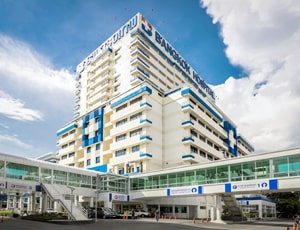
Colorectal Cancer ( Colon Cancer ) Treatment in Bangkok Hospital: Costs, Top Doctors, and Reviews

Bangkok, Thailand

  • Joint Commission International, or JCI

Types of Colorectal Cancer ( Colon Cancer ) Treatment in Bangkok Hospital and its associated cost

Treatment OptionApproximate Cost Range (USD)Approximate Cost Range (THB)
Colorectal Cancer Treatment (Overall)4509 - 19831158478 - 721611
Surgery5720 - 11172196636 - 409700
Chemotherapy1032 - 342136896 - 120746
Radiation Therapy1341 - 391149078 - 140341
Targeted Therapy2060 - 504872981 - 183262
Immunotherapy2796 - 5536102225 - 202416
Hormone Therapy1354 - 387748584 - 143266
Colostomy2231 - 501881858 - 176973
Ileostomy2778 - 570599107 - 197268
Proctectomy3401 - 7849118903 - 282631
Lymph Node Removal1119 - 332939338 - 120605
Laparoscopic Surgery3386 - 8876119362 - 325647
Robotic Surgery3962 - 9919141986 - 359515
Minimally Invasive Surgery3316 - 9178120298 - 321414
  • Address: Bangkok Dusit Medical Services, Nong Prue, Bang Phli, Samut Prakan, Thailand
  • Facilities related to Bangkok Hospital: SIM, TV inside room, Accommodation, Choice of Meals
Colorectal Cancer ( Colon Cancer ) Treatment in Bangpakok 9 International Hospital: Costs, Top Doctors, and Reviews

Bangkok, Thailand

  • Joint Commission International, or JCI

Types of Colorectal Cancer ( Colon Cancer ) Treatment in Bangpakok 9 International Hospital and its associated cost

Treatment OptionApproximate Cost Range (USD)Approximate Cost Range (THB)
Colorectal Cancer Treatment (Overall)4584 - 19974163716 - 728687
Surgery5740 - 11407200594 - 398895
Chemotherapy1010 - 339736656 - 118953
Radiation Therapy1343 - 400048857 - 142305
Targeted Therapy2022 - 515371152 - 183476
Immunotherapy2757 - 568899769 - 196949
Hormone Therapy1372 - 396648243 - 141587
Colostomy2255 - 511980313 - 181824
Ileostomy2782 - 552299195 - 202330
Proctectomy3326 - 7769122350 - 282695
Lymph Node Removal1106 - 342640795 - 120278
Laparoscopic Surgery3334 - 9090119410 - 320286
Robotic Surgery3951 - 10304139050 - 360992
Minimally Invasive Surgery3328 - 9075122645 - 317464
  • Address: Bangpakok 9 International Hospital, International Hospital, Rama II Road, Bang Mot, Chom Thong, Bangkok, Thailand
  • Facilities related to Bangpakok 9 International Hospital: Choice of Meals, Interpreter, SIM, TV inside room, Accommodation
Colorectal Cancer ( Colon Cancer ) Treatment in Phyathai 2 International Hospital: Costs, Top Doctors, and Reviews

Bangkok, Thailand

  • Joint Commission International, or JCI

Types of Colorectal Cancer ( Colon Cancer ) Treatment in Phyathai 2 International Hospital and its associated cost

Treatment OptionApproximate Cost Range (USD)Approximate Cost Range (THB)
Colorectal Cancer Treatment (Overall)4597 - 20335157895 - 708818
Surgery5529 - 11096198808 - 395909
Chemotherapy991 - 342536751 - 120811
Radiation Therapy1345 - 401547449 - 141580
Targeted Therapy2052 - 515172660 - 177545
Immunotherapy2845 - 5705102265 - 204310
Hormone Therapy1335 - 400347715 - 141593
Colostomy2211 - 497579519 - 183431
Ileostomy2814 - 574798808 - 204805
Proctectomy3303 - 7991119360 - 275692
Lymph Node Removal1107 - 334139560 - 121923
Laparoscopic Surgery3401 - 9050118710 - 322832
Robotic Surgery4006 - 10213143400 - 365348
Minimally Invasive Surgery3445 - 8938117891 - 315826
  • Address: Phyathai 2 Hospital, Phahonyothin Road, Phaya Thai, Thailand
  • Facilities related to Phyathai 2 International Hospital: Choice of Meals, Interpreter, SIM, TV inside room, Accommodation

Need Some Advice From Our Experts?

Request a Call Back Now!

Our team of healthcare experts would be happy to assist you

trusted Patientstrusted Patients+99
Trusted by 50000+ Patients
Required | alphabets and spaces
Required | A valid, working email address
Required | A valid contact

Process Involved for Colorectal Cancer ( Colon Cancer ) Treatment in Thailand

  • Consultation with a specialist: Consult an oncologist or colorectal surgeon to evaluate your condition.
  • Staging and diagnosis: Understanding the cancer’s stage is crucial for developing an effective treatment plan. Staging may involve additional tests and may help in choosing between surgery, chemotherapy, radiation therapy, or targeted therapy.
  • Personalised treatment plan: Based on the results, your medical team will create a treatment plan tailored to the stage of cancer, your health, and other factors.
  • Pre-treatment counseling: You'll also receive guidance on managing side effects, post-treatment care, and any necessary lifestyle adjustments during treatment.
  • Colon Cancer
  • Rectal Cancer
  • Polyps
  • Metastatic Colorectal Cancer
  • Inherited Cancer Syndromes
  • Individuals diagnosed with colorectal cancer (colon or rectum)
  • Higher-risk patients, such as those with a family history of colorectal cancer, inflammatory bowel diseases (e.g., Crohn's, ulcerative colitis), or genetic conditions (e.g., Lynch syndrome), may require earlier screening and preventive treatment.
  • Surgical Resection
  • Chemotherapy
  • Radiation Therapy
  • Immunotherapy
  • Targeted Therapy
  • Colonoscopies and Imaging
  • Removes the tumor, achieves remission, and improves survival rates.
  • Reduces the risk of cancer spreading (metastasising).
  • Controls symptoms such as bleeding, pain, and obstruction.
  • Enhances quality of life through early detection and successful treatment.
  • Prevents cancer from progressing to more advanced stages.
  • Medical Oncologist
  • Surgical Surgeon
  • Gastroenterologist
  • Fill out the inquiry form: Fill out the form to provide us with the relevant information about your condition.
  • Consult with Our Healthcare Expert: One of our qualified specialists will contact you for a consultation.
  • Receive a Detailed Treatment Plan: After examining your situation, we will provide you with a detailed treatment plan that includes expert views and cost breakdowns for various choices.
  • Choose your preferred option: Choose the treatment option that suits you the best.

Instantly Connect with our Colorectal Cancer ( Colon Cancer ) Treatment Specialists

Doctor 1
Doctor 2
Doctor 3
Doctor 4
Doctor 5
Doctor 6
Doctor 7
Doctor 8
Our Services to Better your Experience

Opinion & Option

We submit the most accurate opinion and options from one or more countries for your review

Consult Privately

Consult with a certified specialist privately on our telemedicine platform even before you decide to travel

Logistics

We handle flights, visas, transfers, and accommodation—so you can focus on your health.

Recovery

Our In-house rehabilitation service packages to better your recovery and treatment outcome

Other Popular Countries for Colorectal Cancer ( Colon Cancer ) Treatment

Our network connects you with the leading medical tourism destinations globally, offering a wide range of cities, top doctors, and flexible pricing options.

Vietnam
United Arab Emirates
Italy
Singapore

Get Insight with our Blogs

Naji Ahmed Underwent Colorectal Surgery
Patient Stories

Naji Ahmed Underwent Colorectal Surgery

Colorectal surgery is a kind of field in medicine that treats disorders related to intestine, anus and colon. This procedure is beneficial for both adults and children.

Published: 09 Oct, 2024
Updated: 26 Feb, 2026

Frequently Asked Questions

A. In Thailand, the average starting cost for Colorectal Cancer ( Colon Cancer ) Treatment is USD 10000. Only some of the best and certified hospitals in Thailand perform Colorectal Cancer ( Colon Cancer ) Treatment for international patients.

A. Colorectal Cancer (Colon Cancer) Treatment cost in Thailand varies from one hospital to the other. Some of the best hospitals for Colorectal Cancer (Colon Cancer) Treatment offer a comprehensive package that covers the end-to-end expenses related to investigations and treatment of the patient. The treatment cost usually includes the expenses related to hospitalization, surgery, nursing, medicines, and anesthesia. Stay outside the package duration, post-operative complications and diagnosis of a new condition may further increase the Colorectal Cancer (Colon Cancer) Treatment cost in Thailand.

A. Many hospitals across the country offer Colorectal Cancer (Colon Cancer) Treatment to international patients. Some of the best hospitals for Colorectal Cancer (Colon Cancer) Treatment in Thailand include the following:

A. After Colorectal Cancer (Colon Cancer) Treatment in Thailand, the patient is supposed to stay in a guest house for another 30 days. This period is important to conduct all the follow-up tests to ensure that the surgery was successful and the patient can go back to the home country.

A. The stage and location of colorectal cancer, in addition to the patient's general health and preferences, all influence the treatment options. Surgery, chemotherapy, radiation therapy, targeted therapy, and immunotherapy are the main forms of treatment. Below is a synopsis of each:

  • A partial colonectomy involves removing the colon's malignant section as well as any surrounding lymph nodes.
  • The rectum and anus are removed during an abdominal-perineal resection (APR), usually with a colostomy in between.
  • Reattaching the remaining portions of the colon and rectum after removing a portion of it is known as low anterior resection or LAR.
  • Colostomy or Ileostomy: Depending on the situation, a portion of the colon or rectum may be permanently or temporarily redirected to remove waste to an external bag (colostomy or ileostomy). This is frequently carried out when the rectum or lower portion of the colon is removed, or when the gut requires time to heal.
  • Adjuvant Chemotherapy: administered following surgery to eradicate any residual cancer cells and lower the likelihood of a relapse.
  • Neoadjuvant Chemotherapy: Given before surgery to reduce tumor size, facilitate their removal, and enhance surgical results. frequently used with radiation treatment while treating rectal cancer.
  • External Beam Radiation Therapy: Often used to treat rectal cancer in addition to chemotherapy, especially before surgery to reduce tumor size and enhance resection results. External high-energy radiation is used to target the tumor.
  • Targeted therapy, which frequently has fewer side effects than conventional chemotherapy, targets particular molecules involved in the growth and survival of cancer cells.
  • Immunotherapy: Assists the immune system in identifying and eliminating cancerous cells.

A. Your age, the type of surgery you had—keyhole or open—whether you have a stoma, and your overall health will all affect how long it takes you to recuperate from the procedure. You could spend two to seven days in the hospital.

It can take up to six weeks to recover at home. After surgery, many return to most of their regular habits in two weeks or less. In the first few days following returning home, make an effort to treat yourself especially gently. Walking about is healthy for you, but getting up could make you feel weak. Avoid trying to take on too much at once.

A. When we talk about alternative treatments for colorectal cancer, we usually mean complementary or non-traditional methods that are applied in addition to traditional medical care. It's crucial to remember that complementary therapies like alternative medicine can be utilized in addition to traditional treatments including radiation, chemotherapy, surgery, and targeted therapies.

A. The length of recovery following a colon cancer surgery depends on the procedure's details, the patient's general condition, and any potential problems. The following provides a broad summary of recovery periods following various types of colorectal cancer surgeries:

  • Partial Colectomy:
  • Hospital stay: Usually 3–5 Days.
  • Complete recovery: Usually Takes 4-6 Weeks. This entails getting back to your routine and activities.
  • Colectomy:

A hospital stay for a total colectomy is usually 5-7 days.

Complete Recoveries: Usually Take 6–8 Weeks. If a stoma is necessary, full recovery may take longer because patients must adjust to the altered bowel function and stoma care.

  • Abdomen-Perineal Resection (APR):
  • Hospital stay for an abdomen-perineal resection (APR) is usually 5-7 days.
  • Complete recovery: Typically Takes 8–12 Weeks. This involves managing changes in bowel habits and personal hygiene as well as adjusting to a permanent colostomy.
  • Low Anterior Resection (LAR):
  • Hospital Stay for Low Anterior Resection (LAR): Usually 3–5 Days.
  • Complete Recovery: Usually 6–8 weeks, though it may take longer for patients to adjust to any changes and for their bowel function to return to normal.
  • Proctocolectomy:
  • A hospital stay for a proctocolectomy with ileostomy is usually 5-7 days.
  • Complete Recovery: Usually Takes 6–8 Weeks. This covers the period needed to adjust to the ileostomy and handle dietary adjustments.
  • Minimally Invasive (Laparoscopic) Surgery:
  • Hospital Stay for Minimally Invasive (Laparoscopic) Surgery: Usually 2-4 days.
  • Complete Recovery: Generally 3–6 weeks, based on the type of surgery and each patient's rate of recuperation.

A. Treatment for colorectal cancer can be very successful, but there are risks and adverse consequences associated with each approach. Patients are better able to manage their treatment experience and make educated decisions when they are aware of these hazards. The following summarizes the dangers connected to various therapies for colorectal cancer:

  • Infection: There is a chance that there will be an internal or surgical site infection, necessitating further treatments or medications.
  • Bleeding: There may be bleeding during or following surgery, in which case extra care or blood transfusions can be required.
  • Anesthesia Complications: Risks associated with anesthesia, such as hypersensitivity reactions, breathing difficulties, or heart problems.
  • Bowel Dysfunction: Depending on the location and degree of the surgery, there may be long-term abnormalities in bowel function, such as constipation, diarrhea, or incontinence.
  • Vomiting and nausea: These symptoms are frequently treated with antiemetic drugs, but they can be extremely uncomfortable.
  • Fatigue: All-over exhaustion that may interfere with day-to-day activity.
  • Loss of hunger: A decrease in hunger or a shift in flavor that can cause weight loss and nutritional issues.
  • Hair Loss: Depending on the particular chemotherapy medications used, hair loss may be temporary or permanent.
  • Reduced blood cell synthesis from bone marrow suppression increases the risk of infections, bleeding issues, and anemia.
  • Peripheral neuropathy: Hand and foot numbness or tingling, especially after taking certain medications like oxaliplatin.
  • Chance of Secondary malignancies: Chemotherapy users who use it for an extended period may be more likely to get other malignancies.
  • Flu-like Symptoms: Immunotherapy frequently causes fever, chills, and exhaustion.
  • Skin Reactions: Redness or itching, especially when immunological checkpoint inhibitors are used.
  • The possibility of the immune system attacking healthy tissues and causing inflammation or damage to vital organs like the liver, lungs, or endocrine glands is known as an autoimmune reaction.

A. There are certain expenses additional to the Colorectal Cancer (Colon Cancer) Treatment cost that the patient may have to pay for. These are the channels for daily meals and hotel stays outside the hospital. These charges start from USD 50 per person.

A. Many cities offer Colorectal Cancer ( Colon Cancer ) Treatment in Thailand, including the following:

  • Bangkok
  • Krabi

A. After the Colorectal Cancer (Colon Cancer) Treatment takes place, the average duration of stay at the hospital is about 4 days. During the recovery, the patient is carefully monitored and control tests are performed to see that everything is okay. If required, physiotherapy sessions are also planned during recovery in the hospital.

A. There are more than 4 hospitals that offer Colorectal Cancer (Colon Cancer) Treatment in Thailand. These hospitals have proper infrastructure for the treatment of patients who require kidney transplants. Such hospitals follow all legal protocols and guidelines as specified by the local medical affairs body when it comes to the treatment of international patients.

Author

Dr. Abdullah Rahil

MPT (Neuro)

5 Years of Experience

Dr. Abdullah Rahil, M.P.T. (Neurology), is a dedicated physiotherapy professional specializing in orthopedic, neurological, and musculoskeletal rehabilitation. With strong clinical expertise, he focuses on improving patient mobility, reducing pain, and restoring functional independence through evidence-based rehabilitation techniques. He is skilled in advanced therapeutic approaches that support effective rehabilitation and recovery for a wide range of musculoskeletal and neurological conditions, focusing on improving mobility, reducing pain, and restoring functional independence. Dr. Rahil has extensive experience managing diverse rehabilitation cases. His patient-centered approach emphasizes personalized treatment plans, continuous assessment, and comprehensive rehabilitation to achieve optimal recovery outcomes. . View More

Reviewer

Dr Prateek Varshney

Surgical Oncologist

15 Years of Experience

Dr. Prateek Varshney is a renowned Surgical Oncologist. He has experience of more than 15+ years in surgical Oncology. He is currently practicing as a consultant at Metro Mass Hospital and Cancer Institute. He was also previously associated as a consultant with Sir Ganga Ram Hospital and as a professor at Gujarat Cancer Research Institute. View More