Disclaimer: Cost range is subject to change based on clinical evaluation.
Affordable World-class Treatment - Accredited Hospitals - Free Treatment Plan in 24 Hrs

Share your details to receive a personalised treatment plan, estimated costs, hospital recommendations, and expert guidance, “completely free.”
Your information is protected with HIPAA-compliant security standards. We only share your details with hospitals after your consent.
| City | Cost (USD) | |
|---|---|---|
| Ankara | Starting $7k | Explore More |
| Antalya | Starting $7k | Explore More |
| Bursa | Starting $6.5k | Explore More |
| Canakkale | Starting $7k | Explore More |
| Fethiye | Starting $7k | Explore More |
| Istanbul | Starting $7.5k | Explore More |
| Kocaeli | Starting $7k | Explore More |
| Konya | Starting $7k | Explore More |
| Samsun | Starting $7k | Explore More |
| Sivas | Starting $7k | Explore More |
| Tokat | Starting $7k | Explore More |
| Trabzon | Starting $7k | Explore More |
| Usak | Starting $7k | Explore More |
| Zonguldak | Starting $7k | Explore More |

Alvina Hasan is a dedicated medical researcher and scientific writer with a strong foundation in pharmaceutical sciences. She holds a B.Pharm from Jamia Hamdard University and an M.Pharm in Quality Assurance from DIPSAR University.
With deep medical expertise and a strong interest in healthcare communication, she focuses on transforming complex clinical and scientific information into clear, engaging, and easy-to-understand narratives. She develops insightful healthcare articles and research-driven content designed to support both medical professionals and patients, helping bridge the gap between advanced medical knowledge and practical understanding.
Readers can explore her published research and articles here:

Our dedicated Medical Patient Advisors are here to answer your questions, help you compare treatment options, estimate costs, and guide you through every step of your healthcare journey.
Microdiscectomy, also known as microdecompression or cervical microdiscectomy, is one of the most commonly performed spine surgeries. This procedure is particularly preferred for patients with a lumbar herniated disc. The primary goal of a microdiscectomy is to relieve pressure on a spinal nerve root by removing the material causing the pain.
Traditionally, this was achieved through an open technique called lumbardiscectomy surgery, which involved making a large incision and cutting some of the back muscles, leading to a slow and painful recovery. However, modern advancements have led to the development of microdiscectomy, which achieves the same goal with a smaller incision and minimal injury to the back muscles. Consequently, recovery is quicker and less painful.
During a microdiscectomy, a special microscope is used to view the disc and nerves. This magnified view allows the surgeon to make a smaller incision, causing less damage to the surrounding tissues.
Microdiscectomy is done to reduce pressure on a spinal nerve from a herniated disc in the lower back. It's usually prescribed when nonoperative treatments such as physical therapy, rest, or medication do not improve leg pain (sciatica), numbness, or weakness resulting from compression of a nerve.
A doctor should evaluate you if you have ongoing leg pain, numbness, or weakness that doesn't improve after a few weeks of treatment without surgery. Loss of bladder or bowel control is an emergency and needs to be evaluated right away.
You might have an MRI or CT scan to establish the diagnosis before surgery. You'll be required to discontinue some medications, such as blood thinners, not eat or drink for a specified time before the procedure, and make arrangements for assistance after surgery. Pre-op clearance may involve blood work and a physical examination.
The doctor performs a small cut in the lower back and employs a microscope or surgical loupes for magnification. Some herniated disc material compressing the nerve is excised using special tools, taking pressure off. Surrounding structures, such as bone or ligament, can be trimmed if necessary.
The procedure typically lasts 1 to 2 hours. It's commonly an outpatient procedure, but some patients will require an overnight hospital stay.
Microdiscectomy quickly relieves leg pain in most patients and restores function and mobility. It facilitates an earlier return to everyday activities than more complex spinal procedures.
Most individuals return to light activity within a few weeks. Full recovery, including return to exercise or work, can take 4\u20136 weeks, depending on your occupation and general health. Physical therapy can be suggested to build strength in your back and avoid recurrence.
The success rate is 85\u201395% for relieving leg pain due to a herniated disc. Results are improved in patients with single disc herniation and no severe spinal degeneration.
90–95%
Success rate for relief of leg pain and improved nerve function1–2 days
Typical hospital stay2–6 weeks
Return to normal daily activities depending on recovery and rehabilitationOur experienced Medical Patient Advisors have supported 100,000+ patients across 120+ countries with personalised treatment plans, hospital recommendations, cost estimates, and travel assistance, all free.
✓ Free Consultation ✓ No Obligation ✓ Personalized Treatment Plan ✓ Response Within 24 Hours
Your medical info is kept HIPAA-style confidential. We never share with hospitals without your consent.

Opinion & Option
We submit the most accurate opinion and options from one or more countries for your review
Consult Privately
Consult with a certified specialist privately on our telemedicine platform even before you decide to travel
Logistics
We handle flights, visas, transfers, and accommodation—so you can focus on your health.
Recovery
Our In-house rehabilitation service packages to better your recovery and treatment outcome

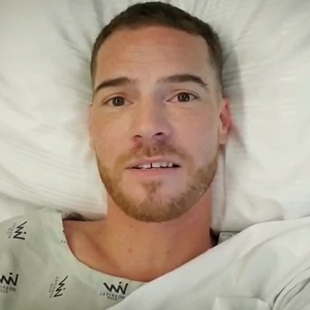
Robinson Trey hails from Georgia, Atlanta, in the US. He experienced extreme pain in the lower back, which extended down…

A USA resident, Mr James Evans 40Y/M, suffered from serious back pain. His doctor assisted him to get the spinal…
Sivas, a city located in central Turkey has an evolving healthcare infrastructure. Private, municipal, and academic hospitals and clinics are all available in the city. These facilities are equipped with modern medical devices to provide high-quality care and treatment. People seeking treatment in the city are required to have some form of insurance. The Turkish government has launched an insurance program called GSS (Genel Salk Sigortas). It is a universal healthcare system that covers parents and children irrespective of their socio-economic status. The doctors in Sivas are highly qualified and required to meet minimum standards before being authorized to practice. Though on the whole, Sivas’s healthcare system lags behind that of many Western European countries, it is progressing and expanding constantly. Some hospitals in the area have also achieved accreditation by JCI.
The hospitals in Sivas have modern infrastructure and consist of well-trained and qualified medical staff. Some of the top hospitals in Sivas are:
The doctors in Sivas are extremely skilled and competent. They have completed their training at some of the best institutes in the world. Some of the top doctors in Sivas are
Sivas is an easily reachable city by train, bus, and flight. The nearest airport to Sivas is the Sivas Nuri Demirag Airport from where you can travel to the city by bus or cab. If you are planning to undergo treatment here, MediGence can assist you in planning your medical travel.
Get your medical reports reviewed by experienced doctors to help you make a confident treatment decision, all online within 48 hours.
Upload Your Reports