A lumbar discectomy is a procedure where the surgeon removes the part of a lower back disc that’s irritating a nearby nerve. This nerve pressure often results in discomfort, tingling, or muscle weakness in the back or legs.
The procedure is done under general anaesthesia. A small incision is made in the back, and the surgeon gently moves soft tissues aside to reach the spine. The damaged or herniated section of the disc is then carefully taken out to ease nerve pressure.
This surgery is usually recommended when symptoms don’t improve with rest, medications, or physical therapy. It is effective in relieving leg pain (sciatica) and improving mobility.
Recovery is often quick, especially if a minimally invasive method is used. Most patients can start walking within a day and return to daily activities within a few weeks, depending on their progress.
- Persistent lower back pain
- Sharp, radiating leg pain (especially down one leg)
- Numbness, tingling, or weakness in the leg or foot
- Difficulty standing, walking, or performing daily activities
- Loss of bowel or bladder control (a medical emergency)
- Physical and neurological examination
- Imaging studies, such asan MRI or CT scan, to confirm disc herniation and its location
- Review of current medications, especially blood thinners, which may need to be temporarily stopped
- Fasting for 6–8 hours before the procedure
- Pre-surgical evaluation by your primary physician or anesthesiologist
- Discuss allergies, surgical expectations, and potential risks with your surgeon
- A small incision is made in the lower back over the affected disc.
- Muscles and tissues are gently moved aside to expose the vertebra.
- The surgeon removes a portion of the herniated disc that is compressing the nerve. In some cases, a small portion of bone (lamina) may also be removed to access the disc.
- The incision is closed with sutures or surgical glue.
- Infection
- Bleeding
- Nerve injury
- Spinal fluid leak
- Recurrent disc herniation
- Deep vein thrombosis (DVT)
- Reaction to anaesthesia
- In rare cases, persistent or worsening symptoms
- Rapid and often significant relief from leg pain (sciatica)
- Improved mobility and physical activity
- Minimally invasive techniques lead to quicker recovery
- Short hospital stay and early return to everyday life
- Reduced need for long-term pain medications
- Prevention of permanent nerve damage
- Patients are usually up and walking the same day
- Mild back or leg discomfort is normal and managed with pain medication
- Light activities can resume within 1 to 2 weeks
- Avoid bending, twisting, or lifting for at least 4–6 weeks
- Physical therapy may be advised to strengthen back muscles and improve posture
- Most people return to work in 2–6 weeks, depending on job type
- Follow-up appointments are essential to monitor recovery and detect recurrence
Would you like some help? We are available.
Get Help
Parkside Private Hospital
London, United Kingdom
Apart from in-detail treatment procedures available, Parkside Private Hospital located in London, United Kingdom has a wide variety of facilities available for International Patients. Some of the facilities which are provided by them are Accommodation, Airport Transfer, Choice of Meals, Interpreter, SIM, TV inside room. Also listed below are some of the most prominent infrastructural details:
- Patient bedrooms with ensuite facilities like TV, internet access, direct dial phone, etc.
- 4 Operating Rooms
- 69 registered beds
- 21 Outpatient Consulting rooms
- 4 minor procedure rooms
- 11-bed day unit
- Endoscopy suite
- Pathology Laboratory
- Pharmacy
- Cafeteria/Restaurant
- Car Parking

NMC As Salama Hospital
Al Khobar, Saudi Arabia

Apart from in-detail treatment procedures available, NMC As Salama Hospital located in Al Khobar, Saudi Arabia has a wide variety of facilities available for International Patients. Some of the facilities which are provided by them are Accommodation, Airport Transfer, Choice of Meals, Interpreter, SIM, TV inside room. Also listed below are some of the most prominent infrastructural details:
- Technology Advancement- Hospital has an ultrasound unit, a mammogram, a CT scan unit, and an X-ray imaging unit
- Laboratory
- 60 Private bedrooms
- Operating rooms
- Labor and Delivery Units
- Isolation rooms
- 2 Dental clinics
- Special Care Units
- 24*7 Emergency Services
- Intensive Care Unit
- Pharmacy
- Cafeteria

NMC Al Qadi Specialty Hospital
Najran, Saudi Arabia

Apart from in-detail treatment procedures available, NMC Al Qadi Specialty Hospital located in Najran, Saudi Arabia has a wide variety of facilities available for International Patients. Some of the facilities which are provided by them are Accommodation, Airport Transfer, Choice of Meals, Interpreter, SIM, TV inside room. Also listed below are some of the most prominent infrastructural details:
- 24*7 Emergency Services
- Intensive Care Unit
- Pharmacy
- Cafeteria
- Hospital can assist you with many lodging or suitable hotel facility

Guven Hospital
Ankara, Turkey

Started as a small hospital and has become a large general Hospital with-
- 254 beds
- 12 Operating rooms
- Staff of 1600 people including expert physicians, nurses, and auxiliary health personnel
- Guven Medical Surgical Centre
- IVF Centre
- Blood Bank
- Organ Transplant Centre
- Fully-equipped centres to perform various types of Surgeries
- Guven Healthy Living Campus for patients
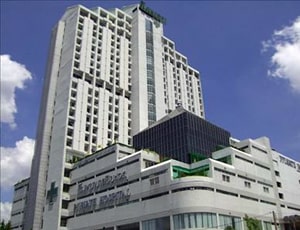
Piyavate Hospital
Bangkok, Thailand

Piyavate Hospital located in Bangkok, Thailand is accredited by JCI. Also listed below are some of the most prominent infrastructural details:
Medicine Centre: Piyavate Hospital provides advanced holistic treatment for their patients. They offer a complete range of services and physicians that specialize in various fields like the endocrine system, the nervous system, kidney function, cardiovascular care, respiratory and digestive system. They pride themselves for the familial care that they provide to their patients.
Fertility and In-Vitro Fertilization Centre: Helping the couples who walk into the Piyavate Hospital to achieve their dream of having a family. They have a medical team that specializes in male and female fertility. They offer consultation services, fertility check-up for both men and women and complete IVF services. They have advanced IVF cycle treatment facilities that offer a high rate of success.
Bone and Joint Institute: Piyavate Hospital houses one of the frontrunners in Orthopaedic health care in all of SouthEast Asia. They offer a wide range of services and surgeries in their bone and joint institute that include hand surgery, hip and knee replacement surgery, spinal cord surgery, upper extremity surgery, arthroscopic surgery and sports medicine.
Eye and Lasik Centre: Piyavate Hospital is fully equipped with the latest and most advanced technology for eye care and houses highly skilled ophthalmologists, sub-specialists and qualified nurses.
Physical Therapy and Rehabilitation Centre: One of the first hospitals to be equipped with the Hybrid Assistive Limb technology that will help a neurologically challenged patient to control the rehabilitation robot limb with a signal from their brain. The Physical Therapy and Rehabilitation Centre at Piyavate Hospital uses this system encourage patients to regain muscle memory to walk and function normally.
Amenities for Patient’s Family:
Piyavate Hospital also offers additional apartment facilities to house the kin of the patients who come to visit them from distant places. A restaurant, a flower shop and a café are a few of the other amenities provided by the hospital.
These are the most popular services offered by the Piyavate Hospital in Bangkok, Thailand. They also provide a plethora of other medical services that are listed below:
Diabetic Foot Centre
Check-up centre
Urology Centre
Heart Institute
Paediatric Centre
Obstetrics and Gynaecology Centre
Surgery Centre
Ear Nose Throat Centre
Haemodialysis Centre
Dental Centre
X-Ray Centre
Gastroenterology Centre
Cancer Centre
Neonatal Intensive Care Unit (NICU)
Emergency Services and Centre
Tele-medicine

Dr. Rela Institute and Medical Centre
Chennai, India


The mega-structure of RIMC serves as a hospital as well as an educational institute. Hence, it offers a huge array of medical services and facilities to cater to the needs of its patients.
Fertility Services - RIMC specializes in both male and female fertility and in procedures like IntraCytoplasmic Sperm Injection (ICSI), Uterine Transplants, Preimplantation genetics and Laser Assisted Hatching (LAH).
Anaesthesia and ICU - The ICU rooms in RIMC are equipped to serve the individual needs of every patient. They boast the largest liver transplant ICU in India and a specific ICU dedicated to pediatrics multi-organ transplants.
Radiology and Imaging Sciences - RIMC has the infrastructure to support high-quality scans including 128 Slice CT, Cardiac MRI, and 3 Tesla MRIs.
Blood Bank and Transfusion Medicine - RIMC has an active blood bank system with facilities dedicated to Blood Component Separation and Therapy. They use high-end technology like the Automated 1H500 Analyser and have a separate Therapeutic Apheresis Unit.
Advanced Endoscopy - Dr. Rela Institute and Medical Centre has one of the most advanced hospital facilities with an individual healthcare unit specifically dedicated to Endoscopy. Advanced procedures like Spyglass Cholangioscopy, Laser therapy, Endoscopic Ultrasound, Capsule Endoscopy, and special ERCP and EUS Suite.
Some of the other healthcare facilities, departments, and services offered by Dr. Rela Institute and Medical Healthcare are listed below:
- Orthopaedics
- Obstetrics and Gynaecology
- Reproductive Medicine
- Hepatology
- Cardiology
- Internal Medicine and Diabetology
- Advanced Paediatrics
- Ear Nose and Throat
- Emergency Medicine
- Interventional Radiology and Imaging Services
- Neonatology
- Neurology
- Liver Disease and Transplantation
- Gastroenterology
- Medical Oncology
- Nephrology
- Neonatology
- Pathology
- Ophthalmology
- Plastic and Reconstructive Surgery
- Radiation Oncology
- Pulmonary Medicine
- Urology
- Surgical Oncology
- Transfusion Medicine
Apart from these facilities, Dr. Rela Institute and Medical Centre also have a preventive health check lounge, 72 consultation suites, and 360 degrees including lab facilities specifically for outpatients.
Visit Dr. Rela Institute and Medical Centre in Chromepet, Chennai today and find the best care for you and your loved ones.
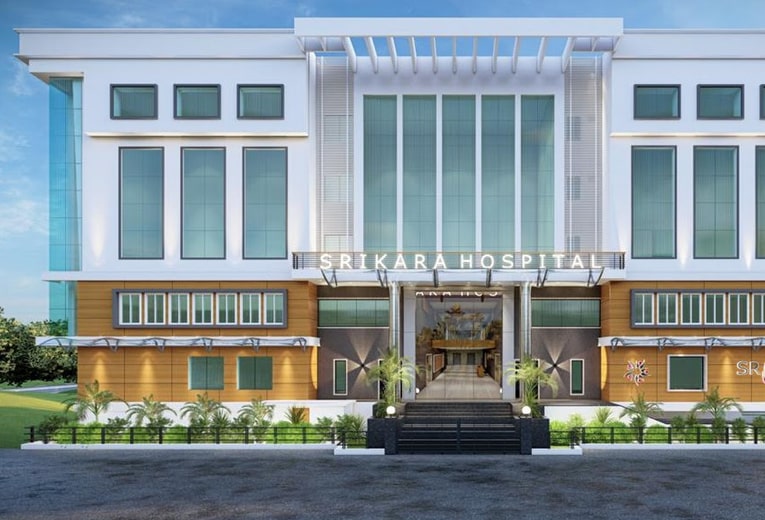
Srikara Hospital, RTC Cross Roads
Hyderabad, India
Srikara Group of Hospitals is an 850-Bedded Tertiary Care healthcare facility, spread over 7 branches and two states in Southern India. 6 out of these 7 branches are situated in the twin city of Hyderabad- Secunderabad and 1 branch is at Vijayawada, Andhra Pradesh. As the ultimate combination of benefits a hospital can provide, Srikara Ortho & Multi-Specialty Hospitals represents the infusion of quality, knowledge, technical proficiency, international standards, compassion, and reasonably priced care. Srikara Hospital is known for its excellence in Orthopedic as well as Neuro-Spine Surgeries. With top-of-the-chart technical proficiency, quality, and skills; Srikara is the destination of choice for patients from not only India but across the globe. Srikara Hospitals are the pioneers in doing Robotics-assisted Joint Replacements in Southern India. These hospitals have been using technologies like Computer Navigation and I-Suite theaters since their inception. Three of its 7 branches offer minimally Invasive Spine surgeries done with the use of top quality Operating microscopes. For patients from other countries seeking treatment at its facilities, Srikara has established a separate unit. By partnering with hospitals and institutions that share its commitment to and passion for ‘Patient Care’, it now hopes to expand its surgical expertise throughout the country and the world.
International quality care at affordable prices is what the Srikara Group of Hospitals strives for. The quality & compassion in care can be bought in only by the human skills behind world-class technology. Rich in human skills & experience, the team of doctors at Srikara Hospitals is decorated with a collective experience of more than 23000 Knee Replacement Surgeries over a period of two decades. 5000+ of these Knee Replacements were Robotic-assisted Knee Replacement surgeries. The team of surgeons and the Sports Medicine Unit at SRIKARA Group of Hospitals hold experience in doing more than 5500 Knee Ligament surgeries. The team of Neuro-spine surgeons holds a collective experience of 11+ years and offers various surgical remedies with and without the assistance of an Operating Microscope. Srikara Group of Hospitals offers a wide array of specialties like Orthopaedics, Neuro-spine, Urology, Laparoscopy, Cardiology, Cosmetic Surgery, etc. with the help of nationally and internationally acclaimed doctors.
To expand their healthcare services globally and for the ease of their patients, the doctors at Srikara Group of Hospitals are also providing Online Consultations to individuals who are unable to visit in person but are in need of medical attention. Srikara Group of Hospitals looks forward to continuing to cater to its domestic as well as overseas patients with compassion and evidence-based healthcare services. All the hospitals of Srikara Group are built in accordance to provide relaxing, serene surroundings, greenery, and a hygienic setting to the patients & visitors. With a large influx of people seeking the best care and facilities in Hyderabad, it is well renowned for its dedication to providing unique and evidence-based healthcare services.

netcare Linksfield Hospital
Johannesburg, South Africa

Apart from in-detail treatment procedures available, Netcare Linksfield Hospital located in Johannesburg, South Africa has a wide variety of facilities available for International Patients. Some of the facilities which are provided by them are Accommodation, Airport Transfer, Choice of Meals, Interpreter. Also listed below are some of the most prominent infrastructural details:
- Orthopedic Unit with biokinetic center (14 orthopedic surgeons)
- Cardiology Unit with interventional catheterisation laboratory and dedicated cardiac theatre (specialist cardiologists and cardiothoracic surgeons)
- Head and Neck Unit for Holistic Treatment (comprised of ENT and maxillo-facial specialists, radiologists, oncologist and a dietician)
- Clinical Decision
- Intensive Care Unit
- Discharge lounge
- Support Care Ward
- Cardiac and Laminar theatres
- Renal Dialysis Unit
- Cardiac Catheterisation Laboratory
- Sports Orthopedic Center
- Cochlear implant center
- Sports Orthopaedic Center
- Sleep Laboratory
- 24-hour Emergency Department with accredited level 3 Trauma unit
- In-house Pharmacy

Apollo Hospitals Bannerghatta
Bangalore, India
Apollo Hospitals Bannerghatta located in Bengaluru, India is accredited by JCI, NABH. Also listed below are some of the most prominent infrastructural details:
- Bed Capacity is 250
- Largest and most sophisticated sleep laboratory in the world
- Technological powerhouse with latest equipments
- 120 slice CT angiogram
- 3 Tesla MRI
- Low energy & High energy Linear Accelerators
- Navigation System in surgical procedures
- 4-D Ultrasound for 4 dimensional sonography
- Digital Fluoroscopy
- Gamma Camera
- Stereotactic Robotic Radio- surgery
- Autologous Bone Marrow Transplantation
- Robotic assisted surgeries
- Thallium Laser-First in India
- Holmium Laser-First in South India
- Digital X-Ray-First in Karnataka
- 100 plus consultants
- Uses Y shaped stent for tracheoesophageal fistula
- Four autologous chondrocyte implantations procedure is performed and several more like Spinal angiolipoma excision, Tibial tuberosity shift with MPSL reconstruction
- Biggest series of airway stents in India
- The Minimal Access Surgery Centre (MASC) centre of excellence

Sarvodaya Hospital and Research Centre
Faridabad, India
Sarvodaya Hospital and Research Centre located in Faridabad, India is accredited by NABH, NABL. Also listed below are some of the most prominent infrastructural details:
- Sarvodaya Hospital has a 500 bed capacity which is inclusive of 65 ICU beds.
- A dedicated dialysis unit for people with kidney conditions.
- The hospital has a cancer center which makes cancer treatment a seamless process.
- There is an upcoming oncology center in Sarvodaya Hospital Faridabad.
- Technologies such as 128 Slice CT scan, 500 MA X-Ray, 1.5 Tesla MRI and Mammography facility.
Need Some Advice From Our Experts?
Request a Call Back Now!
Our team of healthcare experts would be happy to assist you

 +99
+99Process Involved for Lumbar Discectomy
- Initial Consultation: The doctor reviews symptoms, performs a physical examination, and may order imaging tests, such as MRI or CT scans, to further assess the condition.
- Diagnosis and Surgical Planning: Once the disc issue is confirmed, the medical team decides if surgery is necessary and outlines the best approach.
- Preoperative Preparation: Basic blood work, anaesthesia assessment, and pre-surgery instructions are given to prepare the patient for the procedure.
- Surgical Procedure: The surgeon removes the portion of the disc pressing on the nerve through either open or minimally invasive techniques.
- Immediate Postoperative Care: The patient is monitored for several hours to ensure vital signs are stable and pain is effectively managed.
- Rehabilitation and Recovery: Light activity and physiotherapy begin within days to restore mobility and strength.
- Follow-up and Long-Term Care: Regular check-ups help track recovery progress and ensure the patient returns to normal activities safely and securely.
- Bulging or Herniated Disc: A portion of the spinal disc protrudes, putting pressure on nearby nerves and causing discomfort or weakness.
- Sciatic Nerve Pain: Pain that radiates from the lower back down the leg due to nerve compression, often associated with disc herniation or other issues.
- Nerve Root Compression: When spinal nerves in the lower back become irritated or squeezed, causing pain, tingling, or numbness.
- Disc Degeneration: Age-related disc wear can cause spinal instability or nerve irritation, which may require surgical relief.
- Slipped Disc: A displaced disc that presses on spinal nerves and does not improve with non-surgical treatments.
- Persistent Symptoms After Non-Surgical Care: When physiotherapy, medication, or rest fail to reduce symptoms, surgery may become necessary.
- Clinical Assessment and Imaging: The doctor examines the patient and confirms the disc issue using diagnostic tools such as MRI, CT scans, or X-rays.
- Preparation Before Surgery: Routine blood tests and anaesthesia evaluations are performed, and the patient receives instructions on fasting and medication management.
- Giving Anaesthesia: General anaesthesia is administered to ensure the patient is asleep and doesn’t feel pain during the procedure.
- Making the Incision: A small incision is made in the lower back, and the surrounding muscles are gently moved aside to reach the spine.
- Removing the Disc Material: The surgeon carefully removes the portion of the disc that is compressing the nerve, helping to reduce pain and restore mobility.
- Closing the Wound: Once the procedure is complete, the area is cleaned and closed with stitches or staples. A dressing is applied to protect the site.
- Post-Surgical Recovery: The patient is monitored as they wake up from anaesthesia. Most people are encouraged to move around within a few hours.
- Craniotomy
- Laminectomy
- Microdiscectomy
- Fusion
- Laminotomy
- Foraminotomy
- Myelogram
- Electromyography
- Neurostimulation
- Arthrodesis
- Decompression
- Neuroplasty
- Rehydration
- Bracing
- Thermocoagulation
- Pain Relief: Relieves pressure on the spinal nerve, helping to reduce or eliminate leg and lower back pain.
- Improved Mobility: Patients often experience better movement and flexibility after recovery.
- Quick Recovery: Minimally invasive techniques allow a faster return to daily activities.
- Prevents Further Nerve Damage: Early intervention can prevent worsening symptoms, such as numbness or weakness.
- Outpatient Possibility: In many cases, patients can be discharged the same day or within 24 hours.
- Improved Quality of Life: Reduced pain and improved mobility lead to enhanced sleep, mood, and overall daily functioning.
- Minimally Invasive Options Available: Smaller incisions result in less scarring, a reduced risk of infection, and a smoother recovery process.
- Please complete the form to provide us with relevant information about your condition.
- Consult with Our Healthcare Expert: One of our qualified specialists will contact you for a consultation.
- Receive a Detailed Treatment Plan: After examining your situation, we will provide you with a detailed treatment plan that includes expert opinions and a cost breakdown for various options.
- Select your preferred option: Choose the therapy option that best suits your needs.
- Seamless Organisation: We will manage all the details, including visas, flights, accommodations, and transfers, for a stress-free journey.


