Your Notifications
All done, no notifications

Endovascular surgery for AVM Cost in Bangkok

Costs starts from USD20000 to USD38000
Filters

Cost of Endovascular surgery for AVM in Major cities of Thailand

CityMinimum Cost (USD)Minimum Cost (THB)Maximum Cost (USD)Maximum Cost (THB)
BangkokUSD 20000654200USD 380001242980
KrabiUSD 18000588780USD 342001118682

Need Help Planning Your Treatment Abroad?

Your 24/7 AI Health Assistant

Inside your body, blood flows through tiny tubes called blood vessels. Sometimes, these tubes get all twisted and messy in one spot — that’s called an AVM, or Arteriovenous Malformation. It can cause problems, such as headaches or even bleeding, if not treated.

To fix it, doctors use a special method called Endovascular Embolisation. This method repairs the AVM from within the body, eliminating the need for large incisions.

First, the doctor helps you fall asleep so you won’t feel anything. Then, they gently slide a soft, thin tube into a blood vessel, usually in your leg. Using pictures on a screen, they guide the tube to the location of the AVM.

When the tube is in the correct position, the doctor inserts a small amount of special material, such as glue or soft plugs, to block the twisted vessels. This prevents blood from flowing in the wrong direction and helps prevent further complications. Once the AVM is blocked off, the doctor slowly removes the tube, and you rest in the hospital to recover.

This way, your blood flows more efficiently, and the risk of serious issues, such as bleeding, decreases.

Endovascular surgery for AVM is performed to reduce or eliminate abnormal blood flow between arteries and veins in the brain or spinal cord.AVMs can cause bleeding (hemorrhage), seizures, neurological deficits, or chronic headaches.This minimally invasive approach blocks the AVM from within the blood vessels, reducing rupture risk and stabilizing symptoms.

Consult a neurologist or neurosurgeon if you experience sudden severe headaches, seizures, blurred vision, weakness, or numbness, which may indicate a cerebral AVM.Even asymptomatic AVMs discovered incidentally on imaging (MRI/CT) may require evaluation.If the AVM poses a high risk of bleeding or grows, intervention is usually recommended.

Diagnosis is confirmed with cerebral angiography, MRI, or CT scan to map the AVM's size, location, and blood supply.Patients undergo blood tests, cardiac clearance, and must avoid blood thinners before the procedure.A detailed preoperative plan is created to decide whether endovascular embolization will be standalone or followed by surgery/radiosurgery.

Performed under general anesthesia, a catheter is inserted through the femoral artery (groin) and guided up to the brain vessels.Liquid embolic agents (e.g., Onyx, NBCA) or coils are injected into the AVM’s feeding arteries to block abnormal blood flow.The procedure may be done in one or multiple stages depending on AVM complexity and location.

Endovascular embolization typically takes 2 to 4 hours.Hospital stay is 1 to 3 days, depending on the patient’s condition and whether further treatment (surgery or radiosurgery) is needed.Recovery is usually rapid with minimal pain.

  • Stroke or transient ischemic attack (due to clot or vessel spasm)
  • Vessel perforation or bleeding
  • Headache, nausea, or temporary neurological symptoms
  • AVM recurrence or incomplete obliteration
  • Allergic reaction to contrast dye (rare)
Choosing an experienced interventional neuroradiologist minimizes risks significantly.

  • Minimally invasive and performed through a small catheter — no large incision
  • Reduces AVM size or bleeding risk prior to surgery or stereotactic radiosurgery
  • Can relieve symptoms like headaches or seizures
  • Suitable for deep-seated or surgically inaccessible AVMs
  • Often used as part of a multimodal AVM treatment plan

Patients are observed in ICU for 12–24 hours post-procedure for neurological monitoring.Most return to normal activities within 3–7 days, barring complications.Follow-up imaging (MRI or angiography) is done to assess AVM closure and plan further treatment if needed.

The success rate of partial or complete embolization of AVMs ranges from 70–90%, depending on size and vascular structure.When combined with radiosurgery or open surgery, cure rates exceed 90% in many cases.Recurrence is rare if the AVM is fully obliterated, and long-term outcomes are excellent with proper follow-up.

Would you like some help? We are available.

Get Help
Explore Hospitals ( 6 )
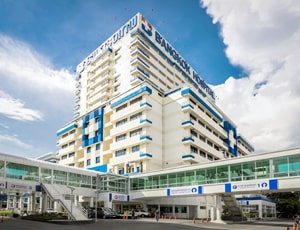
Endovascular surgery for AVM in Bangkok Hospital: Costs, Top Doctors, and Reviews

Bangkok, Thailand

  • Joint Commission International, or JCI

Bangkok Hospital located in Bangkok, Thailand is accredited by JCI. Also listed below are some of the most prominent infrastructural details:

  • It is recognised for the application of the newest healthcare technology.
  • Blood analysis center that is not just the best in Thailand but in Asia Pacific as well.
  • Biomolecule center that is the seed of healthcare equipment for Thailand and overseas.
  • International affiliations and collaborations with universities and hospitals in Japan and the United States of America.
  • 11 hospitals are recognised as Centers of Excellence.
  • Known excellence in Trauma, Orthopedics, Cardiovascular, Neurology as well as Cancer Care.
  • There is a proper streamlined patient services process followed in Bangkok Dusit Medical Services, Bangkok, Thailand.
  • A well developed research center showcases the intent of the organisation to provide research based treatment opportunities to the patients.
  • The group has several Medical industry partnerships as well to ensure healthcare solutions.
Endovascular surgery for AVM in Bangpakok 9 International Hospital: Costs, Top Doctors, and Reviews

Bangkok, Thailand

  • Joint Commission International, or JCI

Bangpakok 9 International Hospital located in Bangkok, Thailand is accredited by JCI. Also listed below are some of the most prominent infrastructural details:

  • It would be prudent to summarise the Medical Services provided at the Bangpakok 9 International Hospital (BPK 9), Bangkok, Thailand:
  • Cosmetic Dentistry
  • Dental Implants
  • Electrocardiogram (EKG or ECG)
  • Exercise Stress Test
  • Health Screening
  • Laser Vagina Firming
  • Pediatric Physical Therapy
  • Perfect Slim by Vela II
  • Physical Therapy for Musculoskeletal
  • Prosthodontics
  • The Medical Services are also inclusive of the International Patient Services such as the ones listed here:
  • Thai, English, French, Arabic, Chinese, Myanmar, Cambodia, Bangladeshi, Bahasa and Tagalog are the languages in which there are Translation services available for International Patients.
  • Visa extension related assistance
  • International health insurance related assistance
  • Embassy and international organizations related assistance
  • A variety of meals of choice for International Patients
  • Email consultation services
  • Transfer to either airport and/or hotels
  • Prayer room
  • Four different types of rooms are available such as Deluxe room, two kinds of suites, and a VIP suite.
  • Hospital facilities like The Coffee shop, Food Hall, Cafe and Medical Spa.
  • Complete health and safety protocols are maintained in the various Medical Centers some of whom are as follows:
  • Aesthetic Center
  • 24 Hour Emergency Center
  • Allergy Center
  • Breast Center
  • bSmart Center
  • Checkup Center
  • Dental Center,
  • Happy Long Life Center
  • Medical Fitness Center
  • Psychiatric Center
  • Rehabilitation Center
  • Sleep Disorders Center
Endovascular surgery for AVM in Phyathai 2 International Hospital: Costs, Top Doctors, and Reviews

Bangkok, Thailand

  • Joint Commission International, or JCI

Phyathai 2 International Hospital located in Bangkok, Thailand is accredited by JCI. Also listed below are some of the most prominent infrastructural details:

  • Fully equipped rooms are available for convenience of the patients- Gold B Room, Gold A Room, Pediatric Gold A, Platinum room, and Prestige ward
  • Nearby accommodations are also available- Abloom Service Apartments, Bangkok Patio, VIB Best Western Sanam Pao, VIC3 Hotel
  • Operating room
  • International Patient Medical Center to assist overseas patients
Endovascular surgery for AVM in Sikarin Hospital: Costs, Top Doctors, and Reviews

Bangkok, Thailand

  • Joint Commission International, or JCI

Apart from in-detail treatment procedures available, Sikarin Hospital located in Bangkok, Thailand has a wide variety of facilities available for International Patients. Some of the facilities which are provided by them are Airport Transfer, Choice of Meals, Interpreter, SIM, TV inside room. Also listed below are some of the most prominent infrastructural details:

  • Sikarin Hospital has a 258-bed capacity.
  • The hospital caters to the healthcare needs of both local and international patients.
  • Dedicated and skilled, experienced healthcare professionals are the strength of the organization.

It has also received many awards and certifications and some of them are:

  • APSIC CSSD Center of Excellence Award (2017-18)
  • Accreditation by the Joint Commission International
  • HA-Hospital/Healthcare Accreditation
  • HACCP Certificate of Registration
  • The Best Under a Billion Award 
  • ISO 14001 Environment Management System
  • ISO 9001 Quality Management System

The various clinics and centers of Sikarin Hospital are as follows:

  • Pediatric Institute
  • Orthopedic Institute
  • Dental Center
  • Health Check-up Center
  • Heart Disease Center
  • Cerebral and Nervous System Center
  • Internal Medicine Clinic
  • Diagnostic Radiology Center
  • Diagnostic Laboratory
  • Endoscopic Surgery Center
  • International Medical Center
  • Emergency Medical Center
  • Sikarin Beauty Center
  • Eye Center
  • Rehabilitation Center
  • Women’s Health Center
  • Ear, Nose and Throat Center
  • Specialized Internal Medicine Center
  • Center for Gastrointestinal and Liver Diseases

The medical technology present in Sikarin Hospital is outlined here:

  • MRI (Magnetic Resonance Imaging) magnetic resonance imaging
  • Hybrid Operating Room
  • Endoscopic Surgery - Gastrointestinal medical technology with tiny capsules
  • S.R. Laboratory
  • Cardiac Catheterization Lab 
  • Dental Operating Microscope, an innovative endoscopic root canal treatment
  • 128-Slice CT Scan
  • ORTHOPANTOMOGRAPH OP 3D oral X-ray machine
  • Digital Mammogram
  • Optical Coherence Tomography
  • INFRARED (IR) IMAGING Surgical Technology “Cure Cancer” – Direct, Accurate, Fast
  • 3D endoscopic surgery technology
  • Laparoscopic Surgery
  • Dental Aerosol Suction Dental Intraoral Aerosol Remover
  • Comprehensive Dental Center
  • iTeroElement 5D
Endovascular surgery for AVM in Kasemrad Ramkhamhaeng Hospital: Costs, Top Doctors, and Reviews

Bangkok, Thailand

  • Joint Commission International, or JCI

Apart from in-detail treatment procedures available, Kasemrad Ramkhamhaeng Hospital located in Bangkok, Thailand has a wide variety of facilities available for International Patients. Some of the facilities which are provided by them are Accommodation, Airport Transfer, Choice of Meals, Interpreter, SIM, TV inside room. Also listed below are some of the most prominent infrastructural details:

  • Initially started with 1.5 acres of land and expanded to 3.5 acres
  • 139 beds, 39 Examination Rooms
  • 13 Specialties Departments/Centers
  • 24*7 Emergency Department
  • Accommodation facilities are available- VIP rooms, Single special room, 6-bed dormitory, baby room
Endovascular surgery for AVM in MALI Interdisciplinary Hospital: Costs, Top Doctors, and Reviews

Bangkok, Thailand

  • National Accreditation Board for Hospitals & Healthcare Providers (NABH)
  • Joint Commission International, or JCI

MALI Interdisciplinary Hospital located in Bangkok, Thailand is accredited by JCI. Also listed below are some of the most prominent infrastructural details:

  • Operating Room
  • X-Ray Department
  • Laboratory
  • Inpatient Department
  • Emergency Department

Need Some Advice From Our Experts?

Request a Call Back Now!

Our team of healthcare experts would be happy to assist you

trusted Patientstrusted Patients+99
Trusted by 50000+ Patients
Required | alphabets and spaces
Required | A valid, working email address
Required | A valid contact

Process Involved for Endovascular surgery for AVM in Bangkok

  • Initial Evaluation: Doctors review medical history and symptoms.
  • Imaging tests, such as MRI, CT, or angiography, are used to locate the AVM.
  • Preoperative Preparation: Fasting, consent, and planning for anaesthesia.
  • Procedure Day: A catheter is inserted through the groin and guided to the AVM.
  • Embolisation: Special material is injected to block the abnormal vessels.
  • Recovery Room: The patient is monitored after the procedure to ensure their safety.
  • Hospital Stay: A short stay is required to check for complications.
  • Follow-up Care: Regular checkups and imaging to ensure success.
  • Brain AVMs: Block abnormal blood flow in tangled brain vessels.
  • Spinal AVMs: Fix faulty blood vessels within the spinal area.
  • Bleeding AVMs: Helps control and stop bleeding from the AVM.
  • Non-bleeding AVMs: treated early to reduce the risk of future bleeding.
  • Deep or risky AVMs: Used when surgery is too dangerous.
  • Seizure-linked AVMs: Helps alleviate seizures associated with blood flow issues.
  • AVMs near key brain parts: Safely targets AVMs near areas that control body functions.
  • AVMs causing swelling: Treats pressure or pain from an enlarged AVM.
  • Patient Preparation: The person is given anaesthesia so they feel no pain and stay relaxed.
  • Catheter Insertion: A narrow, bendable tube is carefully placed into a blood vessel, usually through the upper thigh
  • Guiding the Tube: Doctors use special X-ray tools to move the tube through the body toward the AVM.
  • Blocking the Vessels: A special glue-like material or small particles are sent through the tube to block the abnormal blood flow.
  • Checking the Result: Imaging is performed immediately to determine if the AVM has been successfully sealed.
  • Removing the Tube: The tube is slowly removed once the job is complete.
  • Watching the Patient: The patient is closely monitored during recovery to ensure their well-being and overall health.
  • Follow-up: Doctors check in later with scans and visits to ensure the AVM remains closed.
  • Craniotomy
  • Radiosurgery
  • Angiography
  • Coiling
  • Stenting
  • Thrombectomy
  • Catheterisation
  • Fluoroscopy
  • Embolisation
  • Microsurgery
  • The treatment does not require cutting open the head.
  • Patients often go home within a couple of days.
  • Recovery is quicker compared to traditional surgery.
  • There is usually little to no pain after the procedure.
  • It can stop bleeding from the abnormal blood vessels.
  • The tangled blood vessels can shrink or close off.
  • Sometimes it helps prepare the AVM for another type of treatment.
  • The risk of infection is low.
False
  • Please complete the form to provide us with relevant information about your condition.
  • Consult with Our Healthcare Expert: One of our qualified specialists will contact you for a consultation.
  • Receive a Detailed Treatment Plan: After examining your situation, we will provide you with a detailed treatment plan that includes expert opinions and a cost breakdown for various options.
  • Select your preferred option: Choose the therapy option that best suits your needs.
  • Seamless Organisation: We will manage all the details, including visas, flights, accommodations, and transfers, for a stress-free journey.

Instantly Connect with our Endovascular surgery for AVM Specialists

Doctor 1
Doctor 2
Doctor 3
Doctor 4
Doctor 5
Doctor 6
Doctor 7
Doctor 8
Our Services to Better your Experience

Opinion & Option

We submit the most accurate opinion and options from one or more countries for your review

Consult Privately

Consult with a certified specialist privately on our telemedicine platform even before you decide to travel

Logistics

We handle flights, visas, transfers, and accommodation—so you can focus on your health.

Recovery

Our In-house rehabilitation service packages to better your recovery and treatment outcome

Other Popular Countries for Endovascular surgery for AVM

Our network connects you with the leading medical tourism destinations globally, offering a wide range of cities, top doctors, and flexible pricing options.

Turkey
United Kingdom
Vietnam
Spain

Frequently Asked Questions

Factors that raise the risk of Endovascular embolisation of AVM

  • Deep and infratentorial AVMs are especially risky to access with catheters.
  • Small AVMs in critical brain areas bleed more easily.
  • Aggressive blockage strategies (large volume, many feeders at once) can cause haemorrhage.
  • Not managing blood pressure after the procedure adds risk.

Clinical outcomes from tertiary centres in Thailand indicate that approximately 30–70% of brain AVMs achieve complete vascular occlusion following endovascular embolisation. Procedure-related complications are reported in 5–15%, with permanent neurological deficits typically under 5%.

Vejthani Hospital and Bangkok Hospital in Bangkok offer comprehensive treatment options for brain AVMs through endovascular techniques.

The following are the precautions to take after endovascular Embolisation of AVMs in Thailand :

  • Bed‑rest
  • Flat positioning
  • BP lowering
  • Neurological monitoring
  • Inspect puncture site
  • Renal monitoring

Author

Tanya Bose

MSc Biotechnology

2.5 Years of Experience

Tanya Bose is a medical content specialist with a strong medical background. She has completed her Bachelor's and Master’s in Biotechnology from Amity University. With a deep understanding of biomedical sciences and research, she develops authoritative and patient-focused medical content covering treatments, surgical procedures, and healthcare innovations. Her writing emphasizes accuracy, clarity, and evidence-based information to help readers better understand complex medical topics. She is dedicated to improving patient awareness and supporting informed healthcare decisions by delivering trustworthy medical insights in a clear and accessible format. . View More

Reviewer

⁠Dr Rakesh Kumar Dua

Spine & Neurosurgeon

25 Years of Experience

Dr. Rakesh Dua has more than 25+ years of clinical experience in spine surgeries. He is currently providing his services as Director, Neuro & Spine Surgery at Fortis Hospital, Shalimar Bagh. Before joining Fortis Hospital, he was associated with Max super-specialist Hospital, Shalimar Bagh as Director Neurosurgery & Head Neuro Spine, and with UCMS & GTB hospital as head of the neurosurgery department. View More