Your Notifications
All done, no notifications

Endoscopic Third Ventriculostomy Cost in Tunisia

Costs starts from USD2000 to USD5000
Filters

How Much Does Endoscopic Third Ventriculostomy Cost in Tunisia?

The cost of Endoscopic Third Ventriculostomy in Tunisia is USD 2000 - USD 5000

Additionally, factors like the duration of treatment, the need for follow-up care, and the use of advanced technologies or specialized treatments can further influence the overall cost.

Factors Influencing the Cost of Endoscopic Third Ventriculostomy:

Endoscopic third ventriculostomy is a surgery technique that is used in the management of obstructive hydrocephalus, which is a condition in which there is an accumulation of cerebrospinal fluid in the brain as a result of blockage. To perform the procedure, the patient has to be prepared for surgery by making a small incision and then an endoscope is used to make an opening in the floor of the third ventricle so that the CSF can go around this blockage and reduce pressure from the brain.

ETV is often done on patients with normal-pressure hydrocephalus due to stroke, head injury, or subarachnoid hemorrhage. This technique has several advantages over the placement of a shunt: it is less likely to become infected; there is no need to implant a permanent shunt; and the patient will recover more rapidly.

However, the procedure is not risk-free; cerebral infection, hemorrhage, leakage of cerebrospinal fluid, or injury to the surrounding brain matter may occur. However, there are certain specific risks involved in the procedure, and yet ETV boasts of a high success rate and therefore it should be considered as a valuable modality of treatment for hydrocephalus.

Cost of Endoscopic Third Ventriculostomy in Major Cities of Tunisia

CityMinimum Cost (USD)Minimum Cost (TND)Maximum Cost (USD)Maximum Cost (TND)
Ez ZahraUSD 18005364USD 450013410
MonastirUSD 18005364USD 450013410
TunisUSD 20005960USD 500014900

Endoscopic Third Ventriculostomy Cost : A Global Comparison

CountryMinimum CostMinimum Local CurrencyMaximum CostMaximum Local Currency
IndiaUSD 5100INR 436764USD 7100INR 608044
LithuaniaUSD 2000LTL 6841USD 5000LTL 17104
MalaysiaUSD 10000MYR 42400USD 20000MYR 84800
Moroccoget request
PolandUSD 5000PLN 18800USD 10000PLN 37600
Saudi ArabiaUSD 10000SAR 37500USD 20000SAR 75000
SingaporeUSD 10000SGD 12900USD 20000SGD 25800
SpainUSD 10000ESP 1470399USD 25000ESP 3675997
ThailandUSD 12000THB 392520USD 35000THB 1144850
TunisiaUSD 2000TND 5960USD 5000TND 14900
TurkeyUSD 10000TRY 390600USD 25000TRY 976500
United Arab EmiratesUSD 10000AED 36700USD 20000AED 73400
United KingdomUSD 6500GBP 4810USD 19500GBP 14430

Need Help Planning Your Treatment Abroad?

Your 24/7 AI Health Assistant

Endoscopic third ventriculostomy (ETV) is a surgical procedure used to treat obstructive hydrocephalus, a condition characterized by the accumulation of cerebrospinal fluid (CSF) in the brain. CSF is produced in the ventricular system of the brain, which consists of four cavities - two lateral ventricles, the third ventricle, and the fourth ventricle - interconnected by channels.

The third ventricle, situated centrally above the base of the skull, plays a crucial role in CSF circulation. In cases of obstructive hydrocephalus, CSF flow is impeded due to blockage, often occurring at the passage between the third and fourth ventricles, known as the cerebral aqueduct.

ETV involves creating a new pathway for CSF to bypass the blockage by making a small hole in the floor of the third ventricle using an endoscope. This allows CSF to flow directly into the subarachnoid space surrounding the brain, relieving pressure and reducing ventricle enlargement.

Classification:

Based on the Underlying Cause of Hydrocephalus

  • Congenital Obstructive Hydrocephalus
  • Acquired Obstructive Hydrocephalus

Based on Patient Demographics

  • Pediatric ETV
  • Adult ETV
  • Standard ETV

Based on the Surgical Approach

  • Flexible Endoscope ETV
  • Rigid Endoscope ETV

Hydrocephalus is treated via endoscopic third ventriculostomy (ETV), which removes the brain's excess cerebrospinal fluid (CSF) accumulation. The ETV makes a tiny hole in the third ventricle's floor to allow CSF to flow in a new direction, aiding in pressure reduction without using a shunt.

In order to evaluate your general health and comprehend your symptoms, your surgeon will perform a physical examination and prescribe tests prior to a ventriculostomy. The surgery will be planned based on imaging and test findings. Following surgery, you might need to make arrangements for assistance at home, finish more testing, and modify your medication. During your pre-surgery examination, make sure to ask your care team any questions you may have.

Your surgeon will plan a ventriculostomy by performing a physical examination and reviewing imaging studies. You may need to stop taking certain medications, taking antibiotics, and taking additional tests. Making arrangements for assistance at home following surgery is also crucial.

After making a tiny incision, a surgeon inserts an endoscope—a thin, flexible tube with a light and camera on the end—into the bottom of your third ventricle. Because of its central placement, the third ventricle is simple to reach and see. The opening allows your body to drain into the surrounding tissue to reabsorb the CSF.

Depending on the complexity and urgency of the case, a ventriculostomy procedure usually takes 20 to 45 minutes.

  • The catheter or surgical site can become infected
  • Bleeding at the catheter insertion site
  • Brain damage or stroke may occur if the catheter is placed poorly
  • A blocked or dislodged catheter prevents proper drainage of cerebrospinal fluid
  • Over-drainage or under-drainage may lead to collapse

  • Relieves pressure on the brain
  • Enables CSF drainage

After a ventriculostomy, post-operative recovery usually requires careful observation in an intensive care unit (ICU). Medical professionals examine for infection or complications, evaluate the drainage system, and monitor intracranial pressure. The underlying disease determines the recovery time; however, most patients need to stay in the hospital for several days and may require follow-up imaging or additional treatment.

Endoscopic Third Ventriculostomy (ETV) has a success rate of approximately 74.7% in adults, while some studies have found success rates as high as 87%.

Would you like some help? We are available.

Get Help
Explore Hospitals ( 3 )
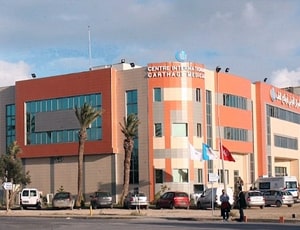
Endoscopic Third Ventriculostomy in Carthage International Medical Center: Costs, Top Doctors, and Reviews

Monastir, Tunisia

  • Joint Commission International, or JCI

Apart from in-detail treatment procedures available, Carthage International Medical Center located in Monastir, Tunisia has a wide variety of facilities available for International Patients. Some of the facilities which are provided by them are Accommodation, Airport Transfer, Choice of Meals, Interpreter, SIM, TV inside room. Also listed below are some of the most prominent infrastructural details:

  • The Hospital covers an area of about 15,000 sqm with a capacity of about 133 beds
  • Standard Rooms & Suites facility is available in order to give them physical and psychological comfort to the patients
  • Furthermore, the rooms are equipped with plasterboard partitions for optimum sound and thermal comfort, individual bathrooms, a television with satellite reception, and a fire door, etc.
  • Ambulance of the Hospital is fully equipped with all the necessary medical equipment of latest technology ensuring the best medical transportation services of the patients
  • The hospital has a Department for international patients offering interpreter services for various languages
Endoscopic Third Ventriculostomy in Taoufik Clinique: Costs, Top Doctors, and Reviews

Tunis, Tunisia

  • ISO 9001

Taoufik Clinique located in Tunis, Tunisia is accredited by JCI. Also listed below are some of the most prominent infrastructural details:

  • Laboratory services and High end medical imaging equipment is present at this clinic.
  • Emergency care services are also available.
  • The clinic has a health checkup center as well as an operation theatre.
  • The important disciplines at this hospital are cardiology, orthopedics, cosmetic surgery, oncology, urology, bariatric surgery, and gastroenterology among others.
  • Some cardiac conditions treated here are peripheral vascular disorder, heart valves disorder, cardiac muscle diseases, and acute and chronic pericarditis.
  • Orthopedic and spine surgery which also includes treatment of sports related injuries, and disorders of both upper and lower limb.
  • Cancer treatment is performed in Taoufik Clinique through chemotherapy, surgery, and radiation therapy.
Endoscopic Third Ventriculostomy in Ezzahra Clinic: Costs, Top Doctors, and Reviews

Ez Zahra, Tunisia

  • National Accreditation Board for Hospitals & Healthcare Providers (NABH)

Apart from in-detail treatment procedures available, Ezzahra Clinic located in Ez Zahra, Tunisia has a wide variety of facilities available for International Patients. Some of the facilities which are provided by them are Accommodation, Airport Transfer, Choice of Meals, Interpreter, SIM, TV inside room. Also listed below are some of the most prominent infrastructural details:

  • The clinic has a national and international patient base.
  • A cutting edge diagnostic center and an advanced medical imaging platform.
  • There are excellent interventional radiology services.
  • Interventional radiology department comprises of the following:
    • Peripheral infiltration
    • Spinal infiltration
    • Vertebroplasty
    • Guided echo
    • Scan biopsy
  • Medical imaging section possesses the following:
    • 1.5 Tesla MRI
    • Standard radiology
    • Remote controlled table
    • General ultrasound and specialized ultrasound
    • Surgical arches
    • 2 Color Doppler Echo
    • 256 slice scanner
  • Cardiac exam unit comprises of the following:
    • Doppler Cardiac Ultrasound
    • Ligation - esophageal varices
    • Polypectomy
    • Endoscopic gastrostomy
    • Stress Echocardiography
    • ERCP
    • Gastric Fibroscopy
    • Mucosectomy
    • Digestive as well as Respiratory Therapeutic, Diagnostic Examinations
    • Fetal Heart Rate Monitoring (RCF)
    • Colonoscopy
  • Complete Maternity Services are also available at the hospital.

Need Some Advice From Our Experts?

Request a Call Back Now!

Our team of healthcare experts would be happy to assist you

trusted Patientstrusted Patients+99
Trusted by 50000+ Patients
Required | alphabets and spaces
Required | A valid, working email address
Required | A valid contact

Process Involved for Endoscopic Third Ventriculostomy in Tunisia

  • Consultation: Meet with a neurosurgeon or neurologist to assess symptoms and the need for ETV.
  • Pre-surgical Examination: Review medical history and symptoms and perform imaging tests to confirm the diagnosis of hydrocephalus.
  • Discussion of Treatment: Evaluate if ETV is the appropriate option or if alternative treatments are required.
  • Surgical Planning: Discuss the procedure, risks, benefits, and expected recovery.
  • Post-Surgery Follow-up: Monitor recovery, manage potential complications, and assess the procedure's success through follow-up imaging and symptom review.
  • Obstructive Hydrocephalus
  • Aqueductal Stenosis
  • Normal Pressure Hydrocephalus (NPH)
  • Cerebral Tumors
  • Communicating Hydrocephalus
  • Obstructive hydrocephalus (obstruction of the brain ventricles leading to accumulation of fluid)
  • A common cause of blockage is aqueductal stenosis, or the constriction of the aqueduct of Sylvius.
  • The condition is termed normal pressure hydrocephalus (NPH) if surgery is more favourable than shunt placement.
  • The underlying cause of persistent headache, nausea, and vomiting symptoms is increased intracranial pressure.
  • Relief from Symptoms of Hydrocephalus
  • Minimally Invasive
  • Faster Recovery Time compared to traditional shunt placement
  • Long-Term CSF Flow Improvement
  • Reduced Dependency on Shunts
  • Neurosurgeon
  • Neurologist
  • Fill out the inquiry form: Fill out the form to provide us with the relevant information about your condition.
  • Consult with Our Healthcare Expert: One of our qualified specialists will contact you for a consultation.
  • Receive a Detailed Treatment Plan: After examining your situation, we will provide you with a detailed treatment plan that includes expert views and cost breakdowns for various choices.
  • Choose your preferred option: Choose the treatment option that suits you the best.

Instantly Connect with our Endoscopic Third Ventriculostomy Specialists

Doctor 1
Doctor 2
Doctor 3
Doctor 4
Doctor 5
Doctor 6
Doctor 7
Doctor 8
Our Services to Better your Experience

Opinion & Option

We submit the most accurate opinion and options from one or more countries for your review

Consult Privately

Consult with a certified specialist privately on our telemedicine platform even before you decide to travel

Logistics

We handle flights, visas, transfers, and accommodation—so you can focus on your health.

Recovery

Our In-house rehabilitation service packages to better your recovery and treatment outcome

Other Popular Countries for Endoscopic Third Ventriculostomy

Our network connects you with the leading medical tourism destinations globally, offering a wide range of cities, top doctors, and flexible pricing options.

United Kingdom
Vietnam
Singapore
United Arab Emirates

Frequently Asked Questions

Endoscopic Third Ventriculostomy package cost in Tunisia has different inclusions and exclusions. Some of the best hospitals for Endoscopic Third Ventriculostomy offer a comprehensive package that covers the end-to-end expenses related to investigations and treatment of the patient. Typically, the package cost of Endoscopic Third Ventriculostomy in Tunisia includes the expenses related to the surgeon's fee, anesthesia, hospital, meals, nursing and ICU stay. Stay outside the package duration, post-operative complications and diagnosis of a new condition may further increase the Endoscopic Third Ventriculostomy cost in Tunisia.

There are several best hospitals for Endoscopic Third Ventriculostomy in Tunisia. For quick reference, the following are some of the leading hospitals for Endoscopic Third Ventriculostomy in Tunisia:

  1. Taoufik Clinique
  2. Ezzahra Clinic
  3. Le Centre International Carthage Medical

After Endoscopic Third Ventriculostomy in Tunisia, the patient is supposed to stay in guest house for another 14 days. This time frame is important to ensure that the surgery was successful and the patient is fit to fly back.

Apart from the Endoscopic Third Ventriculostomy cost, the patient may have to pay for additional daily expenses such as for guest house after discharge and meals. The per day extra expenses in Tunisia per person are about USD 50 per person.

There are many cities that offer Endoscopic Third Ventriculostomy in Tunisia, including the following:

  • Carthage
  • Soukra
  • Marsa
  • El Manzah
  • Tunis

The average duration of stay at the hospital after Endoscopic Third Ventriculostomy is about 3 days for proper care and monitoring. During the recovery, the patient is carefully monitored and control tests are performed to see that everything is okay. If required, physiotherapy sessions are also planned during recovery in hospital.

There are more than 3 hospitals that offer Endoscopic Third Ventriculostomy in Tunisia. The above mentioned hospitals have the required infrastructure and a dedicated unit where patients can be treated. These hospitals comply with all the rules and regulations as dictated by the regulatory bodies and medical association in Tunisia

Author

Dr. Vihan Gautam

BPT, MS in Healthcare Mgmt

3 Years of Experience

Dr. Vihan Gautam is a distinguished Rehabilitation Specialist and Healthcare Management Professional, holding a Bachelor of Physiotherapy (BPT) from Rajiv Gandhi University of Health Sciences and a Master of Science in Healthcare Management (MSc) from the prestigious University of London, United Kingdom. With specialized clinical experience and his advanced medical knowledge in neuro-rehabilitation, musculoskeletal disorders, and evidence-based physiotherapy practices, enables him to develop patient-centered rehabilitation protocols and AI-driven care models that deliver measurable functional recovery outcomes. His diverse contributions across international rehabilitation programs, multidisciplinary care, and AI-driven healthcare initiatives uniquely position him as an emerging leader in neuro-rehabilitative care globally. . View More

Reviewer

⁠Dr Rakesh Kumar Dua

Spine & Neurosurgeon

25 Years of Experience

Dr. Rakesh Dua has more than 25+ years of clinical experience in spine surgeries. He is currently providing his services as Director, Neuro & Spine Surgery at Fortis Hospital, Shalimar Bagh. Before joining Fortis Hospital, he was associated with Max super-specialist Hospital, Shalimar Bagh as Director Neurosurgery & Head Neuro Spine, and with UCMS & GTB hospital as head of the neurosurgery department. View More