Your Notifications
All done, no notifications

Endoscopic Third Ventriculostomy Cost in Kuala Lumpur

USD 10000 - USD 20000

Affordable World-class Treatment - Accredited Hospitals - Free Treatment Plan in 24 Hrs

3
Days in Hospital
1-2 hrs
Procedure Time
70 - 90%
Success Rate
Endoscopic Third Ventriculostomy
JCI/ISO 100,000+ Patients 24X7 Coordinator Visa & Travel handled
Your all-in-one medical travel platform for treatment, recovery & care.

Get Your Personalised Treatment Plan in Just 24 Hours.

Share your details to receive a personalised treatment plan, estimated costs, hospital recommendations, and expert guidance, “completely free.”

Required | alphabets and spaces
Required | A valid, working email address
Required | A valid contact
Connect with an Expert

Your information is protected with HIPAA-compliant security standards. We only share your details with hospitals after your consent.

Estimated Treatment Cost
USD 10000 - USD 20000
All-inclusive • Hospital + Medications + Recovery Assistance + Dedicated Care Coordinator

International Quality. Affordable Care.
Dr. Shagufta Parveen
Author

Doctor of Pharmacy

3 Years of Experience

Last Reviewed - June 2026

Dr. Shagufta Parveen is a Clinical researcher and medical writer with expertise in clinical pharmacology and pharmacotherapeutics. She holds a B.Pharm and Doctor of Pharmacy (Post-Baccalaureate) degree from Teerthanker Mahaveer University, Moradabad.

During her clinical stint at BLK-Max Super Speciality Hospital and Indraprastha Apollo Hospital, she gained hands-on experience in the Clinical Pharmacology Department. Combining scientific knowledge with strong medical writing skills, Dr. Shagufta develops evidence-based healthcare content, treatment guides, and patient education resources.

Her work focuses on simplifying complex medical concepts while maintaining scientific accuracy, helping readers better understand healthcare advancements and treatment options.

In addition to her writing expertise, she is actively involved in scientific research and has contributed to peer-reviewed publications.

Her research work is accessible through the following links:

https://scholar.google.com/citations?user=lMVK1eIAAAAJ&hl=en

https://carcinogenesis.com/index.php/JOC/article/view/870

https://carcinogenesis.com/index.php/JOC/article/view/868

https://wjpsronline.com/abstract/0000000760

View More
⁠Dr Rakesh Kumar Dua
Reviewer

Spine & Neurosurgeon

25 Years of Experience

Last Reviewed - June 2026

Dr. Rakesh Dua has more than 25+ years of clinical experience in spine surgeries. He is currently providing his services as Director, Neuro & Spine Surgery at Fortis Hospital, Shalimar Bagh. Before joining Fortis Hospital, he was associated with Max super-specialist Hospital, Shalimar Bagh as Director Neurosurgery & Head Neuro Spine, and with UCMS & GTB hospital as head of the neurosurgery department.
View More

Need Help Choosing the Right Treatment? Talk to a Medical Advisor

Our dedicated Medical Patient Advisors are here to answer your questions, help you compare treatment options, estimate costs, and guide you through every step of your healthcare journey.

15 min
Average response time

Serving Patients Worldwide in Multiple Languages.

Endoscopic third ventriculostomy (ETV) is a surgical procedure used to treat obstructive hydrocephalus, a condition characterized by the accumulation of cerebrospinal fluid (CSF) in the brain. CSF is produced in the ventricular system of the brain, which consists of four cavities - two lateral ventricles, the third ventricle, and the fourth ventricle - interconnected by channels.

The third ventricle, situated centrally above the base of the skull, plays a crucial role in CSF circulation. In cases of obstructive hydrocephalus, CSF flow is impeded due to blockage, often occurring at the passage between the third and fourth ventricles, known as the cerebral aqueduct.

ETV involves creating a new pathway for CSF to bypass the blockage by making a small hole in the floor of the third ventricle using an endoscope. This allows CSF to flow directly into the subarachnoid space surrounding the brain, relieving pressure and reducing ventricle enlargement.

Classification:

Based on the Underlying Cause of Hydrocephalus

  • Congenital Obstructive Hydrocephalus
  • Acquired Obstructive Hydrocephalus

Based on Patient Demographics

  • Pediatric ETV
  • Adult ETV
  • Standard ETV

Based on the Surgical Approach

  • Flexible Endoscope ETV
  • Rigid Endoscope ETV

Hydrocephalus is treated via endoscopic third ventriculostomy (ETV), which removes the brain's excess cerebrospinal fluid (CSF) accumulation. The ETV makes a tiny hole in the third ventricle's floor to allow CSF to flow in a new direction, aiding in pressure reduction without using a shunt.

In order to evaluate your general health and comprehend your symptoms, your surgeon will perform a physical examination and prescribe tests prior to a ventriculostomy. The surgery will be planned based on imaging and test findings. Following surgery, you might need to make arrangements for assistance at home, finish more testing, and modify your medication. During your pre-surgery examination, make sure to ask your care team any questions you may have.

Your surgeon will plan a ventriculostomy by performing a physical examination and reviewing imaging studies. You may need to stop taking certain medications, taking antibiotics, and taking additional tests. Making arrangements for assistance at home following surgery is also crucial.

After making a tiny incision, a surgeon inserts an endoscope\u2014a thin, flexible tube with a light and camera on the end\u2014into the bottom of your third ventricle. Because of its central placement, the third ventricle is simple to reach and see. The opening allows your body to drain into the surrounding tissue to reabsorb the CSF.

Depending on the complexity and urgency of the case, a ventriculostomy procedure usually takes 20 to 45 minutes.

  • The catheter or surgical site can become infected
  • Bleeding at the catheter insertion site
  • Brain damage or stroke may occur if the catheter is placed poorly
  • A blocked or dislodged catheter prevents proper drainage of cerebrospinal fluid
  • Over-drainage or under-drainage may lead to collapse

  • Relieves pressure on the brain
  • Enables CSF drainage

After a ventriculostomy, post-operative recovery usually requires careful observation in an intensive care unit (ICU). Medical professionals examine for infection or complications, evaluate the drainage system, and monitor intracranial pressure. The underlying disease determines the recovery time; however, most patients need to stay in the hospital for several days and may require follow-up imaging or additional treatment.

Endoscopic Third Ventriculostomy (ETV) has a success rate of approximately 74.7% in adults, while some studies have found success rates as high as 87%.

80–90%

Successful CSF flow restoration

3–5 days

Typical hospital stay

2–6 weeks

Typical recovery period
Explore Hospitals ( 7 )

Kuala Lumpur, Malaysia

277+ Beds · 284+ Procedures
MSQH

Kuala Lumpur, Malaysia

499+ Beds · 296+ Procedures
JCI MSQH

Kuala Lumpur, Malaysia

724+ Beds · 278+ Procedures
ACHS

Kuala Lumpur, Malaysia

300+ Beds · 270+ Procedures
JCI

Kuala Lumpur, Malaysia

442+ Beds · 274+ Procedures
JCI

Kuala Lumpur, Malaysia

220+ Beds · 253+ Procedures
JCI MSQH

Kuala Lumpur, Malaysia

171+ Beds · 264+ Procedures
MSQH

Get Your Endoscopic Third Ventriculostomy
Plan in 24 hrs.

Our experienced Medical Patient Advisors have supported 100,000+ patients across 120+ countries with personalised treatment plans, hospital recommendations, cost estimates, and travel assistance, all free.

HIPAA-Compliant Data SecurityShared Only with Your Consent

Free Consultation No Obligation Personalized Treatment Plan Response Within 24 Hours

Required | alphabets and spaces
Required | A valid, working email address
Required | A valid contact

Your medical info is kept HIPAA-style confidential. We never share with hospitals without your consent.

Process Involved for Endoscopic Third Ventriculostomy in Kuala Lumpur

  • Consultation: Meet with a neurosurgeon or neurologist to assess symptoms and the need for ETV.
  • Pre-surgical Examination: Review medical history and symptoms and perform imaging tests to confirm the diagnosis of hydrocephalus.
  • Discussion of Treatment: Evaluate if ETV is the appropriate option or if alternative treatments are required.
  • Surgical Planning: Discuss the procedure, risks, benefits, and expected recovery.
  • Post-Surgery Follow-up: Monitor recovery, manage potential complications, and assess the procedure's success through follow-up imaging and symptom review.
  • Obstructive Hydrocephalus
  • Aqueductal Stenosis
  • Normal Pressure Hydrocephalus (NPH)
  • Cerebral Tumors
  • Communicating Hydrocephalus
  • Obstructive hydrocephalus (obstruction of the brain ventricles leading to accumulation of fluid)
  • A common cause of blockage is aqueductal stenosis, or the constriction of the aqueduct of Sylvius.
  • The condition is termed normal pressure hydrocephalus (NPH) if surgery is more favourable than shunt placement.
  • The underlying cause of persistent headache, nausea, and vomiting symptoms is increased intracranial pressure.
  • Relief from Symptoms of Hydrocephalus
  • Minimally Invasive
  • Faster Recovery Time compared to traditional shunt placement
  • Long-Term CSF Flow Improvement
  • Reduced Dependency on Shunts
  • Neurosurgeon
  • Neurologist
  • Fill out the inquiry form: Fill out the form to provide us with the relevant information about your condition.
  • Consult with Our Healthcare Expert: One of our qualified specialists will contact you for a consultation.
  • Receive a Detailed Treatment Plan: After examining your situation, we will provide you with a detailed treatment plan that includes expert views and cost breakdowns for various choices.
  • Choose your preferred option: Choose the treatment option that suits you the best.
Jenny Wilson
Your Dedicated Medical Patient Advisor
Treatment planning • Hospital coordination • Multilingual support • Response within 15 minutes.
Our Services to Better your Experience

Opinion & Option

We submit the most accurate opinion and options from one or more countries for your review

Consult Privately

Consult with a certified specialist privately on our telemedicine platform even before you decide to travel

Logistics

We handle flights, visas, transfers, and accommodation—so you can focus on your health.

Recovery

Our In-house rehabilitation service packages to better your recovery and treatment outcome

Patient Stories

Ms Patience: Cosmetic Surgery
Ms Patience
Ms Patience: Cosmetic Surgery

Ms Patience from Uganda travelled to India for cosmetic surgery in May 2017. She got her treatment done in Asian…

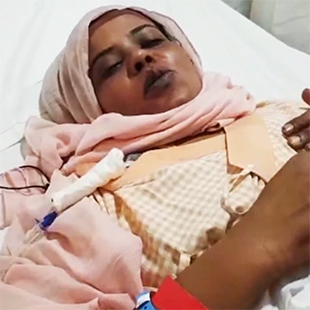
Patient Testimonial: Lobna from Sudan for Successful Open Craniotomy Surgery in India
Mrs. Lobna Salah Hassan
Mrs. Lobna Hasan from Sudan for Open Craniotomy Surgery in India

Lobna (from Sudan) was diagnosed with meningioma, a form of non-cancerous brain tumor. Her family members decided to take her…

Conditions treated by Endoscopic Third Ventriculostomy

Frequently Asked Questions

Endoscopic Third Ventriculostomy package cost in Kuala Lumpur has different inclusions and exclusions. The Endoscopic Third Ventriculostomy package cost usually includes all the expenses related to pre and post surgery expenses of the patient. Typically, the package cost of Endoscopic Third Ventriculostomy in Kuala Lumpur includes the expenses related to the surgeon's fee, anesthesia, hospital, meals, nursing and ICU stay. Extended hospital stay, complications after the surgery or new diagnosis may affect the overall cost of Endoscopic Third Ventriculostomy in Kuala Lumpur.

There are several best hospitals for Endoscopic Third Ventriculostomy in Kuala Lumpur. Some of the most renowned hospitals for Endoscopic Third Ventriculostomy in Kuala Lumpur include the following:

The recovery of the patient many vary, depending on several factors. However, on an average, patient is supposed to stay for about 11 days in the country after discharge. This period is important to conduct all the follow-up tests to ensure that the surgery was successful and the patient can go back to the home country.

Apart from the Endoscopic Third Ventriculostomy cost, the patient may have to pay for additional daily expenses such as for guest house after discharge and meals. These are the chanrges for daily meals and hotel stay outside the hospital. The extra charges may vary from 30 USD.

The average duration of stay at the hospital after Endoscopic Third Ventriculostomy is about 3 Days for proper care and monitoring. During the recovery, the patient is carefully monitored and control tests are performed to see that everything is okay. If required, physiotherapy sessions are also planned during recovery in hospital.

Out of all the hospitals in Kuala Lumpur, there are about 1 Hospitals best hospitals for Endoscopic Third Ventriculostomy in Kuala Lumpur. These hospitals have propoer infrastructure as well as offer good quality of services when it comes to Endoscopic Third Ventriculostomy surgery. Additionally, these hospitals are known to comply with the international standards as well as local legal requirements for the treatment of patients.

Not Sure About Your Treatment Plan? Get a Free Second Opinion

Have your reports reviewed by independent oncology experts to help you make a confident treatment decision, all online within 48 hours.

Upload Your Reports
Free second opinion on your CAR-T plan