Your Notifications
All done, no notifications

Portal Vein Embolization (PVE) Cost in India

Costs starts from USD1200 to USD3000
Filters

How Much Does Portal Vein Embolization Cost in India?

The cost of Portal Vein Embolization (PVE) in India generally ranges between USD 1200 - USD 3000, depending on multiple medical and non-medical factors. The final expense may vary based on hospital infrastructure, the type of imaging guidance used, embolic materials, radiologist expertise, and the need for additional procedures or follow-up imaging. The complexity of the liver condition and the patient’s overall health status also significantly influence the total cost.Additional expenses may include pre-procedure investigations, advanced imaging, treatment planning, hospital stay, medications, post-procedure monitoring, follow-up consultations, and supportive care, all of which contribute to the overall treatment expense. Many international patients prefer India due to its affordability, availability of advanced imaging facilities, and experienced interventional radiology teams, making the procedure both accessible and cost-effective without compromising quality of care.

Factors Affecting the Cost of Portal Vein Embolization in India

Cost of Portal Vein Embolization (PVE) in Major cities of India

CityMinimum Cost (USD)Minimum Cost (INR)Maximum Cost (USD)Maximum Cost (INR)
AhmedabadUSD 1080100678USD 2700251694
BangaloreUSD 1200111864USD 3000279660
ChennaiUSD 1200111864USD 3000279660
DelhiUSD 1200111864USD 3000279660
FaridabadUSD 1200111864USD 3000279660
GhaziabadUSD 1200111864USD 3000279660
GurgaonUSD 1200111864USD 3000279660
HyderabadUSD 1200111864USD 3000279660
KochiUSD 1200111864USD 3000279660
KolkataUSD 1200111864USD 3000279660
MumbaiUSD 1200111864USD 3000279660
NoidaUSD 1200111864USD 3000279660
PanjimUSD 1080100678USD 2700251694
PuneUSD 1080100678USD 2700251694

Portal Vein Embolization (PVE) Cost : A Global Comparison

CountryMinimum CostMinimum Local CurrencyMaximum CostMaximum Local Currency
CzechiaUSD 4000CZK 85080USD 7500CZK 159525
HungaryUSD 3500HUF 1168370USD 7000HUF 2336740
IndiaUSD 1200INR 111864USD 3000INR 279660
IsraelUSD 9000ILS 28350USD 15000ILS 47250
MalaysiaUSD 3500MYR 14140USD 7000MYR 28280
PolandUSD 3500PLN 13020USD 6500PLN 24180
Saudi ArabiaUSD 6000SAR 22500USD 12000SAR 45000
SingaporeUSD 10000SGD 12900USD 18000SGD 23220
South KoreaUSD 7500KRW 11385750USD 14000KRW 21253400
SpainUSD 6000EUR 5220USD 11000EUR 9570
SwitzerlandUSD 12000CHF 9600USD 22000CHF 17600
ThailandUSD 5000THB 163800USD 10000THB 327600
TurkeyUSD 3500TRY 155750USD 6500TRY 289250
United Arab EmiratesUSD 7000AED 25690USD 14000AED 51380
United KingdomUSD 7000GBP 6090USD 14000GBP 12180

Need Help Planning Your Treatment Abroad?

Your 24/7 AI Health Assistant

Portal vein embolization (PVE) is done to increase the size and function of the healthy part of the liver (future liver remnant) before major liver surgery. It is an important preoperative technique for minimising postoperative liver failure.This process guarantees that, following resection, the remaining liver can fulfil the body's metabolic needs.

You should see a specialist if you have a liver tumour that needs to be surgically removed, if a big liver resection is planned but the remaining liver volume is likely to be minimal, or if you have a liver mass with abnormal liver function tests. If you experience symptoms like chronic right upper abdomen pain, jaundice, unexplained weight loss, exhaustion, or appetite loss, you should also seek medical assistance.

PVE preparation consists of contrast CT/MRI with liver volumetry, and blood tests (CBC, LFT, RFT, PT/INR, hepatitis markers, patients may need to grant permission for contrast and interventional radiology procedures, stop taking blood thinners or antiplatelets, and fast for six to eight hours.

Portal Vein Embolization is performed in an interventional radiology suite:
  • Both sedation and/or local anaesthesia are administered.
  • A little skin incision is done to gain access to the portal vein system.
  • Under imaging, a catheter is inserted into the branches that supply the area of the liver that needs to be removed.
  • These portal vein branches are blocked by injecting embolic materials.
  • Blood flow is diverted to the future liver remnant, which is the surviving liver.
  • The puncture site is sealed when the catheter is removed.
  • The patient's liver function, discomfort, and vital signs are tracked.

Depending on the anatomy and complexity of the liver, the treatment usually takes 60 to 120 minutes.Following the procedure, monitoring is done to make sure vital signs are stable and there are no problems right away.

PVE is generally safe but few possible complications may be arise:
  • Fever or pain following embolisation
  • Haematoma or bleeding at the puncture location
  • An infection
  • Contrast kidney strain or allergy (rare)
  • Portal vein thrombosis: an uncommon but dangerous condition
  • Malfunction of the liver, particularly in cirrhosis
  • Rare non-target embolisation
  • Nausea, fatigue and temporary loss of appetite

PVE has several benefits: increasing the amount of liver left over after surgery, reducing the risk of liver failure after hepatectomy, and raising the possibility that a major liver resection is safe are only a few advantages of PVE. It improves cancer patients' long-term surgery outcomes and is relatively less invasive than surgical alternatives.

After PVE, recovery typically happens quickly, with a hospital stay of one to three days and a few days of minor fever and gastrointestinal pain. Before undergoing final surgery, the majority of patients resume their regular activities in 5–10 days, and follow-up imaging in 2–6 weeks evaluates liver growth. Initially, heavy activity should be avoided and continuous monitoring should be maintained.

Effective liver enlargement can be achieved by portal vein embolisation; 70–90% of patients exhibit liver growth, and the majority of eligible patients develop sufficient hypertrophy to undergo scheduled liver surgery. The type and development rate of the tumour, the patient's functional and nutritional state, and liver health (healthy vs. cirrhotic) all influence overall success.

Would you like some help? We are available.

Get Help
Explore Hospitals ( 34 )
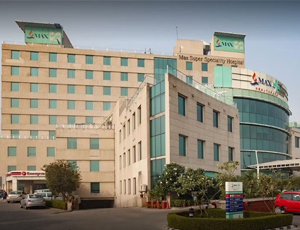
Portal Vein Embolization (PVE) in Max Smart Super Speciality Hospital: Costs, Top Doctors, and Reviews

Delhi, India

3.9 ( 2 Reviews )
  • National Accreditation Board for Hospitals & Healthcare Providers (NABH)
  • Joint Commission International, or JCI
  • Max Smart Super Speciality Hospital, Saket, New Delhi, is a 250-bed tertiary care hospital known for advanced medical technology and patient-centred care.
  • The hospital offers services across 22+ specialities, including Cardiac Sciences, Orthopaedics, Urology, Neurology, Neurosurgery, Paediatrics, Obstetrics, and Gynaecology.
  • It is a regional hub for complex procedures such as neurovascular interventions, targeted cancer treatments, heart surgeries, kidney and liver transplants, and bariatric care.
  • Equipped with a 3.0 Tesla MRI, 256 Slice CT Angio, Cath Labs, Digital Orthopaedic Suite, and advanced diagnostic tools, and supported by 275+ doctors and 606+ trained staff, Max Smart Saket provides high-quality, multidisciplinary care for domestic and international patients.
Portal Vein Embolization (PVE) in Max Super Specialty Hospital, Shalimar Bagh: Costs, Top Doctors, and Reviews

Delhi, India

  • National Accreditation Board for Hospitals & Healthcare Providers (NABH)
  • National Accreditation Board for Testing and Calibration Laboratories (NABL)
  • Max Super Speciality Hospital, Shalimar Bagh, is a 402-bed quaternary-care hospital in New Delhi, offering advanced treatment across 37+ specialities, including Cancer, Cardiac, Neurosciences, Gastroenterology, Orthopaedics, and Renal Transplant.
  • Equipped with state-of-the-art technology and a team of highly skilled doctors and nurses, the hospital provides complex procedures, minimally invasive surgeries, and targeted cancer treatments, making it one of India’s leading healthcare destinations.
Portal Vein Embolization (PVE) in Rajagiri Hospital: Costs, Top Doctors, and Reviews

Kochi, India

  • Joint Commission International, or JCI
  • Rajagiri Hospital, Kochi, Kerala, is a leading multi-speciality tertiary care hospital known for providing world-class medical services with advanced technology and compassionate care.
  • Accredited by JCI, NABH, and NABL, the hospital offers comprehensive treatment across specialities like Cardiology, Oncology, Neurology, Gastroenterology, Orthopaedics, Nephrology, Urology, and Paediatrics, making it a trusted healthcare destination in South India.
Portal Vein Embolization (PVE) in Jaypee Hospital: Costs, Top Doctors, and Reviews

Noida, India

  • National Accreditation Board for Hospitals & Healthcare Providers (NABH)
  • Joint Commission International, or JCI

Jaypee Hospital located in Noida, India is accredited by ISO, NABH, NABL. Also listed below are some of the most prominent infrastructural details:

  • 525 beds in the first phase
  • 150 Critical Care beds
  • 325 ward beds with Suite, Deluxe, Twin Sharing, and Economy options
  • 18 Modular OTs
  • 4 Cardiac Catheterization Lab with unqie Hybrid Operating Room
  • 24 bedded Advanced Neonatal ICUs20 bedded Dialysis Units
  • 2 Linear Accelerator (IMRT, VMAT, I
  • GRT), Wide Bore CT Simulator, one Brachytherapy Suite
  • True Beam STx Linear Accelerator
  • 2 MRI (3.0 Tesla) with High-Intensity Focused Ultrasound
  • 64 Slice PET CT, Gamma Camera, Dual Head 6 Slice SPECT CT
  • 256 Slice CT Scan, CT Simulation
  • Amongst the few GOLD LEED-certified hospital buildings in India
  • Appointment Scheduling
  • Flow motion 64 Slice PET CT technology
  • Pick and drop facility from/to the Airport
  • Foreign exchange facility
  • Treatment packages
  • Visa assistance
  • Admission in the hospital
  • Wi-Fi/internet service in the room
  • Travel arrangement for patient & attendant after discharge
  • Tele-consults after discharge
  • Dedicated Guest House for International Patients maintained by Jaypee Hospital
  • In-house translators for patient’s comfort
  • Assistance in getting doctor’s opinion
  • Registration with the Foreigners Regional Registration Office
  • Accommodation arrangements after discharge
  • Accommodation arrangement for the accompanying attendant
  • Customized diet for patient and attendant
  • Laundry services
  • Prayer room
  • Dialysis facility for 60 patients
  • Cadaver organs
  • Blood bank facilities
  • Advanced Laboratory facilities
  • Diagnostic and Radiology facilities
  • High-end Ultrasound facilities

Need Some Advice From Our Experts?

Request a Call Back Now!

Our team of healthcare experts would be happy to assist you

trusted Patientstrusted Patients+99
Trusted by 50000+ Patients
Required | alphabets and spaces
Required | A valid, working email address
Required | A valid contact

Process Involved for Portal Vein Embolization (PVE) in India

  • Assessment of liver volume and case selection
  • Anaesthesia assessment and pre-procedure research
  • Interventional radiologist's PVE procedure
  • Monitoring following the surgery and managing discomfort and fever
  • CT/MRI follow-up to assess hypertrophy
  • Surgery to remove the liver after sufficient enlargement
  • Hepatocellular cancer (HCC)
  • Cancer of the cholangi
  • Liver metastases from colorectal cancer
  • Hepatectomy is necessary for large liver tumours.
  • Some complicated benign tumours of the liver

There are various methods for carrying out PVE:

  • Transhepatic portal vein embolisation via percutaneous means (most common)
  • Trans-ileocolic PVE (infrequent, surgical entry)
  • Depending on the architecture and resection plan, segmental or selective PVE

PVE may be appropriate for a patient if:

  • There will be a major liver resection.
  • There is not enough future liver residual volume.
  • Embolisation is acceptable for liver function.
  • There is no serious coagulopathy or unchecked infection.
  • Liver biopsy (in the event that the diagnosis is uncertain)
  • Biliary drainage through the skin (if obstructive jaundice)
  • In certain cancer instances, transarterial chemoembolization (TACE)
  • Surgery to remove a significant portion of the liver (following PVE)
  • Safer results from liver surgery
  • Keeps the liver from failing following excision
  • Faster recuperation with less invasiveness
  • Can increase the number of surgical choices available to patients who were previously "not fit for resection."

After a successful PVE:

  • The liver remnant grows in the future.
  • In the remaining parts, liver function improves.
  • A large hepatectomy becomes a safer option for the patient.
  • The overall risk of surgery is greatly decreased.
  • Fill out the inquiry form: Fill out the form to provide us with the relevant information about your condition.
  • Consult with Our Healthcare Expert:One of our qualified specialists will contact you for a consultation
  • Receive a Detailed Treatment Plan:After examining your situation, we will provide you with a detailed treatment plan that includes expert views and cost breakdowns for various choices.
  • Choose your preferred option: Choose the treatment option that suits you the best.

Instantly Connect with our Portal Vein Embolization (PVE) Specialists

Doctor 1
Doctor 2
Doctor 3
Doctor 4
Doctor 5
Doctor 6
Doctor 7
Doctor 8
Our Services to Better your Experience

Opinion & Option

We submit the most accurate opinion and options from one or more countries for your review

Consult Privately

Consult with a certified specialist privately on our telemedicine platform even before you decide to travel

Logistics

We handle flights, visas, transfers, and accommodation—so you can focus on your health.

Recovery

Our In-house rehabilitation service packages to better your recovery and treatment outcome

Other Popular Countries for Portal Vein Embolization (PVE)

Our network connects you with the leading medical tourism destinations globally, offering a wide range of cities, top doctors, and flexible pricing options.

Thailand
Spain
United Kingdom
United Arab Emirates

Frequently Asked Questions

Due to the time it takes for the liver to expand, complete preparation for liver surgery may take two to six weeks, while initial recuperation takes five to ten days.

In addition to the procedure cost, patients may incur:
  • Pre-treatment tests
  • Medications during recovery
  • Follow-up consultations
  • Depending on the patient's condition and monitoring requirements, a hospital stay often lasts one to three days.

    Long-term care includes :
  • Observing tests for liver function
  • Imaging follow-up to evaluate liver hypertrophy
  • Planning a cancer therapy (if necessary)
  • Getting ready for a final liver procedure
  • Patients choose India because:
  • Knowledgeable experts in interventional radiology and liver
  • Treatment guided by advanced imaging
  • Reasonably priced, excellent care
  • Reduced wait times and coordinated global patient services
  • In addition to chest X-rays and ECGs, common diagnostics include contrast CT/MRI liver with volumetry, blood tests such LFT, RFT, CBC, PT/INR, and coagulation profile, and, in some cases, viral hepatitis screening.

    Yes. PVE is usually safe and well tolerated when performed at a hospital that has been accredited and has a skilled interventional radiology team.

    For the majority of eligible patients, major liver surgery is possible due to the >95% technical success rate and the 70–90% liver hypertrophy success rate.

    Author

    Alvina Hasan

    M.Pharm

    1 Year of Experience

    Alvina Hasan is a dedicated medical researcher and scientific writer with a strong foundation in the pharmaceutical sciences. She holds a B.Pharm from Jamia Hamdard University and an M.Pharm in Quality Assurance from DIPSAR University. With deep medical expertise and a strong interest in healthcare communication, she focuses on transforming complex clinical and scientific information into clear, engaging, and easy-to-understand narratives. She develops insightful healthcare articles and research-driven pieces designed to support both medical professionals and patients, helping bridge the gap between advanced medical knowledge and practical understanding. . View More