Your Notifications
All done, no notifications

Left ventricular assist device (LVAD) Cost in Delhi

Costs starts from Get a Quote
Filters

Need Help Planning Your Treatment Abroad?

Your 24/7 AI Health Assistant

Ventricular assist devices (VADs) are pumps that help pump blood from the lower chambers of the heart to the rest of the body's organs. It's a therapy for heart failure or a failing heart. While further therapies, like such a heart transplant, are not yet a reality, a VAD can be used to sustain the heart. A VAD can be used to help the heart pump forever.

A long-term mechanical circulatory support device (VAD) is another term for all of these devices.

A VAD is most commonly placed in the left ventricle, which is the lower chamber of the heart. A left ventricular assist device (LVAD) is its name when it is placed inside the left ventricle. LVADs are what this article discusses.

An LVAD is used to support patients with severe left-sided heart failure when the heart can't pump enough blood. It can be used as a destination therapy for non-transplant candidates, a bridge to recovery in reversible disorders, or a bridge to transplant.

See a cardiologist if your heart failure symptoms—such as shortness of breath, edema, excessive exhaustion, or repeated hospitalisations despite the best medical treatment- get worse. If you are waiting for a heart transplant or if traditional treatments don't work, you can be recommended for an LVAD examination. Seek immediate medical attention if you experience fever, device alerts, bleeding, or infection symptoms after implantation.

Comprehensive medical assessments, device care education, and collaboration with a multidisciplinary care team are all part of being ready for an LVAD. In addition to receiving social and emotional support, patients might need to modify their lifestyle prior to surgery.

  • Anaesthesia: The patient is put under general anaesthesia.
  • Incision: Usually, a median sternotomy (chest opening) is carried out.
  • Pump Location: After the LVAD is surgically installed, the outflow cannula is attached to the aorta and the inflow cannula is inserted into the left ventricle.
  • Controller & Power Source: The patient's external controller and battery pack are coupled to a driveline cable inserted through the abdomen.
  • Heart-Lung Machine: During surgery, the patient can be hooked up to a heart-lung bypass machine.
  • Closure: Sutures and staples close the chest after the device is in position and operating.

LVAD implantation typically takes 4 to 6 hours, depending on the patient's condition and the complexity of the case.

Potential risks of LVAD implantation include:
  • Infection
  • Strokes and thrombosis
  • Bleeding
  • Failure of the right heart
  • Kidney damage
  • Failure of the left ventricular assist device

Vital organs, including the kidneys, liver, and brain, work better when blood flow is increased throughout the body by a left ventricular assist device (LVAD). It improves strength and the capacity to engage in previously challenging tasks, including cardiac rehabilitation, by reducing symptoms like exhaustion, dyspnea, and edema. Furthermore, patients can frequently leave the hospital and continue their recovery at home with the help of an LVAD.

Recovery following LVAD surgery requires a hospital stay of two to four weeks, including intensive care unit time. Patients and caregivers are trained on how to use devices, charge batteries, and change dressings. Regular follow-ups and cardiac rehabilitation are important. It could take several months to recover fully, requiring constant medication and lifestyle changes.

LVADS have a 1-year survival rate of over 80% and a 2-year survival rate of 70%. Usually, both functional status and quality of life improve. Because of their superior results and increased longevity, continuous-flow LVADS are in the lead.

Top Selling Packages for Left ventricular assist device (LVAD)

LVAD
LVAD

Amrita Hospital, Faridabad, India

USD 125000 USD 135000

Would you like some help? We are available.

Get Help
Explore Hospitals ( 14 )
Left ventricular assist device (LVAD) in Fortis Hospital, Shalimar Bagh: Costs, Top Doctors, and Reviews

Delhi, India

4.5 ( 4 Reviews )
  • National Accreditation Board for Hospitals & Healthcare Providers (NABH)
  • Fortis Hospital, Shalimar Bagh, New Delhi, is a leading multi-super-speciality hospital established in 2010, known for advanced medical technology and compassionate patient care.
  • The hospital has 375 beds, including 166 ICU beds, and features 10 modular operating theatres along with specialised ICUs and Level III NICU/PICU. Fortis Shalimar Bagh offers care across Cardiology, Neurosciences, Oncology, Orthopaedics, Transplants, Urology, and Mother & Child Health, supported by NABH and NABL accreditation.
  • Equipped with cutting-edge technology like the Da Vinci Surgical Robot, PET-CT Scanner, and CORI Robotic System, the hospital is recognised for excellence in treatment outcomes, patient comfort, and multidisciplinary care, making it a trusted destination for both domestic and international patients.
Left ventricular assist device (LVAD) in Aakash Healthcare Super Speciality Hospital: Costs, Top Doctors, and Reviews

Delhi, India

  • National Accreditation Board for Hospitals & Healthcare Providers (NABH)
  • ISO 9001

Aakash Healthcare Super Speciality Hospital located in New Delhi, India is accredited by NABH. Also listed below are some of the most prominent infrastructural details:

  • One of the biggest tertiary care hospitals in India
  • Facility is fusion of state of the art technology, competent clinicians, and world-class infrastructure
  • 230 beds
  • 70 bedded medical and surgical and Critical Care Unit
  • Ward Bed Options- Twin, Deluxe, Sharing and Economy
  • Pneumatic Tube System
  • Ambulance Services 24x7
  • 15 Bedded dialysis unit
  • Advanced Neonatal ICU
  • Advanced imaging services, including magnetic resonance imaging, computed tomography scanning, digital mammography, ultrasound
  • 8 modular OTs
  • Flat Panel Cath Labs
  • LASIK - SMILE Suite
  • Wellness Lounge
  • State-of-the-art diagnostic equipment
  • 15 Dialysis beds
  • 24x7 ‘Trauma & Emergency Center
  • Dedicated blood bank
  • 24x7 comprehensive patient care.
  • Deployed high-end technologies & smart digital system
  • Robust Hospital Information Systems to meet complex medical needs of patients
  • Robotic assisted surgeries
  • International Patients Lounge
  • Airport Pick-up and Drop
  • Accommodation and Food for Attendant
  • Language Interpreter Services
  • 4 triage beds, a dedicated sample collection room, 6 observation beds, and highly skilled emergency staff
  • Robotic knee replacement surgery
  • ATM
  • Lounge for visitors
  • Internet Access: The whole facility is Wi-Fi enabled
  • Travel Desk: Provides an all-round patient care.
  • 24x7 pharmacy
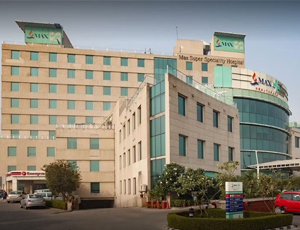
Left ventricular assist device (LVAD) in Max Smart Super Speciality Hospital: Costs, Top Doctors, and Reviews

Delhi, India

3.9 ( 2 Reviews )
  • National Accreditation Board for Hospitals & Healthcare Providers (NABH)
  • Joint Commission International, or JCI
  • Max Smart Super Speciality Hospital, Saket, New Delhi, is a 250-bed tertiary care hospital known for advanced medical technology and patient-centred care.
  • The hospital offers services across 22+ specialities, including Cardiac Sciences, Orthopaedics, Urology, Neurology, Neurosurgery, Paediatrics, Obstetrics, and Gynaecology.
  • It is a regional hub for complex procedures such as neurovascular interventions, targeted cancer treatments, heart surgeries, kidney and liver transplants, and bariatric care.
  • Equipped with a 3.0 Tesla MRI, 256 Slice CT Angio, Cath Labs, Digital Orthopaedic Suite, and advanced diagnostic tools, and supported by 275+ doctors and 606+ trained staff, Max Smart Saket provides high-quality, multidisciplinary care for domestic and international patients.
Left ventricular assist device (LVAD) in Max Super Specialty Hospital, Shalimar Bagh: Costs, Top Doctors, and Reviews

Delhi, India

  • National Accreditation Board for Hospitals & Healthcare Providers (NABH)
  • National Accreditation Board for Testing and Calibration Laboratories (NABL)
  • Max Super Speciality Hospital, Shalimar Bagh, is a 402-bed quaternary-care hospital in New Delhi, offering advanced treatment across 37+ specialities, including Cancer, Cardiac, Neurosciences, Gastroenterology, Orthopaedics, and Renal Transplant.
  • Equipped with state-of-the-art technology and a team of highly skilled doctors and nurses, the hospital provides complex procedures, minimally invasive surgeries, and targeted cancer treatments, making it one of India’s leading healthcare destinations.

Need Some Advice From Our Experts?

Request a Call Back Now!

Our team of healthcare experts would be happy to assist you

trusted Patientstrusted Patients+99
Trusted by 50000+ Patients
Required | alphabets and spaces
Required | A valid, working email address
Required | A valid contact

Instantly Connect with our Left ventricular assist device (LVAD) Specialists

Doctor 1
Doctor 2
Doctor 3
Doctor 4
Doctor 5
Doctor 6
Doctor 7
Doctor 8
Our Services to Better your Experience

Opinion & Option

We submit the most accurate opinion and options from one or more countries for your review

Consult Privately

Consult with a certified specialist privately on our telemedicine platform even before you decide to travel

Logistics

We handle flights, visas, transfers, and accommodation—so you can focus on your health.

Recovery

Our In-house rehabilitation service packages to better your recovery and treatment outcome

Other Popular Countries for Left ventricular assist device (LVAD)

Our network connects you with the leading medical tourism destinations globally, offering a wide range of cities, top doctors, and flexible pricing options.

Thailand
Spain
Malaysia
Singapore

Author

Alvina Hasan

M.Pharm

1 Year of Experience

Alvina Hasan is a dedicated medical researcher and scientific writer with a strong foundation in the pharmaceutical sciences. She holds a B.Pharm from Jamia Hamdard University and an M.Pharm in Quality Assurance from DIPSAR University. With deep medical expertise and a strong interest in healthcare communication, she focuses on transforming complex clinical and scientific information into clear, engaging, and easy-to-understand narratives. She develops insightful healthcare articles and research-driven pieces designed to support both medical professionals and patients, helping bridge the gap between advanced medical knowledge and practical understanding. . View More

Reviewer

Dr. Naresh Kumar Goyal

Cardiologist

21 Years of Experience

Dr. Naresh Kumar Goyal is highly trained as a cardiologist with exposure in virtually all aspects of cardiology. He qualified with an MD in internal medicine in 1999 from SMS Medical College, Jaipur, and served in the Cardiology Department as an honorary resident. From this stage, he also started with training in the temporary pacing of the pacemaker as well as interventional services. View More