Your Notifications
All done, no notifications

Intra-aortic balloon pump (IABP) Cost in India

USD 5500 - USD 8500

Affordable World-class Treatment - Accredited Hospitals - Free Treatment Plan in 24 Hrs

3
Days in Hospital
18
Post-Hospital
80 - 90%
Success Rate
JCI/ISO 100,000+ Patients 24X7 Coordinator Visa & Travel handled
Your all-in-one medical travel platform for treatment, recovery & care.

Get Your Personalised Treatment Plan in Just 24 Hours.

Share your details to receive a personalised treatment plan, estimated costs, hospital recommendations, and expert guidance, “completely free.”

Required | alphabets and spaces
Required | A valid, working email address
Required | A valid contact
Connect with an Expert

Your information is protected with HIPAA-compliant security standards. We only share your details with hospitals after your consent.

Estimated Treatment Cost
USD 5500 - USD 8500
All-inclusive • Hospital + Medications + Recovery Assistance + Dedicated Care Coordinator

International Quality. Affordable Care.

How Much Does an Intra-Aortic Balloon Pump Cost in India?

The price of an Intra-aortic balloon pump in India generally varies between USD 5500 - 8500 USD based on the device type and technology, the company, and the hospital where the procedure is undertaken. Furthermore, the length of treatment, the requirement for follow-up treatment, and the application of advanced technologies or specialized treatments can also affect the total cost.

Factors Influencing the Cost of Intra-Aortic Balloon Pump in India

  • Device Type and Technology: The latest IABP models with additional features and capabilities tend to cost more. Technology plays a significant role in determining costs.
  • Manufacturer and Brand: Prices can differ among manufacturers. Renowned brands known for their quality and reliability often charge a premium.
  • Hospital Facilities: Hi-tech hospitals with state-of-the-art technology may have higher procedure and equipment fees.
  • Location: Price can significantly change based on the city or nation where the procedure is undertaken.
  • Physician's Expertise: Since they are experts and renowned specialists, seasoned cardiologists or specialists could have higher fees for their services.
  • Pre-Procedural Diagnostics: The total expenses can increase if additional tests such as stress tests, electrocardiograms (ECGs), or other diagnostics are required.
  • Post-Procedural Care: Follow-up appointments, medications, and other aftercare services can add to the cost.

What's included in your Intra-aortic balloon pump (IABP) quote?

Intra-aortic balloon pump (IABP) insertion
fee, and monitoring charges
Cardiology consultations
Pre- evaluation, treatment planning, and follow-ups
3–7-day hospital stay
Inpatient care, monitoring, recovery
7–14-day in-country follow-up
Cardiac assessment
Visa & medical-visa invite letter
Airport pickup & transfers

Cost of Intra-aortic balloon pump (IABP) in Major Cities of India

City Cost (USD)
Ahmedabad $4,950 – $7,650 Explore More
Bangalore $5,500 – $8,500 Explore More
Chennai $5,500 – $8,500 Explore More
Delhi $5,500 – $8,500 Explore More
Faridabad $5,500 – $8,500 Explore More
Ghaziabad $5,500 – $8,500 Explore More
Gurgaon $5,500 – $8,500 Explore More
Gurugram $5,500 – $8,500 Explore More
Hyderabad $5,500 – $8,500 Explore More
Kochi $5,500 – $8,500 Explore More
Kolkata $5,500 – $8,500 Explore More
Mohali $4,950 – $7,650 Explore More
Mumbai $5,500 – $8,500 Explore More
Noida $5,500 – $8,500 Explore More
Panjim $4,950 – $7,650 Explore More
Pune $4,950 – $7,650 Explore More

Intra Aortic Balloon Pump Iabp - India Vs the World

$5k - $12k
$5k - $10k
$6k - $8k
$6k - $15k
$8k - $15k
$10k - $16k
$10k - $15k
$10k - $14k
$10k - $18k
$20k - $30k
$25k - $45k
Dr. Vijita Jayan
Author

BPT, MPT (Neuro)

18 Years of Experience

Last Reviewed - June 2026

With over 18 years of distinguished clinical experience, Dr. Vijita Jayan is a highly accomplished Clinical Director and Rehabilitation Specialist, renowned for her expertise in neuro-rehabilitation, functional recovery, and mobility-dependent case management. Her extensive practical knowledge enables her to design and implement individualized, evidence-based rehabilitation protocols that consistently yield measurable patient outcomes. A prolific researcher and academic writer, she has authored numerous peer-reviewed articles and research papers, significantly advancing the field of rehabilitative medicine. The recipient of multiple prestigious accolades, Dr. Jayan is widely regarded as one of the foremost authorities in Physical Medicine and Rehabilitation, continually shaping neuro-rehabilitative care through research, innovation, and clinical excellence.
View More
Dr. Naresh Kumar Goyal
Reviewer

Cardiologist

21 Years of Experience

Last Reviewed - June 2026

Dr. Naresh Kumar Goyal is highly trained as a cardiologist with exposure in virtually all aspects of cardiology. He qualified with an MD in internal medicine in 1999 from SMS Medical College, Jaipur, and served in the Cardiology Department as an honorary resident. From this stage, he also started with training in the temporary pacing of the pacemaker as well as interventional services.
View More

Need Help Choosing the Right Treatment? Talk to a Medical Advisor

Our dedicated Medical Patient Advisors are here to answer your questions, help you compare treatment options, estimate costs, and guide you through every step of your healthcare journey.

15 min
Average response time

Serving Patients Worldwide in Multiple Languages.

An Intra-Aortic Balloon Pump, or IABP, is a machine that assists the heart in pumping blood more effectively. It is made up of a catheter, a thin flexible tube with a balloon on the end. The balloon is inserted into the aorta and attaches to a machine that regulates inflation and deflation of the balloon.

A temporary mechanical device called an intra-aortic balloon pump (IABP) assists the heart when it cannot pump enough blood on its own. It is usually used for high-risk percutaneous coronary procedures (PCI), sudden heart failure, or cardiogenic shock. The IABP lessens the strain on the heart and enhances coronary blood flow. It is frequently used in patients who are waiting for a heart transplant, have had a serious heart attack, or are experiencing problems after heart surgery.

If symptoms like low blood pressure, severe chest pain, dyspnea, or indicators of cardiogenic shock (such as disorientation, cold limbs, or fainting) appear, one should get medical help right away.

Your doctor will perform a comprehensive medical evaluation, including imaging, blood testing, and cardiac function studies like an angiography or echocardiography, prior to placing an IABP. You will also be evaluated for contraindications such as aortic anomalies or vascular disease. After explaining the process and the risks involved, the team will ask for your permission. Before the procedure, you might be requested to stop taking some medications and fast for a few hours.

  • Insertion Site: The balloon catheter is usually placed in the femoral artery in the groin, but the axillary or subclavian arteries may be employed in certain situations.
  • Catheter Navigation: Fluoroscopic or ultrasound guidance is used to advance the catheter to the descending aorta.
  • Placement of the Balloon: The balloon is placed above the renal arteries and somewhat beneath the left subclavian artery.
  • Balloon Inflation: It occurs over time in the cardiac cycle. It inflates during diastole to increase myocardial perfusion and deflates during systole to lessen afterload and aid in blood ejection.
  • Monitoring: Throughout treatment, arterial pressure and ECG are continuously monitored.

The insertion of an IABP usually takes 30 to 60 minutes, depending on the patient's state and vascular access. It is frequently used in an intensive care unit.

IABP treatment can be very beneficial. In certain cases, it can even save lives. However, there are certain risks involved. These consist of:

  • Damage resulting from ischemia, or reduced blood flow
  • Damage to an artery
  • The balloon's rupture
  • The balloon is positioned incorrectly, which could harm the kidneys or cause other issues.
  • Low platelet counts can lead to excessive bleeding because they make it harder for blood to clot.
  • Stroke
  • Infection

IABP can stabilise blood pressure, increase coronary perfusion, and improve cardiac output in individuals with severe heart disease. It offers a means of getting well, getting more help, or getting a transplant. Although it is not a permanent cure, it can save lives in the short term.

Patients are usually maintained in the intensive care unit (ICU) for close observation following IABP implantation. The afflicted leg must be kept straight to stop the catheter from moving. Depending on the therapeutic requirement, the device may stay in place for a few hours to many days. Following removal, pressure stops bleeding, and patients are watched for infection, bleeding, or circulation issues in their limbs. Up until the healing of vascular access, physical activity is limited.

IABP stabilizes critically ill patients and greatly increases survival rates, but it is not a cure. According to studies, it successfully enhances hemodynamic stability in roughly 70\u201380% of situations. Early administration during cardiogenic shock or as a component of a planned intervention yields the best results.

80–90%

Effective temporary cardiac support

3–7 days

Typical hospital stay

2–6 weeks

to typical return to work
Explore Hospitals ( 67 )

Pune, India

NABH NABL

Delhi, India

3.9 - 2 reviews · 250+ Beds · 246+ Procedures
JCI NABH

Faridabad, India

NABH

Kochi, India

JCI

Faridabad, India

NABH NABL

Gurgaon, India

NABH NABL

Get Your Intra-aortic balloon pump (IABP)
Plan in 24 hrs.

Our experienced Medical Patient Advisors have supported 100,000+ patients across 120+ countries with personalised treatment plans, hospital recommendations, cost estimates, and travel assistance, all free.

HIPAA-Compliant Data SecurityShared Only with Your Consent

Free Consultation No Obligation Personalized Treatment Plan Response Within 24 Hours

Required | alphabets and spaces
Required | A valid, working email address
Required | A valid contact

Your medical info has is HIPAA-style confidential. We never share with hospitals without your consent.

Process Involved for Intra-aortic balloon pump (IABP) in India

  • Assessment and Preparation by Cardio Surgeon: The patient's condition is thoroughly assessed to determine the need for IABP. Pre-procedure tests, such as blood work and imaging, are completed, and the femoral artery (or another suitable site) is prepared for insertion.
  • Insertion: A balloon catheter is inserted through the prepared site and guided to the aorta with the help of imaging technologies like X-rays.
  • Operation: The balloon is connected to a control machine that inflates and deflates it in sync with the heart's rhythm, improving blood flow and reducing the heart's workload.
  • Monitoring: During the procedure, the patient's vital signs, heart function, and blood flow are closely observed to ensure the safety and optimal performance of the IABP.
  • Removal: When the heart has stabilised and the IABP is no longer required, the device is carefully removed, and the insertion site is closed and monitored to ensure proper healing.
  • Acute Heart Failure
  • Unstable Angina
  • Support During High-Risk Cardiac Procedures
  • Post-Surgical Cardiac Support
  • Severe Ischemic Conditions

Patients who are likely candidates for Intra-aortic balloon pump (IABP) therapy are typically those who have severe heart disease and require supportive assistance to increase blood supply while reducing the heart's workload. Some of these cases are:

  • Cardiogenic Shock: As a result of a heart attack, the heart fails to pump sufficient blood..
  • High-Risk Cardiac Procedures: Those undergoing complex surgeries, such as coronary artery bypass grafting (CABG) or percutaneous coronary intervention (PCI).
  • Severe Heart Failure: Patients for whom medications or other treatments are inadequate to stabilise the heart.
  • Ischemic Conditions: Cases of unstable angina or significant coronary artery disease that compromise blood flow to the heart.
  • Post-Surgical Support: Patients needing temporary cardiac assistance after specific heart surgeries during recovery.
  • CABG
  • Percutaneous Coronary Intervention
  • Treatment of Cardiogenic Shock
  • Management of Severe Heart Failure
  • Improved Blood Flow: The IABP enhances blood supply to vital organs, particularly the heart, by increasing coronary artery perfusion during diastole.
  • Reduced Cardiac Workload: By deflating during systole (heart contraction), the IABP lowers the heart's resistance, decreasing its workload.
  • Critical Support: It offers essential, short-term assistance to patients facing severe conditions like cardiogenic shock or acute heart failure, stabilising them until further treatments are available.
  • Boosted Oxygen Delivery: The device ensures better oxygenation of tissues by enhancing blood circulation, which is crucial for recovery.
  • Bridge to Advanced Treatments: IABP serves as a bridge to more fixed interventions like cardiac surgery, ventricular assist devices (VADs), or heart transplantations.
  • Less Invasive Alternative: As compared to open-heart procedures, the IABP procedure is less invasive and, therefore, safer for critically ill patients.
  • Cardiologist
  • Cardiothoracic surgeon
  • Fill out the inquiry form: Fill out the form to provide us with the relevant information about your condition.
  • Consult with Our Healthcare Expert: One of our qualified specialists will contact you for a consultation.
  • Receive a Detailed Treatment Plan: After examining your situation, we will provide you with a detailed treatment plan that includes expert views and cost breakdowns for various choices.
  • Choose your preferred option: Choose the therapy option that best suits you.
  • Seamless Organization: We will manage all the details, including visas, flights, accommodations, and transfers, for a stress-free journey.
Jenny Wilson
Your Dedicated Medical Patient Advisor
Treatment planning • Hospital coordination • Multilingual support • Response within 15 minutes.
Our Services to Better your Experience

Opinion & Option

We submit the most accurate opinion and options from one or more countries for your review

Consult Privately

Consult with a certified specialist privately on our telemedicine platform even before you decide to travel

Logistics

We handle flights, visas, transfers, and accommodation—so you can focus on your health.

Recovery

Our In-house rehabilitation service packages to better your recovery and treatment outcome

Patient Stories

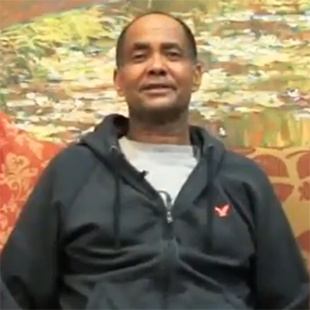
Mr Hailu Kassa : CABG Surgery
Mr Hailu Kassa
Mr Hailu Kassa : CABG Surgery

Mr. Hailu Kassa underwent Coronary Artery Bypass Surgery in Vejthani Hospital, Thailand under the supervision of Dr. Piya, Cardio-Thoracic Surgeon

Rod Schaubroeck
Rod Schaubroeck
Rod Schaubroeck : Double Valve Replacement

Patient Testimonial: Rod Schaubroeck from United States (U.S.A) underwent heart valve replacement at Fortis Hospital, India

Not Sure About Your Treatment Plan? Get a Free Second Opinion

Have your reports reviewed by independent oncology experts to help you make a confident treatment decision, all online within 48 hours.

Upload Your Reports
Free second opinion on your CAR-T plan