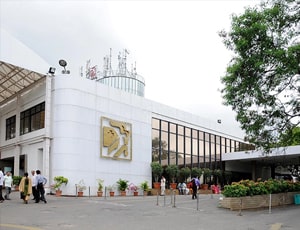
Sikarin Hospital has one of the best emergency care departments with its readiness and importance of urgent and timely care of patients. The specialists take into account the safety and chances of survival of patients and their experience in many fields. A multidisciplinary team works together to help patients suffering from strokes recover at the hospital. The hospital’s emergency center operates 24 hours a day to ensure timely care and appropriate treatment for emergencies like strokes.
The diagnostic facilities available at the hospital include CT scans, MRIs, etc. Physicians use the latest methods of care to help treat stroke patients. For patients with ischemic stroke emergencies, acute obstruction is quickly accessed by diagnostic services, and treatment is delivered by specialized doctors It has significantly reduced the hospital's mortality and disability rates. The emergency unit at the hospital is certified to treat this stroke as per international standards. Dr. Pornthep Mingmalairak and Dr. Suppata Metharakcheep are some of the experts at the hospital.


Patients suffering from an ischemic stroke can be admitted to Apollo Hospitals immediately for a variety of interventions such as intravenous thrombolysis, intra-arterial thrombolysis, and mechanical thrombolysis. A functional DSA laboratory dedicated to such intervention is also available around the clock for imaging with CT scan head and MRI. Neurologic exams, brain imaging tests (CT, or computerized tomography scan; MRI, or magnetic resonance imaging), carotid and transcranial ultrasound and angiography, blood tests, EKG (electrocardiogram) or an ultrasound examination (echocardiogram), and other diagnostic tests are available at the hospital.
For large clots that cannot be dissolved by intravenous thrombolytics, newer interventional treatments such as clot retrieval procedures are used. Mechanical retrieval can help patients for up to 12 hours. Following treatment, the patient recovers at Indraprastha Apollo Hospital's special Stroke ICU, which is equipped with round-the-clock monitoring and stringent infection control. Intensive rehabilitation begins almost immediately. Sophisticated equipment, such as robotic rehabilitation, aids in the efficient recovery of limb function. Dr. Anoop Kohli, Dr. Bhanu Pant, and Dr. C. M Malhotra are some of the neurologists at Indraprastha Apollo Hospital.

Apollo Hospitals in Hyderabad is well-equipped for cutting-edge stroke care. It is the only center in the world to be certified by Joint Commission International, USA, for stroke management. Actilyse and Novoseven are commonly used to treat stroke patients in our hospital. Apollo has minimally invasive and robotic treatment options.
Diagnostic techniques in the neuro department at Apollo include 64 slices of Spiral CT, CT angiogram, MRI, MR angiography, MR spectroscopy, Functional MRI, SPECT and nuclear scanning, PET scan, Digital subtraction angiography, Myelography, Carotid and intra cranial Doppler, Nerve conduction studies, Needle and surface Electromyography, Single fiber EMG, Tilt table test, PCR Study, Chromosomal analysis with the genetic institute, etc. The hospital provides holistic treatment for stroke along with rehabilitation facilities. Dr. Rajesh Reddy Chenna, Dr. Sudhir Kumar, and Dr. Sreekanth Vemula are some of the neuro specialists at Apollo Hospitals.

Star Hospitals in India's neurosurgery department is well-equipped to treat all neurological diseases, including stroke. The hospital has Neurosurgical Intensive Care and Neuro-imaging technology, which greatly improves the functional outcomes of the procedure. The hospital also provides minimally invasive procedures. The integrated team of neurologists, neurosurgeons, neuro physicians, and rehabilitation specialists is dedicated to providing patients with the best care possible.
The department provides specialized stroke care. Neurologic exams, brain imaging tests (CT, or computerized tomography scan; MRI, or magnetic resonance imaging), carotid and transcranial ultrasound and angiography, blood tests, EKG (electrocardiogram) or an ultrasound examination (echocardiogram), and other diagnostic tests are available at the hospital. TPA (tissue plasminogen activator), blood-thinning medications such as anticoagulants (warfarin) and antiplatelet drugs (aspirin or ticlopidine); a combination of aspirin and sustained release dipyridamole; and carotid endarterectomy are all options for stroke treatment. The hospital also provides stroke rehabilitation services. Dr. Bhuvaneswara Raju Basina, Dr. Shahyan Mohsin Siddiqui, and Dr. Aneel Kumar P are some of the neuro specialists in Star Hospitals.

Wockhardt Hospital is well-equipped for cutting-edge stroke care. The hospital has minimally invasive and robotic treatment options. Diagnostic techniques in the neuro department at the hospital include 64 slices of Spiral CT, CT angiogram, MRI, MR angiography, MR spectroscopy, Functional MRI, SPECT and nuclear scanning, PET scan, Digital subtraction angiography, Myelography, Carotid and intra cranial Doppler, Nerve conduction studies, Needle and surface Electromyography, Single fiber EMG, Tilt table test, PCR Study, Chromosomal analysis with the genetic institute, etc. The hospital provides holistic treatment for stroke along with rehabilitation facilities.
The hospital has a ‘code white’ in which within a minute, a team comprising a neurologist, a neuro-intensivist, and a radiologist reach by the patient’s size and ensures the best possible treatment for stroke. Endoscopic spine surgery is an appealing option for patients because it allows for faster recovery, less post-operative pain, smaller incisions, and less soft tissue damage. Dr. Ashwin Borkar is a famous neuro specialist associated with Wockhardt Hospital.

Venkateshwar Hospital has world-class Neurology Services and state-of-the-art services for a variety of Neurological conditions related to the Brain, Spinal Cord, and Nervous system. An experienced team of Neurologists provides excellent clinical care for Neurological disorders and carries out its own clinical research and trials. The Neurology department has facilities like the Latest 256 SLICE CT (Computed Axial Tomography) Scan, Neck and Head Ultrasound, and 3TESLA MRI (Magnetic Resonance Imaging). The team also carries out Neurophysiologic studies of patients including EEG and EMG to ensure the best possible care.
The medical history of the patient is taken by our Neurologists at the beginning of the treatment, followed by a physical examination. In case of emergencies like stroke treatment facilities like TPA therapy and FCH are available. Treatment plans differ from patient to patient. Patients are often referred to a physiotherapist, speech therapist, or psychotherapist and put on medications, advised on lifestyle modification. Dr. Anand Kumar Saxena and Dr. Dinesh Sareen are the neuro specialists at Venkateshwar Hospital.


The Medical Park Trabzon Hospital is a reputed JCI-accredited healthcare facility in Turkey. The hospital has a successful track record of providing treatments for a range of neurological conditions including stroke. It is fully furnished with a modern infrastructure comprising 105 beds, 7 operating rooms, 17 ICUs and 12 neonatal intensive care unit beds. Besides its high-end facilities, the hospital has 42 highly-qualified physicians and 350 medical personnel to deliver supreme healthcare services. The doctors at the hospital are well-versed in the latest treatments and have a patient-centric approach.
The Department of Neurology is well-equipped to provide immediate treatments to stroke patients. Since stroke is a medical emergency, prompt treatment is essential. The medical staff is well-trained in dealing with such situations and the hospital has several operation theaters to carry out emergency stroke surgeries. Following a stroke, most patients need rehabilitation to restore their lost skills and reclaim independent living. The physical therapy and rehabilitation unit at the hospital takes care of stroke patients in this regard and ensures their fast recovery.

With a vision to provide good “ Health for Everybody”, Medical Park Ankara is a JCI-accredited facility with 44 beds, 72 outpatient clinics, and 6 operating rooms. The hospital is well-known for having a patient-centric service approach and providing tailored treatments to patients. There are advanced therapeutics and diagnostic services available for patients from across the globe. The Neurology and Neurosurgery units at the hospital are equipped with skilled and board-certified doctors. These medical professionals are capable of handling complex cases of neurological conditions like stroke.
Stroke patients need the right treatment at the right time. Thus, the neurologists and neurosurgeons at the hospital are trained adequately in providing emergency stroke treatments. Medical Park Ankara also has rehabilitation experts for offering comprehensive rehabilitation to stroke patients. This helps them to achieve independence and perform daily activities after a stroke. Some of the modern technologies available at the hospital include PET-CT, MRI and ultrasound. The hospital has experienced neurosurgeons such as Dr Muammer Yuksel and Dr Orkhan Mammadkhanli on board.

Medical Park Tokat Hospital is well-regarded as a centre for delivering comprehensive and high-quality healthcare services. The hospital has internationally recognized neurosurgery and neurology departments that offer up-to-date treatments to patients. Even for conditions like stroke that are medical emergencies, the doctors at the hospital are well-prepared for offering timely treatments and have saved the lives of many stroke patients. Medical Park Tokat has advanced facilities such as physical therapy units with 6 cabins, ultrasound, MRI, EMG, X-beam, and 3 operating rooms. Neurologists and neurosurgeons at the hospital can treat both ischemic and hemorrhagic strokes. They are trained in the latest surgical techniques or treatments for stroke. Since stroke affects the ability of the patient to perform daily tasks, the physical medicine and rehabilitation center at the hospital works with patients and families to ensure their safe and smooth recovery. Medical Park Tokat Hospital has acclaimed neurologists like Dr Ibrahim Mumcuoglu and neurosurgeons like Dr Mehmet Cengiz Cepoglu on board.

Medical Park Samsun Hospital is a JCI-accredited facility esteemed for offering superior medical care. Stroke patients can be treated at the hospital promptly because of the provision of skilled neurosurgeons and neurologists at Medical Park Samsun. Additionally, the hospital has a dedicated private emergency clinic with coronary, neonatal and adult intensive care units to attend to patients’ needs. Medical Park Samsun’s Hospital has a world-class infrastructure with 33 specialization departments, 146 beds, and 50 physicians. Some of the advanced technologies at the hospital include PET-CT and Linear Accelerator.
Treatment of stroke, both hemorrhagic and ischemic is carried out by board-certified neurologists and neurosurgeons at the hospital. These experts are internationally trained and the hospital has a successful track record of stroke treatments. After the treatment, most stroke patients receive rehabilitation at the Physical therapy and Rehabilitation unit of the hospital to fast-track their recovery and relearn lost skills.

With a legacy of more than 20 years, Avcilar Anadolu Hospital is a leader in providing high-quality healthcare services. It is one of the first private hospitals in Turkey with a capacity of 67 beds. The hospital is JCI-accredited and has more than 197 employees on board along with 10 general intensive care, 1 coronary intensive care bed and 5 neonatal intensive care beds. With more than 4 operation theatres, the doctors at the hospital are able to provide swift treatment for stroke to patients. Avcilar Anadolu offers services across 23 medical specialities . The Department of Brain and Nerve Surgery has skilled neurologists and neurologists who offer comprehensive care to stroke patients. Additionally, the availability of Physical Medicine and Rehabilitation Department at the hospital is staffed with skilled therapists that ensure the holistic recovery of stroke patients. Some of the acclaimed neurosurgeons at the hospital who routinely provide stroke treatments include Dr Alpaslan Kulali and Dr Sabri Karacor.
Ask your healthcare adviser for the best multiple options and choose the one that meets your expectations

| Speciality | Neurology |
| Procedure | Stroke Treatment |
| Success Rate | Varies by condition |
| Recovery Time | Varies by condition |
| Treatment Time | Varies by condition |
| Chances of Recurrence | Varies by condition |
Stroke treatment involves a combination of various interventions to minimize damage to the brain. The treatment approach depends on the type of stroke, whether it is ischemic (caused by a blood clot) or hemorrhagic (caused by bleeding in the brain). Ischemic stroke treatment may involve medications to dissolve or remove the clot, while hemorrhagic stroke treatment focuses on stopping bleeding and relieving pressure on the brain.
Stroke treatment can address a range of medical conditions, including ischemic stroke, hemorrhagic stroke, transient ischemic attacks (TIAs), and certain underlying risk factors that contribute to stroke, such as high blood pressure, atrial fibrillation, and carotid artery disease. The goal is to prevent further damage to the brain, restore blood flow, and manage risk factors to reduce the likelihood of future strokes.
The recovery process after a stroke depends on the severity of the stroke and individual factors. The recovery process includes rehabilitation programs like physical therapy, occupational therapy, speech therapy, and other specialized therapies. The focus is on improving motor skills, restoring speech and language abilities, and regaining independence in daily activities. Recovery is gradual and may take months or even years. Doctors may suggest lifestyle modifications and prescribe certain medications to prevent future strokes.

Patients are those who went to sleep healthy and woke up with stroke symptoms, or a stroke occurs during sleep; this is known as a wake-up stroke.