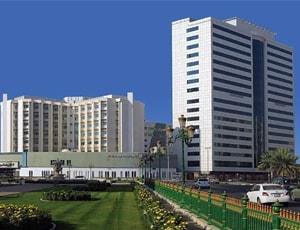
Kuala Lumpur, Malaysia
Number of Beds: 724
Year of Establishment: 1999
Frost & Sullivan: 2024 Malaysian Hospital Market Leadership Award
College of American Pathologists (CAP) Accreditation
Healthcare Asia Awards 2024: Hospital of the Year (Malaysia)
Healthcare Asia Awards 2024: Health Promotion Initiative of the Year
Reader’s Digest Trusted Brand 2024
Newsweek World’s Best Hospitals 2024
World Stroke Organisation (WSO) Angels Awards 2023 - Gold Award (Q4)
World Stroke Organisation (WSO) Angels Awards 2023 - Gold Award (Q3)

One of the top private hospitals in Thailand, Bangpakok 9 International Hospital is a member of the BPK Hospital Group. Bangpakok 9 International Hospital offers top-notch medical care to residents of Bangpakok and visitors from around the world. The hospital is outfitted with a skilled team of medical professionals, the most modern medical technology, and certification by JCI (Joint Commission International) and HA (Hospital Accreditation). The hospital offers a variety of diagnostic tools, such as computed tomography (CT scan), magnetic resonance imaging (MRI) machines, electromyography (EMG) diagnostic tools, sleep detection tools, and an exam room that is fully furnished.
For conditions like tumors, blood clots, epilepsy, brain injuries, swelling of the brain, and tangled blood vessels, a craniotomy procedure entails removing a portion of the skull. It can take up to two months for patients to recover from a craniotomy, during which time the hospital provides comprehensive and all-encompassing care to support patients' recovery. The neurological center not only offers patients effective medical care but also access to rehabilitation therapy programs that are customized to meet their unique needs. Dr. Tanakorn Suebpanwong, Dr. Somkiat Wongsuriyanan, and Dr. Vasinee Viarasilpa are some of the neuro specialists working at Bongpakok 9 International Hospital.
Best doctors for Craniotomy at Bangpakok 9 International Hospital:


Istanbul, Turkey
Number of Beds: 441
Year of Establishment: 2022


A committed group of neurologists with advanced training and experience has been assembled at the Phyathai 2 International Hospital's Neurological Center to offer top-notch neurological care. In order to improve the patient experience, the innovative, fully integrated model of care uses skilled nurses, cutting-edge tools like a neuro-navigator and a contemporary microscope, as well as minimally invasive procedures. For a thorough evaluation of brain conditions, a variety of diagnostic procedures are available, such as electroencephalography (EEG), polysomnography (PSG), electromyography (EMG), neurosonology, CT scanning, advanced 3D magnetic resonance imaging, magnetic resonance angiogram (MRA), selective cerebral angiography, and computerized transaxial angiography (CTA).
The hospital's skilled neurosurgeons perform craniotomies for diseases such as tumors, blood clots, epilepsy, brain injuries, swelling of the brain, and tangled blood vessels. In order to access the brain, a portion of the skull must be removed during this surgical procedure. The recovery process from a craniotomy can take up to two months, during which time the hospital offers comprehensive and all-encompassing care to support patients' recovery. In addition to providing effective treatment, the neurological center also gives patients access to programs of rehabilitation therapy that are tailored specifically to their needs. Assoc. Prof. Dr.Sombat Muengtaweepongsa, Dr.Thirasak Puenngarm, and Dr.Kraisri Chantra are some of the neurosurgeons at the hospital.
Best doctors for Craniotomy at Phyathai 2 International Hospital:


2023, Best Specialized Hospital Asia Pacific – Endocrinology
2023, Best Specialized Hospital Asia Pacific – Cardiology
2022, GlobalHealth Asia Pacific Child Development and Paediatric Service Provider of the Year in Asia Pacific
2022, Frost & Sullivan – Malaysia Emerging Hospital Company of the year award
2022, Malaysian Healthcare Tourism Corporation (MHTC) Elite member (Jan 2022 - Dec 2022)
2022, Malaysian Society for Quality in Health (MSQH) - (2020-2024)
2019, Healthcare Infection Control Management Resources (HICMR)
2018, The Brand Laureate Best Brand – Brand leadership Award (2018-2019)


Kuala Lumpur, Malaysia
Number of Beds: 442
Year of Establishment: 1985
Healthcare Asia Awards 2024, Subang Jaya Medical Centre wins ESG Program of the Year
Frost & Sullivan, Subang Jaya Medical Centre wins Best Practices Award, Malaysian Best Hospital Company of the Year
GlobalHealth Asia-Pacific Awards, Subang Jaya Medical Centre wins Hospital of the Year in Asia-Pacific
GlobalHealth Asia-Pacific Awards, Subang Jaya Medical Centre wins Advanced Genetic Centre Provider of the Year in Asia-Pacific
GlobalHealth Asia-Pacific Awards, Subang Jaya Medical Centre wins Diabetes Service Provider of the Year in Asia-Pacific
GlobalHealth Asia-Pacific Awards, Subang Jaya Medical Centre wins Multi-Disciplinary Oncology Service Provider of the Year in Asia-Pacific
GlobalHealth Asia-Pacific Awards, Subang Jaya Medical Centre wins CSR Service of the Year in Asia-Pacific
GlobalHealth MedTech Awards, Subang Jaya Medical Centre wins the Excellence in Digital Health Innovation of the Year


Ask your healthcare adviser for the best multiple options and choose the one that meets your expectations

A craniotomy is a surgical procedure that involves the temporary removal of a portion of the skull to access the brain. During the procedure, the surgeon carefully opens the skull to perform treatment and then closes the skull using special materials like plates or screws. During some craniotomies, computer systems and imaging techniques like magnetic resonance imaging (MRI) or computerized tomography (CT) scans may be used to precisely locate the part of the brain that needs to be treated.
A craniotomy can be used to treat a wide range of medical conditions related to the brain, including brain tumors (both benign and malignant), arteriovenous malformations (AVMs), cerebral aneurysms, traumatic brain injuries, intracranial hemorrhages, infections, epilepsy, and certain neurological disorders that require surgical intervention.
The recovery process after a craniotomy varies depending on the specific condition being treated, the extent of the surgery, and individual factors. After the procedure, the patient is closely monitored in the hospital's intensive care unit (ICU). The recovery period may involve pain management, monitoring for potential complications, physical and occupational therapy, and rehabilitation programs tailored to the patient's needs. The duration of recovery can vary, but it typically involves a combination of rest, medications, and follow-up appointments to monitor progress and ensure proper healing. Regular follow-up visits are scheduled to assess the patient's recovery and address any concerns or complications that may arise.
| Doctor Name | Cost | Book Appointment |
|---|---|---|
| Dr. Jevgenijus Skuryginas | 175 USD | Book Now |
| Dr. Manish Vaish | 23 USD | Book Now |
| Dr. Professor Mustafa Bozbuga | 114 USD | Book Now |
| Dr. Mustafa Kemal Hamamcioglu | 160 USD | Book Now |
| Dr. Akin Akakin | 88 USD | Book Now |

A craniotomy is a necessary neurosurgical procedure that requires a portion of the skull to be removed temporarily to access the brain for treatment (tumor resection, aneurysm repair,