Your Notifications
All done, no notifications

Orchidectomy Cost in Pune

Costs starts from USD500 to USD1500
Filters

Cost of Orchidectomy in Major cities of India

CityMinimum Cost (USD)Minimum Cost (INR)Maximum Cost (USD)Maximum Cost (INR)
AhmedabadUSD 45041949USD 1350125847
BangaloreUSD 50046610USD 1500139830
ChennaiUSD 50046610USD 1500139830
DelhiUSD 50046610USD 1500139830
Delhi / NCRUSD 40037288USD 1200111864
FaridabadUSD 50046610USD 1500139830
GhaziabadUSD 50046610USD 1500139830
GurgaonUSD 50046610USD 1500139830
HyderabadUSD 50046610USD 1500139830
KochiUSD 50046610USD 1500139830
KolkataUSD 50046610USD 1500139830
MohaliUSD 45041949USD 1350125847
MumbaiUSD 50046610USD 1500139830
NoidaUSD 50046610USD 1500139830
PuneUSD 45041949USD 1350125847

Need Help Planning Your Treatment Abroad?

Your 24/7 AI Health Assistant

Orchidectomy is done to treat conditions such as testicular cancer, severe testicular infection or injury, testicular torsion with irreversible damage, hormone-sensitive prostate cancer, or other disorders where removal of one or both testicles is necessary to relieve symptoms, control disease progression, or save the patient’s life.

You should see a doctor if you notice a testicular lump, persistent pain or swelling, signs of infection, or have been diagnosed with conditions such as testicular cancer or advanced prostate cancer requiring surgical treatment.

Preparation for orchiectomy includes a medical evaluation, discussion of the procedure, medication review, and following fasting instructions before surgery. Patients should also arrange transportation and prepare for post-surgical recovery at home.

  • Anaesthesia is given (general or regional)
  • A small incision is made in the scrotum or groin
  • The affected testicle is carefully detached and removed
  • The incision is closed with sutures and dressed
  • Patient is monitored in recovery and given post-surgery instructions
  • Discharge is usually the same day or after a short hospital stay

Orchidectomy is a fast outpatient surgery carried out under general or regional anaesthesia that typically takes 30 to 60 minutes.

  • Pain and Discomfort
  • Swelling and Bruising
  • Infection
  • Bleeding
  • Anesthesia Complications
  • Nerve Damage
  • Testicular Atrophy

Orchidectomy offers several important benefits, especially for patients with testicular cancer or hormone-related conditions. It is often a definitive treatment for testicular cancer, helping prevent cancer spread and significantly improving survival rates. The procedure also helps control hormone levels in hormone-dependent diseases, reducing symptoms caused by excess testosterone. For patients experiencing chronic testicular pain due to torsion, trauma, or infection, orchidectomy can provide lasting pain relief.

After an orchidectomy, patients may experience swelling, bruising, and mild pain, which is managed with medication. Light activities can usually be resumed within a week, while full recovery takes 4-6 weeks. Proper wound care, activity restrictions, and follow-up appointments are essential for safe healing.

In general, orchidectomy has a very good success rate, especially when testicular cancer is still in its early stages. Because the treatment successfully removes the main tumor and enables precise diagnosis and staging, 5-year survival rates for localised illness are frequently between 96 and 100%.

Would you like some help? We are available.

Get Help
Explore Hospitals ( 2 )
Orchidectomy in Ruby Hall Clinic: Costs, Top Doctors, and Reviews

Pune, India

  • National Accreditation Board for Hospitals & Healthcare Providers (NABH)
  • National Accreditation Board for Testing and Calibration Laboratories (NABL)

Ruby Hall Clinic located in Pune, India is accredited by NABH. Also listed below are some of the most prominent infrastructural details:

  • Ruby Hall Clinic brought in Intensive Care and Coronary care units as early as in 1969.
  • It was the pioneer in terms of having achieved the first successful Kidney Transplant and test tube baby in Pune and being the initiator for Cobalt Therapy to ensure Cancer treatment.
  • Imaging advancement is being used in the hospital which is highly advanced known as Positron Emission Tomography.
  • Ruby Hall Clinic is in the possession of two cardiac cath labs and Linear Accelerators.
  • There are as many as 550 in-patient beds which is inclusive of 130 ICU beds.
  • Air Ambulance services are provided by the hospital.
  • There is a multi-organ transplant centre which began operations in the year 1997 and a Neuro Trauma stroke centre.
  • There is also the presence of an independent Stroke Trauma Unit which is fully equipped and enabled with the right units and healthcare personnel.
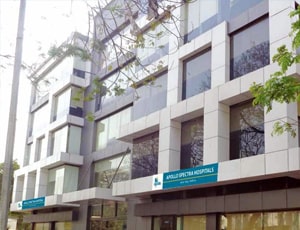
Orchidectomy in Apollo Spectra Hospital: Costs, Top Doctors, and Reviews

Pune, India

  • National Accreditation Board for Hospitals & Healthcare Providers (NABH)
  • National Accreditation Board for Testing and Calibration Laboratories (NABL)

Apollo Spectra Hospital located in Pune, India is accredited by JCI. Also listed below are some of the most prominent infrastructural details:

  • Present in a 30000 sq. ft. area
  • 5 beds are for critical care
  • 5 ultra-modern modular OTs
  • World class rehabilitation center
  • In-house pharmacy
  • Beautifully designed In-patients waiting area
  • 80 plus healthcare professionals which also includes 45 specialist consultants

Need Some Advice From Our Experts?

Request a Call Back Now!

Our team of healthcare experts would be happy to assist you

trusted Patientstrusted Patients+99
Trusted by 50000+ Patients
Required | alphabets and spaces
Required | A valid, working email address
Required | A valid contact

Process Involved for Orchidectomy in Pune

Diagnosis & Pre-Surgical Evaluation

  • Physical examination and medical history review
  • Blood and urine tests
  • Scrotal ultrasound or imaging if required
  • Fitness assessment for anesthesia

Pre-Surgery Preparations

  • Fasting before surgery
  • Medication review, especially blood thinners
  • Brief discussion of procedure and outcomes

Procedure

  • Performed under general or spinal anaesthesia
  • Surgical removal of one or both testicles
  • Small incision with no complex reconstruction

Post-Surgical Recovery

  • Short hospital stay or same-day discharge
  • Pain management and scrotal support
  • Return to routine activities within days

Long-Term Follow-Up

  • Regular urology follow-ups
  • Hormone level monitoring, if needed
  • Ongoing care based on the underlying condition
  • Testicular cancer
  • Advanced prostate cancer (hormone-sensitive)
  • Severe testicular trauma or injury
  • Testicular torsion with irreversible damage
  • Chronic testicular pain unresponsive to other treatments
  • Testicular infection or abscess not responding to medical therapy
  • Unilateral Orchiectomy: Removal of one testicle, commonly performed for localised testicular cancer or when only one testicle is affected by trauma or disease.
  • Bilateral Orchiectomy: Removal of both testicles, usually indicated in advanced prostate cancer or when both testicles are involved in serious conditions.
  • Subcapsular Orchiectomy: The testicular tissue is removed while preserving the outer capsule, helping reduce hormonal impact and maintain some testosterone production.
  • Transscrotal Orchiectomy: The testicle is removed through a scrotal incision, often used for unilateral cases and associated with faster recovery.
  • Inguinal Orchiectomy: The testicle is removed through an incision in the groin, commonly preferred for cancer cases due to better access to blood vessels and lymphatic control.
  • Patients diagnosed with testicular cancer requiring removal of the affected testicle
  • Individuals with hormone-dependent prostate cancer, where testosterone suppression is needed
  • People with severe testicular damage due to trauma, torsion, or infection
  • Patients experiencing chronic testicular pain not responding to conservative treatments
  • Individuals with non-viable or high-risk undescended testis
  • Testicular biopsy
  • Inguinal exploration
  • Retroperitoneal lymph node dissection (RPLND)
  • Chemotherapy
  • Radiotherapy
  • Testicular prosthesis implantation
  • Hormone therapy
  • Imaging and staging procedures (CT, MRI, ultrasound)
  • Effectively removes cancerous tissue in testicular cancer and allows accurate diagnosis
  • Helps lower hormone levels in hormone-sensitive cancers like prostate and breast cancer
  • Slows disease progression and improves treatment outcomes
  • Reduces cancer-related symptoms and complications
  • Can be a definitive, one-time surgical treatment in selected cases
  • Successful removal of the affected testicle or testicles
  • Reduction or control of cancer progression
  • Lower testosterone levels in hormone-dependent cancers
  • Relief from pain, swelling, or discomfort
  • Improved effectiveness of further cancer treatments
  • Fill out the inquiry form: Fill out the form to provide us with the relevant information about your condition.
  • Consult with Our Healthcare Expert: One of our qualified specialists will contact you for a consultation
  • Receive a Detailed Treatment Plan:After examining your situation, we will provide you with a detailed treatment plan that includes expert views and cost breakdowns for various choices.
  • Choose your preferred option: Choose the treatment option that suits you the best.

Instantly Connect with our Orchidectomy Specialists

Doctor 1
Doctor 2
Doctor 3
Doctor 4
Doctor 5
Doctor 6
Doctor 7
Doctor 8
Our Services to Better your Experience

Opinion & Option

We submit the most accurate opinion and options from one or more countries for your review

Consult Privately

Consult with a certified specialist privately on our telemedicine platform even before you decide to travel

Logistics

We handle flights, visas, transfers, and accommodation—so you can focus on your health.

Recovery

Our In-house rehabilitation service packages to better your recovery and treatment outcome

Other Popular Countries for Orchidectomy

Our network connects you with the leading medical tourism destinations globally, offering a wide range of cities, top doctors, and flexible pricing options.

Spain
Thailand
Turkey
United Kingdom

Frequently Asked Questions

Recovery after orchidectomy in India usually takes about 1 to 2 weeks, with most patients resuming normal daily activities gradually.

In addition to the procedure cost, patients may incur:
  • Pre-treatment tests
  • Medications during recovery
  • Follow-up consultations
  • Hospital stay in India is generally short, often requiring same-day discharge or a 1-day stay.

    Long-term care includes regular follow-ups, hormonal evaluation if both testes are removed, wound care, and monitoring for physical or emotional changes.

    India offers skilled urologists and oncologists, advanced surgical care, high safety standards, and cost-effective treatment options.

    Pre-treatment tests in India typically include blood tests, urine tests, imaging studies such as ultrasound or CT scan, and general fitness assessment.

    Yes, orchidectomy in India is safe for international patients when performed in accredited hospitals with experienced medical teams.

    The success rate of orchidectomy in India is high, generally above 95%, especially when performed for appropriate medical indications.

    Author

    Dr. Abdullah Rahil

    MPT (Neuro)

    5 Years of Experience

    Dr. Abdullah Rahil, M.P.T. (Neurology), is a dedicated physiotherapy professional specializing in orthopedic, neurological, and musculoskeletal rehabilitation. With strong clinical expertise, he focuses on improving patient mobility, reducing pain, and restoring functional independence through evidence-based rehabilitation techniques. He is skilled in advanced therapeutic approaches that support effective rehabilitation and recovery for a wide range of musculoskeletal and neurological conditions, focusing on improving mobility, reducing pain, and restoring functional independence. Dr. Rahil has extensive experience managing diverse rehabilitation cases. His patient-centered approach emphasizes personalized treatment plans, continuous assessment, and comprehensive rehabilitation to achieve optimal recovery outcomes. . View More