Your Notifications
All done, no notifications

Nephrectomy Cost in Tunisia

Costs starts from USD3500 to USD6000
Filters

How Much Does Nephrectomy Cost in Tunisia?

The cost of Nephrectomy in Tunisia is USD 3500 - USD 6000

However, this cost can vary depending on several factors, including the type and severity of the condition, treatment techniques chosen, the healthcare facility's location and reputation, the treating professionals' experience and specialisation, and the patient's overall health status.

Additionally, factors like the duration of treatment, the need for follow-up care, and the use of advanced technologies or specialised treatments can further influence the overall cost.

Factors Influencing the Cost of Nephrectomy:

A nephrectomy is a procedure in which a kidney is removed, whole or partially. It is usually performed by a urologic surgeon to remove a non-cancerous growth or to treat kidney cancer. Part of the kidney is removed during a partial nephrectomy, and some healthy tissue is left behind.

Surgeons may reach the kidney in several ways. One method is to make a single incision in the side or stomach region, which is known as an open nephrectomy. Another is to make several tiny incisions in the stomach region, which is known as a laparoscopic nephrectomy.

Occasionally, a robotic system is employed for laparoscopic operations. In robotic surgery, the surgeon operates surgical tools and a camera placed on robotic arms while sitting at a computer close to the operating table.

Cost of Nephrectomy in Major Cities of Tunisia

CityMinimum Cost (USD)Minimum Cost (TND)Maximum Cost (USD)Maximum Cost (TND)
MonastirUSD 31509387USD 540016092
TunisUSD 350010430USD 600017880

Nephrectomy Cost : A Global Comparison

CountryMinimum CostMinimum Local CurrencyMaximum CostMaximum Local Currency
IndiaUSD 2200INR 188408USD 4250INR 363970
Lithuaniaget request
MalaysiaUSD 5000MYR 21200USD 10000MYR 42400
MoroccoUSD 5000MAD 46150USD 10000MAD 92300
Saudi ArabiaUSD 8000SAR 30000USD 15000SAR 56250
SingaporeUSD 10000SGD 12900USD 30000SGD 38700
SpainUSD 15000ESP 2205598USD 25000ESP 3675997
ThailandUSD 15000THB 490650USD 25000THB 817750
TunisiaUSD 3500TND 10430USD 6000TND 17880
TurkeyUSD 7500TRY 292950USD 15000TRY 585900
United Arab EmiratesUSD 11500AED 42205USD 25000AED 91750
United Kingdomget request

Need Help Planning Your Treatment Abroad?

Your 24/7 AI Health Assistant

A nephrectomy is a surgical procedure to remove all or part of a kidney, typically performed to treat kidney cancer or to remove a benign tumor. A urologic surgeon performs this surgery.

There are different approaches to accessing the kidney. One method involves making a single large incision in the abdomen or side, known as an open nephrectomy. More commonly, the surgery is done through several small incisions in the abdomen, referred to as a laparoscopic nephrectomy. Sometimes, a robotic system is used for laparoscopic procedures. In robotic surgery, the surgeon operates surgical tools and a camera attached to robotic arms from a computer console near the operating table.

Types

There are two main types of Nephrectomy.

1)Radical nephrectomy: It removes the entire kidney.

2)Partial nephrectomy: It removes only a part of a kidney and leaves healthy tissue in place.

Why It's Done

A nephrectomy is most commonly performed to remove a tumor from the kidney, whether cancerous or benign. It can also be used to treat a diseased or damaged kidney. In addition, a nephrectomy is performed to remove a healthy kidney from a donor for transplantation into someone who needs a functioning kidney.

The most frequent cause of a nephrectomy is the removal of a kidney tumor. These tumors are often cancerous, but sometimes they're not. In other cases, nephrectomy can help treat a diseased or damaged kidney. Additionally, it is used to take a healthy kidney from an organ donor so that it can be transplanted into a recipient who needs a functional kidney.

Consult a physician if you get persistent headaches, particularly when standing, or if you experience infection symptoms like fever or redness at the puncture site. Watch for numbness, tingling, or weakness in your legs. After the procedure, get help if you have problems controlling your bowels or urinating.

To prevent surgical complications, your physician will evaluate your health, review your medications, and look for allergies before a nephrectomy. To lower the chance of aspiration and associated complications, you will be asked to fast the night before surgery. Your doctor will talk about the best surgical strategy for your situation and clarify which kidney will be removed.

Nephrectomy can be done with robotic assistance, open surgery, or laparoscopic surgery. While laparoscopic and robotic procedures use smaller incisions and specialized instruments for a less invasive approach, open surgery requires a wider incision. The patient's condition and the case's intricacy determine the approach that is used.

Your surgeon will give you a better idea of what to expect, but a nephrectomy typically takes 2-4 hours to complete, though it may take longer depending on the condition of your body.

  • Infection
  • Injury to nearby organs
  • Pneumonia after surgery
  • Bleeding
  • In very rare case kidney failure

  • Treating kidney cancer by removing a damaged or cancerous kidney.
  • Relieve symptoms such as pain, bleeding, or high blood pressure caused by a diseased kidney.

You will need to stay in the hospital for a few days following a nephrectomy in order to receive monitoring and pain relief. Physical activity is limited for several weeks to allow healing. Follow-up treatment guarantees a full recovery and evaluates the remaining kidney's function.

Nephrectomy has a high success rate, usually between 90 and 95 percent, depending on the patient's general health and the cause for the procedure.

Top Selling Packages for Nephrectomy

Laparoscopic Nephrectomy

Amrita Hospital, Faridabad, India

USD 3400 USD 3900

Would you like some help? We are available.

Get Help
Explore Hospitals ( 2 )
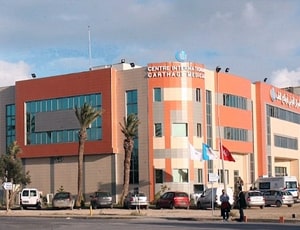
Nephrectomy in Carthage International Medical Center: Costs, Top Doctors, and Reviews

Monastir, Tunisia

  • Joint Commission International, or JCI

Apart from in-detail treatment procedures available, Carthage International Medical Center located in Monastir, Tunisia has a wide variety of facilities available for International Patients. Some of the facilities which are provided by them are Accommodation, Airport Transfer, Choice of Meals, Interpreter, SIM, TV inside room. Also listed below are some of the most prominent infrastructural details:

  • The Hospital covers an area of about 15,000 sqm with a capacity of about 133 beds
  • Standard Rooms & Suites facility is available in order to give them physical and psychological comfort to the patients
  • Furthermore, the rooms are equipped with plasterboard partitions for optimum sound and thermal comfort, individual bathrooms, a television with satellite reception, and a fire door, etc.
  • Ambulance of the Hospital is fully equipped with all the necessary medical equipment of latest technology ensuring the best medical transportation services of the patients
  • The hospital has a Department for international patients offering interpreter services for various languages
Nephrectomy in Taoufik Clinique: Costs, Top Doctors, and Reviews

Tunis, Tunisia

  • ISO 9001

Taoufik Clinique located in Tunis, Tunisia is accredited by JCI. Also listed below are some of the most prominent infrastructural details:

  • Laboratory services and High end medical imaging equipment is present at this clinic.
  • Emergency care services are also available.
  • The clinic has a health checkup center as well as an operation theatre.
  • The important disciplines at this hospital are cardiology, orthopedics, cosmetic surgery, oncology, urology, bariatric surgery, and gastroenterology among others.
  • Some cardiac conditions treated here are peripheral vascular disorder, heart valves disorder, cardiac muscle diseases, and acute and chronic pericarditis.
  • Orthopedic and spine surgery which also includes treatment of sports related injuries, and disorders of both upper and lower limb.
  • Cancer treatment is performed in Taoufik Clinique through chemotherapy, surgery, and radiation therapy.

Need Some Advice From Our Experts?

Request a Call Back Now!

Our team of healthcare experts would be happy to assist you

trusted Patientstrusted Patients+99
Trusted by 50000+ Patients
Required | alphabets and spaces
Required | A valid, working email address
Required | A valid contact

Process Involved for Nephrectomy in Tunisia

  • Consult: See a urologist or nephrologist to evaluate kidney function and decide if a nephrectomy is warranted.
  • Pre-surgical evaluation: Review medical history, take blood tests, and do imaging studies to assess kidney function and the degree of damage or disease.
  • Discussion of Treatment: Assess the surgical considerations (partial or radical nephrectomy), associated risks, and benefits, and decide whether it is possible to preserve the kidney.
  • Surgical Planning: Explain the surgical technique (laparoscopic, robotic, or open procedure), anesthesia regimen, and postoperative care.
  • Post-surgical follow-up: Periodic clinic visits to check kidney function, address any complications, and evaluate recovery.
  • Kidney Cancer.
  • Chronic Kidney Disease.
  • Kidney Trauma or Injury.
  • Polycystic Kidney Disease.
  • Kidney Transplant Donation.
  • Severe renal disease or illness for which conservative therapy is not effective.
  • Diseases such as renal injury, chronic kidney disease, or kidney cancer.
  • Kidney that is severely impaired or not functioning and poses health risks.
  • Evidence of the necessity of a nephrectomy is seen through an MRI, CT scan, or other imaging study.
  • Surgical removal of the injured or cancerous kidney enhances overall well-being.
  • Enhanced kidney function in instances of trauma or kidney cancer.
  • Living donors offer the possibility of transplanting a needy recipient.
  • Minimally invasive technique in laparoscopic or robotic nephrectomy provides quicker recovery.
  • Urologist
  • Nephrologist
  • Medical Oncologist
  • Fill out the inquiry form: Fill out the form to provide us with the relevant information about your condition.
  • Consult with Our Healthcare Expert: One of our qualified specialists will contact you for a consultation.
  • Receive a Detailed Treatment Plan: After examining your situation, we will provide you with a detailed treatment plan that includes expert views and cost breakdowns for various choices.
  • Choose your preferred option: Choose the treatment option that suits you the best.

Instantly Connect with our Nephrectomy Specialists

Doctor 1
Doctor 2
Doctor 3
Doctor 4
Doctor 5
Doctor 6
Doctor 7
Doctor 8
Our Services to Better your Experience

Opinion & Option

We submit the most accurate opinion and options from one or more countries for your review

Consult Privately

Consult with a certified specialist privately on our telemedicine platform even before you decide to travel

Logistics

We handle flights, visas, transfers, and accommodation—so you can focus on your health.

Recovery

Our In-house rehabilitation service packages to better your recovery and treatment outcome

Other Popular Countries for Nephrectomy

Our network connects you with the leading medical tourism destinations globally, offering a wide range of cities, top doctors, and flexible pricing options.

Italy
United Kingdom
Malaysia
Spain

Frequently Asked Questions

In Tunisia, the average starting cost for Nephrectomy is USD 1900. There many TEMOS certified hospitals in Tunisia that offer Nephrectomy

Nephrectomy package cost in Tunisia has different inclusions and exclusions. The cost quoted by some of the best hospitals for Nephrectomy in Tunisia generally covers the pre-surgery investigations of the patient. The treatment cost usually includes the expenses related to hospitalization, surgery, nursing, medicines, and anesthesia. There are many things that may increase the cost of Nephrectomy in Tunisia, including prolonged hospital stay and complications after the procedure.

There are many hospitals across the country that offer Nephrectomy to international patients. Some of the most renowned hospitals for Nephrectomy in Tunisia include the following:

  1. Le Centre International Carthage Medical
  2. Taoufik Clinique

Upon discharge from the hospital after Nephrectomy in Tunisia, the patients are advised to stay for about 21 days for recovery. This is important to ensure that the surgery was successful. During this time, control and follow-up tests take place to check for medical fitness.

Apart from the Nephrectomy cost, there are a few other daily charges that the patient may have to pay. These are the charges for daily meals and accommodation outside the hospital. These charges starts from USD 50 per person.

Some of the cpopular cities in Tunisia that offer Nephrectomy include the following:

  • Marsa
  • Tunis
  • El Manzah
  • Carthage
  • Soukra

The patient is supposed to stay at the hospital for about 3 days after Nephrectomy for monitoring and care. The doctors team review the patient's recovery during this time with the help of blood tests and imaging scans. Once they feel that everything is on track, the patient is discharged.

There are more than 2 hospitals that offer Nephrectomy in Tunisia. The above mentioned clinics have the required infrastructure and a dedicated unit where patients can be treated. Additionally, these hospitals are known to comply with the international standards as well as local legal requirements for the treatment of patients.

Author

Nimra Haseeb

MSc Biochemistry

4 Years of Experience

Miss Nimra Haseeb is a medical researcher and a scientific content writer. She holds a Bachelor’s degree in Biotechnology and a Master’s in Biochemistry from Integral University, Lucknow.With strong experience in healthcare research, she specializes in secondary research, clinical data analysis, and evidence-based medical writing. Her work focuses on transforming complex scientific and medical information into clear, accurate, and reliable healthcare content for patients and healthcare audiences. She is also experienced in interpreting medical studies and healthcare trends to deliver well-researched and informative content that supports better health awareness and decision-making.. View More