Your Notifications
All done, no notifications

Ileal Conduit Cost in Faridabad

Costs starts from USD3000 to USD6500
Filters

Cost of Ileal Conduit in Major cities of India

CityMinimum Cost (USD)Minimum Cost (INR)Maximum Cost (USD)Maximum Cost (INR)
AhmedabadUSD 2700251694USD 5850545337
BangaloreUSD 3000279660USD 6500605930
ChennaiUSD 3000279660USD 6500605930
DelhiUSD 3000279660USD 6500605930
FaridabadUSD 3000279660USD 6500605930
GhaziabadUSD 3000279660USD 6500605930
GurgaonUSD 3000279660USD 6500605930
HyderabadUSD 3000279660USD 6500605930
KochiUSD 3000279660USD 6500605930
KolkataUSD 3000279660USD 6500605930
MumbaiUSD 3000279660USD 6500605930
NoidaUSD 3000279660USD 6500605930
PuneUSD 2700251694USD 5850545337

Need Help Planning Your Treatment Abroad?

Your 24/7 AI Health Assistant

An ileal conduit is performed to divert urine from the kidneys to the exterior when the bladder can no longer safely store or pass urine. It is most commonly done after removal of the bladder (radical cystectomy), usually due to bladder cancer.

If you have severe bladder dysfunction, repeated UTIs, persistent urine issues, or have been diagnosed with a condition like bladder cancer that may necessitate urinary diversion, consult a physician. If you experience fever, pain, decreased urine output, stoma changes, leakage, or signs of infection after surgery, seek medical attention.

A review of current medications, blood and urine tests, imaging tests, and medical examinations is all part of the preparation process for an ileal conduit. Before surgery, your physician may recommend bowel preparation, fasting, and discontinuing certain medications, such as blood thinners. Additionally, you will learn basic stoma care, receive stoma education and marking, and discuss lifestyle modifications and post-surgical recovery with the medical staff.

Under general anaesthesia, ileal conduit surgery is performed. To maintain proper digestion, the surgeon removes a small segment of the small intestine (the ileum) and reconnects the remaining intestine. This intestinal segment is connected to the ureters, which transport urine from the kidneys. Urine can then be continuously drained into an external collecting bag by passing one end of the ileal segment through a hole in the abdominal wall to form a stoma. The surgical site is closed, and the patient is observed while healing, with attention to proper urinary flow and secure connections.

Ileal conduit surgery is typically performed together with bladder removal (cystectomy) and usually takes four to six hours to complete. Most patients remain in the hospital for 10 to 14 days following surgery, although depending on their recovery and general health, some may be discharged earlier, sometimes as soon as 5 days.

  • Urinary Tract Infections (UTIs)
  • Symptoms of Infection
  • Bleeding from the Stoma
  • Sore or Irritated Skin Around the Stoma
  • Stoma-Related Problems (Hernia)

  • Surgery is quicker and easier than alternative methods for urine diversion.
  • Reduced operating time and speedier post-operative recovery
  • Compared with more complex bladder reconstruction surgeries, there is a lower risk of urinary retention and certain urinary infections.
  • Ideal for elderly individuals or people with severe medical issues who might not be able to handle complicated or protracted surgery
  • Urinary diversion that is dependable and efficient following bladder removal (cystectomy)
  • Creates a permanent stoma for urine drainage using a brief section of the intestine.
  • It is appropriate when reconstruction is not feasible, as it does not require bladder replacement (neobladder).

Patients typically remain in the hospital for a few days to two weeks following ileal conduit surgery in order to monitor and recover. Medication is used to treat pain, and nutrition and hydration are progressively restored. Training in stoma care, including handling the urostomy bag and protecting the surrounding skin, is provided by the medical staff. With frequent follow-up appointments to monitor healing, renal function, and overall recovery, most patients can return to light activities within a few weeks.

For basic urine diversion and function, an ileal conduit has a good success rate. Long-term results are usually favourable, although success depends on controlling possible complications such as infections, urinary stones, stoma-related problems, and strictures at the ureter-ileum junction. While less invasive treatments may have lower success rates, surgical correction of strictures has a high success rate of about 80-90%.

Would you like some help? We are available.

Get Help
Explore Hospitals ( 3 )
Ileal Conduit in Asian Institute of Medical Sciences: Costs, Top Doctors, and Reviews

Faridabad, India

  • National Accreditation Board for Testing and Calibration Laboratories (NABL)
  • National Accreditation Board for Hospitals & Healthcare Providers (NABH)

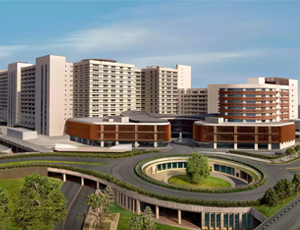
Asian Institute of Medical Sciences located in Faridabad, India is accredited by NABH, NABL. Also listed below are some of the most prominent infrastructural details:

  • 425 bed capacity
  • Preventive and diagnostic sevices of the hospital are its strength.
  • It is also well recognised for the therapeutic and rehabilitative services.
  • For patients who need end process care for advanced healthcare conditions, the palliative services that the hospital provides are a boon.
  • The healthcare delivery of AIMS, Delhi/NCR is focused on patient care.
  • Research focused organisation
  • International Patient care center is present to liason with medical travellers
  • Focus on Academics, various healthcare educational programmes
Ileal Conduit in Sarvodaya Hospital and Research Centre: Costs, Top Doctors, and Reviews

Faridabad, India

4.9 ( 4 Reviews )
  • National Accreditation Board for Hospitals & Healthcare Providers (NABH)
  • National Accreditation Board for Testing and Calibration Laboratories (NABL)

Sarvodaya Hospital and Research Centre located in Faridabad, India is accredited by NABH, NABL. Also listed below are some of the most prominent infrastructural details:

  • Sarvodaya Hospital has a 500 bed capacity which is inclusive of 65 ICU beds.
  • A dedicated dialysis unit for people with kidney conditions.
  • The hospital has a cancer center which makes cancer treatment a seamless process.
  • There is an upcoming oncology center in Sarvodaya Hospital Faridabad.
  • Technologies such as 128 Slice CT scan, 500 MA X-Ray, 1.5 Tesla MRI and Mammography facility.
Ileal Conduit in Amrita Hospital: Costs, Top Doctors, and Reviews

Faridabad, India

  • National Accreditation Board for Hospitals & Healthcare Providers (NABH)

Founded in 1998 by Mata Amritanandamayi (Amma), the Amrita Institute of Medical Sciences and Research Centre is one of India’s leading healthcare institutions, accredited by ISO, NABH, and NABL. With 2 branches, 7 medical colleges, and a network of 800+ doctors and 2,600+ beds, it offers comprehensive care across 81 specialties and 12 super-specialty departments, supported by 60+ modern operating theatres and 534 critical care beds. The Faridabad campus, a world-class multispeciality facility, houses advanced centers for oncology, neurosciences, cardiac sciences, gastro-sciences, mother and child care, and trauma care, along with India’s most comprehensive infectious disease unit. Guided by a mission of compassion and innovation, Amrita Hospitals combine cutting-edge medicine with humanitarian service to empower communities and promote holistic well-being.

Need Some Advice From Our Experts?

Request a Call Back Now!

Our team of healthcare experts would be happy to assist you

trusted Patientstrusted Patients+99
Trusted by 50000+ Patients
Required | alphabets and spaces
Required | A valid, working email address
Required | A valid contact

Process Involved for Ileal Conduit in Faridabad

Diagnosis & Pre-Surgical Evaluation

  • Urological evaluation, cystoscopy, imaging (CT/MRI/ultrasound), urine and blood tests
  • Assessment of kidney function, overall health, and surgical fitness

Pre-Surgery Preparations

  • Medication review and adjustments, fasting, and bowel preparation if required
  • Stoma site marking and counselling on stoma care
  • Discussion of surgical approach (open, laparoscopic, or robotic)

Procedure

  • Removal of the bladder (if required)
  • Creation of an ileal conduit using a small segment of the small intestine
  • Attachment of the ureters to the ileal segment and formation of a stoma

Post-Surgical Recovery

  • Hospital stay, pain control, and gradual return to fluids and diet
  • Stoma care training and monitoring for infections or complications

Long-Term Follow-Up

  • Regular follow-up visits to monitor kidney function and stoma health
  • Ongoing stoma care, lifestyle guidance, and surveillance for long-term complications
  • Bladder cancer
  • Severe bladder dysfunction
  • Neurogenic bladder
  • Radiation-damaged bladder
  • Congenital urinary tract abnormalities
  • Chronic bladder disease
  • Patients who have severe bladder dysfunction that cannot be managed with medications or less invasive treatments
  • Individuals diagnosed with neurogenic bladder, causing unsafe urine storage, recurrent infections, or kidney damage
  • Patients with congenital urinary tract abnormalities affecting normal urine flow or bladder function
  • Individuals with a radiation-damaged bladder resulting in poor bladder capacity, pain, or incontinence
  • Patients with chronic bladder disease for whom other surgical or non-surgical treatments have failed
  • Individuals at risk of progressive kidney damage due to impaired urine drainage
  • Patients who are medically fit to undergo major surgery and can manage long-term stoma care, either independently or with caregiver support
  • Radical cystectomy (removal of the bladder)
  • Pelvic lymph node dissection
  • Ureteral reimplantation
  • Stoma creation
  • Bowel reconstruction
  • Ureteral stent placement
  • Simple and reliable urinary diversion technique
  • Shorter and less complex surgery compared to other urinary diversion options
  • Faster recovery time after surgery
  • Lower risk of urinary retention compared to continent diversions
  • Suitable for older patients or those with multiple medical conditions
  • Effective option after bladder removal (cystectomy)
  • Does not require bladder reconstruction (neobladder)
  • Long-term durability with predictable outcomes
  • Effective and continuous urine drainage through a stoma
  • Protection of kidney function by ensuring proper urine flow
  • Relief from urinary obstruction or bladder-related symptoms
  • Stable long-term urinary diversion with regular stoma care
  • Improved quality of life when bladder function is no longer possible
  • Ability to resume daily activities after recovery and adaptation to stoma care
  • Fill out the inquiry form: Fill out the form to provide us with the relevant information about your condition.
  • Consult with Our Healthcare Expert:One of our qualified specialists will contact you for a consultation
  • Receive a Detailed Treatment Plan:After examining your situation, we will provide you with a detailed treatment plan that includes expert views and cost breakdowns for various choices.
  • Choose your preferred option: Choose the treatment option that suits you the best.

Instantly Connect with our Ileal Conduit Specialists

Doctor 1
Doctor 2
Doctor 3
Doctor 4
Doctor 5
Doctor 6
Doctor 7
Doctor 8
Our Services to Better your Experience

Opinion & Option

We submit the most accurate opinion and options from one or more countries for your review

Consult Privately

Consult with a certified specialist privately on our telemedicine platform even before you decide to travel

Logistics

We handle flights, visas, transfers, and accommodation—so you can focus on your health.

Recovery

Our In-house rehabilitation service packages to better your recovery and treatment outcome

Other Popular Countries for Ileal Conduit

Our network connects you with the leading medical tourism destinations globally, offering a wide range of cities, top doctors, and flexible pricing options.

United Arab Emirates
Malaysia
Spain
United Kingdom

Frequently Asked Questions

Initial recovery usually takes 4-6 weeks. During this time, patients gradually regain strength, adapt to stoma care, and return to normal daily activities, depending on overall health and surgical complexity.

In addition to the procedure cost, patients may incur:
  • Pre-treatment tests
  • Medications during recovery
  • Follow-up consultations
  • Most patients remain in the hospital for 7-14 days, depending on recovery progress, the absence of complications, and overall health status.

    Long-term care includes regular follow-up visits, monitoring of kidney function, stoma care and skin protection, management of urostomy supplies, and periodic imaging or laboratory tests to detect infections or complications early.

    Patients choose India for ileal conduit surgery due to experienced surgeons, advanced medical infrastructure, availability of minimally invasive techniques, comprehensive postoperative care, and cost-effective treatment options compared to many developed nations.

    Pre-treatment evaluation typically includes blood and urine tests, kidney function tests, imaging studies (CT, MRI, or ultrasound), cystoscopy, cardiac and pulmonary assessments, and a general fitness evaluation for surgery.

    Yes, ileal conduit surgery in India is considered safe for international patients. Hospitals adhere to international safety standards and provide dedicated international patient services, including care coordination and post-treatment support.

    The ileal conduit has a high success rate for urinary diversion, with good long-term outcomes when patients receive proper stoma care and regular medical follow-up.

    Author

    Dr. Vihan Gautam

    BPT, MS in Healthcare Mgmt

    3 Years of Experience

    Dr. Vihan Gautam is a distinguished Rehabilitation Specialist and Healthcare Management Professional, holding a Bachelor of Physiotherapy (BPT) from Rajiv Gandhi University of Health Sciences and a Master of Science in Healthcare Management (MSc) from the prestigious University of London, United Kingdom. With specialized clinical experience and his advanced medical knowledge in neuro-rehabilitation, musculoskeletal disorders, and evidence-based physiotherapy practices, enables him to develop patient-centered rehabilitation protocols and AI-driven care models that deliver measurable functional recovery outcomes. His diverse contributions across international rehabilitation programs, multidisciplinary care, and AI-driven healthcare initiatives uniquely position him as an emerging leader in neuro-rehabilitative care globally. . View More