Your Notifications
All done, no notifications

Stem Cell Therapy Cost in Ukraine

USD 5000 - USD 20000

Affordable World-class Treatment - Accredited Hospitals - Free Treatment Plan in 24 Hrs

15
Post-Hospital
50 - 90%
Success Rate
Stem Cell Therapy: Costs, Top Doctors, and Hospitals | MediGence
JCI/ISO 100,000+ Patients 24X7 Coordinator Visa & Travel handled
Your all-in-one medical travel platform for treatment, recovery & care.

Get Your Personalised Treatment Plan in Just 24 Hours.

Share your details to receive a personalised treatment plan, estimated costs, hospital recommendations, and expert guidance, “completely free.”

Required | alphabets and spaces
Required | A valid, working email address
Required | A valid contact
Connect with an Expert

Your information is protected with HIPAA-compliant security standards. We only share your details with hospitals after your consent.

Estimated Treatment Cost
USD 5000 - USD 20000
All-inclusive • Hospital + Medications + Recovery Assistance + Dedicated Care Coordinator

International Quality. Affordable Care.

What's included in your Stem Cell Therapy quote?

Stem Cell Therapy
Regenerative treatment using stem cells to repair or replace damaged tissues and support healing
Stem cell specialist consultation
Pre-treatment evaluation, treatment planning, and follow-up consultations
Treatment & supportive care
Stem cell harvesting/preparation (where applicable), administration, and recovery monitoring
Follow-up monitoring
Clinical assessment, progress evaluation, and routine follow-up visits
Visa & medical-visa invite letter
Airport pickup & transfers

Cost of Stem Cell Therapy in Major Cities of Ukraine

City Cost (USD)
Kyiv $5,000 – $20,000 Explore More

Stem Cell Therapy - Ukraine Vs the World

$0 - $0
$3k - $65k
$5k - $50k
$5k - $20k
$10k - $30k
$10k - $15k
$15k - $25k
$18k - $36k
$20k - $35k
Tanya Bose
Author

MSc Biotechnology

4 Years of Experience

Last Reviewed - June 2026

Tanya Bose is a medical content specialist with a strong medical background. She has completed her Bachelor's and Master’s in Biotechnology from Amity University. With a deep understanding of biomedical sciences and research, she develops authoritative and patient-focused medical content covering treatments, surgical procedures, and healthcare innovations. Her writing emphasizes accuracy, clarity, and evidence-based information to help readers better understand complex medical topics. She is dedicated to improving patient awareness and supporting informed healthcare decisions by delivering trustworthy medical insights in a clear and accessible format.
View More
Dr. Akash Khandelwal
Reviewer

Hematologist

9 Years of Experience

Last Reviewed - June 2026

Dr. Akash Khandelwal is a distinguished Hematologist, Hemato-oncologist, and Bone Marrow Transplant (BMT) Physician with extensive training from the prestigious AIIMS New Delhi. His expertise encompasses a wide range of specialized techniques in bone marrow transplantation, including autologous and allogeneic transplants such as matched sibling donors, matched unrelated donors (MUD), and haploidentical donor transplants. Dr. Khandelwal has personally supervised and conducted over 100 bone marrow transplants.
View More

Need Help Choosing the Right Treatment? Talk to a Medical Advisor

Our dedicated Medical Patient Advisors are here to answer your questions, help you compare treatment options, estimate costs, and guide you through every step of your healthcare journey.

15 min
Average response time

Serving Patients Worldwide in Multiple Languages.

Two significant features set stem cells apart from other types of cells. They can proliferate spontaneously into new cells. That is, they renew themselves. And through a process called differentiation, they can develop into other types of cells with distinct functions. Almost all tissues in the body include stem cells. Additionally, they are required for both tissue maintenance and post-injury repair.

The stem cells can differentiate into various tissues depending on where they are located. Hematopoietic stem cells, for instance, are found in the bone marrow and can produce every type of blood cell. Furthermore, stem cells can develop into other cell types such as bone, muscle, brain, or heart cells.

Various types of stem cells exist. The most adaptable stem cells are embryonic stem cells since they can differentiate into any type of fetal cell. Most stem cells in the body are mostly found in tissues and organs, where they may only aid in tissue and organ maintenance and repair. They are less capable of proliferating into new cells. No other body cell possesses an inherent ability to differentiate into new cell types.

What are the different types of Stem cells?

  • Adult stem cells: Small amounts of these stem cells can be detected in most adult organs, including fat and bone marrow. Adult stem cells are less able to differentiate into different bodily cells than embryonic stem cells.
  • Embryonic stem cells: These stem cells are derived from 3–5-day-old embryos. Approximately 150 cells make up a blastocyst, the term for this stage of the embryo. Because they are pluripotent, they can differentiate into multiple stem cells or any kind of cell found in the body. This makes it possible to heal or restore damaged tissue and organs using embryonic stem cells.
  • Adult cells altered to have properties of embryonic stem cells: Scientists have used genetic reprogramming to turn ordinary adult cells become stem cells. Researchers can make adult cells behave like embryonic stem cells by changing their DNA. They are called "induced pluripotent stem cells" (iPSCs). This novel approach might make it possible to use reprogrammed cells rather than embryonic stem cells and shield the newly created stem cells from the immune system's rejection.
  • Perinatal stem cells: Researchers have found stem cells in both umbilical cord blood and amniotic fluid. These stem cells can develop into specialized cells.
  • The sac that envelops and shields a developing fetus in the uterus is filled with amniotic fluid. In samples of amniotic fluid taken from pregnant men for diagnosis or treatment (a process known as amniocentesis), researchers have found stem cells in it.

What is the importance of Stem Cells?

The unique characteristics and potential uses of stem cells in research and therapy are the main reasons for their significance.

  • Regenerative medicine: During the early stages of life and growth, stem cells can differentiate into a wide variety of cell types within the body. They replenish tissues that are harmed by illness, trauma, or aging, acting as the body's healing system.
  • Understanding Development: Researchers are better able to comprehend how complex animals grow from a single cell thanks to their study of stem cells. grasp the course of illnesses and developmental disorders requires a grasp of these essential concepts.
  • Drug Testing and Screening: The safety and effectiveness of novel medications can be evaluated using stem cells. Their ability to be engineered into distinct cell types makes them a controlled model for studying diseases and testing possible remedies.
  • Potential therapy: A variety of illnesses and ailments for which there are insufficient medicines available now may be treated using stem cell therapy. Parkinson's disease, spinal cord injury, diabetes, heart disease, and other conditions are a few examples.
  • Tissue Engineering: Organs and tissues for transplantation can be created using stem cells. This may put an end to the organ shortage issue and remove the requirement for immunosuppressive medications.
  • Research Instrument: Stem cells offer a useful instrument for examining the course of illness and normal development. They make it possible for scientists to study the consequences of genetic alterations, verify theories regarding the causes of diseases, and create novel treatments.

Stem cell therapy is used to promote tissue repair and regeneration in conditions like joint disease, heart problems, and spinal cord injuries.Blood cancers are also treated with stem cell transplantation. Parkinson's and Alzheimer's disease are examples of degenerative disorders that it aids in managing.

Consult a physician if you have unexpected changes in your health, such as discomfort, breathing difficulties, or vision loss, or if your symptoms are persistent and odd.

Observe your doctor's directions for any fasting or medication adjustments in order to get ready for a procedure. Make travel arrangements if sedation is necessary, and make sure you understand the procedure details.

In stem cell therapy, autologous (derived from the patient) or allogenic (derived from a donor) stem cells are extracted and subsequently injected or transplanted into the injured area. The stem cells aid in tissue regeneration and cell replacement.

Depending on the type of treatment and the area being treated, stem cell therapy sessions usually last between 1 - 2 hours.

  • Infection at the site of transplant
  • Rejection of donor stem cells
  • Tumor formation in rare conditions if stem cells grow uncontrollably
  • Allergic reactions
  • Blood clotting or bleeding
  • Graft-versus-host disease

Stem cell therapy has the ability to treat chronic illnesses and injuries by promoting tissue regeneration and repairing damaged cells. Additionally, it may help in the restoration of function in degenerative disorders such as arthritis or spinal cord injuries.

Post-operative recovery from stem cell therapy generally involves minimal downtime. Within a few days, most patients are able to return to their regular activities, but some may feel moderate discomfort or swelling at the injection site.

Stem cell therapy has demonstrated encouraging outcomes in fields such as regenerative medicine, blood disorders, and degenerative diseases, while its success rate varies according on the condition being treated.

Explore Hospitals ( 1 )

Kyiv, Ukraine

ISO

Get Your Stem Cell Therapy
Plan in 24 hrs.

Our experienced Medical Patient Advisors have supported 100,000+ patients across 120+ countries with personalised treatment plans, hospital recommendations, cost estimates, and travel assistance, all free.

HIPAA-Compliant Data SecurityShared Only with Your Consent

Free Consultation No Obligation Personalized Treatment Plan Response Within 24 Hours

Required | alphabets and spaces
Required | A valid, working email address
Required | A valid contact

Your medical info has is HIPAA-style confidential. We never share with hospitals without your consent.

Jenny Wilson
Your Dedicated Medical Patient Advisor
Treatment planning • Hospital coordination • Multilingual support • Response within 15 minutes.
Our Services to Better your Experience

Opinion & Option

We submit the most accurate opinion and options from one or more countries for your review

Consult Privately

Consult with a certified specialist privately on our telemedicine platform even before you decide to travel

Logistics

We handle flights, visas, transfers, and accommodation—so you can focus on your health.

Recovery

Our In-house rehabilitation service packages to better your recovery and treatment outcome

Patient Stories

Marsha Akatu, Bone marrow transplant
Marsha Akatu
Marsha Akatu:Bone marrow transplant

Marsha Akatu from Kenya was suffering from Sickle Cell Anaemia. She got her treatment done at Medanta Hospital, Gurgaon, India.

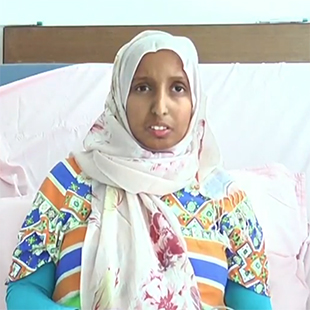
Bushra Masoud
Bushra Masoud
Bushra Masoud:Brain Tumor Treatment

Patient Testimonial: Bushra Masoud for Brain Marrow Treatment from Apollo Hospitals

Not Sure About Your Treatment Plan? Get a Free Second Opinion

Have your reports reviewed by independent oncology experts to help you make a confident treatment decision, all online within 48 hours.

Upload Your Reports
Free second opinion on your CAR-T plan