Affordable World-class Treatment - Accredited Hospitals - Free Treatment Plan in 24 Hrs

Share your details to receive a personalised treatment plan, estimated costs, hospital recommendations, and expert guidance, “completely free.”
Your information is protected with HIPAA-compliant security standards. We only share your details with hospitals after your consent.
The average cost of Heart Transplant in Ghaziabad approximately starts from USD 55000 - USD 65000
| City | Minimum Cost (USD) | Minimum Cost (INR) | Maximum Cost (USD) | Maximum Cost (INR) |
|---|---|---|---|---|
| Bangalore | USD 55000 | 4710200 | USD 65000 | 5566600 |
| Chennai | USD 55000 | 4710200 | USD 65000 | 5566600 |
| Delhi | USD 55000 | 4710200 | USD 65000 | 5566600 |
| Ghaziabad | USD 55000 | 4710200 | USD 65000 | 5566600 |
| Hyderabad | USD 55000 | 4710200 | USD 65000 | 5566600 |
| Kochi | USD 55000 | 4710200 | USD 65000 | 5566600 |
| Mumbai | USD 55000 | 4710200 | USD 65000 | 5566600 |
| Rajkot | USD 49500 | 4239180 | USD 58500 | 5009940 |
| City | Cost (USD) | |
|---|---|---|
| Bangalore | $55,000 – $65,000 | Explore More |
| Chennai | $55,000 – $65,000 | Explore More |
| Delhi | $55,000 – $65,000 | Explore More |
| Ghaziabad | $55,000 – $65,000 | Explore More |
| Gurgaon | $55,000 – $65,000 | Explore More |
| Hyderabad | $55,000 – $65,000 | Explore More |
| Kochi | $55,000 – $65,000 | Explore More |
| Mumbai | $55,000 – $65,000 | Explore More |
| Rajkot | $49,500 – $58,500 | Explore More |

Dr. Shagufta Parveen is a Clinical researcher and medical writer with expertise in clinical pharmacology and pharmacotherapeutics. She holds a B.Pharm and Doctor of Pharmacy (Post-Baccalaureate) degree from Teerthanker Mahaveer University, Moradabad.
During her clinical stint at BLK-Max Super Speciality Hospital and Indraprastha Apollo Hospital, she gained hands-on experience in the Clinical Pharmacology Department. Combining scientific knowledge with strong medical writing skills, Dr. Shagufta develops evidence-based healthcare content, treatment guides, and patient education resources.
Her work focuses on simplifying complex medical concepts while maintaining scientific accuracy, helping readers better understand healthcare advancements and treatment options.
In addition to her writing expertise, she is actively involved in scientific research and has contributed to peer-reviewed publications.
Her research work is accessible through the following links:
https://scholar.google.com/citations?user=lMVK1eIAAAAJ&hl=en
https://carcinogenesis.com/index.php/JOC/article/view/870

Our dedicated Medical Patient Advisors are here to answer your questions, help you compare treatment options, estimate costs, and guide you through every step of your healthcare journey.
Heart transplantation is necessary for patients with a diseased heart, especially when their heart function fails to improve despite undergoing surgeries and prolonged medication use. During this procedure, the patient's heart failure is replaced with a fully functional one from a brain-dead donor who is being kept alive on life support. Despite its life-saving potential, heart transplant surgeries remain rare due to the scarcity of suitable donors, exacerbated by concerns, such as aesthetic reasons, which deter many families from consenting to organ donation. Although heart transplant surgery is a major procedure, the post-operative survival rate is generally favorable, contingent upon the quality of post-surgical care.
This surgery is typically reserved for patients experiencing heart failure resulting from various conditions, including cardiomyopathy, previously failed heart transplants, coronary artery disease, cardiac valve disease, congenital heart defects, amyloidosis, and abnormal heart rhythms. Furthermore, heart transplant surgeries may involve the transplantation of other organs, such as the kidneys, liver, or lungs, depending on the patient's specific needs. However, not all heart patients qualify for transplantation; those with a history of cancer, a major illness that would significantly reduce life expectancy, active infections, advanced age, or unhealthy lifestyle habits are generally deemed unsuitable candidates for heart transplant surgery.
When alternative therapies are unable to control severe heart failure, heart transplants are performed. Cardiomyopathy, arrhythmias, valve disease, coronary artery disease, and prior transplant failure are among the reasons in adults. The primary reasons in children are cardiomyopathy or congenital cardiac abnormalities.
If you suffer from severe shortness of breath, exhaustion, fluid retention, a fast heartbeat, or chest pain that doesn't go away with medicine or lifestyle modifications, you should see a doctor. Determining whether advanced treatments, such as a heart transplant, are necessary can be aided by early evaluation.
Prior to receiving a heart transplant, you will be sent to a transplant program and go through a comprehensive evaluation. The waiting list will include you if you qualify. A mechanical device may be required in certain situations to support the function of your heart until a donor heart becomes available, and you will continue to receive medical treatment throughout this time.
During a heart transplant, a heart-lung bypass machine is connected, ventilator assistance is provided, and general anesthesia is administered. Your failing heart is removed by the surgeon, who then connects the donor heart to your main blood vessels. The new heart may need help to start beating with an external pacing device.
The average duration of a heart transplant procedure is 4-6 hours. However, the complexity of the procedure and the state of the patient may cause it to take longer.
When all other choices have been exhausted, heart transplantation can save your life, which is the most significant advantage.
A hospital stay of 1-3 weeks is necessary for post-heart transplant recovery, during which time complications must be closely monitored. Long-term success requires consistent medication, physical therapy, and frequent follow-up appointments. With lifestyle modifications to maintain heart health, a full recovery could take 6-12 months.
Over time, the success rate of cardiac transplants has increased dramatically. 5 year survival rates are at 70-75%, while 1 year survival rates are roughly 85-90%.
85–90%
One-year survival rate after heart transplantation2–4 weeks
Typical hospital stay3–6 months
Return to normal daily activities depending on recovery and rehabilitationGhaziabad, India
Our experienced Medical Patient Advisors have supported 100,000+ patients across 120+ countries with personalised treatment plans, hospital recommendations, cost estimates, and travel assistance, all free.
✓ Free Consultation ✓ No Obligation ✓ Personalized Treatment Plan ✓ Response Within 24 Hours
Your medical info is kept HIPAA-style confidential. We never share with hospitals without your consent.

Opinion & Option
We submit the most accurate opinion and options from one or more countries for your review
Consult Privately
Consult with a certified specialist privately on our telemedicine platform even before you decide to travel
Logistics
We handle flights, visas, transfers, and accommodation—so you can focus on your health.
Recovery
Our In-house rehabilitation service packages to better your recovery and treatment outcome

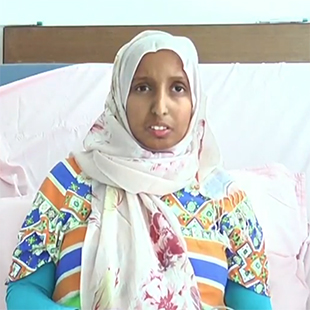
Marsha Akatu from Kenya was suffering from Sickle Cell Anaemia. She got her treatment done at Medanta Hospital, Gurgaon, India.

Patient Testimonial: Bushra Masoud for Brain Marrow Treatment from Apollo Hospitals
$100000 is the starting cost of Heart Transplant Surgery in Ghaziabad. While there are wide range of hospitals offering Heart Transplantation, international patients should always seek JCI-Certified Hospitals in Ghaziabad for the best results.
The Heart Transplant package cost in Ghaziabad varies from one hospital to another and may offer different benefits. The cost quoted by some of the best hospitals for Heart Transplant in Ghaziabad generally covers the pre-surgery investigations of the patient. The Heart Transplant package in Ghaziabad includes the fees of the surgeon, hospitalization and anesthesia as well. A prolonged hospital stay due to delayed recovery, new diagnosis and complications after surgery may increase the cost of Heart Transplant in Ghaziabad.
There are several best hospitals for Heart Transplant in Ghaziabad. The following are some of the most renowned hospitals for Heart Transplant in Ghaziabad:
The recovery of the patient many vary, depending on several factors. However, on an average, patient is supposed to stay for about 35 days in the country after discharge. During this time, the patient undergoes medical tests and consultations. this is to ensure that the treatment was successful and the patient us safe to return.
Ghaziabad is one of the most popular cities for Heart Transplant in the world. The country offers the best cost of Heart Transplant, best doctors, and advanced hospital infrastructure. there are a select few destinations that provide comparable quality of healthcare for the procedure. Some of such cities are:
Apart from the Heart Transplant cost, the patient may have to pay for additional daily expenses such as for guest house after discharge and meals. These charges may vary from 25 USD per person.
It is possible for patients to opt for video telemedicine consultation before they come for Heart Transplant in Ghaziabad. There are many kidney transpant surgeons who offer video telemedicine consultation, including the following:
Some of the most sought after doctors available for online video consultation for Heart Transplant in Ghaziabad are:
| Doctor Name | Cost | Book Appointment |
|---|---|---|
| Dr. Manoj K Singhal | 60 | Book Now |
The patient is supposed to stay at the hospital for about 10 Days after Heart Transplant surgery for monitoring and care. This phase is important to ensure that the patient is recovering well and is clinically stable. During this time, several tests are performed before the patient is deemed suitable for discharge.
The overall rating for hospitals providing Heart Transplant in Ghaziabad is 4.9. This rating is automatically calculated on the basis of several parameters such as the infrastructure of the hospital, quality of services, nursing support, and other services.
There are about 1 Hospitals in Ghaziabad that offer Heart Transplant to international patients. These hospitals are approved to perform the surgery and have proper infrastructure to handle Heart Transplant patients. Also, these hospitals follow the necessary guidelines as required by the medical associations for the treatment of Heart Transplant patients.
Some of the most sought after doctors for Heart Transplant in Ghaziabad are:
Have your reports reviewed by independent oncology experts to help you make a confident treatment decision, all online within 48 hours.
Upload Your Reports