Your Notifications
All done, no notifications

Cost of Posterior Cruciate Ligament (PCL) Reconstruction Worldwide

Get a Quote

Affordable World-class Treatment - Accredited Hospitals - Free Treatment Plan in 24 Hrs

1
Days in Hospital
9
Post-Hospital
90 - 95%
Success Rate
Posterior Cruciate Ligament (PCL) Reconstruction
JCI/ISO 100,000+ Patients 24X7 Coordinator Visa & Travel handled
Your all-in-one medical travel platform for treatment, recovery & care.


Get Your Personalised Treatment Plan in Just 24 Hours.

Share your details to receive a personalised treatment plan, estimated costs, hospital recommendations, and expert guidance, “completely free.”

Required | alphabets and spaces
Required | A valid, working email address
Required | A valid contact
Connect with an Expert

Your information is protected with HIPAA-compliant security standards. We only share your details with hospitals after your consent.

Estimated Treatment Cost
All-inclusive • Hospital + Medications + Recovery Assistance + Dedicated Care Coordinator

International Quality. Affordable Care.
Alvina Hasan
Author

M.Pharm

2 Year of Experience

Last Reviewed - June 2026

Alvina Hasan is a dedicated medical researcher and scientific writer with a strong foundation in pharmaceutical sciences. She holds a B.Pharm from Jamia Hamdard University and an M.Pharm in Quality Assurance from DIPSAR University.

With deep medical expertise and a strong interest in healthcare communication, she focuses on transforming complex clinical and scientific information into clear, engaging, and easy-to-understand narratives. She develops insightful healthcare articles and research-driven content designed to support both medical professionals and patients, helping bridge the gap between advanced medical knowledge and practical understanding.

Readers can explore her published research and articles here:

https://carcinogenesis.com/index.php/JOC/article/view/868

https://carcinogenesis.com/index.php/JOC/article/view/870

View More
Dr. Manoj Miglani
Reviewer

Orthopedic Surgeon

22 Years of Experience

Last Reviewed - June 2026

Known for his soft-spoken nature, Dr. Manon Miglani had completed his MBBS from Maulana Azad Medical College and MS (Ortho) for All India Institute of Medical Sciences. Dr. Miglani was awarded AO spine fellowship from Queen’s Medical Center, Nottingham and he also received Stryker fellowship in Arthroplasty from Indraprastha Apollo Hospital. Dr. Manon Miglani has provided his expert services to various hospitals of Delhi and NCR including AIIMS, Indraprastha Apollo, Jaipur Golden hospital, and Artemis hospital Presently, Dr. Manon is the additional director of Fortis, Vasant Kunj and senior consultant at Fortis, Shalimar Bagh.
View More

Need Help Choosing the Right Treatment? Talk to a Medical Advisor

Our dedicated Medical Patient Advisors are here to answer your questions, help you compare treatment options, estimate costs, and guide you through every step of your healthcare journey.

15 min
Average response time

Serving Patients Worldwide in Multiple Languages.

PCL Reconstruction is an operation to repair a torn ligament inside the knee that helps keep the joint steady. When the ligament is hurt, the knee may feel unstable or shaky.

In this surgery, the injured ligament is taken out and replaced with a new tendon, either from the patient’s own body or from a donor. The surgeon makes minor incisions and uses a tiny camera to guide the repair, avoiding a large incision.

After surgery, patients typically undergo exercises and physical therapy to help their knee regain strength and motion. Recovery usually takes several months before normal activities can be resumed.

PCL reconstruction is done to restore knee stability after a complete or severe tear of the posterior cruciate ligament. This procedure is often necessary when the injury causes pain, instability, or limits physical activity. It involves replacing the torn ligament with a tissue graft. This helps prevent long-term joint damage and the onset of early arthritis.

You should see a doctor if you have knee pain, swelling, or instability after a trauma, especially if the shin bone seems to move backwards. Difficulty walking or being unable to bear weight are warning signs. MRI scans can confirm a PCL injury. Early consultation can help prevent the injury from getting worse.

Preparation includes a physical examination, an MRI scan, and blood tests. You may need to stop taking certain medications, such as blood thinners temporarily. Your doctor might recommend prehabilitation with physical therapy to strengthen muscles. If you plan to have general anesthesia, your doctor will provide fasting instructions.

The surgeon performs the reconstruction arthroscopically, using small incisions and a camera-guided tool. A graft, often from the hamstring or a donor, is used to replace the torn PCL. The graft is secured in place with screws or other devices. After that, the incisions are closed and a brace is applied.

PCL reconstruction typically takes between 90 minutes and 2 hours. It usually occurs as a day procedure, though some cases may need overnight observation. The initial recovery starts in a brace with limited movement. Walking with crutches is common for the first few weeks after surgery.

  • Infection at the surgical site
  • Blood clots or deep vein thrombosis
  • Knee stiffness or limited range of motion
  • Graft failure or loosening
  • Nerve or vessel injury

  • Restored knee stability and improved movement
  • Reduced pain and improved joint function
  • Prevention of further cartilage or ligament damage
  • Return to sports and physical activities
  • Long-term protection against knee degeneration

Recovery involves physical therapy, bracing, and limited weight-bearing. The initial healing phase lasts 6 to 8 weeks, followed by a period of progressive strengthening. Full recovery and return to high-impact sports may take 6 to 12 months. Regular follow-ups ensure the graft heals properly.

PCL reconstruction has a success rate of 80 to 90%, primarily when performed by experienced orthopedic surgeons. Most patients regain stability and function, allowing them to participate in daily activities and sports. Long-term outcomes are favourable when combined with consistent rehabilitation and proper injury prevention.

Explore Hospitals ( 246 )

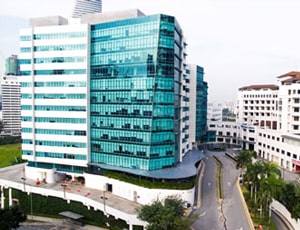
Kuala Lumpur, Malaysia

MSQH

Dubai, United Arab Emirates

4.5 - 1 review · 100+ Beds · 165+ Procedures
JCI

Novena, Singapore

JCI

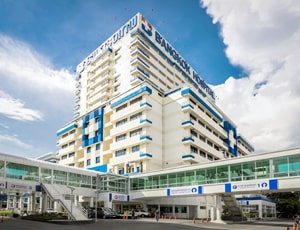
Bangkok, Thailand

JCI

Seoul, South Korea

ISO

Singapore, Singapore

JCI

Delhi, India

5.0 - 1 review · 650+ Beds · 302+ Procedures
JCI NABH

Bangkok, Thailand

JCI

Kuala Lumpur, Malaysia

JCI MSQH

Get Your Posterior Cruciate Ligament (PCL) Reconstruction
Plan in 24 hrs.

Our experienced Medical Patient Advisors have supported 100,000+ patients across 120+ countries with personalised treatment plans, hospital recommendations, cost estimates, and travel assistance, all free.

HIPAA-Compliant Data SecurityShared Only with Your Consent

Free Consultation No Obligation Personalized Treatment Plan Response Within 24 Hours

Required | alphabets and spaces
Required | A valid, working email address
Required | A valid contact

Your medical info has is HIPAA-style confidential. We never share with hospitals without your consent.

Process Involved for Posterior Cruciate Ligament (PCL) Reconstruction

  • Diagnosis: The doctor examines your knee through a physical exam and imaging tests, such as X-rays or MRIs, to confirm the PCL injury.
  • Pre-Surgery Preparation: This includes medical checkups, discontinuing certain medications, and beginning gentle exercises to strengthen the knee before surgery.
  • Surgery: The damaged PCL is replaced with a new tissue graft—either from your own body or a donor using minimally invasive tools.
  • Post-Surgery Care: Immediately after surgery, the knee is kept supported with a brace, and pain is managed with medication.
  • Rehabilitation: Physical therapy begins gradually to help the knee regain strength, movement, and balance over several months.
  • Return to Normal Activities: Most people can walk normally within a few weeks and return to sports or full activity in 9 to 12 months, depending on the healing progress.
  • Complete PCL Tear: When the ligament is fully torn and cannot heal on its own, surgery helps repair the knee and restore stability.
  • Chronic Knee Instability: If the knee continues to feel loose or give way long after an injury, reconstruction is necessary to restore its strength.
  • Multiple Ligament Injuries: PCL tears can occur in conjunction with other ligament injuries. Surgery is often unnecessary to repair the knee and provide proper support.
  • Joint Damage Alongside PCL Injury: When damage to the bone or cartilage accompanies a PCL tear, reconstruction helps protect the joint and prevent long-term complications, such as arthritis.
  • When Physical Therapy Doesn’t Work: If rest, bracing, and exercises don’t help with pain or weakness, surgery becomes the best option to restore knee function.
  • Knee Check: The doctor checks your knee using tests and scans, such as an MRI, to identify the injured ligament.
  • Anaesthesia: You receive medicine to make sure you don’t feel any pain during the surgery, either by being asleep or having the lower body numbed.
  • Using a Small Camera: A tiny camera is inserted into the knee, allowing the surgeon to view the damaged area.
  • Taking the New Ligament: A strong piece of tissue, called a graft, is taken from your own body or from a donor to replace the damaged ligament.
  • Preparing Bone Tunnels: The surgeon carefully creates small holes inside the thigh and shin bones to hold the new ligament in place.
  • Placing the Graft: The new ligament is threaded through these holes and secured in place using small screws or anchors.
  • Closing the Incisions: The surgeon closes the minor cuts with stitches or glue once the ligament is fixed.
  • Starting Recovery: A knee brace is worn to protect the joint, and gentle physical therapy begins to help restore movement and strength.
  • Meniscectomy
  • Chondroplasty
  • Osteotomy
  • Arthroscopy
  • Debridement
  • Synovectomy
  • Ligamentoplasty
  • Microfracture
  • Allografting
  • Autografting
  • Makes the Knee Stable Again: After surgery, the knee feels strong and steady, so it doesn’t slip or feel wobbly when walking or running.
  • Less Pain: Repairing the torn ligament helps reduce pain and makes movement more comfortable.
  • Stops More Damage: A stable knee means other parts of the joint, like bones and cartilage, won’t get hurt over time.
  • Easier to Move: The knee bends and straightens better, so daily things like climbing stairs or playing become easier.
  • Back to Sports and Activities: With a healthy knee, it’s safer to go back to games, dancing, or sports you enjoy.
  • Protects the Knee in the Long Run: Addressing the issue now can help maintain your knee's health for many years and reduce the risk of arthritis.
  • Please complete the form to provide us with relevant information about your condition.
  • Consult with Our Healthcare Expert: One of our qualified specialists will contact you for a consultation.
  • Receive a Detailed Treatment Plan: After examining your situation, we will provide you with a detailed treatment plan that includes expert opinions and a cost breakdown for various options.
  • Select your preferred option: Choose the therapy option that best suits your needs.
  • Seamless Organisation: We will manage all the details, including visas, flights, accommodations, and transfers, for a stress-free journey.
Jenny Wilson
Your Dedicated Medical Patient Advisor
Treatment planning • Hospital coordination • Multilingual support • Response within 15 minutes.
Our Services to Better your Experience

Opinion & Option

We submit the most accurate opinion and options from one or more countries for your review

Consult Privately

Consult with a certified specialist privately on our telemedicine platform even before you decide to travel

Logistics

We handle flights, visas, transfers, and accommodation—so you can focus on your health.

Recovery

Our In-house rehabilitation service packages to better your recovery and treatment outcome

Not Sure About Your Treatment Plan? Get a Free Second Opinion

Have your reports reviewed by independent oncology experts to help you make a confident treatment decision, all online within 48 hours.

Upload Your Reports
Free second opinion on your CAR-T plan