Your Notifications
All done, no notifications

Corrective osteotomy fixation and ligament reconstruction surgery Cost in Noida

Costs starts from USD7000 to USD11000
Filters

Cost of Corrective osteotomy fixation and ligament reconstruction surgery in Major cities of India

CityMinimum Cost (USD)Minimum Cost (INR)Maximum Cost (USD)Maximum Cost (INR)
AhmedabadUSD 6300539532USD 9900847836
BangaloreUSD 7000599480USD 11000942040
ChennaiUSD 7000599480USD 11000942040
DelhiUSD 7000599480USD 11000942040
FaridabadUSD 7000599480USD 11000942040
GhaziabadUSD 7000599480USD 11000942040
GurgaonUSD 7000599480USD 11000942040
GurugramUSD 7000599480USD 11000942040
HyderabadUSD 7000599480USD 11000942040
KochiUSD 7000599480USD 11000942040
KolkataUSD 7000599480USD 11000942040
MohaliUSD 6300539532USD 9900847836
MumbaiUSD 7000599480USD 11000942040
NoidaUSD 7000599480USD 11000942040
PanjimUSD 6300539532USD 9900847836

Need Help Planning Your Treatment Abroad?

Your 24/7 AI Health Assistant

“Corrective Osteotomy Fixation and Ligament Reconstruction Surgery” is a specialised orthopaedic treatment used to address bone deformities, non-healing fractures, and ligament injuries in patients of all ages. The procedure is commonly performed on patients with conditions such as malunited fractures, congenital bone deformities, or ligament damage from trauma. Surgeons begin by carefully cutting and realigning the bone (osteotomy) to its proper position to restore joint function and improve alignment. To secure the bone in place, metal plates, rods, or screws are used, or in some cases, an external fixator may be applied. If necessary, a bone graft is added to promote bone healing and fusion, thereby assisting in the natural growth process.

When ligament reconstruction is part of the procedure, tendon grafts repair or replace damaged ligaments, ensuring proper joint stability. The overall aim of the surgery is to enhance leg strength, correct deformities, and improve mobility. This will ultimately enable the patient to walk and move more naturally, alleviate pain, and improve their quality of life.

This combined surgical approach is performed to realign bones and repair or reconstruct damaged ligaments, often in cases of limb deformity, joint instability, or previous trauma that caused both bone misalignment and soft tissue damage. Commonly seen in the knee, ankle, or elbow, this procedure aims to restore joint stability, function, and alignment, relieve pain, and prevent long-term issues such as arthritis, gait abnormalities, or functional limitations. Bone grafting may be used to enhance structural support and healing.

Consult an orthopaedic specialist if you have joint instability, difficulty walking, visible limb deformity, chronic pain after injury, or if you’ve suffered repeated ligament injuries (e.g., ACL tears) that have caused abnormal loading on the joint. Children with congenital deformities or adults with old fractures or joint degeneration may also be candidates for combined corrective surgery.

Preparation begins with a full orthopaedic assessment, including X-rays, MRI, CT scans, and gait analysis (if needed). This helps determine the degree of deformity and ligament integrity. A personalised surgical plan is developed using 3D imaging. Routine pre-op lab tests and anaesthesia clearance are done. Patients are advised to fast for 6–8 hours prior to surgery and stop certain medications such as blood thinners. Education is provided about the recovery process and need for post-op physiotherapy.

The procedure is done under general or regional anaesthesia and may take 3 to 5 hours, depending on complexity.
  • Corrective Osteotomy: The bone is cut at a specific angle to realign it properly. The new position is held in place using metal plates, rods, or screws.
  • Ligament Reconstruction: Torn or degenerated ligaments are reconstructed using tendon grafts (either autograft or allograft). This restores joint stability and function.
  • Fixation & Bone Grafting: A bone graft may be placed at the osteotomy site to promote healing and bridge gaps if necessary.
Minimally invasive or arthroscopic techniques may be used for the ligament portion, depending on the joint involved.

Surgery duration ranges from 3 to 5 hours, based on the extent of correction. Hospital stay is typically 2 to 5 days. Initial non-weight-bearing or bracing may be required for 4 to 8 weeks, followed by gradual return to activity.

  • Infection
  • Delayed bone healing or nonunion
  • Nerve or blood vessel injury
  • Graft failure
  • Joint stiffness
  • Implant irritation or loosening
  • Incomplete correction or recurrence of instability

  • Restores normal alignment and joint stability
  • Prevents early-onset arthritis
  • Relieves chronic joint pain and dysfunction
  • Improves weight-bearing and walking ability
  • Enhances long-term joint durability and performance

Recovery involves immobilization, use of crutches or braces, and gradual progression to full weight-bearing. Physical therapy is essential to regain range of motion, muscle strength, and joint control. Full recovery may take 4 to 6 months, with return to sports or strenuous activity often after 8–12 months, depending on the joint and surgical technique used.

This surgery has a success rate of 85–95%, especially when performed in specialised orthopaedic centres. Most patients experience significant improvement in function, alignment, and pain relief. With proper rehabilitation and follow-up, long-term outcomes are excellent and recurrence is rare.

Would you like some help? We are available.

Get Help
Explore Hospitals ( 4 )
Corrective osteotomy fixation and ligament reconstruction surgery in Sharda Hospital: Costs, Top Doctors, and Reviews

Noida, India

  • National Accreditation Board for Hospitals & Healthcare Providers (NABH)

Sharda Hospital located in Greater Noida, India is accredited by ISO, NABH. Also listed below are some of the most prominent infrastructural details:

  • The hospital is equipped with the best of technologically advanced equipment.
  • Sharda Hospital, Delhi has a bed capacity of 900.
  • There are as many as 90 beds in the critical care section.
  • The critical care facilities are present for general medicine, Pulmonology, Surgery, Paediatrics, Neonatology, Cardiology, Cardiothoracic surgery and Neurosciences.
  • There are Centers of Excellence such as Institute of Child Care, Institute of Dental Sciences, Institute of Orthopedic & Spine,Institute of Neuro Sciences, Institute of Minimal Access Surgery etc.
  • Virtual consultations in the form of Telemedicine and Teleradiology are a reality at an advanced hospital such as Sharda Hospital.
  • There is also a Tele ICU facility that ensures that a virtual ICU is a functioning system. It is aided with audio visual communication systems, latest computers, a team which is networking and a physically present ICU team.
  • 24/7 Emergency care available aided with buses as well as ambulances.
  • Exceptional International patient care coordination is available throughout the system helping patients with transfer, travel, treatments.
Corrective osteotomy fixation and ligament reconstruction surgery in Metro Hospital: Costs, Top Doctors, and Reviews

Noida, India

  • National Accreditation Board for Testing and Calibration Laboratories (NABL)
  • National Accreditation Board for Hospitals & Healthcare Providers (NABH)

Metro Hospital located in Noida, India is accredited by ISO, NABH, NABL. Also listed below are some of the most prominent infrastructural details:

  • Metro Hospital is a 317 bedded state-of-the-art super speciality hospital, which is functioning as two units- 110 beds capacity in Metro Heart Institute and 207 beds capacity in Metro Multispeciality Hospital
  • 45 beds in Intensive Coronary Care and High Dependency Unit
  • 24/7 Blood Bank
  • 24/7 Pharmacy
  • 24/7 Cardiac Ambulance
  • 24/7 Emergency unit
  • Different types of patients in-patient rooms are available for patients convenience- Super Deluxe rooms (8), Deluxe Rooms (2), Private Rooms (6), Semi-private rooms (14), Triple bedded rooms (6), Four bedded rooms (8), Five bedded rooms (5) and Six bedded rooms (12)
  • Cafeteria/Restaurant
Corrective osteotomy fixation and ligament reconstruction surgery in Fortis Hospital: Costs, Top Doctors, and Reviews

Noida, India

3.0 ( 1 Reviews )
  • National Accreditation Board for Hospitals & Healthcare Providers (NABH)
  • National Accreditation Board for Testing and Calibration Laboratories (NABL)

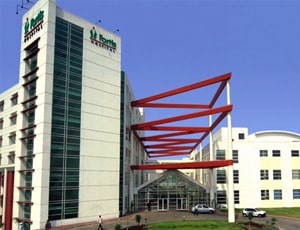
Fortis Healthcare Limited is one of India’s prominent providers of integrated healthcare services, offering comprehensive medical care across multiple specialities. The company’s operations span hospitals, diagnostic centres, and day-care speciality facilities, ensuring a wide range of healthcare solutions under one umbrella. Fortis has established a strong presence across the country, managing 33 healthcare facilities, which include joint ventures and operational & management (O&M) setups, across 11 states.

The company’s hospital network comprises more than 5,700 operational beds, including O&M beds, catering to patients with varied healthcare needs. In addition to inpatient services, Fortis operates around 400 diagnostic laboratories, providing reliable and timely diagnostic support for accurate medical care. This extensive network enables Fortis to deliver high-quality healthcare services consistently and efficiently, from routine diagnostics to specialised treatments and complex procedures.

Corrective osteotomy fixation and ligament reconstruction surgery in Jaypee Hospital: Costs, Top Doctors, and Reviews

Noida, India

  • National Accreditation Board for Hospitals & Healthcare Providers (NABH)
  • Joint Commission International, or JCI

Jaypee Hospital located in Noida, India is accredited by ISO, NABH, NABL. Also listed below are some of the most prominent infrastructural details:

  • 525 beds in the first phase
  • 150 Critical Care beds
  • 325 ward beds with Suite, Deluxe, Twin Sharing, and Economy options
  • 18 Modular OTs
  • 4 Cardiac Catheterization Lab with unqie Hybrid Operating Room
  • 24 bedded Advanced Neonatal ICUs20 bedded Dialysis Units
  • 2 Linear Accelerator (IMRT, VMAT, I
  • GRT), Wide Bore CT Simulator, one Brachytherapy Suite
  • True Beam STx Linear Accelerator
  • 2 MRI (3.0 Tesla) with High-Intensity Focused Ultrasound
  • 64 Slice PET CT, Gamma Camera, Dual Head 6 Slice SPECT CT
  • 256 Slice CT Scan, CT Simulation
  • Amongst the few GOLD LEED-certified hospital buildings in India
  • Appointment Scheduling
  • Flow motion 64 Slice PET CT technology
  • Pick and drop facility from/to the Airport
  • Foreign exchange facility
  • Treatment packages
  • Visa assistance
  • Admission in the hospital
  • Wi-Fi/internet service in the room
  • Travel arrangement for patient & attendant after discharge
  • Tele-consults after discharge
  • Dedicated Guest House for International Patients maintained by Jaypee Hospital
  • In-house translators for patient’s comfort
  • Assistance in getting doctor’s opinion
  • Registration with the Foreigners Regional Registration Office
  • Accommodation arrangements after discharge
  • Accommodation arrangement for the accompanying attendant
  • Customized diet for patient and attendant
  • Laundry services
  • Prayer room
  • Dialysis facility for 60 patients
  • Cadaver organs
  • Blood bank facilities
  • Advanced Laboratory facilities
  • Diagnostic and Radiology facilities
  • High-end Ultrasound facilities

Need Some Advice From Our Experts?

Request a Call Back Now!

Our team of healthcare experts would be happy to assist you

trusted Patientstrusted Patients+99
Trusted by 50000+ Patients
Required | alphabets and spaces
Required | A valid, working email address
Required | A valid contact

Process Involved for Corrective osteotomy fixation and ligament reconstruction surgery in Noida

Treatment Stages for Corrective Osteotomy Fixation and Ligament Reconstruction Surgery are

  • Initial Examination and Counselling : During the first visit, the healthcare provider will examine your leg, ask about your symptoms, and review any previous X-rays or scans. Based on this information, they will discuss the best treatment approach for your condition.
  • Preparing for Surgery : Before surgery, you will undergo several tests, including blood work and additional X-rays, to ensure your health is optimal. The surgeon will explain the procedure in detail, including what to expect during and after the surgery, as well as the necessary preparation steps.
  • During the Procedure, the Surgeon Removes the damaged or deformed bone. They may use a metal rod or frame to stabilise the leg, and sometimes, they will take a piece of healthy bone from another part of your body to promote healing.
  • Post-Surgery Care : After the surgery, you will be closely monitored to ensure no complications, such as infections. The medical team will manage your pain and regularly assess the progress of your leg's recovery.
  • Exercise and Rehabilitation : A physiotherapist will guide you through simple exercises as you begin to feel better. These exercises help strengthen the leg and improve your ability to walk correctly.
  • Regular Follow-Up Visits : You will have regular check-ups to monitor the progress of your bone healing. Depending on your progress, the doctor may adjust the length of your treatment and rehabilitation plan.
  • Non-healing Fractures
  • Tibia Deformities
  • Bone Weakness
  • Growth Abnormalities
  • Leg Length Discrepancy
  • Neurofibromatosis

Process Involved in Corrective Osteotomy Fixation and Ligament Reconstruction Surgery :

  • Eligibility Assessment : Doctors assess whether the patient has a bone that hasn’t healed properly, a bone deformity, or a ligament injury that impacts their ability to move. If other treatments haven't helped, surgery may be considered.
  • Surgical Procedure : The surgeon makes a small cut to reach the affected bone. The bone is then carefully cut and repositioned to achieve its proper alignment, correcting deformities and restoring function.
  • Ligament Reconstruction : If ligaments are torn or damaged, they are repaired using grafts, which can come from the patient’s own body or a donor. This helps to restore the joint's stability.
  • Bone Grafting : To help the bone heal properly, healthy bone from another part of the body, such as the hip, or a donor, may be used to support the damaged bone.
  • Fixation : To keep the bone stable as it heals, metal plates, rods, screws, or external frames are used to hold the bone in place.
  • Post-Surgery Rehabilitation : Following surgery, physical therapy plays a crucial role in helping the patient regain strength and mobility in the affected limb, while ensuring that the bone and joint heal properly.
  • Bone Grafting
  • Intramedullary Rod
  • External Fixation
  • Physical Therapy
  • Pain Management
  • Follow-up Imaging


Benefits of Corrective Osteotomy Fixation and Ligament Reconstruction Surgery include:

  • Improved Bone Healing : This procedure facilitates proper bone healing, reducing the risk of deformities and promoting normal bone growth.
  • Restored Functionality : Following surgery, patients can regain the ability to walk and perform daily activities with greater ease and comfort.
  • Reduced Pain : The surgery alleviates discomfort caused by deformities or fractures that haven’t healed properly.
  • Better Alignment : The procedure corrects the bone's alignment, preventing further fractures and enhancing overall bone health.
    Enhanced Mobility : It improves movement and strengthens the affected leg, ensuring stability and mobility.
  • Prevents Complications : Addressing underlying issues lowers the risk of developing future bone-related problems or fractures.
False

Instantly Connect with our Corrective osteotomy fixation and ligament reconstruction surgery Specialists

Doctor 1
Doctor 2
Doctor 3
Doctor 4
Doctor 5
Doctor 6
Doctor 7
Doctor 8
Our Services to Better your Experience

Opinion & Option

We submit the most accurate opinion and options from one or more countries for your review

Consult Privately

Consult with a certified specialist privately on our telemedicine platform even before you decide to travel

Logistics

We handle flights, visas, transfers, and accommodation—so you can focus on your health.

Recovery

Our In-house rehabilitation service packages to better your recovery and treatment outcome

Other Popular Countries for Corrective osteotomy fixation and ligament reconstruction surgery

Our network connects you with the leading medical tourism destinations globally, offering a wide range of cities, top doctors, and flexible pricing options.

Spain
United Arab Emirates
Thailand
Singapore

Frequently Asked Questions

Factors that raise the risk of Corrective Osteotomy Fixation and Ligament Reconstruction Surgery:

  • Neurofibromatosis
  • Genetics
  • Heredity
  • Congenital
  • Fragility
  • Vascularity
  • Fractures
  • Growth

In India, the success rate for corrective osteotomy fixation and ligament reconstruction surgery ranges from 80% to 90%. This high success rate is primarily due to the presence of specialised orthopaedic hospitals, skilled surgeons, and affordable access to post-operative care.

Apollo Hospitals in Chennai and Fortis Healthcare in Gurgaon are among the most trusted names in the private healthcare sector. These hospitals provide cutting-edge treatments, including computer-assisted surgery, 3D-printed implants, and minimally invasive techniques. They also offer patient-specific surgical planning and holistic rehabilitation programs, improving both short-term and long-term outcomes in bone deformity correction and ligament reconstruction.

Following Corrective Osteotomy Fixation and Ligament Reconstruction Surgery, several precautions should be taken to ensure proper healing and reduce the risk of complications:

  • Move around gently after surgery using support like crutches to protect your healing leg
  • Be alert for any unusual warmth, pus or increasing pain near your stitches
  • Include protein-rich foods like dal and paneer in meals to help repair tissues

Recovery after Corrective Osteotomy Fixation and Ligament Reconstruction Surgery in India typically takes around:

  • 3 to 6 months for less complex surgeries, such as those involving simpler bone fixation techniques or ligament repairs. During this time, you will need to follow physical therapy recommendations and gradually regain strength in the leg.
  • 6 to 12 months for more complex surgeries requiring external fixators, multiple procedures, or intensive ligament reconstruction. These surgeries require an extended recovery period due to the need for additional healing, physical therapy, and regular monitoring.

Author

Nimra Haseeb

MSc Biochemistry

4 Years of Experience

Miss Nimra Haseeb is a medical researcher and a scientific content writer. She holds a Bachelor’s degree in Biotechnology and a Master’s in Biochemistry from Integral University, Lucknow.With strong experience in healthcare research, she specializes in secondary research, clinical data analysis, and evidence-based medical writing. Her work focuses on transforming complex scientific and medical information into clear, accurate, and reliable healthcare content for patients and healthcare audiences. She is also experienced in interpreting medical studies and healthcare trends to deliver well-researched and informative content that supports better health awareness and decision-making.. View More

Reviewer

Dr. Manoj Miglani

Orthopedic Surgeon

22 Years of Experience

Known for his soft-spoken nature, Dr. Manon Miglani had completed his MBBS from Maulana Azad Medical College and MS (Ortho) for All India Institute of Medical Sciences. Dr. Miglani was awarded AO spine fellowship from Queen’s Medical Center, Nottingham and he also received Stryker fellowship in Arthroplasty from Indraprastha Apollo Hospital. Dr. Manon Miglani has provided his expert services to various hospitals of Delhi and NCR including AIIMS, Indraprastha Apollo, Jaipur Golden hospital, and Artemis hospital Presently, Dr. Manon is the additional director of Fortis, Vasant Kunj and senior consultant at Fortis, Shalimar Bagh. View More