Your Notifications
All done, no notifications

Congenital Pseudarthrosis of the Tibia (CPT) Surgery Cost in Tunisia

USD 9000 - USD 17000

Affordable World-class Treatment - Accredited Hospitals - Free Treatment Plan in 24 Hrs

5
Days in Hospital
4-8 hrs
Procedure Time
75 - 90%
Success Rate
Congenital Pseudarthrosis of the Tibia (CPT) Surgery
JCI/ISO 100,000+ Patients 24X7 Coordinator Visa & Travel handled
Your all-in-one medical travel platform for treatment, recovery & care.

Get Your Personalised Treatment Plan in Just 24 Hours.

Share your details to receive a personalised treatment plan, estimated costs, hospital recommendations, and expert guidance, “completely free.”

Required | alphabets and spaces
Required | A valid, working email address
Required | A valid contact
Connect with an Expert

Your information is protected with HIPAA-compliant security standards. We only share your details with hospitals after your consent.

Estimated Treatment Cost
USD 9000 - USD 17000
All-inclusive • Hospital + Medications + Recovery Assistance + Dedicated Care Coordinator

International Quality. Affordable Care.

How Much Does Congenital Pseudarthrosis of the Tibia (CPT) Surgery Treatment Cost in Tunisia?

Congenital Pseudarthrosis of the Tibia (CPT) Surgery Treatment in Tunisia usually costs between USD 9000 - USD 17000. The cost of Congenital Pseudarthrosis of the Tibia (CPT) Surgery varies widely depending on the type of treatment, hospital, and location.

Diagnostic testing, surgery, and therapy can be costly. This estimate covers initial consultations, diagnostic procedures, surgical treatments, chemotherapy or radiation sessions, and follow-up care.

The final cost will be determined by the complexity of the case and the chosen healthcare facility.

Factors Influencing the Cost of Congenital Pseudarthrosis of the Tibia (CPT) Surgery Treatment in Tunisia

Several factors might affect the cost of Congenital Pseudarthrosis of the Tibia (CPT) Surgery Treatment in Tunisia, including:

  • Hospital Category: Private hospitals charge more than public or government hospitals globally.
  • Surgeon's Expertise: Highly skilled orthopaedic surgeons increase the cost of surgery worldwide.
  • Complexity of Condition: Severe or complicated CPT cases require advanced procedures, which can increase costs.
  • Type of Surgery: Special techniques, such as bone grafting or intramedullary rodding, add to the expenses.
  • Implants and Devices: Use of high-quality plates, screws, or rods increases surgery costs.
  • Medical Technology: The use of 3D imaging, navigation, and robotic surgery increases the treatment cost.
  • Location of Treatment: Healthcare in countries such as the United States, the United Kingdom, or Singapore is generally more expensive than in India or Thailand.
  • Hospital Infrastructure: Advanced facilities, ICU support, and specialised care centres add extra costs.
  • Post-Surgery Rehabilitation: Extended physiotherapy, braces, and support devices increase recovery expenses.
  • Insurance Coverage: Comprehensive insurance can lower personal costs, but the lack of it raises out-of-pocket payments.
  • Pre-Surgical Investigations: Costs increase if multiple X-rays, MRIS, or CT scans are needed before surgery.
  • Follow-up Requirements: Frequent post-operative visits, X-rays, or recasting add to the overall expense.
  • Hospital Stay Duration: Longer inpatient stays for observation or complications lead to higher bills.
  • Additional Procedures: Repeat surgeries for non-union or deformity correction raise the total cost.
  • International Patient Services: Translation, medical visa help, and concierge services for foreign patients increase charges.
  • Economic Factors: Currency exchange rates and inflation impact the final cost for international patients.

What's included in your Congenital Pseudarthrosis of the Tibia (CPT) Surgery quote?

Comprehensive tests and imaging
Digital X-ray, CT scan, MRI, and bone scan
Pediatric orthopedic specialist team
Pre-operative assessment, surgery, post-operative care
Hospital stay + ICU as needed
Pain management, neurological monitoring, physiotherapy, wound care
Country stay monitoring
X-rays, bone healing assessment, cast/brace management, rehabilitation guidance
Visa & medical-visa invite letter
Airport pickup & transfers

Cost of Congenital Pseudarthrosis of the Tibia (CPT) Surgery in Major Cities of Tunisia

City Cost (USD)
Monastir $8,100 – $15,300 Explore More

Congenital Pseudarthrosis Of The Tibia Cpt Surgery - Tunisia Vs the World

$8k - $15k
$9k - $15k
$9k - $17k
$12k - $22k
$12k - $23k
$15k - $28k
$15k - $28k
$16k - $30k
$18k - $33k
$22k - $42k
$25k - $40k
$30k - $70k

Find the Right Destination for Your Congenital Pseudarthrosis of the Tibia (CPT) Surgery Journey

Dr. Vihan Gautam
Author

BPT, MS in Healthcare Mgmt

4 Years of Experience

Last Reviewed - June 2026

Dr. Vihan Gautam is a distinguished Rehabilitation Specialist and Healthcare Management Professional, holding a Bachelor of Physiotherapy (BPT) from Rajiv Gandhi University of Health Sciences and a Master of Science in Healthcare Management (MSc) from the prestigious University of London, United Kingdom. With specialized clinical experience and his advanced medical knowledge in neuro-rehabilitation, musculoskeletal disorders, and evidence-based physiotherapy practices, enables him to develop patient-centered rehabilitation protocols and AI-driven care models that deliver measurable functional recovery outcomes. His diverse contributions across international rehabilitation programs, multidisciplinary care, and AI-driven healthcare initiatives uniquely position him as an emerging leader in neuro-rehabilitative care globally.
View More
Dr. Manoj Miglani
Reviewer

Orthopedic Surgeon

22 Years of Experience

Last Reviewed - June 2026

Known for his soft-spoken nature, Dr. Manon Miglani had completed his MBBS from Maulana Azad Medical College and MS (Ortho) for All India Institute of Medical Sciences. Dr. Miglani was awarded AO spine fellowship from Queen’s Medical Center, Nottingham and he also received Stryker fellowship in Arthroplasty from Indraprastha Apollo Hospital. Dr. Manon Miglani has provided his expert services to various hospitals of Delhi and NCR including AIIMS, Indraprastha Apollo, Jaipur Golden hospital, and Artemis hospital Presently, Dr. Manon is the additional director of Fortis, Vasant Kunj and senior consultant at Fortis, Shalimar Bagh.
View More

Need Help Choosing the Right Treatment? Talk to a Medical Advisor

Our dedicated Medical Patient Advisors are here to answer your questions, help you compare treatment options, estimate costs, and guide you through every step of your healthcare journey.

15 min
Average response time

Serving Patients Worldwide in Multiple Languages.

Congenital Pseudarthrosis of the Tibia (CPT) is a rare condition in which a child is born with a weak or broken shinbone (tibia) that fails to heal correctly. Over time, the bone may bend or break, making it hard for the child to walk or stand.

To treat this, doctors perform surgery to help the bone grow and become strong. One standard method uses an external fixator, a special frame placed outside the leg to straighten and support the bone while it heals. Another method is placing a metal rod inside the bone (called intramedullary nailing) to keep it stable.

In some cases, doctors may replace the damaged part of the bone with healthy bone from another part of the body, usually the lower leg (fibula). The primary goal of the surgery is to repair the bone, promote normal growth, and enable the child to walk without pain or difficulty.

CPT surgery treats a rare condition in which the tibia, or shinbone, fails to develop or heal properly, often from birth. This condition results in a fragile, bowed, or fractured bone that does not unite naturally. The surgery aims to correct the deformity, encourage healthy bone growth, and stabilise the leg to prevent future fractures. It also helps restore mobility and improves the child\u2019s quality of life.

Parents should consult a doctor if their child shows signs of bowing in the lower leg at birth or soon after, or if a tibial fracture occurs and does not heal. Recurrent fractures, instability while walking, or noticeable differences in leg length are also warning signs. Children with neurofibromatosis type 1 are especially prone to CPT and should be monitored regularly for early signs of bone deformity.

Preparing for CPT surgery involves a detailed diagnostic process, including X-rays, CT scans, or MRIs, to assess the condition of the bone. The child may undergo blood tests and a physical exam to ensure they can handle anesthesia and surgery. Parents will receive information on the surgical plan, the expected recovery timeline, and post-operative care.

During the procedure, the surgeon removes the abnormal pseudarthrosis tissue and any fibrous or non-healing bone. A bone graft, often taken from the child\u2019s pelvis, is used to promote bone healing. To stabilise the tibia, the surgeon may use internal fixation with rods or plates, or external fixation with devices like the Ilizarov frame. In severe cases, vascularized fibular grafting is performed to improve blood supply and help bone regeneration.

CPT surgery usually takes 3 to 5 hours, depending on its complexity and whether bone grafts or fixators are used. After surgery, the child stays in the hospital for about 4 to 7 days for pain management, monitoring, and initial rehabilitation. Recovery can last several months, with ongoing assessments to track bone healing and alignment.

  • Infection at surgical or pin sites.
  • Failure of bone healing, nonunion, or re-fracture.
  • Nerve or blood vessel injury.
  • Limb length discrepancy or recurring deformity.

  • Promotes solid bone healing in a tibia that previously did not heal.
  • Improves leg alignment, strength, and mobility.
  • Reduces the risk of fractures and the need for future surgeries.
  • Improves overall quality of life and physical activity.

Following surgery, the leg is immobilised with a cast or an external fixator. Physical therapy begins once healing has progressed, focusing on exercises to improve strength, joint flexibility, and gait. The child will attend regular follow-up appointments, and X-rays will be taken to monitor the progress of the bone. Once healing is sufficient, any hardware or frames may be removed. Full recovery can take anywhere from 6 months to longer, depending on the individual's healing process.

CPT surgery has a success rate of approximately 70% to 85% in achieving bone union, although some children may require multiple surgeries. The outcome largely depends on the child\u2019s age at the time of treatment, the severity of the deformity, and the surgical technique employed. Early diagnosis, skilled orthopaedic intervention, and consistent follow-up can lead to improved long-term results.

75-90%

Significant pain relief

5-7 days

Typical recovery period before resuming normal daily activities

6-12months

Typical rehabilitation recovery with progressive return to daily activities
Explore Hospitals ( 2 )

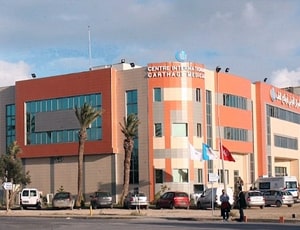
Monastir, Tunisia

120+ Beds · 98+ Procedures

Monastir, Tunisia

120+ Beds · 117+ Procedures
JCI

Get Your Congenital Pseudarthrosis of the Tibia (CPT) Surgery
Plan in 24 hrs.

Our experienced Medical Patient Advisors have supported 100,000+ patients across 120+ countries with personalised treatment plans, hospital recommendations, cost estimates, and travel assistance, all free.

HIPAA-Compliant Data SecurityShared Only with Your Consent

Free Consultation No Obligation Personalized Treatment Plan Response Within 24 Hours

Required | alphabets and spaces
Required | A valid, working email address
Required | A valid contact

Your medical info is kept HIPAA-style confidential. We never share with hospitals without your consent.

Process Involved for Congenital Pseudarthrosis of the Tibia (CPT) Surgery in Tunisia

Treatment Stages for Congenital Pseudarthrosis of the Tibia (CPT) Surgery

  • Consultation with a Specialist: The orthopaedic specialist assesses the child’s condition, medical history, and the severity of CPT to determine the best treatment approach.
  • Staging and Diagnosis: Diagnostic tools, such as X-rays, CT scans, and MRI scans, evaluate the extent of the deformity and any underlying conditions, including Neurofibromatosis Type 1 (NF1).
  • Personalised Treatment Plan: Based on the severity and complexity of the CPT, the doctor creates a treatment plan, which may include bone grafting, intramedullary rodding, or external fixators to stabilise and promote bone healing.
  • Pre-treatment Counselling: Parents and the child are informed about the surgery, expected recovery time, potential risks, and the necessary care during and after the procedure. This includes weight-bearing restrictions and the need for physical therapy.
  • Follow Up- Regular follow-up sessions are essential for tracking recovery, recognising recurrences, and managing problems.
  • Non-healing Fractures
  • Tibia Deformities
  • Bone Weakness
  • Growth Abnormalities
  • Leg Length Discrepancy
  • Neurofibromatosis Type 1 (NF1)
  • Children with Congenital Pseudarthrosis of the Tibia (CPT) who have a non-healing tibial fracture or deformity.
  • Early-stage CPT may be treated with less invasive procedures, while more severe cases may require complex surgeries.
  • Patients with Neurofibromatosis Type 1 (NF1), a common condition associated with CPT, may need special considerations for surgery.
  • Bone Grafting
  • Intramedullary Rodding
  • External Fixation
  • Ilizarov Technique
  • Lengthening Procedures
  • Physical Therapy
  • Improved Bone Healing: Surgical interventions, such as bone grafting and rodding, promote proper bone healing and alignment, thereby enhancing tibial strength.
  • Reduced Risk of Fractures: Successful treatment reduces the risk of future fractures or non-healing bones, preventing further deformities.
  • Enhanced Mobility: Physical therapy and surgical procedures can help restore mobility and improve leg function, allowing the child to walk and move more freely.
  • Improved Quality of Life: Correcting bone deformities and addressing CPT symptoms can alleviate pain and discomfort, enhancing the child’s overall quality of life.
  • Personalised Treatment Options: Tailored treatment plans, such as external fixators or the Ilizarov technique, offer gradual bone correction and lengthening.
  • Please complete the inquiry form to provide us with relevant information about your condition.
  • Consult with Our Healthcare Expert: One of our qualified specialists will contact you for a consultation.
  • Receive a Detailed Treatment Plan: After examining your situation, we will provide you with a detailed treatment plan that includes expert opinions and a cost breakdown for various options.
  • Select your preferred option: Choose the therapy option that best suits your needs.
  • Seamless Organisation: We will manage all the details, including visas, flights, accommodations, and transfers, for a stress-free journey.
Jenny Wilson
Your Dedicated Medical Patient Advisor
Treatment planning • Hospital coordination • Multilingual support • Response within 15 minutes.
Our Services to Better your Experience

Opinion & Option

We submit the most accurate opinion and options from one or more countries for your review

Consult Privately

Consult with a certified specialist privately on our telemedicine platform even before you decide to travel

Logistics

We handle flights, visas, transfers, and accommodation—so you can focus on your health.

Recovery

Our In-house rehabilitation service packages to better your recovery and treatment outcome

Patient Stories

Kevin Stewart
Kevin Stewart
Kevin Stewart: Slip Disc Treatment in UAE

Kevin Stewart from Scotland could barely walk straight due to a Slip Disc. He faced many discomforts for the past…

Mr.Mohamed Dumia
Mr.Mohamed Dumia
Mr.Mohamed Dumia: Knee Replacement

Mr. Muhammed Dumia was suffering from painful left Knee and was in considerable pain for the last 2 months. He…

Not Sure About Your Treatment Plan? Get a Free Second Opinion

Have your reports reviewed by independent oncology experts to help you make a confident treatment decision, all online within 48 hours.

Upload Your Reports
Free second opinion on your CAR-T plan