Your Notifications
All done, no notifications

Stomach Cancer Treatment Cost in Bangkok

USD 10000 - USD 27000

Affordable World-class Treatment - Accredited Hospitals - Free Treatment Plan in 24 Hrs

5
Days in Hospital
3-5 hrs
Procedure Time
65 - 85%
Success Rate
Stomach Cancer: Cost, Procedure and Clinics | MediGence
JCI/ISO 100,000+ Patients 24X7 Coordinator Visa & Travel handled
Your all-in-one medical travel platform for treatment, recovery & care.

Get Your Personalised Treatment Plan in Just 24 Hours.

Share your details to receive a personalised treatment plan, estimated costs, hospital recommendations, and expert guidance, “completely free.”

Required | alphabets and spaces
Required | A valid, working email address
Required | A valid contact
Connect with an Expert

Your information is protected with HIPAA-compliant security standards. We only share your details with hospitals after your consent.

Estimated Treatment Cost
USD 10000 - USD 27000
All-inclusive • Hospital + Medications + Recovery Assistance + Dedicated Care Coordinator

International Quality. Affordable Care.

The average cost of Stomach Cancer Treatment in Bangkok approximately starts from USD 10000 - USD 27000

Cost of Stomach Cancer Treatment in Major Cities of Thailand

CityMinimum Cost (USD)Minimum Cost (THB)Maximum Cost (USD)Maximum Cost (THB)
BangkokUSD 10000327100USD 27000883170

Cost of Stomach Cancer Treatment in Major Cities of Thailand

City Cost (USD)
Bangkok $10,000 – $27,000 Explore More

Find the Right Destination for Your Stomach Cancer Treatment Journey

Alvina Hasan
Author

M.Pharm

2 Year of Experience

Last Reviewed - June 2026

Alvina Hasan is a dedicated medical researcher and scientific writer with a strong foundation in pharmaceutical sciences. She holds a B.Pharm from Jamia Hamdard University and an M.Pharm in Quality Assurance from DIPSAR University.

With deep medical expertise and a strong interest in healthcare communication, she focuses on transforming complex clinical and scientific information into clear, engaging, and easy-to-understand narratives. She develops insightful healthcare articles and research-driven content designed to support both medical professionals and patients, helping bridge the gap between advanced medical knowledge and practical understanding.

Readers can explore her published research and articles here:

https://carcinogenesis.com/index.php/JOC/article/view/868

https://carcinogenesis.com/index.php/JOC/article/view/870

View More
Dr Prateek Varshney
Reviewer

Surgical Oncologist

15 Years of Experience

Last Reviewed - June 2026

Dr. Prateek Varshney is a renowned Surgical Oncologist. He has experience of more than 15+ years in surgical Oncology. He is currently practicing as a consultant at Metro Mass Hospital and Cancer Institute. He was also previously associated as a consultant with Sir Ganga Ram Hospital and as a professor at Gujarat Cancer Research Institute.
View More

Need Help Choosing the Right Treatment? Talk to a Medical Advisor

Our dedicated Medical Patient Advisors are here to answer your questions, help you compare treatment options, estimate costs, and guide you through every step of your healthcare journey.

15 min
Average response time

Serving Patients Worldwide in Multiple Languages.

The proliferation of cancer cells in the stomach that gets out of control is known as stomach cancer, also known as gastric cancer. The tumor can grow anywhere in the stomach. The majority of stomach cancer occurrences are caused by abnormal cell development at the gastroesophageal junction, the area where your stomach and esophagus connect. The main part of the stomach is where cancer typically develops in other nations where gastric cancer is more prevalent.

Stomach cancer develops in the lining of your stomach around 95% of the time and spreads gradually. If left untreated, it may develop into a tumor that grows further into the walls of the stomach. The pancreas and liver are two adjacent organs where the tumor may spread.

Types of stomach cancer:

  • Gastrointestinal stromal tumors (GISTs)- These rare malignancies begin as interstitial cells of Cajal, which are extremely early forms of stomach wall cells. Compared to other GISTs, some have a far higher propensity to spread or grow into other body parts. While GISTs can originate from any point in the digestive tract, the stomach is where most of them do.
  • Lymphomas- These malignancies begin in lymphocytes, which are immune system cells. Though certain lymphomas can begin in the stomach wall, most lymphomas originate in other areas of the body. The type of lymphoma and other variables determine the course of treatment and prognosis for various malignancies.
  • Neuroendocrine tumors (NETs)- originate from cells that function as both nerve and hormone-producing (endocrine) cells in the stomach (or other digestive system) in different situations. While certain NETs can grow and spread quickly, the majority of NETs usually grow slowly and do not spread to other organs.
  • Other cancers- Though these tumors are extremely uncommon, other cancer forms, including squamous cell carcinomas, small cell carcinomas, and leiomyosarcomas, can also begin in the stomach.

What are the stages of Stomach Cancer?

Usually, stomach cancer develops in several stages, each of which represents the disease's severity and spread. The general phases of stomach cancer are as follows:

  • Stage 0 (Carcinoma in situ)- The mucosa, or innermost lining of the stomach, is the only location where cancer cells can be discovered; they have not penetrated farther into the stomach wall.
  • Stage I-
  • Stage IA- The cancer has spread to the submucosa or deeper layers of the mucosa, but not past the stomach wall.
  • Stage IB- The stomach wall's muscular layer has been affected by cancer.
  • Stage II-
  • Stage IIA- The cancer has not yet penetrated the surrounding lymph nodes, but it has progressed to the stomach wall's outermost layers.
  • Stage IIB- Cancer has progressed to the stomach wall's deeper layers and may have affected neighboring lymph nodes.
  • Stage III:
  • Stage IIIA- The cancer has penetrated every layer of the stomach wall and is now present in the lymph nodes and surrounding tissues.
  • Stage IIIB- The cancer has spread to neighboring lymph nodes and has infected organs like the spleen or pancreas.
  • Stage IV:
  • Stage IVA- The cancer has progressed to lymph nodes or distant organs from the stomach.
  • Stage IVB- The cancer has progressed to distant lymph nodes or other organs other than the stomach.

Staging helps in deciding on the best course of action and prognosis for patients with stomach cancer. It's crucial to remember that staging might change based on the unique features of the malignancy as well as specific patient characteristics.

What causes Stomach Cancer?

Although stomach cancer can happen to anyone, some demographic parameters may make you more susceptible. Stomach cancer is more likely to strike if:

  • You are 65 years of age or older.
  • The gender was assigned to you at birth.
  • You are of East Asian, Eastern European, or South or Central American descent.

The objectives of the treatment of stomach cancer are to remove or kill stomach cancer cells, prevent the disease from spreading to other organs, alleviate symptoms, and enhance survival and quality of life.

If you experience chronic stomach cramps, bloating, unintentional weight loss, nausea, vomiting (especially vomiting with blood), fatigue, black stools, or swallowing problems, you should see a doctor. Early consultation improves the likelihood of a successful treatment course.

In each case, preparation may involve an endoscopy, a biopsy, a blood test, nutritional assessment, and imaging studies (CT, PET, or MRI scans). Patients will be required to fast, adjust medications, and discuss potential lifestyle modifications and post-operative nutrition with their care providers before surgery.

Treatment varies with stage and site of cancer:

  • Surgery: Subtotal or total gastrectomy (excision of part or entire stomach).
  • Radiation therapy: Directed against cancer cells, usually in combination with other forms.
  • Chemotherapy: Given before (neoadjuvant) or after (adjuvant) surgery, or as a sole treatment in advanced disease.
  • Targeted therapy: Medications that are directed against certain proteins on cancer cells (e.g., HER2).
  • Immunotherapy: Applied in some advanced or recurrent situations to activate the immune response.

Surgery can last between three and six hours. 7\u201314 days in the hospital. Radiation and chemotherapy are typically administered over several weeks to months.

  • Bleeding
  • Infection
  • Fatigue
  • Bowel changes
  • Dumping syndrome

Treatment can cure or shrink tumours, alleviate symptoms, stop metastases, and significantly extend survival, especially when detected early.

Nutritional support, dietary changes, and even tube feedings are all part of the recovery process. It may take months for patients to adapt. Imaging, laboratory tests, and help with side effects and weight maintenance are all part of long-term follow-up.

Stage, overall health, and the response to therapy all influence outcome. Survival for early-stage stomach cancer in 5 years is around 70%, even though more advanced stages have a lower rate but a better prognosis due to modern therapies.

60–90%

Five-year survival rate (depends on cancer stage and treatment)

5–10 days

Typical hospital stay (for surgery; varies by treatment)

4–8 weeks

Return to normal daily activities (depends on treatment and recovery)
Explore Hospitals ( 5 )

Bangkok, Thailand

580+ Beds · 255+ Procedures
JCI
Starting
USD 18000

Bangkok, Thailand

263+ Beds · 229+ Procedures
JCI
Starting
USD 18000

Bangkok, Thailand

300+ Beds · 287+ Procedures
JCI GHA

Bangkok, Thailand

550+ Beds · 238+ Procedures
JCI
Starting
USD 18000

Bangkok, Thailand

120+ Beds · 171+ Procedures
JCI

Get Your Stomach Cancer Treatment
Plan in 24 hrs.

Our experienced Medical Patient Advisors have supported 100,000+ patients across 120+ countries with personalised treatment plans, hospital recommendations, cost estimates, and travel assistance, all free.

HIPAA-Compliant Data SecurityShared Only with Your Consent

Free Consultation No Obligation Personalized Treatment Plan Response Within 24 Hours

Required | alphabets and spaces
Required | A valid, working email address
Required | A valid contact

Your medical info is kept HIPAA-style confidential. We never share with hospitals without your consent.

Process Involved for Stomach Cancer Treatment in Bangkok

  • Consultation: Talk with a gastroenterologist or oncologist about the diagnosis and staging of stomach cancer.
  • Preoperative evaluation: Imaging studies (such as CT scans, MRI, endoscopic ultrasound, and PET scans) and a physical examination are done to identify the location, size, and extent of the tumor.
  • Treatment and Discussion: Treatment is decided based on the cancer stage and can include surgery, chemotherapy, radiotherapy, targeted therapy, or a combination of these modalities.
  • Planning for Surgery: If surgery is advised, the surgeon will describe the operation. Lymph node dissection can also be done if the cancer has spread to surrounding nodes.
  • Post-Surgery, Follow-up: Routine follow-up appointments will be scheduled to track recovery, look for complications, and monitor for cancer recurrence.
  • Early-stage gastric cancer
  • Advanced gastric cancer
  • Gastric cancer with lymph node involvement
  • Recurrent gastric cancer
  • Once a patient is diagnosed with gastric cancer, therapy is recommended.
  • The patient's suitability for treatment depends on the tumour's type, extent, and site, as well as all other illnesses, overall health, and the individual's tolerance for surgery or other therapies.
  • Gastrectomy
  • Chemotherapy
  • Radiation therapy
  • Targeted therapy
  • Immunotherapy
  • Reduces or eliminates the tumor, improving survival.
  • It reduces symptoms such as nausea, bloating, stomach pain, and difficulty swallowing.
  • Reduces the likelihood of cancer returning or spreading, especially if detected early.
  • Enhances quality of life and survival, mainly if diagnosed and treated.
  • Can improve diet intake and post-operative quality of life, especially with reconstructive therapy.
  • Gastroenterologist
  • Surgical oncologist
  • Radiation Oncologist
  • Fill out the inquiry form: Fill out the form to provide us with the relevant information about your condition.
  • Consult with Our Healthcare Expert: One of our qualified specialists will contact you for a consultation.
  • Receive a Detailed Treatment Plan: After examining your situation, we will provide you with a detailed treatment plan that includes expert views and cost breakdowns for various choices.
  • Choose your preferred option: Choose the treatment option that suits you the best.
Jenny Wilson
Your Dedicated Medical Patient Advisor
Treatment planning • Hospital coordination • Multilingual support • Response within 15 minutes.
Our Services to Better your Experience

Opinion & Option

We submit the most accurate opinion and options from one or more countries for your review

Consult Privately

Consult with a certified specialist privately on our telemedicine platform even before you decide to travel

Logistics

We handle flights, visas, transfers, and accommodation—so you can focus on your health.

Recovery

Our In-house rehabilitation service packages to better your recovery and treatment outcome

Patient Stories

Ms. Monica
Ms. Monica
Monica from Ghana for AV Malformation Treatment in India

Monica from Ghana suffered from AV malformation. She decided to look for options for medical treatment when she started experiencing…

Patient Testimonial: Mrs Henshaw from Nigeria underwent Cervical Cancer Treatment in India
Mrs. Affiong Uko Henshaw
Mrs Henshaw from Nigeria underwent Cervical Cancer Treatment in India

This was the case with a 60-year-old cervical cancer patient from Nigeria, Mrs. Affiong Uko Henshaw. She was diagnosed with…

Frequently Asked Questions

The minimum cost of Stomach Cancer Treatment in Bangkok is about $18000. Healthcare Accreditation Institute, JCI are just some of the accreditations which top hospitals in Bangkok hold where a Stomach Cancer Treatment is conducted.

Different hospitals have different pricing policy when it comes to the cost of Stomach Cancer Treatment in Bangkok. The top hospitals for Stomach Cancer Treatment in Bangkok covers all the expenses related to the pre-surgery investigations of the candidate. The Stomach Cancer Treatment package in Bangkok includes the fees of the surgeon, hospitalization and anesthesia as well. There are many things that may increase the cost of Stomach Cancer Treatment in Bangkok, including prolonged hospital stay and complications after the procedure.

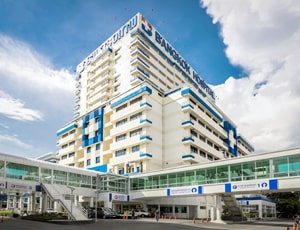
There are many hospitals that perform Stomach Cancer Treatment in Bangkok. Some of the most renowned hospitals for Stomach Cancer Treatment in Bangkok include the following:

After Stomach Cancer Treatment in Bangkok, the patient is supposed to stay in guest house for another 23 days. This duration of stay is recommended to complete all the necessary follow-ups and control tests to ensure that the surgery was successful.

Apart from the cost of Stomach Cancer Treatment, the patient is also required to pay additionally for daily meals and guest house accommodation. The per day extra expenses in Bangkok per person are about 25 USD.

After the Stomach Cancer Treatment surgery takes place, the average duration of stay at the hospital is about 5 Days. This time frame is important for the patient to recover properly and feel comfortable after the surgery. With the help of several tests, it is determined that the patient is doing fine after the surgery and is okay to be discharged.

There are about 5 Hospitals in Bangkok that offer Stomach Cancer Treatment to international patients. These hospitals have propoer infrastructure as well as offer good quality of services when it comes to Stomach Cancer Treatment surgery. Additionally, these hospitals are known to comply with the international standards as well as local legal requirements for the treatment of patients.

Not Sure About Your Treatment Plan? Get a Free Second Opinion

Have your reports reviewed by independent oncology experts to help you make a confident treatment decision, all online within 48 hours.

Upload Your Reports
Free second opinion on your CAR-T plan