Your Notifications
All done, no notifications

Robotic Cancer Surgery Cost in Riyadh

Starts from USD 19000

Disclaimer: Cost range is subject to change based on clinical evaluation.

Affordable World-class Treatment - Accredited Hospitals - Free Treatment Plan in 24 Hrs

2
Days in Hospital
2-6 hrs
Procedure Time
90-95%
Success Rate
JCI/ISO 100,000+ Patients 24X7 Coordinator Visa & Travel handled
Your all-in-one medical travel platform for treatment, recovery & care.


Get Your Personalised Treatment Plan in Just 24 Hours.

Share your details to receive a personalised treatment plan, estimated costs, hospital recommendations, and expert guidance, “completely free.”

Required | alphabets and spaces
Required | A valid, working email address
Required | A valid contact

Your information is protected with HIPAA-compliant security standards. We only share your details with hospitals after your consent.

Estimated Treatment Cost
Starts from USD 19000
All-inclusive • Hospital + Medications + Recovery Assistance + Dedicated Care Coordinator

International Quality. Affordable Care.
The average cost of Robotic Cancer Surgery in Riyadh starts from USD 19000.

Cost of Robotic Cancer Surgery in Major Cities of Saudi Arabia

CityCost (USD)
Al Khobar Starting $19k Explore More
Riyadh Starting $19k Explore More
Alvina Hasan
Author

M.Pharm

2 Year of Experience

Alvina Hasan is a dedicated medical researcher and scientific writer with a strong foundation in pharmaceutical sciences. She holds a B.Pharm from Jamia Hamdard University and an M.Pharm in Quality Assurance from DIPSAR University.

With deep medical expertise and a strong interest in healthcare communication, she focuses on transforming complex clinical and scientific information into clear, engaging, and easy-to-understand narratives. She develops insightful healthcare articles and research-driven content designed to support both medical professionals and patients, helping bridge the gap between advanced medical knowledge and practical understanding.

Readers can explore her published research and articles here:

https://carcinogenesis.com/index.php/JOC/article/view/868

https://carcinogenesis.com/index.php/JOC/article/view/870

View More
Dr Prateek Varshney
Reviewer

Surgical Oncologist

15 Years of Experience

Last Reviewed - June 2026

Dr. Prateek Varshney is a renowned Surgical Oncologist. He has experience of more than 15+ years in surgical Oncology. He is currently practicing as a consultant at Metro Mass Hospital and Cancer Institute. He was also previously associated as a consultant with Sir Ganga Ram Hospital and as a professor at Gujarat Cancer Research Institute.
View More

Need Help Choosing the Right Treatment? Talk to a Medical Advisor

Our dedicated Medical Patient Advisors are here to answer your questions, help you compare treatment options, estimate costs, and guide you through every step of your healthcare journey.

15 min
Average response time

Serving Patients Worldwide in Multiple Languages.

Robotic cancer surgery is the least invasive technique in which the surgeon operates a robotic system to define minor incision procedures. Compared to traditional open surgery, it enhances accuracy, reduces blood loss, minimises complications, and speeds up recovery.

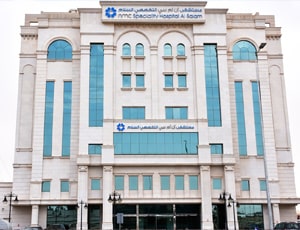
Explore Hospitals ( 3 )

Riyadh, Saudi Arabia

4.0 - 4161 reviews · 325+ Beds · 264+ Procedures
JCI
Starting
USD 21000
Chat with a Medical Advisor

Riyadh, Saudi Arabia

3.7 - 4358 reviews · 100+ Beds · 179+ Procedures
CBAHI
Starting
USD 19000
Chat with a Medical Advisor

Riyadh, Saudi Arabia

4.2 - 2947 reviews · 1500+ Beds · 60+ Procedures
JCI
Chat with a Medical Advisor

Get Your Robotic Cancer Surgery
Plan in 24 hrs.

Our experienced Medical Patient Advisors have supported 100,000+ patients across 120+ countries with personalised treatment plans, hospital recommendations, cost estimates, and travel assistance, all free.

HIPAA-Compliant Data SecurityShared Only with Your Consent

✓ Free Consultation ✓ No Obligation ✓ Personalized Treatment Plan ✓ Response Within 24 Hours

Required | alphabets and spaces
Required | A valid, working email address
Required | A valid contact

Your medical info is kept HIPAA-style confidential. We never share with hospitals without your consent.

Jenny Wilson
Your Dedicated Medical Patient Advisor
Treatment planning • Hospital coordination • Multilingual support • Response within 15 minutes.
Our Services to Better your Experience

Opinion & Option

We submit the most accurate opinion and options from one or more countries for your review

Consult Privately

Consult with a certified specialist privately on our telemedicine platform even before you decide to travel

Logistics

We handle flights, visas, transfers, and accommodation—so you can focus on your health.

Recovery

Our In-house rehabilitation service packages to better your recovery and treatment outcome

Patient Stories

Ms. Monica
Ms. Monica
Monica from Ghana for AV Malformation Treatment in India

Monica from Ghana suffered from AV malformation. She decided to look for options for medical treatment when she started experiencing…

Silim Shabani
Silim Shabani
Patient Testimonial: Silim Shabani for Ovarian Cancer Treatment in Turkey

Nasrin (Sister of the patient ) explains the journey of how MediGence helped for the treatment of Silim Shabani for…

Frequently Asked Questions

The cost of robotic cancer surgery in Riyadh may vary depending on the type and stage of cancer, complexity of the procedure, robotic surgical system used, preoperative diagnostic investigations, hospital charges, surgeon's fees, operating room expenses, medications, and length of hospital stay. The overall cost may include specialist consultations, biopsy and pathology, CT/MRI or PET imaging, blood tests, robotic surgery, anaesthesia, postoperative monitoring, medications, and follow-up care.MediGence can help international patients explore suitable cancer centres and obtain an estimated treatment plan based on the patient's cancer diagnosis, treatment requirements, and clinical condition.

The best hospitals in Riyadh for robotic cancer surgery are those with experienced surgical oncologists, robotic surgeons, medical oncologists, radiation oncologists, radiologists, pathologists, and multidisciplinary tumour boards. Patients should consider hospitals with advanced robotic surgery systems, modern operating rooms, comprehensive cancer diagnostic facilities, intensive care support, and integrated oncology services.

Patients should choose a surgical oncologist or specialist surgeon experienced in robotic-assisted cancer surgery for their specific type of cancer. Important factors include expertise in robotic surgery, experience with the specific cancer procedure, tumour resection techniques, lymph-node surgery, and management of complex cases.The treating team should assess cancer type and stage, tumour location and size, biopsy and pathology findings, imaging results, previous treatments, associated medical conditions, and overall health before recommending robotic cancer surgery.

Robotic cancer surgery has favourable outcomes in appropriately selected patients, although the success rate varies depending on the type and stage of cancer, surgical complexity, the patient's overall health, and the experience of the treating team. Outcomes may include complete tumour removal, negative surgical margins, appropriate lymph-node assessment, reduced complications, and disease control.The expected outcome should be discussed with the treating surgical oncologist based on the patient's specific cancer diagnosis, stage, treatment plan, and overall clinical condition.

Hospitals in Riyadh may use advanced robotic surgical platforms, high-definition three-dimensional visualisation, wristed surgical instruments, fluorescence-guided imaging, advanced laparoscopic equipment, intraoperative imaging, and computer-assisted surgical technology.Robotic cancer surgery involves the surgeon controlling specialised robotic instruments from a console to perform precise surgical movements through small incisions. Depending on the cancer type, robotic surgery may be used for selected prostate, kidney, bladder, colorectal, gynaecological, gastrointestinal, thoracic, and other cancers.

Possible risks and complications may include:
  • Bleeding or blood loss
  • Infection
  • Pain or discomfort at the surgical site
  • Injury to nearby organs, nerves, or blood vessels
  • Blood clots
  • Anaesthesia-related complications
  • Wound healing problems
  • Organ-specific complications
  • Conversion to open surgery
  • Need for additional surgery
  • Cancer recurrence
  • The specific risks depend on the type and stage of cancer, complexity of the procedure, patient's overall health, and other treatments. The treating surgical team will explain the potential risks before surgery.

    Patients should share all relevant cancer records with the treating oncology team before travelling. These may include biopsy and pathology reports, CT, MRI, PET-CT or other imaging findings, previous oncology consultation records, surgical history, chemotherapy or radiation records, blood test results, medication history, and allergy information.Patients should also discuss the planned robotic procedure, expected hospital stay, postoperative recovery, possible additional cancer treatments, medication adjustments, and travel arrangements before making their plans.

    Yes. International patients can arrange an online consultation with a surgical oncologist or specialist surgeon before travelling to Riyadh. The specialist may review the patient's pathology reports, imaging studies, cancer stage, treatment history, medical records, and overall clinical condition to determine whether robotic surgery may be an appropriate treatment option.MediGence can help coordinate online consultations and facilitate the secure sharing of relevant medical records with suitable cancer specialists.

    International patients should carry a valid passport and relevant medical documents, including:
  • Biopsy and pathology reports
  • CT, MRI, PET-CT, or other imaging reports
  • Previous oncology consultation records
  • Previous surgery records, if applicable
  • Chemotherapy or radiation treatment records
  • Recent blood test results
  • Current prescriptions and medication details
  • Allergy and complete medical history
  • Molecular or genetic test reports, if available
  • Patients should also carry digital copies of important medical records for easy access during consultations and treatment.

    The required stay in Riyadh depends on the type and complexity of robotic cancer surgery, the patient's overall health, postoperative recovery, and whether additional cancer treatment is required. Robotic surgery generally involves a hospital stay followed by postoperative assessment before discharge.Patients may need to remain in Riyadh until the surgical team confirms satisfactory recovery, stable vital signs, adequate wound healing, and fitness to travel. Patients requiring additional chemotherapy, radiation therapy, or other procedures may need a longer stay.

    Recovery after robotic cancer surgery varies depending on the type of cancer, surgical procedure, extent of surgery, and the patient's overall health. Robotic surgery may allow smaller incisions, reduced postoperative discomfort, and faster recovery compared with some conventional open procedures.Patients may gradually resume light daily activities after surgery while avoiding strenuous activities until cleared by the treating team. Long-term follow-up may include pathology review, imaging, cancer surveillance, rehabilitation, and additional treatment when required.

    If complications occur, patients should contact the treating surgical or oncology team or seek immediate medical attention. Prompt evaluation may be required for fever, excessive bleeding, worsening pain, difficulty breathing, persistent vomiting, wound redness or discharge, swelling, or other concerning symptoms.Patients should receive detailed discharge instructions, wound care guidance, medication recommendations, activity restrictions, emergency contact information, and a structured follow-up plan before returning home.

    International patients can submit their medical records, pathology reports, and cancer imaging through the MediGence website. Following an initial review, the MediGence care team can help patients explore suitable cancer hospitals and experienced surgical oncologists, coordinate consultations, and support treatment planning and medical travel arrangements.The final treatment recommendation is made by the treating oncology team after a comprehensive evaluation of the patient's cancer diagnosis and clinical condition.

    International patients may choose Riyadh for access to experienced surgical oncologists, specialised robotic surgery programmes, advanced cancer diagnostics, modern operating rooms, multidisciplinary oncology teams, and comprehensive postoperative cancer care.The destination should be evaluated based on hospital accreditation, patient safety standards, surgeon expertise, experience with the specific cancer procedure, availability of robotic technology, and access to multidisciplinary cancer treatment.

    Treatment options depend on the type and stage of cancer, tumour location, patient's overall health, and treatment goals. Options may include:
  • Robotic-assisted cancer surgery
  • Minimally invasive laparoscopic surgery
  • Open cancer surgery
  • Organ-preserving surgery where appropriate
  • Chemotherapy
  • Radiation therapy
  • Targeted therapy
  • Immunotherapy
  • Hormonal therapy for selected cancers
  • Cancer rehabilitation and supportive care
  • The treating multidisciplinary oncology team will recommend the most appropriate treatment plan after evaluating the patient's diagnosis, pathology, imaging findings, previous treatments, and overall clinical condition.

    International patients may choose Riyadh for access to specialised cancer centres, experienced surgical oncologists, advanced robotic surgical technology, multidisciplinary tumour boards, modern cancer diagnostics, and comprehensive oncology care.MediGence can assist patients with hospital and specialist selection, medical record coordination, consultation scheduling, treatment planning, and travel-related support. The final destination should be selected according to the patient's cancer type and stage, clinical requirements, treatment goals, and the hospital's expertise in robotic cancer surgery.

    Not Sure About Your Treatment Plan? Get a Second Opinion

    Get your medical reports reviewed by experienced doctors to help you make a confident treatment decision, all online within 48 hours.

    Upload Your Reports
    Free second opinion on your CAR-T plan