Your Notifications
All done, no notifications

Prostatectomy Cost in Thailand

USD 12000 - USD 23000

Affordable World-class Treatment - Accredited Hospitals - Free Treatment Plan in 24 Hrs

3
Days in Hospital
18
Post-Hospital
90 - 98%
Success Rate
Prostatectomy
JCI/ISO 100,000+ Patients 24X7 Coordinator Visa & Travel handled
Your all-in-one medical travel platform for treatment, recovery & care.

Get Your Personalised Treatment Plan in Just 24 Hours.

Share your details to receive a personalised treatment plan, estimated costs, hospital recommendations, and expert guidance, “completely free.”

Required | alphabets and spaces
Required | A valid, working email address
Required | A valid contact
Connect with an Expert

Your information is protected with HIPAA-compliant security standards. We only share your details with hospitals after your consent.

Estimated Treatment Cost
USD 12000 - USD 23000
All-inclusive • Hospital + Medications + Recovery Assistance + Dedicated Care Coordinator

International Quality. Affordable Care.

How Much Does Prostatectomy Cost in Thailand?

The cost of Prostatectomy in Thailand typically ranges between USD 12000 - USD 23000.

However, this cost can vary depending on several factors, including the type and severity of the condition, treatment techniques chosen, the healthcare facility's location and reputation, the treating professionals' experience and specialisation, and the patient's overall health status.

Additionally, factors like the duration of treatment, the need for follow-up care, and the use of advanced technologies or specialised treatments can further influence the overall cost.

Factors Influencing the Cost of Prostatectomy:

  • Type of Prostatectomy: Radical prostatectomy, Open prostatectomy.
  • Hospital and Location: Healthcare costs vary by location. Hospitals in urban areas or those with higher operating expenses may charge more than rural hospitals.
  • Pre-TreatmentTests: Diagnostic imaging, such as cystoscopy, Blood Tests, and urine tests, can add to the cost.
  • Post-Treatment Care: Medications and follow-up consultations also impact the expenses.
  • Length of Hospital Stay: Hospital stays may become more expensive due to complicated surgeries or complications.

Prostatectomy is a surgical procedure used to partially or entirely remove the prostate gland, mainly to treat prostate cancer or benign prostatic hyperplasia (BPH). A component of the male reproductive system is the prostate gland. It is situated in the pelvis, below the bladder. The urethra, a hollow tube that transports urine from the bladder to the penis, is surrounded by it.

Prostate-related problems can be treated with a prostateectomy. Prostate cancer is the condition for which it is most frequently used.

What's included in your Prostatectomy quote?

Prostatectomy
Surgical removal of part or all of the prostate gland to treat prostate cancer or severe prostate disease
Urologic surgeon consultation
Pre-surgery evaluation, treatment planning, and post-operative follow-up consultations
Hospital stay & supportive care
PSA tests, wound assessment, urinary function monitoring, and routine follow-up visits
Follow-up monitoring
Imaging, labs, follow-ups
Visa & medical-visa invite letter
Airport pickup & transfers

Cost of Prostatectomy in Major Cities of Thailand

City Cost (USD)
Bangkok $12,000 – $23,000 Explore More

Prostatectomy - Thailand Vs the World

$0 - $0
$4k - $8k
$4k - $10k
$5k - $20k
$6k - $8k
$6k - $15k
$8k - $15k
$8k - $15k
$10k - $24k
$12k - $23k
$14k - $30k
$18k - $40k
Dr. Vijita Jayan
Author

BPT, MPT (Neuro)

18 Years of Experience

Last Reviewed - June 2026

With over 18 years of distinguished clinical experience, Dr. Vijita Jayan is a highly accomplished Clinical Director and Rehabilitation Specialist, renowned for her expertise in neuro-rehabilitation, functional recovery, and mobility-dependent case management. Her extensive practical knowledge enables her to design and implement individualized, evidence-based rehabilitation protocols that consistently yield measurable patient outcomes. A prolific researcher and academic writer, she has authored numerous peer-reviewed articles and research papers, significantly advancing the field of rehabilitative medicine. The recipient of multiple prestigious accolades, Dr. Jayan is widely regarded as one of the foremost authorities in Physical Medicine and Rehabilitation, continually shaping neuro-rehabilitative care through research, innovation, and clinical excellence.
View More
Dr Prateek Varshney
Reviewer

Surgical Oncologist

15 Years of Experience

Last Reviewed - June 2026

Dr. Prateek Varshney is a renowned Surgical Oncologist. He has experience of more than 15+ years in surgical Oncology. He is currently practicing as a consultant at Metro Mass Hospital and Cancer Institute. He was also previously associated as a consultant with Sir Ganga Ram Hospital and as a professor at Gujarat Cancer Research Institute.
View More

Need Help Choosing the Right Treatment? Talk to a Medical Advisor

Our dedicated Medical Patient Advisors are here to answer your questions, help you compare treatment options, estimate costs, and guide you through every step of your healthcare journey.

15 min
Average response time

Serving Patients Worldwide in Multiple Languages.

Prostatectomy is a surgical procedure used to partially or completely remove the prostate gland, mostly to treat prostate cancer or benign prostatic hyperplasia (BPH).

The procedure commonly involves making an incision and extracting the prostate gland or a portion of it. This can be done through a retropubic or suprapubic incision in the lower abdomen, or through a perineal incision located between the scrotum and the rectum.

Before undergoing a prostatectomy, a prostate biopsy is often required. This biopsy provides additional information needed for planning the surgery.

Types of Prostatectomy

Radical prostatectomy: This operation removes the entire prostate gland as well as the surrounding lymph nodes. The surgical techniques used to do radical prostatectomy include the following:

  • Robot-assisted surgery: In this technique, several small incisions are made in the lower abdomen to remove the prostate gland.
  • Open surgery: In this method to remove the prostate gland, a surgical incision is created in the lower abdomen between the anus and the scrotum.
  • Laparoscopic: This procedure involves inserting specific surgical tools into the lower abdomen to remove the prostate gland.

The removal of cancerous tissue from the prostate gland is the primary goal of a prostatectomy. Prostate cancer is eliminated or managed, urinary symptoms are relieved, cancer spread is halted, and survival rates are enhanced. In some cases, benign prostatic hyperplasia (BPH) can also be treated with it.

To see a healthcare professional, if you suffer from or experience symptoms like erectile dysfunction, pelvic pain, blood in the urine or semen, difficulty starting or stopping urination, or frequent or painful urination,

If cancer is detected, preparation can include imaging studies, blood test, prostate biopsy, and staging. Patients might be asked to stop certain medications, follow a special diet, fast before surgery, and talk to their health care provider about what will happen after surgery.

  • Catheter Use: During the procedure, a catheter is placed in the bladder to drain urine for one to two weeks while the body recovers.
  • Incision: Depending on the procedure type, an incision may be made between the anus and scrotum (perineal approach) or in the lower abdomen (retropubic approach).
  • Tissue Separation: The surgeon carefully separates the bladder and urethra from the prostate gland, sparing the peripheral nerves whenever possible.
  • Prostate Removal: To ensure that all of the cancer cells have been removed, the whole prostate gland is taken out, together with a little extra tissue and perhaps some nearby lymph nodes.
  • Anastomosis: In order to facilitate normal urination, the urethra is reattached to the bladder.
  • Closure: The incision is closed using stitches or surgical staples.

Typically, procedures take two to four hours. Hospital stays last one to three days. It could take a few weeks to recover completely, and hormone and radiation therapy may take several months.

  • Anaesthesia complications.
  • Difficulty healing.
  • Need for transfusion of blood.
  • Infection.
  • Collection of clotted blood (hematoma).
  • Blood clots.

  • Effective control of prostate cancer in its early stages
  • Symptom relief for the urinary system

Kegel exercises, which are also referred to as pelvic floor exercises, drugs for erectile functioning, dietary modification, repeat PSA testing, and catheterisation for 1-2 weeks can all be involved in the recovery process. Long-term healing strategy often involves emotional support and lifestyle changes.

There is a 100% survival chance for at least five years if the cancer is only in the prostate. The chances of survival become lower as cancer extends beyond the prostate. The odds for survival for at least five years are roughly 37% when prostate cancer metastasises, or extends to other areas of the body.

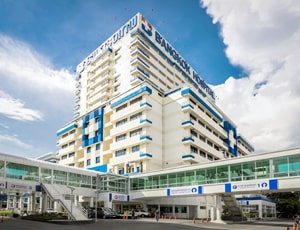
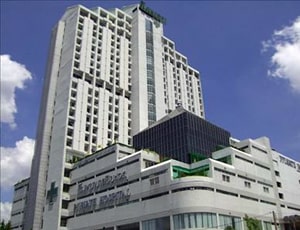
Explore Hospitals ( 4 )

Bangkok, Thailand

JCI
Starting
USD 11770

Bangkok, Thailand

JCI GHA
Starting
USD 11140

Bangkok, Thailand

ISO JCI

Bangkok, Thailand

JCI ISO
Starting
USD 12010

Get Your Prostatectomy
Plan in 24 hrs.

Our experienced Medical Patient Advisors have supported 100,000+ patients across 120+ countries with personalised treatment plans, hospital recommendations, cost estimates, and travel assistance, all free.

HIPAA-Compliant Data SecurityShared Only with Your Consent

Free Consultation No Obligation Personalized Treatment Plan Response Within 24 Hours

Required | alphabets and spaces
Required | A valid, working email address
Required | A valid contact

Your medical info has is HIPAA-style confidential. We never share with hospitals without your consent.

Process Involved for Prostatectomy in Thailand

  • Consultation: Discuss the staging, treatment, and diagnosis with a urologist or oncologist.
  • Preoperative Assessment: Imaging examinations and physical examinations are performed to determine the extent of cancer and assess whether the patient is suitable for surgery.
  • Discussion of Treatment: If prostatectomy is warranted, possible treatments like open or robotic prostatectomy will be discussed.
  • Planning Surgery: In the event of choosing prostatectomy, the doctor will thoroughly discuss the operation with you, which can either be a radical prostatectomy or a more conservative robotic-assisted procedure.
  • Follow-up after surgery: Plan follow-up appointments at regular intervals to track progress, screen for complications (like infection or incontinence), and track PSA levels to detect recurrence of the cancer.
  • Localised prostate cancer
  • Locally advanced prostate cancer
  • Prostate cancer with potential for curative surgery
  • Prostatectomy is advised for patients with a localised or locally advanced prostate cancer diagnosis.
  • Radical prostatectomy
  • Lymph node dissection
  • Hormone therapy
  • Radiation therapy
  • Cryotherapy
  • Lowers the risk of cancer spread by removing the cancerous or tumor prostate.
  • Enhances survival rates and quality of life in the case where cancer is limited to the prostate.
  • Decreases symptoms such as frequent urination, problems urinating, or pain of advanced prostate cancer.
  • Urologist
  • Surgical Oncologist
  • Radiation oncologis
  • Fill out the inquiry form: Fill out the form to provide us with the relevant information about your condition.
  • Consult with Our Healthcare Expert: One of our qualified specialists will contact you for a consultation.
  • Receive a Detailed Treatment Plan: After examining your situation, we will provide you with a detailed treatment plan that includes expert views and cost breakdowns for various choices.
  • Choose your preferred option: Choose the treatment option that suits you the best.
Jenny Wilson
Your Dedicated Medical Patient Advisor
Treatment planning • Hospital coordination • Multilingual support • Response within 15 minutes.
Our Services to Better your Experience

Opinion & Option

We submit the most accurate opinion and options from one or more countries for your review

Consult Privately

Consult with a certified specialist privately on our telemedicine platform even before you decide to travel

Logistics

We handle flights, visas, transfers, and accommodation—so you can focus on your health.

Recovery

Our In-house rehabilitation service packages to better your recovery and treatment outcome

Patient Stories

Ms. Monica
Ms. Monica
Monica from Ghana for AV Malformation Treatment in India

Monica from Ghana suffered from AV malformation. She decided to look for options for medical treatment when she started experiencing…

Patient Testimonial: Mrs Henshaw from Nigeria underwent Cervical Cancer Treatment in India
Mrs. Affiong Uko Henshaw
Mrs Henshaw from Nigeria underwent Cervical Cancer Treatment in India

This was the case with a 60-year-old cervical cancer patient from Nigeria, Mrs. Affiong Uko Henshaw. She was diagnosed with…

Conditions treated by Prostatectomy

Frequently Asked Questions

In Thailand, the average starting cost for Prostatectomy is USD 17000. Many multispeciality hospitals which are Healthcare Accreditation Institute, JCI certified are approved to operate a Prostatectomy in Thailand

The cost of Prostatectomy in Thailand may differ from one medical facility to the other. The cost quoted by some of the best hospitals for Prostatectomy in Thailand generally covers the pre-surgery investigations of the patient. The Prostatectomy cost in Thailand includes the cost of anesthesia, medicines, hospitalization and the surgeon's fee. A prolonged hospital stay due to delayed recovery, new diagnosis and complications after surgery may increase the cost of Prostatectomy in Thailand.

There are several best hospitals for Prostatectomy in Thailand. The top hospitals for Prostatectomy in Thailand include the following:

  1. Bangkok Dusit Medical Services
  2. Bangpakok 9 International Hospital (BPK 9)

While the speed of recovery may vary from patient to patient, they are still required to stay for about 21 days after discharge. This time frame is important to ensure that the surgery was successful and the patient is fit to fly back.

Apart from the Prostatectomy cost, the patient may have to pay for additional daily expenses such as for guest house after discharge and meals. The per day extra expenses in Thailand per person are about USD 50 per person.

Prostatectomy in Thailand is offered in almost all metropolitan cities, including the following:

  • Bangkok
  • Krabi

There are many Prostatectomy surgeons who offer video telemedicine consultation to patients who need this treatment. Some of them include the following:

DoctorCostSchedule Your Appointment
Dr. Saipin TangkarattUSD 130Schedule Now
Dr. Suchart ChaimuangrajUSD 81Schedule Now
Dr. Voratape KijtaveeUSD 81Schedule Now

After the Prostatectomy takes place, the average duration of stay at the hospital is about 4 days. During the recovery, the patient is carefully monitored and control tests are performed to see that everything is okay. If required, physiotherapy sessions are also planned during recovery in hospital.

There are more than 2 hospitals that offer Prostatectomy in Thailand. These clinics have proper infrastructure for the treatment of patients who require kidney transplant. Additionally, these hospitals are known to comply with the international standards as well as local legal requirements for the treatment of patients.

Some of the most sought after doctors for Prostatectomy in Thailand are:

  1. Dr. Adisorn Boonyapiban
  2. Dr. Benjawan Limpwanaspong
  3. Dr. Wichit Arpornwirat

Not Sure About Your Treatment Plan? Get a Free Second Opinion

Have your reports reviewed by independent oncology experts to help you make a confident treatment decision, all online within 48 hours.

Upload Your Reports
Free second opinion on your CAR-T plan