Benign Prostate Hyperplasia (BPH) Treatment in Thailand
- Top Accredited Hospitals
- Global Medical Standards
- Cutting-Edge Technology
- Proven Treatment Options
- High Success Rate
- Trusted by Millions

What is Benign Prostate Hyperplasia (BPH)?
Benign prostatic hyperplasia (BPH) is a disorder in which your prostate increases in size. Your prostate is a gland located below your bladder and in front of your rectum. It's about the size of a walnut and covers part of your urethra.
Your urethra is a channel that transports urine (pee) and sperm (ejaculate) from your body. If your prostate grows in size, it can prevent urine and ejaculation from passing through your urethra.
BPH is not malignant. However, BPH symptoms can signify more serious problems, such as prostate cancer.
What is the Importance of Timely Treatment?
- Timely treatment of Benign Prostatic Hyperplasia (BPH) is essential for avoiding complications such as urinary tract infections, bladder stones, or kidney damage caused by prolonged urine retention.
- Managing symptoms early on, such as frequent urination, poor urine flow, and difficulties initiating or ending urination, significantly enhances affected individuals' quality of life.
- If untreated, BPH can cause acute urine retention, which is a painful and severe condition that necessitates emergency treatment.
- Early therapy can also lessen the need for invasive surgeries, as medication and minimally invasive techniques can effectively manage symptoms.
- Treating BPH in its early stages can delay the condition's progression, allowing for better long-term control and lowering the risk of subsequent invasive therapies.
What are the Common Symptoms of Benign Prostate Hyperplasia (BPH)?
Common symptoms of BPH are:
- Urination (frequent or urgent need to pee)
- Peeing more frequently at night
- Trouble starting to pee
- A urine stream that is weak or intermittent
- Dribbling occurs at the end of urine
- Being unable to empty the bladder adequately
Less common symptoms are:
- A urinary tract infection
- Unable to urinate
- Blood in the urine
Causes, Risk Factors and Complications of Benign Prostate Hyperplasia (BPH)
Causes
- The prostate gland is placed underneath the bladder. The urethra is the tube that connects the bladder to the penis and transports pee. This tube runs across the middle of the prostate. When the prostate grows larger, it begins to restrict urine flow.
- The prostate is a gland that normally continues to expand throughout life. This development frequently enlarges the prostate enough to induce discomfort or prevent urine flow.
- It is unclear what causes the prostate to grow. It could be linked to changes in the balance of sex hormones as you get older.
Risk Factors
Risk factors for prostate enlargement include:
- Ageing: An enlarged prostate gland rarely produces symptoms before the age of 40. Following that, the risk of developing an enlarged prostate and associated symptoms increases.
- Family history: Having a blood family with prostate problems increases your chances of developing prostate issues.
- Diabetes and cardiovascular disease: According to studies, diabetes may increase BPH risk.
- Lifestyle: Obesity increases the risk of BPH. Exercise can reduce the danger.
Complications
Complications of an enlarged prostate may include:
- Unable to urinate: This is also known as urine retention. To drain pee, you may need to have a catheter inserted into your bladder. Some patients with enlarged prostates require surgery to receive relief.
- Urinary tract infections (UTI): Failure to adequately empty the bladder increases the risk of urinary tract infection. If you frequently have UTIs, you may need surgery to remove a portion of your prostate.
- Bladder stones: These are most commonly caused by an inability to empty the bladder. Bladder stones can cause disease, bladder discomfort, blood in the urine, and impaired urine flow.
- Bladder injury: A bladder that does not empty might stretch and weaken with time. As a result, the bladder's muscular wall no longer effectively squeezes to drive pee out. This makes it difficult to empty the bladder.
- Kidney injury: Pressure in the bladder caused by being unable to pee might harm the kidneys or allow bladder infections to reach them.
Connect with our advisor for a PRIORITY response
Latest Research and Technologies in the Treatment of Benign Prostate Hyperplasia (BPH) in Thailand
- Thailand provides innovative BPH treatments such as the UroLift System and water vapor therapy (Rezum), which are minimally invasive alternatives for improving urine flow and reducing symptoms.
- Thailand is researching Thai medicinal herbs, as well as approving water vapor therapy for BPH, to ensure the acceptance of new, effective treatment choices.
Benign Prostate Hyperplasia (BPH) Prevention Tips
Here are some preventative tips for benign prostatic hyperplasia (BPH):
- Maintain a healthy diet
- Exercise regularly
- Stay hydrated
- Limit alcohol and caffeine
- Maintain a Healthy Weight
- Practice Regular urination
- Monitor Prostate Health
By following these guidelines, you can improve overall prostate health and potentially lower your risk of having BPH.
Treatment options for Benign Prostate Hyperplasia (BPH)
Transurethral resection of the prostate (TURP): A scope is a tiny gadget with a light placed into the urethra. The surgeon removes all but the outermost section of the prostate. TURP frequently resolves problems quickly. Some people experience a greater urine flow shortly after the treatment. After TURP, you may need to use a catheter to drain your bladder for a bit.
Cost Start From USD 6000 - USD 10000Explore Options
Open or robot-assisted prostatectomy: One or more incisions are made in the lower stomach. This allows the surgeon to access the prostate and remove tissue. In general, this sort of surgery is performed on patients with a large prostate.
Cost Start From USD 12000 - USD 23000Explore Options
Benign prostatic hyperplasia (BPH) is diagnosed using a combination of patient history, physical examinations, and diagnostic tests. Here are the most common diagnostic steps:
- Digital rectal examination: The clinician slips a gloved finger into your rectum to determine whether your prostate is enlarged.
- Urine test: A lab examines a urine sample to determine whether you have an infection or other conditions that can cause symptoms similar to BPH.
- Blood test: The results can indicate whether you have kidney problems.
- PSA blood test: PSA is a protein produced in the prostate. PSA values increase when the prostate enlarges. However, elevated PSA levels may be the result of recent operations, illnesses, surgery, or prostate cancer.
- Urine flow test: You pee into a container connected to a machine. The gadget monitors the strength of your urine flow and the amount of pee you pass. Test findings can indicate whether your health improves or deteriorates over time.
- Postvoid residual volume test: This test determines whether you can empty your bladder. The test can be performed utilising an imaging exam known as ultrasonography.
- Urodynamic and pressure flow test: It involves threading a catheter through the urethra and into the bladder. Water or, less frequently, air is progressively introduced into the bladder to measure bladder pressure and assess how well the bladder muscles function when attempting to pass urine.
- Cystoscopy: A lighted, flexible tool is inserted into the urethra. It allows a provider to see into the urethra and bladder. Before the test, you may be given a topical urethral numbing medication.
- Pelvic Floor Exercises (Kegel Exercises): Pelvic floor exercises, often known as Kegel exercises, help to strengthen the muscles responsible for urine flow. These exercises can enhance bladder control, alleviate urine urgency, and promote pelvic health.
- Lifestyle modifications: Dietary changes, fluid management, weight control, and bladder training are all examples of lifestyle modifications for BPH that can help with symptoms and quality of life.
Medications are the most popular treatment for mild to moderate symptoms of an enlarged prostate.
Depending on the situation, your healthcare professional may prescribe medicine to help control your symptoms and support the treatment plan.
Instantly Connect with our Specialists


Hospitals for Benign Prostate Hyperplasia (BPH) in Thailand
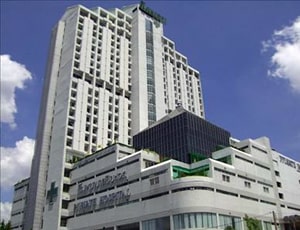
Piyavate Hospital
Bangkok, Thailand
Piyavate Hospital located in Bangkok, Thailand is accredited by JCI. Also listed below are some of the most prominent infrastructural details:
Medicine Centre: Piyavate Hospital provides advanced holistic treatment for their patients. They offer a complete range of services and physicians that specialize in various fields like the endocrine system, the nervous system, kidney function, cardiovascular care, respiratory and digestive system. They pride themselves for the familial care that they provide to their patients.
Fertility and In-Vitro Fertilization Centre: Helping the couples who walk into the Piyavate Hospital to achieve their dream of having a family. They have a medical team that specializes in male and female fertility. They offer consultation services, fertility check-up for both men and women and complete IVF services. They have advanced IVF cycle treatment facilities that offer a high rate of success.
Bone and Joint Institute: Piyavate Hospital houses one of the frontrunners in Orthopaedic health care in all of SouthEast Asia. They offer a wide range of services and surgeries in their bone and joint institute that include hand surgery, hip and knee replacement surgery, spinal cord surgery, upper extremity surgery, arthroscopic surgery and sports medicine.
Eye and Lasik Centre: Piyavate Hospital is fully equipped with the latest and most advanced technology for eye care and houses highly skilled ophthalmologists, sub-specialists and qualified nurses.
Physical Therapy and Rehabilitation Centre: One of the first hospitals to be equipped with the Hybrid Assistive Limb technology that will help a neurologically challenged patient to control the rehabilitation robot limb with a signal from their brain. The Physical Therapy and Rehabilitation Centre at Piyavate Hospital uses this system encourage patients to regain muscle memory to walk and function normally.
Amenities for Patient’s Family:
Piyavate Hospital also offers additional apartment facilities to house the kin of the patients who come to visit them from distant places. A restaurant, a flower shop and a café are a few of the other amenities provided by the hospital.
These are the most popular services offered by the Piyavate Hospital in Bangkok, Thailand. They also provide a plethora of other medical services that are listed below:
Diabetic Foot Centre
Check-up centre
Urology Centre
Heart Institute
Paediatric Centre
Obstetrics and Gynaecology Centre
Surgery Centre
Ear Nose Throat Centre
Haemodialysis Centre
Dental Centre
X-Ray Centre
Gastroenterology Centre
Cancer Centre
Neonatal Intensive Care Unit (NICU)
Emergency Services and Centre
Tele-medicine

Phyathai 2 International Hospital
Bangkok, Thailand
Phyathai 2 International Hospital located in Bangkok, Thailand is accredited by JCI. Also listed below are some of the most prominent infrastructural details:
- Fully equipped rooms are available for convenience of the patients- Gold B Room, Gold A Room, Pediatric Gold A, Platinum room, and Prestige ward
- Nearby accommodations are also available- Abloom Service Apartments, Bangkok Patio, VIB Best Western Sanam Pao, VIC3 Hotel
- Operating room
- International Patient Medical Center to assist overseas patients

Asia clinic thonglor
Bangkok, Thailand
- A wide range of services in cosmetic surgery, skincare, wellness, and weight control.
- Experienced doctors and specialists with medical licenses and expert training.
- Use of trusted, approved products and techniques that meet global safety standards.
- Non-surgical beauty options include facial lifting, wrinkle care, and skin treatments.
- Health screening packages that check for hormones, allergies, and early signs of disease.
- Private recovery rooms are designed for comfort and relaxation after treatments.
- Additional conveniences include a café, free Wi-Fi, and clean, modern surroundings.
- Friendly staff who speak Thai, English, and Turkish for easier communication.
- A central location inside Marché Thonglor, a well-known health and lifestyle complex.
- Services for adults only, with about 1,500 people visiting each year.
Our Services to better your experience
Opinion & Option
We submit the most accurate opinion and options from one or more countries for your review
Consult Privately
Consult with a certified specialist privately on our telemedicine platform even before you decide to travel
Logistics
We handle flights, visas, transfers, and accommodation—so you can focus on your health.
Recovery
Our In-house rehabilitation service packages to better your recovery and treatment outcome
Why Choose Thailand for Benign Prostate Hyperplasia (BPH) Treatment?
Here are some of the reasons for choosing Thailand:
- Advanced Treatment Options: Thailand offers revolutionary therapies like the UroLift System Rezum water vapor therapy, which are less invasive and allow speedy recovery.
- Experienced Specialists: Highly trained urologists with skills in BPH care using the latest technologies.
- Affordable Care: Quality care at a cheaper cost than in Western countries.
- Accredited Hospitals: Many hospitals in Thailand are globally certified, assuring high-quality medical care.
- Seamless Medical Tourism: Thai hospitals offer individualised care, bilingual support, and aid with travel arrangements to international patients.
Frequently Asked Questions
Some persons with moderate BPH saw relief from their symptoms without receiving therapy. If your symptoms persist after a cautious waiting approach, you and your healthcare physician should begin exploring therapy alternatives.
People with BPH have a highly positive mindset. BPH does not have a cure, but therapies can help you manage your symptoms. Mild symptoms may not require treatment. More severe cases can be treated with medications, surgery, or minimally invasive procedures.
BPH is the name of a condition that causes your prostate to grow in size. Benign prostatic enlargement (BPE) is a term used by healthcare providers to describe the increased size of the prostate gland caused by BPH.
BPH is not a risk factor for prostate cancer in Thailand. However, the symptoms of BPH may overlap with those of prostate cancer; thus, early diagnosis is essential.
The average age at which males develop Benign Prostatic Hyperplasia (BPH) in Thailand is comparable to global trends, ranging between 50 and 60 years. However, the incidence rises with age, and by the age of 70, a large number of men may have symptoms of BPH.
Surgery is typically used as a last resort when medications and lifestyle changes fail to offer adequate symptom reduction. Minimally invasive procedures, such as UroLift or laser therapy, are increasingly preferred alternatives to classic surgeries like TURP.
Obesity has a vital role in the development and progression of Benign Prostatic Hyperplasia (BPH) in Thailand, as it does worldwide. Excess body fat, particularly abdominal fat, stimulates the production of hormones such as estrogen, which can influence prostate growth. Obesity is also connected to metabolic syndrome, which can worsen BPH symptoms such as urine retention and bladder problems. Maintaining a healthy weight is frequently advised to lower the risk and severity of BPH in affected persons.
The recovery time following BPH surgery in Thailand varies according to the technique. Recovery time for minimally invasive therapies such as UroLift or Rezum is approximately 1-2 weeks, with regular activities resumed after a few days. More invasive operations, such as TURP (Transurethral Resection of the Prostate), often require 4-6 weeks of recuperation time, with follow-up consultations to check progress. Most patients notice significant symptom reduction soon after surgery.

Reviewer

Dr. Mohit Agarwal
Medical Oncologist
14 Years of Experience
One of the finest Oncologist in New Delhi, India, Dr. Mohit Agarwal has worked with several world class multidisciplinary hospitals over the years. Dr. Mohit Agarwal has over 14+ years of experience in his field. The doctor treats and manages a wide range of conditions such as Stomach Cancer, Rectal Cancer, Breast Cancer, Brain Cancer View More
Last Reviewed - January 2026