Your Notifications
All done, no notifications

Kidney Cancer Treatment Cost in Thailand

Costs starts from USD10000 to USD50000
Filters

How Much Does Kidney Cancer Treatment Cost in Thailand?

The cost of Kidney Cancer Treatment in Thailand typically ranges between USD 10000 - USD 50000.

However, this cost can vary depending on several factors, including the type and severity of the condition, treatment techniques chosen, the healthcare facility's location and reputation, the treating professionals' experience and specialisation, and the patient's overall health status.

Additionally, factors like the duration of treatment, the need for follow-up care, and the use of advanced technologies or specialised treatments can further influence the overall cost.

Factors Influencing the Cost of Kidney Cancer Treatment:

Kidney cancer is the abnormal growth of cells in your kidney tissue. Over time, these cells accumulate into a mass known as a tumour. When anything causes the cells to alter and divide uncontrollably, cancer starts.

Surgery, radiation therapy, targeted therapy, immunotherapy, active surveillance, cryotherapy, radiofrequency ablation, or microwave ablation are among the available treatments for kidney cancer.

Cost of Kidney Cancer Treatment in Major Cities of Thailand

CityMinimum Cost (USD)Minimum Cost (THB)Maximum Cost (USD)Maximum Cost (THB)
BangkokUSD 10000327100USD 500001635500

Kidney Cancer Treatment Cost : A Global Comparison

CountryMinimum CostMinimum Local CurrencyMaximum CostMaximum Local Currency
IndiaUSD 8000INR 685120USD 10000INR 856400
MalaysiaUSD 35000MYR 148400USD 75000MYR 318000
Singaporeget request
South KoreaUSD 5000KRW 6879900USD 20000KRW 27519600
SpainUSD 15000ESP 2205598USD 50000ESP 7351995
ThailandUSD 10000THB 327100USD 50000THB 1635500
TunisiaUSD 10000TND 29800USD 30000TND 89400
TurkeyUSD 6500TRY 253890USD 21180TRY 827291
United Arab EmiratesUSD 20000AED 73400USD 100000AED 367000
United KingdomUSD 13000GBP 9620USD 26000GBP 19240

Need Help Planning Your Treatment Abroad?

Your 24/7 AI Health Assistant

Kidney cancer, also called “renal cancer”, is a condition where the cells in the kidneys grow out of control. So, forms a small mass also called a renal cortical tumor. This tumor could be malignant or benign. A malignant tumor is cancerous and may spread to other parts of the body. A benign tumor is also cancerous but it does not spread to other parts of the body. A benign tumor can grow but won’t spread.

The exact reasons behind most kidney cancers are not completely understood. Doctors believe kidney cancer starts when certain cells in the kidney change their DNA, like a set of instructions inside the cell(mutation). These changes signal the cells to grow and multiply quickly. As these abnormal cells gather, they create a lump called a tumor, which might go beyond the kidney. In some cases, these cells can break away and travel to other parts of the body, a process known as metastasis.

Once you are diagnosed with kidney cancer and know the stage of cancer, your doctor and you can plan your treatment. Your doctor may refer you to a specialist such as a urologist, a radiation oncologist, or a surgeon for treatment. There are many types of kidney cancer treatment. However, in most cases, surgery is the first step. Sometimes, even if the surgery removes the entire tumor, your doctor may recommend additional treatments, to kill the remaining cancer cells, if any. Here below are a few types of treatment for kidney cancer.

Treatment for kidney cancer aims to remove or destroy cancerous cells in the kidneys, stop the spread of the disease, and improve survival. It helps preserve kidney function, relieve symptoms, and enhance quality of life.

See a doctor if you notice blood in urine, persistent back or side pain, unexplained weight loss, fatigue, or a lump in the abdomen. These symptoms warrant evaluation, and early detection leads to better treatment results.

Preparation includes imaging tests (CT, MRI, ultrasound), blood tests, and possibly a biopsy. Patients may need to stop certain medications, fast before surgery, and discuss treatment plans, including any underlying kidney conditions, with their doctor.

Treatment varies based on cancer stage, kidney function, and overall health. Options include:Surgery: Partial or total nephrectomy (removal of part or all of the kidney).
Ablation therapy: Freezes or burns cancer cells (cryoablation or radiofrequency ablation).
Targeted therapy: Drugs that block cancer cell growth.
Immunotherapy: Stimulates the immune system to attack cancer.
Radiation therapy: Occasionally used, especially if surgery isn’t possible.

Kidney cancer surgery takes 2–4 hours. Hospital stays usually last 2–5 days. Other treatments like immunotherapy or targeted therapy can extend over weeks or months, depending on response.

  • Bleeding
  • Infection
  • Injury to nearby organs
  • Reduced kidney function
  • Fatigue
  • Digestive issues

Treatment can remove or shrink the tumor, prevent metastasis, and extend life. Early-stage kidney cancer treatment often allows patients to retain some kidney function and live normal lives post-treatment.

Recovery from surgery usually takes 4–6 weeks. Patients are advised to avoid heavy lifting, follow wound care instructions, and attend follow-up appointments. Recovery from drug therapies may involve managing ongoing side effects.

Success depends on cancer stage and type. Localized kidney cancer has a 5-year survival rate of around 90%, while advanced cases may have lower rates, though targeted and immunotherapies have improved outcomes.

Would you like some help? We are available.

Get Help
Explore Hospitals ( 4 )
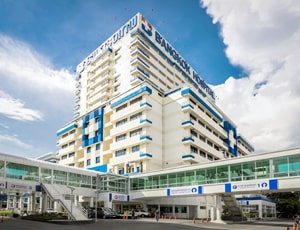
Kidney Cancer Treatment in Bangkok Hospital: Costs, Top Doctors, and Reviews

Bangkok, Thailand

  • Joint Commission International, or JCI

Types of Kidney Cancer Treatment in Bangkok Hospital and its associated cost

Treatment OptionApproximate Cost Range (USD)Approximate Cost Range (THB)
Kidney Cancer Treatment (Overall)6814 - 16640240385 - 607044
Surgery2295 - 556181708 - 196505
Radical Nephrectomy3368 - 7985121988 - 276043
Partial Nephrectomy3942 - 8989141304 - 320265
Laparoscopic Nephrectomy2875 - 6787101718 - 237236
Targeted Therapy1723 - 446960196 - 163760
Immunotherapy3444 - 6823121882 - 237253
Radiation Therapy1722 - 447359347 - 158426
Chemotherapy917 - 282831857 - 98346
Ablation Therapies1699 - 510660483 - 184074
Embolization1146 - 392840677 - 143247
  • Address: Bangkok Dusit Medical Services, Nong Prue, Bang Phli, Samut Prakan, Thailand
  • Facilities related to Bangkok Hospital: SIM, TV inside room, Accommodation, Choice of Meals
Kidney Cancer Treatment in Bangpakok 9 International Hospital: Costs, Top Doctors, and Reviews

Bangkok, Thailand

  • Joint Commission International, or JCI

Types of Kidney Cancer Treatment in Bangpakok 9 International Hospital and its associated cost

Treatment OptionApproximate Cost Range (USD)Approximate Cost Range (THB)
Kidney Cancer Treatment (Overall)6833 - 16898242468 - 595744
Surgery2229 - 562678875 - 196978
Radical Nephrectomy3353 - 7832119036 - 280963
Partial Nephrectomy3972 - 8976139303 - 314956
Laparoscopic Nephrectomy2754 - 689099073 - 239758
Targeted Therapy1685 - 452760902 - 161093
Immunotherapy3335 - 6867119408 - 242595
Radiation Therapy1684 - 450861376 - 163807
Chemotherapy919 - 282232360 - 98545
Ablation Therapies1662 - 512861203 - 181668
Embolization1108 - 389140445 - 141568
  • Address: Bangpakok 9 International Hospital, International Hospital, Rama II Road, Bang Mot, Chom Thong, Bangkok, Thailand
  • Facilities related to Bangpakok 9 International Hospital: Choice of Meals, Interpreter, SIM, TV inside room, Accommodation
Kidney Cancer Treatment in Phyathai 2 International Hospital: Costs, Top Doctors, and Reviews

Bangkok, Thailand

  • Joint Commission International, or JCI

Types of Kidney Cancer Treatment in Phyathai 2 International Hospital and its associated cost

Treatment OptionApproximate Cost Range (USD)Approximate Cost Range (THB)
Kidney Cancer Treatment (Overall)6703 - 16886239557 - 612633
Surgery2275 - 564681306 - 198737
Radical Nephrectomy3413 - 7857122912 - 274750
Partial Nephrectomy3903 - 9026138491 - 326480
Laparoscopic Nephrectomy2769 - 6827101215 - 245364
Targeted Therapy1692 - 443260532 - 162924
Immunotherapy3440 - 6824119820 - 239485
Radiation Therapy1669 - 449060889 - 157295
Chemotherapy882 - 287431726 - 100563
Ablation Therapies1681 - 507160791 - 182146
Embolization1121 - 402239239 - 142666
  • Address: Phyathai 2 Hospital, Phahonyothin Road, Phaya Thai, Thailand
  • Facilities related to Phyathai 2 International Hospital: Choice of Meals, Interpreter, SIM, TV inside room, Accommodation
Kidney Cancer Treatment in Piyavate Hospital: Costs, Top Doctors, and Reviews

Bangkok, Thailand

  • Joint Commission International, or JCI
  • ISO 9001

Types of Kidney Cancer Treatment in Piyavate Hospital and its associated cost

Treatment OptionApproximate Cost Range (USD)Approximate Cost Range (THB)
Kidney Cancer Treatment (Overall)6676 - 17101240845 - 591650
Surgery2273 - 571079597 - 196772
Radical Nephrectomy3354 - 7935120878 - 281796
Partial Nephrectomy3902 - 8975138481 - 314397
Laparoscopic Nephrectomy2798 - 676299492 - 236069
Targeted Therapy1699 - 440160389 - 158561
Immunotherapy3301 - 6610119114 - 243628
Radiation Therapy1695 - 441360603 - 160143
Chemotherapy881 - 281731577 - 99653
Ablation Therapies1718 - 498861182 - 183507
Embolization1146 - 394339422 - 137459
  • Address: Piyavate Hospital, Khlong Samsen Road, Bang Kapi, Huai Khwang, Bangkok, Thailand
  • Facilities related to Piyavate Hospital: Choice of Meals, Interpreter, TV inside room, Accommodation, Airport Transfer

Need Some Advice From Our Experts?

Request a Call Back Now!

Our team of healthcare experts would be happy to assist you

trusted Patientstrusted Patients+99
Trusted by 50000+ Patients
Required | alphabets and spaces
Required | A valid, working email address
Required | A valid contact

Process Involved for Kidney Cancer Treatment in Thailand

  • Preoperative Stage: Imaging to determine tumor size, location, and metastasis; thorough health evaluation and discussion of treatment options based on cancer stage.
  • Surgical Stage: General anesthesia is delivered; surgery may include a partial or radical nephrectomy, with laparoscopic or robotic-assisted options for less invasive treatments.
  • Postoperative Stage: Inpatient recovery to monitor healing, pain management, and kidney function; follow-up treatment to assess recurrence and kidney health.
  • Rehabilitation: Depending on the length of the surgery and recovery, post-operative rehabilitation may include lifestyle changes, dietary alterations, and physical activity.
  • Renal Cell Carcinoma (RCC)
  • Localised Kidney Cancer
  • Metastatic Kidney Cancer
  • Wilms Tumor (in children)
  • Individuals diagnosed with kidney cancer (renal cell carcinoma), especially those with localised or advanced disease.
  • Candidates with early-stage cancers that can be surgically removed or treated with other therapies
  • Patients with metastatic kidney cancer may benefit from systemic treatments like immunotherapy or targeted medications.
  • Ablation Therapy: Cryoablation or Radiofrequency Ablation (RFA)
  • Targeted Therapy
  • Immunotherapy
  • Tumor Removal: Surgery has the potential to remove localised kidney cancer, which increases survival rates altogether.
  • Minimally Invasive Options: Robotic-assisted or laparoscopic operations minimise recovery time, pain, and scarring.
  • Advanced Treatment Options: Immunotherapy and targeted therapy benefit advanced kidney cancer.
  • Medical Oncologist
  • Urologist
  • Radiation Oncologist
  • Fill out the inquiry form: Fill out the form to provide us with the relevant information about your condition.
  • Consult with Our Healthcare Expert: One of our qualified specialists will contact you for a consultation.
  • Receive a Detailed Treatment Plan: After examining your situation, we will provide you with a detailed treatment plan that includes expert views and cost breakdowns for various choices.
  • Choose your preferred option: Choose the treatment option that suits you the best.

Instantly Connect with our Kidney Cancer Treatment Specialists

Doctor 1
Doctor 2
Doctor 3
Doctor 4
Doctor 5
Doctor 6
Doctor 7
Doctor 8
Our Services to Better your Experience

Opinion & Option

We submit the most accurate opinion and options from one or more countries for your review

Consult Privately

Consult with a certified specialist privately on our telemedicine platform even before you decide to travel

Logistics

We handle flights, visas, transfers, and accommodation—so you can focus on your health.

Recovery

Our In-house rehabilitation service packages to better your recovery and treatment outcome

Other Popular Countries for Kidney Cancer Treatment

Our network connects you with the leading medical tourism destinations globally, offering a wide range of cities, top doctors, and flexible pricing options.

United Kingdom
Turkey
Vietnam
Malaysia

Frequently Asked Questions

A. Kidney Cancer Treatment cost in Thailand varies from one hospital to the other. The Kidney Cancer Treatment package cost usually includes all the expenses related to pre and post-surgery expenses of the patient. The treatment cost usually includes the expenses related to hospitalization, surgery, nursing, medicines, and anesthesia. Post-surgical complications, new findings, and delayed recovery may have an impact on the total Kidney Cancer Treatment cost in Thailand.

A. Depending on the kind of treatment you had, the severity of the disease, and your general health, there are differences in the recovery process following kidney cancer treatment. Here's a basic rundown of what to anticipate:

  • Hospital Stay: You might require a few days in the hospital following surgery, such as a partial or whole nephrectomy. Depending on the intricacy of the procedure and any complications, recovery times can change.
  • Wound Care: If you had surgery, take care of your incision as directed by your physician. Keep it dry and clean, and keep an eye out for infection symptoms.
  • Activity Restrictions: For a few weeks, you may need to refrain from heavy lifting and intense activity. As you start to feel better, gradually increase your degree of activity.
  • Frequent Check-ups: Keep track of any problems or recurrence signs by attending follow-up sessions. Periodic physical examinations, blood work, and imaging tests will be scheduled by your healthcare practitioner.
  • Monitoring: To make sure the cancer hasn't returned or spread, routine check-ups usually involve scans like CT or MRIs.
  • Healthy Diet: Consuming a well-balanced diet promotes general health and recuperation. If there are any changes in renal function or other health issues, you may need to modify your diet.
  • Hydration: It's critical to stay properly hydrated, particularly if you are recovering from surgery or have decreased kidney function.

A. Sometimes nonsurgical methods like heat and ice can eradicate small kidney malignancies. In some cases, such as those involving individuals with additional health issues that make surgery problematic, these methods might be a choice. Possible choices could be:

  • Cryoablation is a cancer cell-freezing treatment: Using ultrasound or other imaging guidance, a unique hollow needle is introduced through your skin and into the kidney tumor during cryoablation. The cancer cells are frozen using cold gas in the needle.
  • Heat-based cancer cell treatment (radiofrequency ablation): A unique probe is put through your skin and into the kidney tumor during radiofrequency ablation. The placement of the probe is guided by ultrasonography or other imaging technology. The cancer cells heat up or burn as a result of an electrical current passing through the needle and into them.

A. In its early stages, kidney cancer may not usually show symptoms. When symptoms do appear, though, they can differ. Typical signs and symptoms include of:

  • Hematuria, or blood in urine, can be seen (red or pink urine) or only be identified by urinalysis. It's frequently one of the initial symptoms that lead people to seek medical attention.
  • Lower Back or Side discomfort: Kidney cancer may be indicated by persistent lower back or side discomfort, particularly if it is unrelated to an injury or strain.
  • A lump or mass in the abdomen: Although it might not be apparent in the early stages, you might detect a lump or swelling in the abdomen.
  • Frequent Urination: Having more frequent urination can be a symptom, particularly if it's accompanied by pain or discomfort.
  • Urination Pain: While it's less common, discomfort or pain during urination might occur.
  • Unexplained Weight Loss: Without dietary or exercise modifications, there may be a notable and inexplicable drop in weight.
  • Fatigue: An overwhelming sense of exhaustion that doesn't go away with rest or a persistent state of tiredness.
  • Fever: Kidney cancer may be linked to a low-grade fever that lasts for an extended period without a clear reason.
  • Swelling in the legs or ankles: This could happen if a urinary tract blockage is brought on by malignancy.
  • Loss of Appetite: A drop in appetite and modifications to eating patterns may occasionally indicate kidney cancer.
  • Anemia: Paleness, lightheadedness, or dyspnea may be signs of a decrease in red blood cells, or anemia.
  • High Blood Pressure: Kidney cancer can occasionally result in high blood pressure, which may be identified during normal medical checkups.

A. Kidney cancer diagnosis techniques and procedures include:

  • Urine and blood tests: Your doctor may be able to determine the cause of your symptoms and signs with the help of blood and urine tests.
  • Imaging examinations: Your doctor can see a kidney tumor or other problem with imaging tests. An MRI, CT, X-ray, or ultrasound are examples of imaging tests.
  • Removing a sample of the kidney (biopsy): In certain cases, your physician could advise a biopsy—a technique in which a small sample of cells is taken from a suspicious location of your kidney—if there are any concerns. In a lab, the sample is examined for indications of malignancy. Not every time is this process required.

A. Surgery is usually the first line of treatment for kidney malignancies. When feasible, normal kidney function is preserved during the surgical procedure to eradicate the cancer. Kidney cancer is treated with the following surgeries:

  • Removing the kidney that is damaged (nephrectomy): In a complete (radical) nephrectomy, the kidney is removed with a margin of healthy tissue and, on occasion, other adjacent tissues like the adrenal gland, lymph nodes, or other structures.
  • A partial nephrectomy, or removal of the kidney tumor: Often referred to as "kidney-sparing" or "nephron-sparing" surgery, the surgeon eliminates the cancer along with a little portion of the kidney's healthy tissue surrounding it. It can be performed laparoscopically, openly, or with a robot.
  • Cryoablation is a cancer cell-freezing treatment: Using ultrasound or other imaging guidance, a unique hollow needle is introduced through your skin and into the kidney tumor during cryoablation. The cancer cells are frozen using cold gas in the needle.
  • Heat-based cancer cell treatment (radiofrequency ablation): A unique probe is put through your skin and into the kidney tumor during radiofrequency ablation. The placement of the probe is guided by ultrasonography or other imaging technology. The cancer cells heat up or burn when an electrical current is passed through the needle and into them.
  • Targeted treatment: Treatments with targeted drugs concentrate on particular defects found in cancer cells. Cancer cells can be killed by specific medication treatments that prevent these abnormalities. To determine which targeted medications may have the best chance of working, your doctor could advise evaluating your cancer cells.
  • Immunotherapy: It fights cancer by boosting your immune system. The immune system that fights disease may not be able to combat your cancer because the cancer cells make proteins that assist them evade the immune system cells. Immunotherapy functions by obstructing that procedure.
  • Radiation treatment: High-powered energy beams from sources like protons and X-rays are used in radiation therapy to destroy cancer cells. Radiation therapy is occasionally used to manage or lessen kidney cancer symptoms that have migrated to other body parts, like the brain and bones.

  • Infection: There is a chance of infection internally or at the site of the incision, as with any major surgery.
  • Bleeding: Transfusions may be necessary if there is significant blood loss.
  • Pain: Following surgery, pain is frequent and may need to be managed.
  • Damage to Neighboring Organs: The spleen, liver, or intestines are among the organs that could unintentionally sustain damage.
  • Kidney failure: Kidney function may be compromised if problems arise or if both kidneys are damaged.
  • Blood Clots: Following surgery, there may be a higher risk of deep vein thrombosis (DVT) or pulmonary embolism (PE).
  • Complications at the Port Site: There may be problems at the incision sites where the tools are placed.
  • Hypertension: One frequent adverse effect is elevated blood pressure.
  • Patients receiving targeted therapy frequently report feeling weak and fatigued.
  • damage to surrounding organs: Radiation exposure can have a long-term negative impact on surrounding tissues and organs.
  • One well-known adverse effect of various chemotherapy medications is hair loss.
  • Anemia: Weakness and exhaustion may result from a reduction in red blood cells.

A. As they transition to life following treatment, kidney cancer survivors must address several long-term health issues. Depending on the kind and stage of the cancer, the therapies taken, and personal health circumstances, these factors may change. The following are some crucial factors for long-term health:

  • Kidney Function: Long-term renal function monitoring is essential if one kidney was removed or if the remaining kidney suffered serious damage.
  • Risk factors for renal disease: renal failure or chronic renal disease are more likely to strike survivors with impaired kidney function. Keeping up a healthy lifestyle and getting regular checkups can help reduce this risk.
  • Monitoring for Recurrence: To identify any possible cancer recurrence, routine imaging tests, and follow-up visits are crucial. This usually entails routine MRIs or CT scans.
  • Increased Risk of Cardiovascular Problems: Certain cancer treatments, particularly some forms of targeted therapy, may make patients more susceptible to cardiovascular conditions such as high blood pressure, heart disease, or stroke.
  • Bone Density: An increased risk of osteoporosis or fractures can result from some medications that hurt bone health. It may be advised to check bone density and take preventative steps such as taking supplements of calcium and vitamin D.
  • Exercise: Getting regular exercise helps control weight, enhance mood, and improve general health.
  • Limiting Alcohol and Quitting Tobacco: These lifestyle choices have the potential to affect general health and should be taken into consideration.

A. There are several best hospitals for Kidney Cancer Treatment in Thailand. Some of the most renowned hospitals for Kidney Cancer Treatment in Thailand include the following:

  • Bangpakok 9 International Hospital
  • Phyathai 2 International Hospital
  • Bangkok Hospital
  • Vejthani Hospital
  • Piyavate Hospital

A. The recovery of the patient may vary, depending on several factors. However, on average, a patient is supposed to stay for about 28 days in the country after discharge. This is important to ensure that the surgery is successful. During this time, control and follow-up tests take place to check for medical fitness.

A. One of the topmost destinations for Kidney Cancer Treatment is Thailand. It has a variety of accredited hospitals, affordable cost of treatment, and some of the best medical fraternity. Some of the other destinations that are popular for Kidney Cancer Treatment include the following:

  • South Korea
  • Spain
  • The United Kingdom
  • Turkey
  • Malaysia
  • The United Arab Emirates
  • India
  • Tunisia

A. There are certain additional costs that the patient has to pay apart from the Kidney Cancer Treatment cost. These include the cost of accommodation and meals outside the hospital. The per day cost in this case may range around USD 25.

A. Many cities offer Kidney Cancer Treatment in Thailand, including the following:

  • Bangkok

A. The average duration of stay at the hospital after Kidney Cancer Treatment is about 5 days for proper care and monitoring. During the recovery, the patient is carefully monitored and control tests are performed to see that everything is okay. If required, physiotherapy sessions are also planned during recovery in the hospital.

Author

Alvina Hasan

M.Pharm

1 Year of Experience

Alvina Hasan is a dedicated medical researcher and scientific writer with a strong foundation in the pharmaceutical sciences. She holds a B.Pharm from Jamia Hamdard University and an M.Pharm in Quality Assurance from DIPSAR University. With deep medical expertise and a strong interest in healthcare communication, she focuses on transforming complex clinical and scientific information into clear, engaging, and easy-to-understand narratives. She develops insightful healthcare articles and research-driven pieces designed to support both medical professionals and patients, helping bridge the gap between advanced medical knowledge and practical understanding. . View More

Reviewer

Dr Prateek Varshney

Surgical Oncologist

15 Years of Experience

Dr. Prateek Varshney is a renowned Surgical Oncologist. He has experience of more than 15+ years in surgical Oncology. He is currently practicing as a consultant at Metro Mass Hospital and Cancer Institute. He was also previously associated as a consultant with Sir Ganga Ram Hospital and as a professor at Gujarat Cancer Research Institute. View More