Your Notifications
All done, no notifications

Brachytherapy Cost in Thailand

USD 12000 - USD 28000

Affordable World-class Treatment - Accredited Hospitals - Free Treatment Plan in 24 Hrs

21
Post-Hospital
85 - 95%
Success Rate
Brachytherapy starting from starting from USD 600 | Cost, Procedure, Hospitals, and Clinics from all around the world with MediGence
JCI/ISO 100,000+ Patients 24X7 Coordinator Visa & Travel handled
Your all-in-one medical travel platform for treatment, recovery & care.

Get Your Personalised Treatment Plan in Just 24 Hours.

Share your details to receive a personalised treatment plan, estimated costs, hospital recommendations, and expert guidance, “completely free.”

Required | alphabets and spaces
Required | A valid, working email address
Required | A valid contact
Connect with an Expert

Your information is protected with HIPAA-compliant security standards. We only share your details with hospitals after your consent.

Estimated Treatment Cost
USD 12000 - USD 28000
All-inclusive • Hospital + Medications + Recovery Assistance + Dedicated Care Coordinator

International Quality. Affordable Care.

How Much Does Brachytherapy Cost in Thailand?

The cost of Brachytherapy in Thailand typically ranges between USD 12000 - USD 28000. However, this cost can vary depending on several factors, including the type and severity of the condition, treatment techniques chosen, the healthcare facility's location and reputation, the treating professionals' experience and specialization, and the patient's overall health status.

Additionally, factors like the duration of treatment, the need for follow-up care, and the use of advanced technologies or specialized treatments can further influence the overall cost.

Factors Influencing the Cost of Brachytherapy:

  • Type of Treatment: For brachial Plexus treatment- Physical therapy and rehabilitation, Bracing or splinting for joint stability, Nerve Grafting, Nerve Transfer (neurotization), Muscle and Tendon Transfer, Osteotomy, and Spinal Nerve Root Avulsion Surgery. For Stereotactic procedures- Stereotactic Biopsy: Precise tissue sampling from deep brain areas, Deep Brain Stimulation (DBS), Stereotactic Radiosurgery (SRS), Minimally Invasive Spinal Surgery, Stereotactic Peripheral Nerve Stimulation, and Stereotactic-guided Nerve Grafting/Repair.
  • Hospital and Location: This is equivocal because of the increased overhead cost that accompanies operations in large cities or urban areas compared to the countryside. It often costs more to stay in a private hospital or clinic.
  • Surgeon’s Expertise: Very experienced or specialized surgeons, particularly those acknowledged as regional or international experts, may well be more expensive than the average.
  • Pre-treatment tests: clinical investigations, mainly including imaging studies, blood tests, endoscopic examinations, and heart, lung, and kidney function tests. The performance of these tests enables the assessment of the general well-being of the patient and the possibility of surgery. These tests include X-ray, MRI, and CT.
  • Post-Surgical Care: In addition to the price, the costs of aftercare, such as hospitalization, physiotherapy, anesthesia and pain medication, follow-up visits, and possible complications, will also be included.
  • Length of Hospital Stay: Complex surgeries or complications may increase hospitalization costs.

It is a regional nerve that arises from the cervical part of the spinal cord, it descends the neck and into the arm. It manages the muscles and feelings all through the extremities involving the shoulder, arm, and hand. BPI arises when these complex nerves get stretched, compressed, or avulsed- this results in a range of affected power, sensory loss, or even complete paralysis of the arm. These injuries may occur through trauma, as is birth palsy (Erb’s palsy), car accidents, sports, or falls.

A stereotactic procedure means a clinical operation to treat specific medical conditions affecting the brain, spinal cord, and other parts of the body through a minimally invasive process. It involves the use of 3D imaging either in a frame or not in a frame to direct the surgeon to a specific point, without making extensive incisions.

This method is more applicable in treating illnesses such as cancerous growth around the head, especially the brain, Parkinson’s disease, epilepsy, and sometimes in the brachial plexus injury in which stimulation or DBS may be required.

What's included in your Brachytherapy quote?

Brachytherapy
Internal radiation therapy delivering high-dose radiation directly to the tumor site
Radiation oncology consultation
Pre-treatment evaluation, treatment planning, and follow-up consultations
Procedure & supportive care
Radiation implantation procedure, anaesthesia if required, nursing care, and monitoring
Follow-up monitoring
Imaging, treatment response assessment, and routine oncology follow-ups
Visa & medical-visa invite letter
Airport pickup & transfers

Cost of Brachytherapy in Major Cities of Thailand

City Cost (USD)
Bangkok $12,000 – $28,000 Explore More

Brachytherapy - Thailand Vs the World

$0 - $0
$2k - $3k
$2k - $6k
$2k - $6k
$2k - $12k
$3k - $0
$3k - $8k
$5k - $10k
$7k - $15k
$8k - $16k
$12k - $28k
$15k - $30k
$20k - $35k
Nimra Haseeb
Author

MSc Biochemistry

4 Years of Experience

Last Reviewed - June 2026

Miss Nimra Haseeb is a medical researcher and a scientific content writer. She holds a Bachelor’s degree in Biotechnology and a Master’s in Biochemistry from Integral University, Lucknow. With strong experience in healthcare research, she specializes in secondary research, clinical data analysis, and evidence-based medical writing. Her work focuses on transforming complex scientific and medical information into clear, accurate, and reliable healthcare content for patients and healthcare audiences. She is also experienced in interpreting medical studies and healthcare trends to deliver well-researched and informative content that supports better health awareness and decision-making.
View More
Dr Prateek Varshney
Reviewer

Surgical Oncologist

15 Years of Experience

Last Reviewed - June 2026

Dr. Prateek Varshney is a renowned Surgical Oncologist. He has experience of more than 15+ years in surgical Oncology. He is currently practicing as a consultant at Metro Mass Hospital and Cancer Institute. He was also previously associated as a consultant with Sir Ganga Ram Hospital and as a professor at Gujarat Cancer Research Institute.
View More

Need Help Choosing the Right Treatment? Talk to a Medical Advisor

Our dedicated Medical Patient Advisors are here to answer your questions, help you compare treatment options, estimate costs, and guide you through every step of your healthcare journey.

15 min
Average response time

Serving Patients Worldwide in Multiple Languages.

“Brachytherapy”, also called “Internal radiation therapy”, represents an advanced approach within the realm of radiation therapy, a cornerstone of cancer treatment. Unlike conventional external beam radiation therapy, which emanates radiation from a machine outside the body, brachytherapy involves placing radioactive particles or sources directly inside or adjacent to the tumor site.

By doing so, brachytherapy delivers a targeted, high dose of radiation precisely to the tumor, while minimizing exposure to surrounding healthy tissues. This focused delivery allows for the administration of high radiation doses to specific areas of the body, enhancing treatment efficacy.

This therapy finds application in the treatment of various cancers, including cervical, prostate, breast, skin, lung, head and neck, and gum cancer, among others. Particularly, it is a widely utilized procedure for prostate cancer treatment, offering an alternative to surgery for gum cancer patients who may be unfit or do not require surgical intervention. One of the notable advantages of brachytherapy lies in its efficiency, as treatment completion often requires fewer sessions compared to conventional radiotherapy techniques. Moreover, many patients undergo brachytherapy on an outpatient basis, further enhancing its accessibility and convenience. Overall, brachytherapy is well-tolerated by patients, with fewer side effects reported, making it a valuable therapeutic option in the fight against cancer.

Types of Brachytherapy

There are two types of brachytherapy treatment:

Temporary brachytherapy: In this method, highly radioactive particles are placed in a catheter or slender tube for a specific amount of time and then withdrawn. Temporary brachytherapy can be administered at either a low-dose rate (LDR) or a high-dose rate (HDR).

Permanent brachytherapy: In this method, a radioactive seed or pellet is implanted in or near the tumor and left there permanently. After several months, the radioactivity level of the implanted seed eventually diminishes to nothing.

A type of internal radiation therapy called brachytherapy is used to treat cancers of the skin, breast, prostate, and cervical areas. In order to deliver targeted radiation and efficiently kill cancer cells while limiting exposure to nearby healthy tissue, radioactive material is placed inside or close to the tumor.

Get in touch with your doctor right away if you have severe nausea, vomiting, diarrhoea, or difficulty breathing or swallowing. You should also seek help for symptoms like faecal or urine incontinence. These symptoms may indicate serious adverse effects that require immediate medical attention.

Preparation may involve blood testing, imaging tests (CT, MRI, or ultrasound), and at times an assessment of anesthetic. Depending on the location of the cancer, you might need to stop taking some medications, fast before the surgery, and follow specific hygiene or bladder-emptying instructions.

Brachytherapy involves positioning Radioactive material inside or close to the tumour. Small radioactive seeds, wires, or pellets may be inserted using applicators, catheters, or needles; the technique may be temporary or permanent, depending on the nature and location of the tumours. The treatment may be guided by imaging (like ultrasound or CT) and is usually done in an outpatient setting or with a short hospital stay.

HDR brachytherapy is often performed as an outpatient procedure and lasts 10 to 30 minutes. After 1-2 hours of LDR brachytherapy, radioactive seeds are permanently left in the body.

  • Difficulty peeing
  • Urinary incontinence
  • Erectile dysfunction
  • Fatigue
  • Vaginal scarring
  • Faecal (bowel) incontinence, constipation or diarrhoea
  • Nausea and vomiting

High radiation doses are sent directly to the tumor with this treatment, protecting healthy tissue in the process. For localized malignancies, it has a high efficacy rate, fewer side effects, and a shorter treatment duration.

Post-operative recovery from brachytherapy is typically faster than that from external radiation, depending on the type and site of treatment. Although insignificant side effects like tiredness, bowel or urine abnormalities, and local discomfort may occur, most patients are able to return to their regular activities in a matter of days. Rest, proper hydration, and follow-up care promote a speedy recovery and help detect any delayed side effects.

The success rate of brachytherapy for localised tumours, such as breast, cervical, and prostate cancer, is high and frequently ranges from 85% to over 95%.

Explore Hospitals ( 4 )

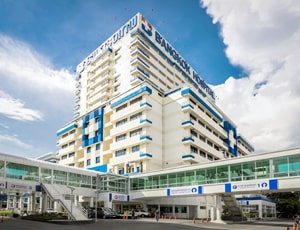
Bangkok, Thailand

JCI
Starting
USD 4500

Bangkok, Thailand

JCI
Starting
USD 4500

Bangkok, Thailand

JCI GHA
Starting
USD 4500
Starting
USD 4500

Get Your Brachytherapy
Plan in 24 hrs.

Our experienced Medical Patient Advisors have supported 100,000+ patients across 120+ countries with personalised treatment plans, hospital recommendations, cost estimates, and travel assistance, all free.

HIPAA-Compliant Data SecurityShared Only with Your Consent

Free Consultation No Obligation Personalized Treatment Plan Response Within 24 Hours

Required | alphabets and spaces
Required | A valid, working email address
Required | A valid contact

Your medical info has is HIPAA-style confidential. We never share with hospitals without your consent.

Process Involved for Brachytherapy in Thailand

  • Consultation: Discuss the diagnosis, treatment options, and appropriateness of brachytherapy with an oncologist or radiation oncologist.
  • Pre-Treatment Assessment: Imaging tests are used to determine the tumour's exact size and location.
  • Treatment Planning: Precise positioning of radioactive sources within or near the tumor is planned with precise imaging. The treatment is personalised for every patient to decrease exposure to radiation of surrounding healthy tissue.
  • Delivery of Treatment: To provide large doses of radiation to the tumor and spare nearby tissues, small radioactive sources are placed inside or near the cancer for a limited period.
  • Follow-Up: Regular follow-up visits are scheduled after treatment to monitor the response of the tumor, manage side effects, and search for recurrence.
  • Prostate cancer
  • Cervical cancer
  • Uterine cancer
  • Breast cancer
  • Lung cancer
  • Skin cancer
  • Patients with locally confined malignancies, particularly prostate, cervical, uterine, breast, and lung malignancies, are recommended to receive brachytherapy.
  • Those patients who cannot undergo surgery or have cancers in their initial stages are helped by it.
  • The patient's overall health determines the eligibility for such treatment in addition to the tumour type, stage, and site.
  • Radiation therapy
  • Surgical procedures for tumor access
  • For a more extensive course of treatment, it can be combined with other therapies such as surgery or external beam radiation.
  • Most useful in the case of localised malignancies when surgery cannot be performed.
  • Radiation Oncologist
  • Medical Oncologist
  • Fill out the inquiry form: Fill out the form to provide us with the relevant information about your condition.
  • Consult with Our Healthcare Expert:One of our qualified specialists will contact you for a consultation
  • Receive a Detailed Treatment Plan:After examining your situation, we will provide you with a detailed treatment plan that includes expert views and cost breakdowns for various choices.
  • Choose your preferred option: Choose the treatment option that suits you the best.
Jenny Wilson
Your Dedicated Medical Patient Advisor
Treatment planning • Hospital coordination • Multilingual support • Response within 15 minutes.
Our Services to Better your Experience

Opinion & Option

We submit the most accurate opinion and options from one or more countries for your review

Consult Privately

Consult with a certified specialist privately on our telemedicine platform even before you decide to travel

Logistics

We handle flights, visas, transfers, and accommodation—so you can focus on your health.

Recovery

Our In-house rehabilitation service packages to better your recovery and treatment outcome

Patient Stories

Ms. Monica
Ms. Monica
Monica from Ghana for AV Malformation Treatment in India

Monica from Ghana suffered from AV malformation. She decided to look for options for medical treatment when she started experiencing…

Patient Testimonial: Mrs Henshaw from Nigeria underwent Cervical Cancer Treatment in India
Mrs. Affiong Uko Henshaw
Mrs Henshaw from Nigeria underwent Cervical Cancer Treatment in India

This was the case with a 60-year-old cervical cancer patient from Nigeria, Mrs. Affiong Uko Henshaw. She was diagnosed with…

Conditions treated by Brachytherapy

Frequently Asked Questions

The cost of Brachytherapy procedure starts from USD 4500 in Thailand. While there are wide range of hospitals offering Brachytherapy, international patients should always seek Healthcare Accreditation Institute, JCI-Certified Hospitals in Thailand for the best results.

The cost of Brachytherapy in Thailand may differ from one medical facility to the other. The Brachytherapy package cost usually includes all the expenses related to pre and post surgery expenses of the patient. The comprehensive Brachytherapy package cost includes the cost of investigations, surgery, medicines and consumables. Post-surgical complications, new findings and delayed recovery may have an impact on the total Brachytherapy cost in Thailand.

There are several best hospitals for Brachytherapy in Thailand. For quick reference, the following are some of the leading hospitals for Brachytherapy in Thailand:

  1. Bangkok Dusit Medical Services
  2. Vejthani Hospital
  3. Phyathai 2 International Hospital
  4. Bangpakok 9 International Hospital (BPK 9)

After discharge from the hospital, the patient has to stay for another 21 days in the country for complete recovery. This duration of stay is recommended to complete all the necessary follow-ups and control tests to ensure that the surgery was successful.

There are certain additional cost that the patient has to pay apart from the Brachytherapy cost. The extra charges may start from USD 50 per person.

The following are some of the best cities for Brachytherapy in Thailand:

  • Krabi
  • Bangkok

Patients who are interested in availing telemedicine consultation before they travel for Brachytherapy in Thailand can opt for the same. There are many Brachytherapy surgeons who offer video telemedicine consultation, including the following:

DoctorCostSchedule Your Appointment
Dr. Saipin TangkarattUSD 130Schedule Now
Dr. Suchart ChaimuangrajUSD 81Schedule Now
Dr. Voratape KijtaveeUSD 81Schedule Now

The average duration of stay at the hospital after Brachytherapy is about 1 days for proper care and monitoring. The doctors team review the patient's recovery during this time with the help of blood tests and imaging scans. Once they feel that everything is on track, the patient is discharged.

There are more than 4 hospitals that offer Brachytherapy in Thailand. Such clinics have the required infrastructure and a dedicated unit where patients can be treated. Apart from good services, the hospitals are known to follow all standard and legal guidelines as dictated by the local medical affairs body or organization.

Some of the top doctors for Brachytherapy in Thailand are:

  1. Dr. Adisorn Boonyapiban
  2. Dr. Benjawan Limpwanaspong
  3. Dr. Wichit Arpornwirat

Not Sure About Your Treatment Plan? Get a Free Second Opinion

Have your reports reviewed by independent oncology experts to help you make a confident treatment decision, all online within 48 hours.

Upload Your Reports
Free second opinion on your CAR-T plan