Your Notifications
All done, no notifications

Cost of Spinal Cord Detethering Worldwide

Costs starts from Get a Quote
Filters

Spinal Cord Detethering is a delicate neurosurgical procedure performed to release a tethered spinal cord, a condition where the spinal cord is abnormally attached to surrounding tissues. This attachment can restrict spinal cord movement, leading to stretching, neurological symptoms, and long-term damage.

The procedure involves making a small incision in the back to access the spinal cord, identifying the point of tethering, and carefully separating the cord from the structures causing the restriction.

It is typically performed under general anaesthesia and may utilise advanced tools, such as microscopes or neuronavigation systems, to ensure precision. The goal is to relieve tension in the spinal cord, prevent further neurological deterioration, and improve quality of life.

Spinal cord detethering is a surgical procedure to release a spinal cord that is abnormally attached to surrounding tissues, preventing normal movement and causing progressive nerve damage. It treats both congenital (e.g., spina bifida) and acquired (e.g., scarring from surgery or trauma) causes. The goal is to relieve tension on the spinal cord, reduce symptoms like pain, weakness, or bladder issues, and prevent further neurological decline.

Consult a neurosurgeon or spine specialist if you or your child experiences:
  • Back or leg pain
  • Numbness, tingling, or weakness in the legs
  • Gait abnormalities
  • Loss of bladder or bowel control
  • Progressive scoliosis or foot deformities
  • Worsening symptoms after previous spinal surgery
Early intervention is crucial for preventing irreversible nerve damage, especially in children or when symptoms are worsening.

Preparation includes:
  • Neurological examination
  • MRI or CT scan of the spine to assess the tethering and related anomalies
  • Urodynamic testing (if bladder symptoms are present)
  • Review of medications, especially blood thinners
  • Fasting for 6–8 hours before surgery
  • Detailed discussion of surgical risks, recovery expectations, and long-term monitoring needs
In pediatric cases, consultation with a pediatric neurosurgeon and an anesthesiologist may also be required.

Spinal cord detethering is performed under general anaesthesia. The steps include:
  • A small incision is made over the lower back (usually at the lumbar or sacral level)
  • The surgeon opens the spinal canal to expose the tethered cord
  • The abnormal attachments (scar tissue, fatty filum, or other adhesions) are carefully released to free the spinal cord
  • If necessary, microsurgical techniques and intraoperative monitoring are used to protect nerve function
  • The dura (spinal covering) is closed tightly to prevent cerebrospinal fluid leakage
The goal is to relieve tension, restore mobility of the cord, and preserve neurological function.

The surgery typically takes 2 to 4 hours, depending on the complexity and presence of associated abnormalities. Hospital stays usually range from 2 to 5 days for monitoring and early recovery.

Potential risks include:
  • Infection
  • Bleeding
  • Cerebrospinal fluid leak
  • Nerve injury
  • Paralysis or sensory changes (rare)
  • Re-tethering over time, which may require repeat surgery
  • Bladder or bowel function changes
Utilising experienced neurosurgical care and monitoring significantly reduces complication risks.

  • Relief from neurological symptoms such as pain, weakness, and sensory issues
  • Improved or stabilised bladder and bowel function
  • Prevention of further spinal cord damage
  • Improved mobility and posture, especially in children
  • May slow or stop scoliosis progression
Early surgical treatment often results in better long-term outcomes, particularly in younger patients.

Patients are typically monitored for a few days post-surgery. Pain and stiffness at the incision site are common. Limited activity is advised for several weeks to allow healing. Physical therapy may be recommended to regain strength and mobility. Full recovery generally takes 4–8 weeks, but some neurological symptoms may take longer to improve. Follow-up imaging and regular neurological exams are important to monitor for potential re-tethering.

Spinal cord detethering has a high success rate for symptom stabilisation and improvement, primarily when performed early. Around 70–90% of patients experience relief from symptoms, although re-tethering can occur in up to 30% of cases, often requiring further monitoring or intervention.

Would you like some help? We are available.

Get Help
Explore Hospitals ( 218 )
Spinal Cord Detethering in Prince Court Medical Centre: Costs, Top Doctors, and Reviews

Kuala Lumpur, Malaysia

Prince Court is a private medical facility in the center of Kuala Lumpur that has 277 individual beds. Our dedication is to provide you with the best treatment possible from the time you arrive until you depart, healthier and happier. We are well-known for our top-notch facilities, cutting-edge technology, and friendly customer service.

Spinal Cord Detethering in Acibadem International Hospital: Costs, Top Doctors, and Reviews

Istanbul, Turkey

  • Joint Commission International, or JCI

Acibadem International Hospital located in Istanbul, Turkey is accredited by JCI. Also listed below are some of the most prominent infrastructural details:

  • The Acibadem International Hospital is spread over an indoor area of atleast 19,000 square meters.
  • It comprises as many as 122 beds which also means there are intensive care beds (26) with observation beds (16).
  • Medical technologies are present such as Whole Body MR, DSA Digital Angiography, EUS (Endoultrasonography), and Ultrasonography.
  • Additional services like Heliport, Prayer Room, Cafeteria, ATM within premises etc. can also be availed.
  • Patients can choose from either a standard room or a suite during their hospital stay.
Spinal Cord Detethering in Burjeel Hospital for Advanced Surgery Dubai: Costs, Top Doctors, and Reviews

Dubai, United Arab Emirates

4.5 ( 1 Reviews )
  • Joint Commission International, or JCI

Burjeel Hospital for Advanced Surgery Dubai located in Dubai, United Arab Emirates is accredited by JCI. Also listed below are some of the most prominent infrastructural details:

  • 209 patient beds
  • 14-bed capacity of Intensive Care Unit
  • 64 Slice CT
  • Neuro-navigation Surgical Systems
  • High-End MRI, 3.0 Tesla MRI
  • Laminar airflow systems
  • Burjeel Hospital for Advanced Surgery (BHAS) has as many as three operation rooms.
  • Cutting edge non surgical as well as minimally invasive arthroscopic techniques are used.
  • Customised treatment plans are used for the benefit of patients.
  • Focus is on keeping the treatment process minimalist and only what is absolutely necessary and advanced procedures are done case to case basis.
  • The patients natural joints are preserved to the extent possible and these include ligaments, cartilage and bones.
  • The hospital helps with insurance for patients and complete support is provided for international patients.
  • Online appointments are available and there is a 24/7 helpline.
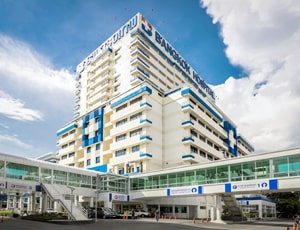
Spinal Cord Detethering in Bangkok Hospital: Costs, Top Doctors, and Reviews

Bangkok, Thailand

  • Joint Commission International, or JCI

Bangkok Hospital located in Bangkok, Thailand is accredited by JCI. Also listed below are some of the most prominent infrastructural details:

  • It is recognised for the application of the newest healthcare technology.
  • Blood analysis center that is not just the best in Thailand but in Asia Pacific as well.
  • Biomolecule center that is the seed of healthcare equipment for Thailand and overseas.
  • International affiliations and collaborations with universities and hospitals in Japan and the United States of America.
  • 11 hospitals are recognised as Centers of Excellence.
  • Known excellence in Trauma, Orthopedics, Cardiovascular, Neurology as well as Cancer Care.
  • There is a proper streamlined patient services process followed in Bangkok Dusit Medical Services, Bangkok, Thailand.
  • A well developed research center showcases the intent of the organisation to provide research based treatment opportunities to the patients.
  • The group has several Medical industry partnerships as well to ensure healthcare solutions.
Spinal Cord Detethering in Asan Medical Centre: Costs, Top Doctors, and Reviews

Seoul, South Korea

  • ISO 9001

Asan Medical Centre located in Seoul, South Korea is accredited by ISO. Also listed below are some of the most prominent infrastructural details:

  • 524,700 square meters is the floor area of Asan Medical Centre
  • Number of beds is 2,715
  • 67 operating rooms
  • 11,680 outpatients
  • Everday 2,427 inpatients come to the Centre
  • 66,838 Sophisticated surgeries (per year)
  • 1,600 physicians and surgeons
  • 3,100 nurses
  • Five various types of rooms ranging from suites to multi-bed rooms
Spinal Cord Detethering in Mount Elizabeth Novena Hospital: Costs, Top Doctors, and Reviews

Novena, Singapore

  • Joint Commission International, or JCI

Mount Elizabeth Novena Hospital located in Novena, Singapore is accredited by JCI. Also listed below are some of the most prominent infrastructural details:

  • Capacity of 333 beds
  • Intensive Care Unit beds
  • Endoscopy beds
  • Day ward with 20 beds
  • 13 Operating Theatres, which includes 1 Neurological operating room, 2 Cardiac operating rooms, 4 Orthopaedic operating rooms, etc.
  • High Dependency Unit (HDU)
  • Neonatal Intensive Care Unit (NICU)
  • 24/7 Accident & Emergency Department
  • Maternity ward
  • 1 major operating unit with 13 operating rooms inclusive of 1 hybrid theatre
  • In-house Pharmacy
  • Rooms are categorized as Single Signature Rooms, Junior Suite and Regal Suite
  • All patient rooms are equipped with electric safe, LCD, sofa cum bed, wardrobe, radio channels, and much more
Spinal Cord Detethering in Mount Elizabeth Hospital: Costs, Top Doctors, and Reviews

Singapore, Singapore

  • Joint Commission International, or JCI

Mount Elizabeth Hospital located in Singapore, Singapore is accredited by JCI. Also listed below are some of the most prominent infrastructural details:

  • 345 bedded Hospital
  • Maternity wards
  • The Mount Elizabeth Patient Assistance Centre (MPAC)
  • 1 major operating unit with 12 operating rooms and 1 operating theatre dedicated to in vitro fertilisation (IVF)
  • Intensive Care Unit
  • High Dependency Unit (HDU)
  • Neonatal Intensive Care Unit (NICU)
  • Accident & Emergency Department
  • Rooms are categorized as Single rooms, 2-bedded rooms, 4-bedded rooms, Executive deluxe suite, Daffodil/Magnolia suite, VIP Room, and Royal Suite
  • All patient rooms are equipped with electric safe, LCD, sofa cum bed, wardrobe, radio channels, and much more
  • Parking lot
Spinal Cord Detethering in BLK-Max Super Speciality Hospital: Costs, Top Doctors, and Reviews

Delhi, India

5.0 ( 1 Reviews )
  • Joint Commission International, or JCI
  • National Accreditation Board for Hospitals & Healthcare Providers (NABH)

BLK-Max Super Speciality Hospital, located in New Delhi, is the leading best-in-class healthcare institution in India, providing tertiary and quaternary care. 650 + beds including 162 critical care beds, 22 OTs with 1,500+ clinical professionals allied to health are at the hospital's disposal. JCI, NABH, and NABL accredited. The hospitals are a leader in transplants, cancer care, and robotic surgery education and implementation. Established in1959 by Dr. B.L. Kapur, the hospital combines state-of-the-art technology with patient-centric values including compassion, efficiency, and consistency.

Spinal Cord Detethering in Vejthani Hospital: Costs, Top Doctors, and Reviews

Bangkok, Thailand

  • Joint Commission International, or JCI

Vejthani Hospital located in Bangkok, Thailand is accredited by NABH, NABL. Also listed below are some of the most prominent infrastructural details:

  • It is among the topmost private hospitals functioning in Thailand.
  • The bed capacity of the hospital is 263.
  • There are more than three hundred thousand patients visiting the hospital every year.
  • Vejthani hospital has more than 40 outpatient clinics and centers.
  • International patient care center with all kinds of services: air ambulance, transfers, travel, stay, embassy liaison, patient coordinators, prayer rooms, visa coordination and translators for 20 languages.
  • The special facilities are:
  • International Certified Laboratory
  • 10 Operating Rooms
  • Radiology Section: Portable X-ray, CT-scan and C-ARM and MRI
  • Neonatal Critical Care Unit
  • Water-jet technique applied for liposuction
  • Computer navigation and mini-invasive technique for Joint Replacement surgery
Spinal Cord Detethering in Parkway Pantai: Costs, Top Doctors, and Reviews

Kuala Lumpur, Malaysia

  • Joint Commission International, or JCI

Parkway Pantai located in Kuala Lumpur, Malaysia is accredited by JCI. Also listed below are some of the most prominent infrastructural details:

  • Capacity of 335 beds
  • 200+ specialist Doctors
  • Critical Care Unit
  • Neonatal Intensive Care Unit
  • Operating Theatre
  • International Patient Care Center
  • Types of rooms available- Premier Suite, Supreme Suite, Deluxe Single Room, 2-bedded room, 4-bedded room, Deluxe Suite, Premier Single room, and Supreme Single room

Need Some Advice From Our Experts?

Request a Call Back Now!

Our team of healthcare experts would be happy to assist you

trusted Patientstrusted Patients+99
Trusted by 50000+ Patients
Required | alphabets and spaces
Required | A valid, working email address
Required | A valid contact

Process Involved for Spinal Cord Detethering

  • Initial Evaluation: The doctor assesses symptoms, reviews medical history, and checks for signs of neurological impairment.
  • Diagnostic Testing: Imaging tests, such as MRI or CT scans, are performed to confirm spinal cord tethering and determine its exact location.
  • Preoperative Preparation: Patients are provided with instructions regarding medications, fasting, and laboratory tests before surgery.
  • Surgical Procedure: The spinal cord is carefully freed from the tissues or structures that are causing it to tether.
  • Postoperative Monitoring: After surgery, the patient is closely observed for neurological stability and pain control.
  • Rehabilitation and Recovery: Depending on the case, physical therapy and regular follow-ups are advised to support full recovery.
  • Tethered Cord Syndrome: A condition where the spinal cord is abnormally stuck to surrounding tissues, causing tension and symptoms.
  • Spina Bifida: A congenital disability that may lead to spinal cord attachment and restricted movement, often needing surgical correction.
  • Lipomyelomeningocele: A fatty growth linked to the spinal cord that can limit its mobility and lead to nerve problems.
  • Dermal Sinus Tract: An unusual channel from the skin to the spinal cord that can pull on the cord and require detethering.
  • Split Cord Malformation: A structural problem where the spinal cord is divided and potentially tethered, affecting function.
  • Post-Surgical Retethering: The scar tissue from previous spine surgeries can reattach to the spinal cord, potentially requiring a second release.
  • FilumTerminale Lipoma – A fatty mass on the cord’s anchoring band that can create strain and symptoms.
  • Diastematomyelia – A rare condition where the spinal cord is split and may become fixed in place, needing surgical intervention.

  • Clinical Assessment: The healthcare provider evaluates neurological symptoms, medical history, and physical findings.
  • Imaging Studies: MRI or CT scans are performed to confirm spinal cord tethering and plan the surgical approach.
  • Anaesthesia Administration: General anaesthesia is administered to ensure the patient remains unconscious and pain-free during the procedure.
  • Surgical Access: A minor cut is created on the back to allow entry to the section of the spine where the spinal cord is attached abnormally.
  • Detethering the Cord: The surgeon carefully separates the spinal cord from any scar tissue, fatty masses, or abnormal structures causing restriction.
  • Closure: The protective covering of the spinal cord (dura) and the skin are closed in layers to prevent leaks and infections.
  • Postoperative Observation: The patient is monitored for any immediate complications and to assess improvement in symptoms.
  • MRI
  • Myelogram
  • Urodynamics
  • Fusion
  • Sectioning
  • Monitoring
  • Laminectomy
  • Debridement
  • Pain Relief: Helps ease chronic back and leg pain caused by spinal cord tension.
  • Improved Mobility: Reduces stiffness and improves walking and movement.
  • Better Bladder Control: This can improve urinary symptoms, particularly in individuals with tethered cord syndrome.
  • Prevents Nerve Damage: Stops further stretching of the spinal cord, protecting nerve function.
  • Enhanced Quality of Life: Patients often experience better physical and emotional well-being.
  • Improved Sensation: May restore feeling in areas affected by nerve compression.
  • Supports Child Development: In children, it can help prevent developmental delays due to nerve stress.
  • Reduces Need for Medication: Less dependence on long-term pain medications or bladder aids.
False
  • Please complete the form to provide us with relevant information about your condition.
  • Consult with Our Healthcare Expert: One of our qualified specialists will contact you for a consultation.
  • Receive a Detailed Treatment Plan: After examining your situation, we will provide you with a detailed treatment plan that includes expert opinions and a cost breakdown for various options.
  • Select your preferred option: Choose the therapy option that best suits your needs.
  • Seamless Organisation: We will manage all the details, including visas, flights, accommodations, and transfers, for a stress-free journey.

Instantly Connect with our Spinal Cord Detethering Specialists

Doctor 1
Doctor 2
Doctor 3
Doctor 4
Doctor 5
Doctor 6
Doctor 7
Doctor 8
Our Services to Better your Experience

Opinion & Option

We submit the most accurate opinion and options from one or more countries for your review

Consult Privately

Consult with a certified specialist privately on our telemedicine platform even before you decide to travel

Logistics

We handle flights, visas, transfers, and accommodation—so you can focus on your health.

Recovery

Our In-house rehabilitation service packages to better your recovery and treatment outcome

Author

Dr. Abdullah Rahil

MPT (Neuro)

5 Years of Experience

Dr. Abdullah Rahil, M.P.T. (Neurology), is a dedicated physiotherapy professional specializing in orthopedic, neurological, and musculoskeletal rehabilitation. With strong clinical expertise, he focuses on improving patient mobility, reducing pain, and restoring functional independence through evidence-based rehabilitation techniques. He is skilled in advanced therapeutic approaches that support effective rehabilitation and recovery for a wide range of musculoskeletal and neurological conditions, focusing on improving mobility, reducing pain, and restoring functional independence. Dr. Rahil has extensive experience managing diverse rehabilitation cases. His patient-centered approach emphasizes personalized treatment plans, continuous assessment, and comprehensive rehabilitation to achieve optimal recovery outcomes. . View More

Reviewer

⁠Dr Rakesh Kumar Dua

Spine & Neurosurgeon

25 Years of Experience

Dr. Rakesh Dua has more than 25+ years of clinical experience in spine surgeries. He is currently providing his services as Director, Neuro & Spine Surgery at Fortis Hospital, Shalimar Bagh. Before joining Fortis Hospital, he was associated with Max super-specialist Hospital, Shalimar Bagh as Director Neurosurgery & Head Neuro Spine, and with UCMS & GTB hospital as head of the neurosurgery department. View More