Your Notifications
All done, no notifications

Pars Repair surgery Cost in Hyderabad

Costs starts from USD6500 to USD10000
Filters

Cost of Pars Repair surgery in Major cities of India

CityMinimum Cost (USD)Minimum Cost (INR)Maximum Cost (USD)Maximum Cost (INR)
AhmedabadUSD 5850500994USD 9000770760
BangaloreUSD 6500556660USD 10000856400
ChennaiUSD 6500556660USD 10000856400
DelhiUSD 6500556660USD 10000856400
FaridabadUSD 6500556660USD 10000856400
GhaziabadUSD 6500556660USD 10000856400
GurgaonUSD 6500556660USD 10000856400
GurugramUSD 6500556660USD 10000856400
HyderabadUSD 6500556660USD 10000856400
KochiUSD 6500556660USD 10000856400
KolkataUSD 6500556660USD 10000856400
MohaliUSD 5850500994USD 9000770760
MumbaiUSD 6500556660USD 10000856400
NoidaUSD 6500556660USD 10000856400
PanjimUSD 5850500994USD 9000770760

Need Help Planning Your Treatment Abroad?

Your 24/7 AI Health Assistant

Pars Repair Surgery is a specialised spinal procedure aimed at treating defects or fractures in the pars interarticularis, a small segment of bone that connects the upper and lower joints of the vertebrae. This surgery is commonly recommended for patients with spondylolysis or chronic lower back pain that hasn’t improved with non-surgical treatments.

During the procedure, the damaged area is stabilized using screws, bone grafts, or fixation devices to promote healing and restore spinal function. The goal is to relieve pain, improve mobility, and prevent further spinal instability while preserving the natural movement of the spine.

Pars repair surgery is performed to treat a condition called spondylolysis, which is a stress fracture or defect in the pars interarticularis, a small segment of bone connecting the upper and lower facets of a vertebra. It is most common in adolescents and young adults, especially athletes involved in activities that involve repetitive spine extension (e.g., gymnastics, football). The goal of the surgery is to repair the fractured bone, restore spinal stability, relieve chronic lower back pain, and allow the patient to return to regular activity without limiting motion.

Consult a spine specialist if you experience:
  • Persistent lower back pain, especially during activity
  • Pain that worsens with bending backwards or twisting
  • Limited mobility or stiffness in the lower back
  • Symptoms that do not improve with rest, physical therapy, or medications
  • X-rays, MRI, or CT scans confirming a pars defect or non-healing fracture
Surgery is usually recommended when conservative treatments fail after several months or when the condition leads to spinal instability.

Preparation for the pars repair surgery includes:
  • Detailed imaging (CT or MRI) to confirm the defect and assess spinal health
  • Physical examination and review of symptoms
  • Discussion of your activity level, lifestyle, and goals for surgery
  • Medication review, especially if taking anti-inflammatory drugs or blood thinners
  • Fasting for 6–8 hours before surgery
  • Discussion of surgical risks, recovery expectations, and post-operative care
You should also plan for limited activity during early recovery and arrange for assistance at home.

Pars repair surgery is typically performed under general anaesthesia. The steps include:
  • A small incision is made in the lower back to expose the affected vertebra
  • The surgeon removes scar tissue and prepares the bone edges of the fracture site
  • A bone graft (from the patient or donor) is placed in the gap
  • The fracture is stabilised using screws, wires, or hooks to hold the bone in place while it heals.
The goal is to preserve motion at the affected spinal level and avoid spinal fusion if possible, especially in younger patients.

Pars repair surgery typically takes between 1.5 and 3 hours, depending on the number of levels involved. Most patients stay in the hospital for 1 to 2 days, and in some cases, the procedure can be performed as a day surgery.

Potential risks include:
  • Infection
  • Bleeding
  • Nerve injury
  • Failure of the bone graft to heal (nonunion)
  • Hardware-related discomfort
  • Persistent or recurrent back pain
  • Need for revision surgery or spinal fusion
Risks are minimised with proper patient selection and experienced surgical care.

  • Pain relief from stabilised vertebra
  • Preservation of natural spinal motion, especially in young patients
  • Avoidance of spinal fusion and long-term stiffness
  • Improved function and return to sports or regular activity
  • High success rate in appropriately selected patients

Patients are encouraged to walk as soon as possible after surgery. A back brace may be worn for a few weeks. Light activities can resume in 2–4 weeks, while a full return to sports or heavy lifting may take 3–6 months, depending on the rate of healing. Physical therapy supports core strength and flexibility. Follow-up X-rays or CT scans are used to assess bone healing and implant position.

Pars repair surgery has a high success rate, particularly in younger, active patients with isolated pars defects. Studies report 80–90% of patients achieving significant pain relief and return to normal function, especially when the bone heals fully and the spine remains stable.

Would you like some help? We are available.

Get Help
Explore Hospitals ( 5 )
Pars Repair surgery in Apollo Hospitals: Costs, Top Doctors, and Reviews

Hyderabad, India

  • Joint Commission International, or JCI

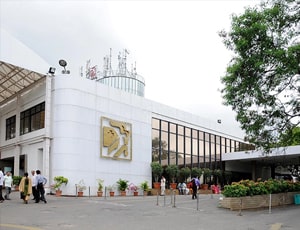
Apollo Hospitals located in Hyderabad, India is accredited by JCI, NABH. Also listed below are some of the most prominent infrastructural details:

  • A premier multi-specialty hospital with 477-bed capacity
  • More than 50 specialties, super-specialties
  • 12 Centers of Excellence
  • The Institutes for Heart Diseases, Neurosciences, Cancer, Emergency, Orthopaedics, Renal Diseases, and Transplants
  • Centers of Excellence are known for patient care, training and research
  • Doctors with years of truly global experience in healthcare delivery
Pars Repair surgery in Star Hospitals: Costs, Top Doctors, and Reviews

Hyderabad, India

  • National Accreditation Board for Hospitals & Healthcare Providers (NABH)
  • National Accreditation Board for Testing and Calibration Laboratories (NABL)

Star Hospitals located in Hyderabad, India is accredited by NABH, NABL. Also listed below are some of the most prominent infrastructural details:

  • The bed capacity of Star Hospitals, Hyderabad, India is 130.
  • The hospital has Intensive Care Units which are upgraded with the latest technologies.
  • International patient care services are applied to make the process of medical travel easier for international patients.
  • Centres of Excellence across disciplines such as Cardiac Sciences, Renal Sciences, Critical Care, ENT, Spine Surgery etc.
  • A radiology centre which has been digitised.
  • There are Centers of Excellence for prominent specialties such as cardiac care and neurosciences, there are a total of six.
Pars Repair surgery in Srikara Hospitals, Miyapur: Costs, Top Doctors, and Reviews

Hyderabad, India

  • National Accreditation Board for Hospitals & Healthcare Providers (NABH)


Pars Repair surgery in Tx Hospitals Banjara Hills: Costs, Top Doctors, and Reviews

Hyderabad, India

  • Joint Commission International, or JCI
  • National Accreditation Board for Hospitals & Healthcare Providers (NABH)

Tx Hospitals Group is one of the country’s fastest-growing and most significant chains of multi-super specialty hospitals. The first hospital was established in Hyderabad and six healthcare facilities (including projects under development) in two years since opening. It has been accredited by JCI and NABH certifications. It has a 200-bed capacity with more projects underway.

It offers a comprehensive array of integrated healthcare services, wellness centers, diagnostic labs, retail pharmacies, and fertility centers, ranging from clinics, health insurance, quaternary care facilities, and home healthcare. The hospitals are easy to reach in an emergency, considering the strategic locations of the hospitals within the cities of India. It caters to daycare surgeries across specialties such as general surgery, cardiology, neurology, ENT, dermatology, ophthalmology, vascular surgery, plastic surgery, cosmetology, orthopedics, pediatrics, gynecology, and obstetrics many more specialties.

It has state-of-the-art medical teams that utilize advanced technologies, including international evidence-based protocols, for providing extensive treatment in all specialties of medicine through a wide range. The team places a high priority on patient safety, compassionate care to all of its patients clinical excellence, dignity, quality, affordability, transparency, and accessibility of quality care to ensure that all of the patients receive the best possible care in a patient-friendly environment. The vision is to set new dimensions in healthcare by providing comprehensive medical services to patients.

Pars Repair surgery in Yashoda Hospital, Malakpet: Costs, Top Doctors, and Reviews

Hyderabad, India

  • National Accreditation Board for Hospitals & Healthcare Providers (NABH)
  • National Accreditation Board for Testing and Calibration Laboratories (NABL)

Yashoda Hospital, Malakpet located in Hyderabad, India is accredited by NABH, NABL. Also listed below are some of the most prominent infrastructural details:

  • Multi-bed facility
  • High-tech labs, modular operation theaters
  • Advanced medical equipement
  • Dedicated rooms for patients with all facilities
  • State-of-art technology
  • 24/7 blood bank
  • State of the art Cardio-Thoracic Center with the latest CATH LAB Equipment & Modular steel operation theatre
  • Neurosurgery department equipped with an operating microscope, high-speed drill & stereotaxy
  • 24-hour Emergency services to take care of all kinds of trauma and other orthopedic emergencies
  • Pulmonology department equipped with modern gadgets.
  • One of the best PFT labs and bronchoscopy units
  • Nephrology services include Renal Biopsy, AV Fistulas, AV Grafts & Permanent Catheter Insertions, Hemodialysis; Temporary Access For Dialysis; Peritoneal Dialysis
  • Has a comprehensive cancer care unit following a trans-disciplinary & multi-modality approach
  • State-of-the-art services of Digital X rays, Flouroscopy, Ultrasonography, OPG, Mammography, CT 64 Slices, MRI, etc.
  • Airport Transfer Service
  • Scheduling Of All Medical Appointment
  • Processing Of Medical Second Opinion
  • Provide Language Interpreter
  • Special Dietary Needs / Religious Arrangement
  • Coordination Of Admissions Process
  • Cost Estimates For Anticipated Treatments
  • Foreign Exchange service
  • Billing and Finance Related Service
  • Providing Information Of Patient’s Relatives Back Home

Need Some Advice From Our Experts?

Request a Call Back Now!

Our team of healthcare experts would be happy to assist you

trusted Patientstrusted Patients+99
Trusted by 50000+ Patients
Required | alphabets and spaces
Required | A valid, working email address
Required | A valid contact

Process Involved for Pars Repair surgery in Hyderabad

  • Diagnosis: A detailed physical examination, along with imaging tests such as X-rays, MRIs, or CT scans, is performed to confirm a pars defect.
  • Preoperative Preparation: This includes blood tests, anaesthesia clearance, medication review, and patient counselling regarding the surgery and recovery.
  • Surgical Procedure: The surgeon repairs the fractured pars interarticularis using screws, bone grafts, or fixation devices under general anaesthesia.
  • Post-operative Care: The patient is monitored for pain, wound healing, and neurological function, and is advised on limited movement and incision care.
  • Rehabilitation: Includes physiotherapy and strengthening exercises to restore mobility, reduce stiffness, and support long-term spinal stability.
  • Follow-up and Recovery Monitoring: Regular follow-up visits with imaging (X-ray/CT) to assess healing, ensure bone fusion, and prevent complications.
  • Spondylolysis: A stress fracture in the pars interarticularis that causes localised lower back pain, especially in young athletes.
  • Lumbar spine stress fractures: Tiny cracks in the lower back bones due to repetitive stress or overuse, often requiring surgical repair when conservative treatments fail.
  • Pars interarticularis defect: A break or defect in the bony bridge between vertebrae, which can lead to spinal instability and pain.
  • Chronic lower back pain due to a pars defect: Persistent back pain linked to an undiagnosed or unhealed defect in the pars region.
  • Instability of the vertebral arch: When the spinal bones fail to stay properly aligned due to a weakened or broken pars, causing pain and reduced mobility.
  • Non-healing stress fractures in young athletes: Stress fractures that don’t heal with rest or bracing and require surgical intervention to restore spine stability.
  • Progressive spinal slippage (early-stage spondylolisthesis): A condition where one vertebra starts to slide forward due to a pars defect, needing surgical repair before it worsens.
  • Recurrent back pain not responding to conservative treatment: Ongoing lower back pain that doesn’t improve with physiotherapy, medication, or bracing, often linked to an underlying pars defect.
  • Patient Evaluation: A thorough clinical assessment and imaging (X-ray, MRI, or CT scan) are conducted to confirm the presence and severity of the pars defect.
  • Anaesthesia Administration: The patient is given general anaesthesia to ensure they are wholly unconscious and pain-free during the procedure.
  • Surgical Incision: A small incision is made in the lower back to access the affected vertebra and the fractured pars interarticularis.
  • Exposure of the Defect: The surrounding muscles and soft tissues are carefully retracted to fully reveal the pars defect, while ensuring that nearby nerves remain undisturbed.
  • Defect Preparation: The site is cleaned, and any scar tissue or damaged bone is removed to prepare for repair.
  • Bone Grafting (if needed): A bone graft, either from the patient (autograft) or donor (allograft), is placed in the defect to support healing.
  • Fixation: Specialized screws or wires (e.g., Buck’s screw or Scott wiring technique) are used to stabilize the pars and hold the bone in place.
  • Closure: The incision is carefully sutured layer by layer, and a sterile dressing is applied to the wound.
  • Recovery and Monitoring: The patient is taken to a recovery room for observation and initial pain management before starting the rehabilitation process.
  • Laminectomy / Laminotomy
  • Foraminotomy
  • Discectomy
  • Bracing
  • Endoscopy
  • Improves spinal stability
  • Reduces lower back pain
  • Restores normal movement and flexibility
  • Enhances physical activity and mobility
  • Promotes natural bone healing
  • Helps maintain proper posture and alignment
  • Strengthens surrounding muscles and ligaments
  • Speeds up return to daily activities
  • Prevents progression of spinal damage
  • Improves overall quality of life
False
  • Please complete the form to provide us with relevant information about your condition.
  • Consult with Our Healthcare Expert: One of our qualified specialists will contact you for a consultation.
  • Receive a Detailed Treatment Plan: After examining your situation, we will provide you with a detailed treatment plan that includes expert opinions and a cost breakdown for various options.
  • Select your preferred option: Choose the therapy option that best suits your needs.
  • Seamless Organisation: We will manage all the details, including visas, flights, accommodations, and transfers, for a stress-free journey.

Instantly Connect with our Pars Repair surgery Specialists

Doctor 1
Doctor 2
Doctor 3
Doctor 4
Doctor 5
Doctor 6
Doctor 7
Doctor 8
Our Services to Better your Experience

Opinion & Option

We submit the most accurate opinion and options from one or more countries for your review

Consult Privately

Consult with a certified specialist privately on our telemedicine platform even before you decide to travel

Logistics

We handle flights, visas, transfers, and accommodation—so you can focus on your health.

Recovery

Our In-house rehabilitation service packages to better your recovery and treatment outcome

Other Popular Countries for Pars Repair surgery

Our network connects you with the leading medical tourism destinations globally, offering a wide range of cities, top doctors, and flexible pricing options.

Spain
United Arab Emirates
Turkey
Singapore

Frequently Asked Questions

Factors that raise the risk of Pars Repair surgery in India include: -

  • Delayed diagnosis due to limited access to MRI/CT in rural areas.
  • Nutritional deficiencies, particularly in calcium and vitamin D, can affect bone healing.
  • Out-of-pocket expenses are causing delays in surgery and post-operative care.
  • A preference for traditional remedies (such as Ayurvedic or home-based) before seeking surgery.
  • Increased spinal stress in youth due to cricket, gymnastics, and weightlifting.

The success rate ranges from 80% to 90%, depending on the accuracy of early diagnosis and the quality of care.

Fortis Hospital and Artemis Hospital are renowned for performing Pars Repair surgery, focusing on precision through the combination of expert neurosurgeons, advanced imaging, and personalised rehabilitation programs.

The following are the precautions to take after a Pars Repair surgery in India:

  • Avoid bending, lifting, or twisting for at least 6 to 8 weeks.
  • Use a lumbar brace if recommended due to long travel or sitting conditions.
  • Prioritise follow-up physiotherapy, especially in urban centres.
  • Maintain adequate intake of calcium and vitamin D due to common deficiencies.
  • Limit home remedies and massages that may interfere with surgical recovery.

Author

Dr. Vijita Jayan

BPT, MPT (Neuro)

18 Years of Experience

With over 18 years of distinguished clinical experience, Dr. Vijita Jayan is a highly accomplished Clinical Director and Rehabilitation Specialist, renowned for her expertise in neuro-rehabilitation, functional recovery, and mobility-dependent case management. Her extensive practical knowledge enables her to design and implement individualized, evidence-based rehabilitation protocols that consistently yield measurable patient outcomes. A prolific researcher and academic writer, she has authored numerous peer-reviewed articles and research papers, significantly advancing the field of rehabilitative medicine. The recipient of multiple prestigious accolades, Dr. Jayan is widely regarded as one of the foremost authorities in Physical Medicine and Rehabilitation, continually shaping neuro-rehabilitative care through research, innovation, and clinical excellence.. View More

Reviewer

⁠Dr Rakesh Kumar Dua

Spine & Neurosurgeon

25 Years of Experience

Dr. Rakesh Dua has more than 25+ years of clinical experience in spine surgeries. He is currently providing his services as Director, Neuro & Spine Surgery at Fortis Hospital, Shalimar Bagh. Before joining Fortis Hospital, he was associated with Max super-specialist Hospital, Shalimar Bagh as Director Neurosurgery & Head Neuro Spine, and with UCMS & GTB hospital as head of the neurosurgery department. View More