Your Notifications
All done, no notifications

Lesionectomy Cost in Hyderabad

Costs starts from USD11000 to USD18000
Filters

Cost of Lesionectomy in Major cities of India

CityMinimum Cost (USD)Minimum Cost (INR)Maximum Cost (USD)Maximum Cost (INR)
AhmedabadUSD 9900847836USD 162001387368
BangaloreUSD 11000942040USD 180001541520
ChennaiUSD 11000942040USD 180001541520
DelhiUSD 11000942040USD 180001541520
FaridabadUSD 11000942040USD 180001541520
GhaziabadUSD 11000942040USD 180001541520
GurgaonUSD 11000942040USD 180001541520
GurugramUSD 11000942040USD 180001541520
HyderabadUSD 11000942040USD 180001541520
KochiUSD 11000942040USD 180001541520
KolkataUSD 11000942040USD 180001541520
MohaliUSD 9900847836USD 162001387368
MumbaiUSD 11000942040USD 180001541520
NoidaUSD 11000942040USD 180001541520
PanjimUSD 9900847836USD 162001387368
PuneUSD 9900847836USD 162001387368

Need Help Planning Your Treatment Abroad?

Your 24/7 AI Health Assistant

Lesionectomy is a specialised brain surgery designed to remove abnormal tissue causing seizures or other neurological issues, especially in patients who do not respond well to medications. It targets specific brain lesions identified through detailed imaging and diagnostic evaluations.

The procedure involves opening a small part of the skull (craniotomy) to access and carefully remove the lesion, with the help of advanced tools like brain mapping and surgical navigation to avoid damage to healthy brain areas.

Lesionectomy can significantly reduce or stop seizures and may also improve cognitive and functional abilities. Recovery depends on the lesion’s location and complexity, and patients are often supported with short-term rehabilitation and ongoing medical follow-up.

A lesionectomy is a type of brain surgery performed to remove abnormal brain tissue (lesions) that are causing seizures or other neurological problems. These lesions may include tumours, vascular malformations, cortical dysplasia, scarring, or other abnormal brain structures. Lesionectomy is often used to treat drug-resistant epilepsy when seizures originate from a well-defined lesion identifiable on brain imaging. By removing the lesion, the surgery aims to reduce or eliminate seizures and preserve surrounding healthy brain tissue.

You should see a neurologist or neurosurgeon if you experience:
  • Frequent or uncontrolled seizures, especially if medications are ineffective
  • Neurological symptoms such as weakness, vision changes, speech difficulties, or memory problems
  • Changes in personality or cognition
  • Brain imaging (MRI, CT) that shows a lesion with unclear or suspicious features
Persistent neurological issues or structural brain abnormalities may indicate the need for further evaluation, possibly leading to surgical treatment like lesionectomy.

Preparation involves a comprehensive evaluation by a multidisciplinary epilepsy or neurology team:
  • Neuroimaging: MRI, PET, or CT scans to locate the lesion
  • EEG monitoring: To map seizure activity and confirm the lesion as the source
  • Neuropsychological testing: To assess memory, language, and cognitive functions
  • Functional MRI or brain mapping: To identify areas responsible for vital functions like speech or movement
  • Medication review: Some drugs may be paused or adjusted before surgery
  • Fasting: Usually required 6–8 hours before the procedure
Patients will meet with an anesthesiologist and surgeon to review risks, benefits, and expected outcomes.

  • Anaesthesia: The patient is placed under general anaesthesia.
  • Craniotomy: A portion of the skull is carefully opened to access the brain.
  • Navigation and Mapping: Advanced imaging and intraoperative brain mapping guide the surgeon to locate the lesion precisely.
  • Lesion Removal: The abnormal tissue is removed, taking care to avoid surrounding healthy or functional areas.
  • Closure: The bone flap is replaced, and the scalp is sutured.
Depending on the lesion's location and the patient's condition, surgery may last 2 to 6 hours.

A lesionectomy usually takes 2 to 6 hours, depending on lesion size, location, and complexity. Patients typically stay in the hospital for 3 to 7 days for observation and early recovery.

Although lesionectomy is generally safe, potential risks include:
  • Infection
  • Bleeding
  • Brain swelling
  • Neurological deficits (speech, memory, or motor issues, depending on location)
  • Seizures after surgery
  • Cerebrospinal fluid leakage
  • Anesthesia-related complications
These risks vary depending on the type, size, and location of the lesion in the brain.

  • Seizure reduction or elimination, especially in drug-resistant epilepsy
  • Improved quality of life, cognitive function, and independence
  • Minimal disruption to the surrounding brain tissue when precisely targeted
  • Increased effectiveness of medications post-surgery, if still required
  • It can sometimes eliminate the need for lifelong anti-seizure medication
Lesionectomy is a valuable option when the abnormal area can be safely removed.

After surgery:
  • Patients are initially monitored in the ICU and then transferred to a regular neurology unit.
  • Headaches, fatigue, or confusion are common during early recovery.
  • Physical, occupational, or speech therapy may be needed depending on outcomes.
  • Most patients resume light activities in 2 to 4 weeks and return to work or school within 6 to 8 weeks.
  • Follow-up includes neuroimaging, EEGs, and ongoing neurology consultations.
Patients must attend all post-operative visits and continue taking prescribed medications as advised.

Lesionectomy has a high success rate, especially in patients with focal epilepsy and identifiable lesions. Studies show that 60–80% of patients become seizure-free after surgery, and many experience improved cognitive and psychological function.

Would you like some help? We are available.

Get Help
Explore Hospitals ( 6 )
Lesionectomy in Star Hospitals: Costs, Top Doctors, and Reviews

Hyderabad, India

  • National Accreditation Board for Hospitals & Healthcare Providers (NABH)
  • National Accreditation Board for Testing and Calibration Laboratories (NABL)

Star Hospitals located in Hyderabad, India is accredited by NABH, NABL. Also listed below are some of the most prominent infrastructural details:

  • The bed capacity of Star Hospitals, Hyderabad, India is 130.
  • The hospital has Intensive Care Units which are upgraded with the latest technologies.
  • International patient care services are applied to make the process of medical travel easier for international patients.
  • Centres of Excellence across disciplines such as Cardiac Sciences, Renal Sciences, Critical Care, ENT, Spine Surgery etc.
  • A radiology centre which has been digitised.
  • There are Centers of Excellence for prominent specialties such as cardiac care and neurosciences, there are a total of six.
Lesionectomy in Srikara Hospitals, Miyapur: Costs, Top Doctors, and Reviews

Hyderabad, India

  • National Accreditation Board for Hospitals & Healthcare Providers (NABH)


Lesionectomy in Tx Hospitals Banjara Hills: Costs, Top Doctors, and Reviews

Hyderabad, India

  • Joint Commission International, or JCI
  • National Accreditation Board for Hospitals & Healthcare Providers (NABH)

Tx Hospitals Group is one of the country’s fastest-growing and most significant chains of multi-super specialty hospitals. The first hospital was established in Hyderabad and six healthcare facilities (including projects under development) in two years since opening. It has been accredited by JCI and NABH certifications. It has a 200-bed capacity with more projects underway.

It offers a comprehensive array of integrated healthcare services, wellness centers, diagnostic labs, retail pharmacies, and fertility centers, ranging from clinics, health insurance, quaternary care facilities, and home healthcare. The hospitals are easy to reach in an emergency, considering the strategic locations of the hospitals within the cities of India. It caters to daycare surgeries across specialties such as general surgery, cardiology, neurology, ENT, dermatology, ophthalmology, vascular surgery, plastic surgery, cosmetology, orthopedics, pediatrics, gynecology, and obstetrics many more specialties.

It has state-of-the-art medical teams that utilize advanced technologies, including international evidence-based protocols, for providing extensive treatment in all specialties of medicine through a wide range. The team places a high priority on patient safety, compassionate care to all of its patients clinical excellence, dignity, quality, affordability, transparency, and accessibility of quality care to ensure that all of the patients receive the best possible care in a patient-friendly environment. The vision is to set new dimensions in healthcare by providing comprehensive medical services to patients.

Lesionectomy in American Oncology Institute: Costs, Top Doctors, and Reviews

Hyderabad, India

  • National Accreditation Board for Hospitals & Healthcare Providers (NABH)

American Oncology Institute located in Hyderabad, India is accredited by AAAHC. Also listed below are some of the most prominent infrastructural details:

  • Equipped with the most advanced technology
  • TruebeamStx + Calypso combination used for precise radiation therapy
  • Backed by advanced equipment like 4D PET CT Imaging, Luminous Acupulse DUO laser, Rapid Arc, MRI, Brachytherapy, Digital Mammography 
  • Radiation oncology techniques- Intensity Modulated Radiation Therapy, Rapid Arc, Image-Guided Radiation Therapy,
  • Stereotactic Radiosurgery, Stereotactic Body Radiation Therapy
  • All types of patient accommodation available which provide a comfortable stay to the patients & relatives.
  • Fully equipped ICUs with the latest monitoring & therapeutic facilities for critically ill patients
  • In house 24/7 blood bank for medical oncology service
  • Well-designed patient rooms, therapy rooms OTs, consultation chambers, ICUs, walkways, lounges, parking
  • Digital Breast Tomosynthesis is the breast imaging digital technology with 3D imaging
  • Dedicated leukemia wing caters to the needs of the patients who are at a high risk of developing an infection
  • State-of-the art PET CT, GE Discovery IQ 3 Ring16 PET with LightBurst technology
  • Individual cabins for patients needing chemotherapy
  • Friendly facility for differently-abled
  • Exclusive outpatient consulting section
  • Airport pick-up & drop
  • Accommodation
  • Currency exchange
  • The estimated cost of treatment
  • Language interpreters
  • Payment
  • Medical opinion
  • Additional services
  • Relationship manager
  • Meals
  • 24/7 Personal nurses*
  • Visa assistance
Lesionectomy in Srikara Hospital, RTC Cross Roads: Costs, Top Doctors, and Reviews

Hyderabad, India

  • National Accreditation Board for Hospitals & Healthcare Providers (NABH)

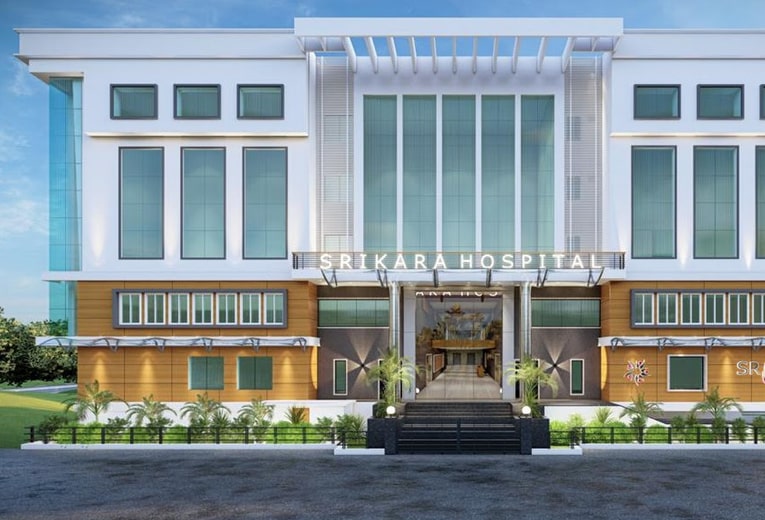
Srikara Group of Hospitals is an 850-Bedded Tertiary Care healthcare facility, spread over 7 branches and two states in Southern India. 6 out of these 7 branches are situated in the twin city of Hyderabad- Secunderabad and 1 branch is at Vijayawada, Andhra Pradesh. As the ultimate combination of benefits a hospital can provide, Srikara Ortho & Multi-Specialty Hospitals represents the infusion of quality, knowledge, technical proficiency, international standards, compassion, and reasonably priced care. Srikara Hospital is known for its excellence in Orthopedic as well as Neuro-Spine Surgeries. With top-of-the-chart technical proficiency, quality, and skills; Srikara is the destination of choice for patients from not only India but across the globe. Srikara Hospitals are the pioneers in doing Robotics-assisted Joint Replacements in Southern India. These hospitals have been using technologies like Computer Navigation and I-Suite theaters since their inception. Three of its 7 branches offer minimally Invasive Spine surgeries done with the use of top quality Operating microscopes. For patients from other countries seeking treatment at its facilities, Srikara has established a separate unit. By partnering with hospitals and institutions that share its commitment to and passion for ‘Patient Care’, it now hopes to expand its surgical expertise throughout the country and the world.

International quality care at affordable prices is what the Srikara Group of Hospitals strives for. The quality & compassion in care can be bought in only by the human skills behind world-class technology. Rich in human skills & experience, the team of doctors at Srikara Hospitals is decorated with a collective experience of more than 23000 Knee Replacement Surgeries over a period of two decades. 5000+ of these Knee Replacements were Robotic-assisted Knee Replacement surgeries. The team of surgeons and the Sports Medicine Unit at SRIKARA Group of Hospitals hold experience in doing more than 5500 Knee Ligament surgeries. The team of Neuro-spine surgeons holds a collective experience of 11+ years and offers various surgical remedies with and without the assistance of an Operating Microscope. Srikara Group of Hospitals offers a wide array of specialties like Orthopaedics, Neuro-spine, Urology, Laparoscopy, Cardiology, Cosmetic Surgery, etc. with the help of nationally and internationally acclaimed doctors.

To expand their healthcare services globally and for the ease of their patients, the doctors at Srikara Group of Hospitals are also providing Online Consultations to individuals who are unable to visit in person but are in need of medical attention. Srikara Group of Hospitals looks forward to continuing to cater to its domestic as well as overseas patients with compassion and evidence-based healthcare services. All the hospitals of Srikara Group are built in accordance to provide relaxing, serene surroundings, greenery, and a hygienic setting to the patients & visitors. With a large influx of people seeking the best care and facilities in Hyderabad, it is well renowned for its dedication to providing unique and evidence-based healthcare services.

Lesionectomy in Yashoda Hospital, Malakpet: Costs, Top Doctors, and Reviews

Hyderabad, India

  • National Accreditation Board for Hospitals & Healthcare Providers (NABH)
  • National Accreditation Board for Testing and Calibration Laboratories (NABL)

Yashoda Hospital, Malakpet located in Hyderabad, India is accredited by NABH, NABL. Also listed below are some of the most prominent infrastructural details:

  • Multi-bed facility
  • High-tech labs, modular operation theaters
  • Advanced medical equipement
  • Dedicated rooms for patients with all facilities
  • State-of-art technology
  • 24/7 blood bank
  • State of the art Cardio-Thoracic Center with the latest CATH LAB Equipment & Modular steel operation theatre
  • Neurosurgery department equipped with an operating microscope, high-speed drill & stereotaxy
  • 24-hour Emergency services to take care of all kinds of trauma and other orthopedic emergencies
  • Pulmonology department equipped with modern gadgets.
  • One of the best PFT labs and bronchoscopy units
  • Nephrology services include Renal Biopsy, AV Fistulas, AV Grafts & Permanent Catheter Insertions, Hemodialysis; Temporary Access For Dialysis; Peritoneal Dialysis
  • Has a comprehensive cancer care unit following a trans-disciplinary & multi-modality approach
  • State-of-the-art services of Digital X rays, Flouroscopy, Ultrasonography, OPG, Mammography, CT 64 Slices, MRI, etc.
  • Airport Transfer Service
  • Scheduling Of All Medical Appointment
  • Processing Of Medical Second Opinion
  • Provide Language Interpreter
  • Special Dietary Needs / Religious Arrangement
  • Coordination Of Admissions Process
  • Cost Estimates For Anticipated Treatments
  • Foreign Exchange service
  • Billing and Finance Related Service
  • Providing Information Of Patient’s Relatives Back Home

Need Some Advice From Our Experts?

Request a Call Back Now!

Our team of healthcare experts would be happy to assist you

trusted Patientstrusted Patients+99
Trusted by 50000+ Patients
Required | alphabets and spaces
Required | A valid, working email address
Required | A valid contact

Process Involved for Lesionectomy in Hyderabad

  • Preoperative Evaluation: This includes a neurological exam, EEG, MRI, and sometimes intracranial monitoring to localise the lesion.
  • Surgical Planning: Advanced imaging and brain mapping are used to plan a safe and precise lesion removal.
  • Surgery (Lesionectomy): The identified brain lesion is surgically removed through a craniotomy.
  • Intraoperative Monitoring: Brain function is continuously monitored to protect vital areas of the brain.
  • Postoperative Care: Includes observation in the ICU, pain management, and neurological assessments.
  • Rehabilitation: This may involve physical, occupational, or speech therapy, depending on the specific brain area affected.
  • Follow-up and Monitoring: Conduct long-term follow-up, including imaging and seizure monitoring, to assess outcomes and evaluate the effectiveness of treatment.
  • Drug-resistant epilepsy: Lesionectomy is performed when seizures persist despite optimal medication.
  • Low-grade gliomas: The surgery removes slow-growing brain tumours that contribute to seizure activity.
  • Cortical dysplasia: Abnormal brain tissue responsible for seizures is surgically eliminated.
  • Cavernous malformations: These vascular lesions, which cause recurrent seizures, are safely excised.
  • Gangliogliomas: Rare tumours made up of nerve and glial cells are removed to help manage epilepsy.
  • Dysembryoplastic neuroepithelial tumours (DNETs): Benign brain growths that trigger seizures are taken out.
  • Arteriovenous malformations (selected cases): Certain vascular abnormalities linked with seizures are treated surgically.
  • Benign brain lesions causing seizures: Non-cancerous brain abnormalities that generate seizures are targeted and removed.
  • Hamartomas: These non-cancerous tissue overgrowths are excised when they cause epilepsy.
  • Epileptogenic brain tumours: Tumours acting as a source of seizures are surgically treated.
  • Neurological evaluation to confirm seizure origin or lesion-related symptoms.
  • Imaging tests, such as MRI, CT scans, and PET scans, are used to locate the lesion accurately.
  • EEG or intracranial monitoring to identify abnormal electrical activity.
  • Surgical planning using neuronavigation and functional mapping.
  • Craniotomy to access the lesion in the brain.
  • Precise removal of the abnormal tissue causing seizures or symptoms.
  • Intraoperative monitoring is used to ensure the safety of the surrounding brain areas.
  • Closure of the surgical site and transfer to recovery or ICU for observation.
  • Postoperative imaging to confirm complete lesion removal.
  • Ongoing follow-up for seizure control and neurological function evaluation.
  • Craniotomy
  • Electrocorticography (ECoG)
  • Stereoelectroencephalography (SEEG)
  • Neuronavigation
  • Intraoperative MRI
  • Cortical mapping
  • Functional MRI (fMRI)
  • Brain biopsy
  • Intracranial EEG monitoring
  • Awake craniotomy
  • Seizure control in patients with drug-resistant epilepsy
  • Improved quality of life due to reduced or complete seizure freedom
  • Preservation of brain function by targeting only the lesion
  • Minimally invasive options are available in selected cases
  • Faster recovery time compared to extensive brain surgeries
  • Reduced medication dependence, often leading to dose reduction or discontinuation
  • Accurate diagnosis and treatment, when combined with advanced imaging and monitoring techniques
False
  • Please complete the form to provide us with relevant information about your condition.
  • Consult with Our Healthcare Expert: One of our qualified specialists will contact you for a consultation.
  • Receive a Detailed Treatment Plan: After examining your situation, we will provide you with a detailed treatment plan that includes expert opinions and a cost breakdown for various options.
  • Select your preferred option: Choose the therapy option that best suits your needs.
  • Seamless Organisation: We will manage all the details, including visas, flights, accommodations, and transfers, for a stress-free journey.

Instantly Connect with our Lesionectomy Specialists

Doctor 1
Doctor 2
Doctor 3
Doctor 4
Doctor 5
Doctor 6
Doctor 7
Doctor 8
Our Services to Better your Experience

Opinion & Option

We submit the most accurate opinion and options from one or more countries for your review

Consult Privately

Consult with a certified specialist privately on our telemedicine platform even before you decide to travel

Logistics

We handle flights, visas, transfers, and accommodation—so you can focus on your health.

Recovery

Our In-house rehabilitation service packages to better your recovery and treatment outcome

Other Popular Countries for Lesionectomy

Our network connects you with the leading medical tourism destinations globally, offering a wide range of cities, top doctors, and flexible pricing options.

United Arab Emirates
Spain
Malaysia
Vietnam

Frequently Asked Questions

Factors that raise the risk of Lesionectomy in India include: -

  • Delayed diagnosis and limited access to specialised centres.
  • Higher prevalence of untreated comorbidities (e.g., diabetes, hypertension).
  • Limited availability of advanced intraoperative monitoring in smaller hospitals.

In India, the success rate of lesionectomy ranges from 70% to 85%, particularly in carefully chosen patients with identifiable seizure-causing brain lesions.

Fortis Hospital and Artemis Hospital are renowned for performing lesionectomies with a focus on precision, combining expert neurosurgeons, advanced imaging, and personalised rehabilitation programs.

The following are the precautions to take after a Lesionectomy in India:

  • Take all prescribed medications consistently, especially anti-epileptics.
  • Avoid dusty or crowded areas to reduce the risk of infection.
  • Ensure proper hygiene around the surgical wound.
  • Eat nutritious, home-cooked meals to support healing.
    Wait for medical clearance before driving or travelling alone.

Author

Dr. Vishwas Kaushik

MBBS, MD

5 Years of Experience

Dr. Vishwas Kaushik is a qualified medical professional holding an MBBS from the prestigious Belgorod State University, Russia, with a strong foundation in clinical medicine and healthcare practice. His comprehensive medical training has equipped him with a profound understanding of evidence-based clinical practices, patient-centered care, and the evolving landscape of modern medicine. With a keen interest in medical research and scientific communication, he consistently translates complex clinical concepts into clear, accurate, and accessible content for diverse audiences. His work reflects a deep commitment to advancing medical knowledge, delivering impactful healthcare insights, and bridging the gap between clinical expertise and accessible medical communication.. View More

Reviewer

⁠Dr Rakesh Kumar Dua

Spine & Neurosurgeon

25 Years of Experience

Dr. Rakesh Dua has more than 25+ years of clinical experience in spine surgeries. He is currently providing his services as Director, Neuro & Spine Surgery at Fortis Hospital, Shalimar Bagh. Before joining Fortis Hospital, he was associated with Max super-specialist Hospital, Shalimar Bagh as Director Neurosurgery & Head Neuro Spine, and with UCMS & GTB hospital as head of the neurosurgery department. View More