Your Notifications
All done, no notifications

Foraminotomy Cost in Noida

Costs starts from USD6000 to USD9000
Filters

Cost of Foraminotomy in Major cities of India

CityMinimum Cost (USD)Minimum Cost (INR)Maximum Cost (USD)Maximum Cost (INR)
AhmedabadUSD 5400462456USD 8100693684
BangaloreUSD 6000513840USD 9000770760
ChennaiUSD 6000513840USD 9000770760
DelhiUSD 6000513840USD 9000770760
FaridabadUSD 6000513840USD 9000770760
GhaziabadUSD 6000513840USD 9000770760
GurgaonUSD 6000513840USD 9000770760
GurugramUSD 6000513840USD 9000770760
HyderabadUSD 6000513840USD 9000770760
KochiUSD 6000513840USD 9000770760
KolkataUSD 6000513840USD 9000770760
MohaliUSD 5400462456USD 8100693684
MumbaiUSD 6000513840USD 9000770760
NoidaUSD 6000513840USD 9000770760
PanjimUSD 5400462456USD 8100693684
PuneUSD 5400462456USD 8100693684

Need Help Planning Your Treatment Abroad?

Your 24/7 AI Health Assistant

A foraminotomy is a type of surgery performed on the spine to relieve a pinched nerve. Your spine is made of small bones stacked on top of each other, and between these bones are small openings called foramina. They are small openings that allow nerves to pass from the spine to various parts of the body.

Sometimes, these openings become too small. This can occur due to conditions such as swelling, the growth of extra bone (known as bone spurs), or a slipped disc. When the opening is too tight, the nerve gets squeezed. That can cause pain, tingling, or weakness in your arms, legs, or back.

In a foraminotomy, the doctor makes a small cut on your back near where the problem is. Then, using specialised tools, they move the muscles aside and carefully remove a small amount of bone or tissue that is pressing on the nerve. This gives the nerve more space and helps it work better again.

The surgery typically lasts only one to two hours. After the operation, you’ll rest in a recovery area while nurses check on you. Most kids and adults can go home the same day or the day after.

Afterwards, you’ll need to rest and avoid heavy lifting. Your doctor may prescribe simple exercises to help your back heal.

This surgery helps many people feel much better and move around more easily without pain.

Foraminotomy is performed to relieve nerve root compression caused by narrowing (stenosis) of the neural foramen , the passageways through which nerves exit the spinal column.It’s commonly used to treat radiculopathy, where spinal nerves are pinched due to herniated discs, bone spurs, or arthritis.The procedure alleviates neck/back pain, numbness, tingling, and limb weakness by creating more space for the affected nerves

Consult a spine specialist if you experience persistent nerve-related pain in the arms or legs, numbness, tingling, or weakness, especially if conservative treatments like medications, physical therapy, or injections fail.If imaging (MRI or CT) shows foraminal stenosis with nerve impingement, surgery may be recommended.Foraminotomy is indicated when quality of life is significantly impacted by nerve compression.

Preparation includes MRI or CT scan to assess the extent and exact location of the nerve compression.You’ll undergo routine blood tests and pre-anesthesia evaluations.Patients are advised to stop blood thinners or anti-inflammatory medications, fast before surgery, and arrange post-op assistance for a few days.

Under general or regional anesthesia, a small incision is made in the back or neck over the affected spinal level.Using microsurgical or minimally invasive tools, the surgeon removes part of the bone, ligament, or disc material compressing the nerve.Foraminotomy may be done alone or combined with discectomy or spinal fusion if instability is present.

The surgery usually takes 1 to 2 hours, depending on the number of spinal levels treated and the surgical approach.It’s often performed as an outpatient or short-stay procedure, and most patients go home the same or next day.Minimally invasive techniques further reduce operation and recovery time.

  • Bleeding or infection at the surgical site
  • Spinal fluid leak (dural tear)
  • Nerve damage (rare but possible)
  • Persistent or recurrent symptoms if decompression is incomplete
  • Instability of the spine requiring future fusion (if significant bone is removed) Careful surgical planning and technique reduce most complications.

  • Relieves pressure on spinal nerves, improving pain, strength, and sensation
  • Minimally invasive option for nerve decompression
  • Preserves spinal stability in most cases
  • Short recovery time and less postoperative pain compared to open spine surgeries
  • High patient satisfaction when symptoms are well-matched with imaging findings

Patients can often walk on the same day of surgery.Initial recovery includes mild pain, soreness, and restrictions on lifting or twisting for 2–4 weeks.Most return to work within 2–4 weeks, depending on job demands.Physical therapy may be advised to restore spinal strength and flexibility.

Foraminotomy has a success rate of 85–95% in relieving nerve compression symptoms, especially in well-selected patients.Outcomes are best when pain is localized to a single nerve root with clear imaging correlation.Many patients experience long-term relief without needing fusion or further surgeries.

Would you like some help? We are available.

Get Help
Explore Hospitals ( 4 )
Foraminotomy in Sharda Hospital: Costs, Top Doctors, and Reviews

Noida, India

  • National Accreditation Board for Hospitals & Healthcare Providers (NABH)

Sharda Hospital located in Greater Noida, India is accredited by ISO, NABH. Also listed below are some of the most prominent infrastructural details:

  • The hospital is equipped with the best of technologically advanced equipment.
  • Sharda Hospital, Delhi has a bed capacity of 900.
  • There are as many as 90 beds in the critical care section.
  • The critical care facilities are present for general medicine, Pulmonology, Surgery, Paediatrics, Neonatology, Cardiology, Cardiothoracic surgery and Neurosciences.
  • There are Centers of Excellence such as Institute of Child Care, Institute of Dental Sciences, Institute of Orthopedic & Spine,Institute of Neuro Sciences, Institute of Minimal Access Surgery etc.
  • Virtual consultations in the form of Telemedicine and Teleradiology are a reality at an advanced hospital such as Sharda Hospital.
  • There is also a Tele ICU facility that ensures that a virtual ICU is a functioning system. It is aided with audio visual communication systems, latest computers, a team which is networking and a physically present ICU team.
  • 24/7 Emergency care available aided with buses as well as ambulances.
  • Exceptional International patient care coordination is available throughout the system helping patients with transfer, travel, treatments.
Foraminotomy in Metro Hospital: Costs, Top Doctors, and Reviews

Noida, India

  • National Accreditation Board for Testing and Calibration Laboratories (NABL)
  • National Accreditation Board for Hospitals & Healthcare Providers (NABH)

Metro Hospital located in Noida, India is accredited by ISO, NABH, NABL. Also listed below are some of the most prominent infrastructural details:

  • Metro Hospital is a 317 bedded state-of-the-art super speciality hospital, which is functioning as two units- 110 beds capacity in Metro Heart Institute and 207 beds capacity in Metro Multispeciality Hospital
  • 45 beds in Intensive Coronary Care and High Dependency Unit
  • 24/7 Blood Bank
  • 24/7 Pharmacy
  • 24/7 Cardiac Ambulance
  • 24/7 Emergency unit
  • Different types of patients in-patient rooms are available for patients convenience- Super Deluxe rooms (8), Deluxe Rooms (2), Private Rooms (6), Semi-private rooms (14), Triple bedded rooms (6), Four bedded rooms (8), Five bedded rooms (5) and Six bedded rooms (12)
  • Cafeteria/Restaurant
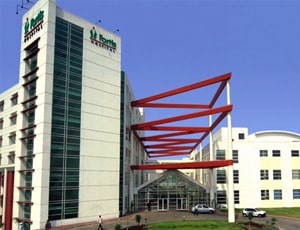
Foraminotomy in Fortis Hospital: Costs, Top Doctors, and Reviews

Noida, India

3.0 ( 1 Reviews )
  • National Accreditation Board for Hospitals & Healthcare Providers (NABH)
  • National Accreditation Board for Testing and Calibration Laboratories (NABL)

Fortis Healthcare Limited is one of India’s prominent providers of integrated healthcare services, offering comprehensive medical care across multiple specialities. The company’s operations span hospitals, diagnostic centres, and day-care speciality facilities, ensuring a wide range of healthcare solutions under one umbrella. Fortis has established a strong presence across the country, managing 33 healthcare facilities, which include joint ventures and operational & management (O&M) setups, across 11 states.

The company’s hospital network comprises more than 5,700 operational beds, including O&M beds, catering to patients with varied healthcare needs. In addition to inpatient services, Fortis operates around 400 diagnostic laboratories, providing reliable and timely diagnostic support for accurate medical care. This extensive network enables Fortis to deliver high-quality healthcare services consistently and efficiently, from routine diagnostics to specialised treatments and complex procedures.

Foraminotomy in Jaypee Hospital: Costs, Top Doctors, and Reviews

Noida, India

  • National Accreditation Board for Hospitals & Healthcare Providers (NABH)
  • Joint Commission International, or JCI

Jaypee Hospital located in Noida, India is accredited by ISO, NABH, NABL. Also listed below are some of the most prominent infrastructural details:

  • 525 beds in the first phase
  • 150 Critical Care beds
  • 325 ward beds with Suite, Deluxe, Twin Sharing, and Economy options
  • 18 Modular OTs
  • 4 Cardiac Catheterization Lab with unqie Hybrid Operating Room
  • 24 bedded Advanced Neonatal ICUs20 bedded Dialysis Units
  • 2 Linear Accelerator (IMRT, VMAT, I
  • GRT), Wide Bore CT Simulator, one Brachytherapy Suite
  • True Beam STx Linear Accelerator
  • 2 MRI (3.0 Tesla) with High-Intensity Focused Ultrasound
  • 64 Slice PET CT, Gamma Camera, Dual Head 6 Slice SPECT CT
  • 256 Slice CT Scan, CT Simulation
  • Amongst the few GOLD LEED-certified hospital buildings in India
  • Appointment Scheduling
  • Flow motion 64 Slice PET CT technology
  • Pick and drop facility from/to the Airport
  • Foreign exchange facility
  • Treatment packages
  • Visa assistance
  • Admission in the hospital
  • Wi-Fi/internet service in the room
  • Travel arrangement for patient & attendant after discharge
  • Tele-consults after discharge
  • Dedicated Guest House for International Patients maintained by Jaypee Hospital
  • In-house translators for patient’s comfort
  • Assistance in getting doctor’s opinion
  • Registration with the Foreigners Regional Registration Office
  • Accommodation arrangements after discharge
  • Accommodation arrangement for the accompanying attendant
  • Customized diet for patient and attendant
  • Laundry services
  • Prayer room
  • Dialysis facility for 60 patients
  • Cadaver organs
  • Blood bank facilities
  • Advanced Laboratory facilities
  • Diagnostic and Radiology facilities
  • High-end Ultrasound facilities

Need Some Advice From Our Experts?

Request a Call Back Now!

Our team of healthcare experts would be happy to assist you

trusted Patientstrusted Patients+99
Trusted by 50000+ Patients
Required | alphabets and spaces
Required | A valid, working email address
Required | A valid contact

Process Involved for Foraminotomy in Noida

  • Evaluation: The doctor reviews symptoms, conducts a physical examination, and orders imaging tests, such as an MRI or CT scan, to confirm nerve compression.
  • Diagnosis Confirmation: Specific spinal level and cause of nerve compression are identified, and foraminotomy is considered based on severity and failed conservative treatments.
  • Preoperative Preparation: Routine blood tests, anaesthesia evaluation, and patient education are done; fasting instructions and consent are obtained.
  • Surgical Procedure: A small incision is made near the affected spinal area, and bone or tissue compressing the nerve in the foramen is removed.
  • Recovery Room Monitoring: The patient is observed for stable vital signs, with pain managed and early complications assessed.
  • Postoperative care includes pain management, wound care, and early mobilisation, all of which are guided by the care team. Discharge may occur within 24 to 48 hours.
  • Rehabilitation: Physical therapy is started to strengthen muscles, improve flexibility, and prevent recurrence.
  • Follow-up: Regular checkups and imaging may be scheduled to ensure proper healing and monitor for any returning symptoms.
  • Radiculopathy: Pain, tingling, or weakness caused by nerve root compression in the spine. Foraminotomy relieves pressure by enlarging the nerve passageway.
  • Spinal Stenosis: Narrowing of spinal spaces that pinches nerves, causing pain or numbness. The procedure helps create more room to reduce nerve irritation.
  • Herniated Disc: A disc pushes out and presses on the spinal nerves, leading to back or leg pain. Foraminotomy may help relieve nerve pressure caused by the herniation.
  • Bone Spurs: Bony overgrowths from arthritis or ageing that compress nearby nerves.
    Removing or bypassing spurs during surgery helps reduce pain and improve function.
  • Degenerative Disc Disease: Worn-out discs can shrink or collapse, pinching nerves and causing chronic pain. Foraminotomy provides nerve space to alleviate symptoms associated with disc degeneration.
  • Sciatica: Radiating leg pain from sciatic nerve irritation, often from spine issues.
    Decompression through foraminotomy can reduce leg pain and improve mobility.
  • Nerve Compression: General compression from discs, bones, or tissue pressing on spinal nerves. Foraminotomy directly opens the narrowed foramina to relieve that pressure.
  • Anaesthesia Administration: General or local anaesthesia is given to keep the patient comfortable and pain-free during the procedure.
  • Positioning the Patient: The patient is carefully positioned (usually face down) to allow access to the affected spinal area.
  • Incision and Exposure: A small skin incision is made, and the soft tissues are gently retracted to expose the spine.
  • Removal of Bone/Tissue: A part of the bone or disc material compressing the nerve in the foramen is removed.
  • Nerve Decompression: The spinal nerve is gently freed from any surrounding pressure to restore function and relieve pain.
  • Wound Closure: The surgical site is closed with sutures or staples, and a sterile dressing is applied.
  • Postoperative Observation: The patient is monitored in the recovery room for vital signs, pain control, and any early complications that may arise.
  • Laminectomy
  • Discectomy
  • Laminotomy
  • Spinalfusion
  • Facetectomy
  • Microdiscectomy
  • Decompression
  • Reduces nerve pressure: Eases the compression on spinal nerves that causes pain or numbness.
  • Enhances movement, allowing for better flexibility and physical activity after healing.
  • Minimally invasive option: This procedure can be performed through small incisions, resulting in less tissue disruption.
  • Shorter hospital time: Many patients are discharged within one day.
  • Decreases medication use: May lower the need for long-term pain medications.
  • Maintains spine motion: The natural structure of the spine remains intact.
  • Speeds up recovery: Often leads to quicker rehabilitation compared to traditional spine surgeries.
False
  • Please complete the form to provide us with relevant information about your condition.
  • Consult with Our Healthcare Expert: One of our qualified specialists will contact you for a consultation.
  • Receive a Detailed Treatment Plan: After examining your situation, we will provide you with a detailed treatment plan that includes expert opinions and a cost breakdown for various options.
  • Select your preferred option: Choose the therapy option that best suits your needs.
  • Seamless Organisation: We will manage all the details, including visas, flights, accommodations, and transfers, for a stress-free journey.

Instantly Connect with our Foraminotomy Specialists

Doctor 1
Doctor 2
Doctor 3
Doctor 4
Doctor 5
Doctor 6
Doctor 7
Doctor 8
Our Services to Better your Experience

Opinion & Option

We submit the most accurate opinion and options from one or more countries for your review

Consult Privately

Consult with a certified specialist privately on our telemedicine platform even before you decide to travel

Logistics

We handle flights, visas, transfers, and accommodation—so you can focus on your health.

Recovery

Our In-house rehabilitation service packages to better your recovery and treatment outcome

Other Popular Countries for Foraminotomy

Our network connects you with the leading medical tourism destinations globally, offering a wide range of cities, top doctors, and flexible pricing options.

United Arab Emirates
Malaysia
Vietnam
Spain

Frequently Asked Questions

Factors that raise the risk of Foraminotomy in India include

  • Older patients may recover more slowly and have a higher risk of complications during surgery.
  • Chronic conditions like diabetes can interfere with healing.
  • Degenerative spine diseases may make surgery more complex.
  • Unhealthy lifestyle factors, such as smoking or poor diet, can delay recovery.

Spinal decompression surgeries in India, including foraminotomy, have been successful, with around 70–75% of patients reporting significant symptom improvement and better quality of life post-surgery.

Apollo Hospitals, Hyderabad and KIMS Hospital (Hyderabad) are highly reputed multispecialty centres that perform foraminotomy using robotic and minimally invasive techniques.

The following are the precautions to take after Foraminotomys in India:

  • Do not bend, twist, or lift heavy items (exceeding 5–10 kg) for at least 4–6 weeks, as instructed.
  • Break up sitting—stand or walk every 20–30 minutes.
  • Maintain a dry, clean incision and cover it while showering until it is sealed.
  • Light walking starts after a few days; physiotherapy is often recommended around weeks 2–4.

Author

Dr. Vishwas Kaushik

MBBS, MD

5 Years of Experience

Dr. Vishwas Kaushik is a qualified medical professional holding an MBBS from the prestigious Belgorod State University, Russia, with a strong foundation in clinical medicine and healthcare practice. His comprehensive medical training has equipped him with a profound understanding of evidence-based clinical practices, patient-centered care, and the evolving landscape of modern medicine. With a keen interest in medical research and scientific communication, he consistently translates complex clinical concepts into clear, accurate, and accessible content for diverse audiences. His work reflects a deep commitment to advancing medical knowledge, delivering impactful healthcare insights, and bridging the gap between clinical expertise and accessible medical communication.. View More

Reviewer

⁠Dr Rakesh Kumar Dua

Spine & Neurosurgeon

25 Years of Experience

Dr. Rakesh Dua has more than 25+ years of clinical experience in spine surgeries. He is currently providing his services as Director, Neuro & Spine Surgery at Fortis Hospital, Shalimar Bagh. Before joining Fortis Hospital, he was associated with Max super-specialist Hospital, Shalimar Bagh as Director Neurosurgery & Head Neuro Spine, and with UCMS & GTB hospital as head of the neurosurgery department. View More