Your Notifications
All done, no notifications

Endovascular Embolization of AVM Cost in Bangalore

Costs starts from USD11000 to USD19000
Filters

Cost of Endovascular Embolization of AVM in Major cities of India

CityMinimum Cost (USD)Minimum Cost (INR)Maximum Cost (USD)Maximum Cost (INR)
AhmedabadUSD 9900847836USD 171001464444
BangaloreUSD 11000942040USD 190001627160
ChennaiUSD 11000942040USD 190001627160
DelhiUSD 11000942040USD 190001627160
FaridabadUSD 11000942040USD 190001627160
GhaziabadUSD 11000942040USD 190001627160
GurgaonUSD 11000942040USD 190001627160
GurugramUSD 11000942040USD 190001627160
HyderabadUSD 11000942040USD 190001627160
KochiUSD 11000942040USD 190001627160
KolkataUSD 11000942040USD 190001627160
MohaliUSD 9900847836USD 171001464444
MumbaiUSD 11000942040USD 190001627160
NoidaUSD 11000942040USD 190001627160
PanjimUSD 9900847836USD 171001464444
PuneUSD 9900847836USD 171001464444

Need Help Planning Your Treatment Abroad?

Your 24/7 AI Health Assistant

Inside your body, blood flows through tiny tubes called blood vessels. Sometimes, these tubes get all twisted and messy in one spot — that’s called an AVM, or Arteriovenous Malformation. It can cause problems, such as headaches or even bleeding, if not treated.

To fix it, doctors use a special method called Endovascular Embolisation. This method repairs the AVM from within the body, eliminating the need for large incisions.

First, the doctor helps you fall asleep so you won’t feel anything. Then, they gently slide a soft, thin tube into a blood vessel, usually in your leg. Using pictures on a screen, they guide the tube to the location of the AVM.

When the tube is in the correct position, the doctor inserts a small amount of special material, such as glue or soft plugs, to block the twisted vessels. This prevents blood from flowing in the wrong direction and helps prevent further complications. Once the AVM is blocked off, the doctor slowly removes the tube, and you rest in the hospital to recover.

This way, your blood flows more efficiently, and the risk of serious issues, such as bleeding, decreases.

Endovascular embolisation reduces blood flow to an AVM, which is an abnormal tangle of blood vessels in the brain or spinal cord. This helps prevent rupture or bleeding. It can be done alone or as prep for surgery or radiosurgery. The procedure lowers the risk of hemorrhagic stroke and neurological damage. It's essential if the AVM is deep, hard to reach, or considered high-risk.

Get medical help if you have ongoing headaches, seizures, sudden weakness, or unexplained neurological symptoms. An AVM might be discovered during imaging for other issues. If you are diagnosed, a neurosurgeon or interventional radiologist can determine if embolisation is suitable. Early treatment lowers the risk of severe bleeding or stroke.

Preparation involves detailed imaging of the brain, such as MRI, CT angiography, or cerebral angiogram, to identify the AVM’s size, location, and blood flow pattern. You may need to fast before the procedure and temporarily stop certain medications. Blood tests and an anesthesia evaluation will also take place. The care team will explain possible risks and get your informed consent.

During embolisation, a catheter is inserted through a small cut in the groin or wrist and guided to the AVM using imaging. A liquid embolic agent, like glue or Onyx, is injected to block the abnormal vessels. The aim is to slow or stop blood flow to the AVM. Afterwards, the catheter is removed, and a bandage is placed on the site.

The procedure usually takes 1.5 to 3 hours, depending on the complexity and location of the AVM. Most hospital stays last 1 to 2 days, but some patients may go home the same day. Doctors will monitor you for several hours after the procedure to check your neurological function. Recovery time varies based on your condition and the extent of treatment.

  • Stroke or temporary neurological deficits
  • Vessel rupture or bleeding
  • Reaction to contrast dye or embolic material
  • Infection or issues at the groin site
  • Incomplete embolisation that may need follow-up treatments

  • Lowers the risk of bleeding from the AVM
  • Makes surgery or radiosurgery safer
  • It is less invasive compared to open brain surgery
  • Leads to shorter recovery times
  • Can ease seizures or symptoms in some cases

Recovery requires rest and monitoring for signs of complications like headaches, weakness, or speech problems. Most patients can resume light activity within a few days, but follow-up imaging is necessary to confirm whether the embolisation was successful. Depending on treatment goals, further therapies like radiosurgery or repeat embolisation may be scheduled. Following post-op care is essential for better outcomes.

Success rates vary based on the AVM's size, location, and complexity. Embolisation alone cures AVMs fully in about 10 to 20% of cases, but it works very well when combined with other treatments. It significantly reduces the risk of bleeding and improves surgical outcomes. Advances in embolic materials and imaging techniques have led to increased success rates and enhanced safety over time.

Would you like some help? We are available.

Get Help
Explore Hospitals ( 7 )
Endovascular Embolization of AVM in Manipal Hospital, Hebbal: Costs, Top Doctors, and Reviews

Bangalore, India

  • National Accreditation Board for Testing and Calibration Laboratories (NABL)
  • National Accreditation Board for Hospitals & Healthcare Providers (NABH)

Manipal Hospitals, a group of Manipal Education Medical Group, is India’s leading multi-speciality network, comprising over 650 beds. Dedicated to clinical excellence, patient-centric care and ethical practices, it provides sophisticated diagnostics, surgery and home care services to both domestic and international patients, while also improving access to affordable healthcare for underprivileged communities.

Endovascular Embolization of AVM in Manipal Hospital, Yeshwantpur: Costs, Top Doctors, and Reviews

Bangalore, India

  • Joint Commission International, or JCI
  • National Accreditation Board for Hospitals & Healthcare Providers (NABH)

Manipal Hospital, Yeshwantpur located in Bengaluru, India is accredited by NABH. Also listed below are some of the most prominent infrastructural details:

  • Super-specialty healthcare facility
  • Started operations in July 2008
  • Video consultations with specialists
  • Various health checkup packages available
  • Technological applications in healthcare and healthcare delivery
  • Many ancillar services available like
    • ICU, NICU
    • Physiotherapy
    • Referral lab
    • Teleradiology / telemedicine
    • Pharmacy
    • Imaging facilities
  • Rehabilitation services, 24 hour emergency services, operating theatre, ambulatory and daycare, cafeteria, and many kinds of patient accomodation.
Endovascular Embolization of AVM in BGS Gleneagles Global Hospitals: Costs, Top Doctors, and Reviews

Bangalore, India

  • National Accreditation Board for Hospitals & Healthcare Providers (NABH)
  • National Accreditation Board for Testing and Calibration Laboratories (NABL)

Gleneagles BGS Hospital, Kengeri, is a leading healthcare centre in Bengaluru, committed to delivering compassionate, patient-focused care locally and globally. The hospital houses 15 specialised departments with over 30 medical and surgical specialities, supported by 450 beds, advanced emergency services, imaging, laboratory, and transfusion facilities.

It is renowned for pioneering initiatives such as South India’s first 5G-enabled ambulance and Karnataka’s largest Multi-Organ Transplant Program. Recognised among India’s top paediatric cranio-maxillofacial centres, it is also the first in Karnataka to receive the AHPI Award 2024 for “Excellence in Nursing Practices” consecutively.

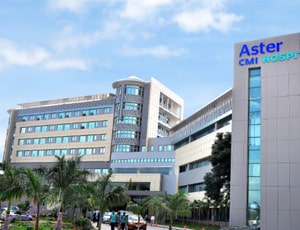
Endovascular Embolization of AVM in Aster CMI Hospital: Costs, Top Doctors, and Reviews

Bangalore, India

5.0 ( 1 Reviews )
  • Joint Commission International, or JCI
  • National Accreditation Board for Testing and Calibration Laboratories (NABL)

Aster CMI Hospital located in Bengaluru, India is accredited by JCI, NABH. Also listed below are some of the most prominent infrastructural details:

  • Around 500 bed capacity
  • Primary care to Quaternary care services
  • Outpatient and inpatient departments
  • Day care center for small children
  • Availability of Surgical suites
  • Intensive Care Units
  • 24-hour Emergency and Trauma Care
  • Emergency Unit especially for children
  • Newly launched the Lung and Heart Transplant Centre
  • Video Consultation with doctors available on GraphMyHealth
  • A specialised Aster Center of Excellence for Women & Children
  • Latest Minimally Invasive Procedures being performed
  • Safe Interventional Procedures
  • Control of Infection protocols are strictly followed
  • Aster Holistic Collaborative Care: Aster Palliative Care for lowering suffering if critically ill patients, Physical Medicine & Rehabilitation, Aster Wellness, Psychology, Chronic Pain Management, Nutrition & Dietetic, Podiatry Care etc.
  • 11 Centers of Excellence
  • An academics focus with BSc Program, MEM Program, Pediatric Fellowship Program
  • A streamlined International patient care center with dedicated services and technology enabled processes
Endovascular Embolization of AVM in Apollo Hospitals Bannerghatta: Costs, Top Doctors, and Reviews

Bangalore, India

  • Joint Commission International, or JCI

Apollo Hospitals Bannerghatta located in Bengaluru, India is accredited by JCI, NABH. Also listed below are some of the most prominent infrastructural details:

  • Bed Capacity is 250
  • Largest and most sophisticated sleep laboratory in the world
  • Technological powerhouse with latest equipments
  • 120 slice CT angiogram
  • 3 Tesla MRI
  • Low energy & High energy Linear Accelerators
  • Navigation System in surgical procedures
  • 4-D Ultrasound for 4 dimensional sonography
  • Digital Fluoroscopy
  • Gamma Camera
  • Stereotactic Robotic Radio- surgery
  • Autologous Bone Marrow Transplantation
  • Robotic assisted surgeries
  • Thallium Laser-First in India
  • Holmium Laser-First in South India
  • Digital X-Ray-First in Karnataka
  • 100 plus consultants
  • Uses Y shaped stent for tracheoesophageal fistula
  • Four autologous chondrocyte implantations procedure is performed and several more like Spinal angiolipoma excision, Tibial tuberosity shift with MPSL reconstruction
  • Biggest series of airway stents in India
  • The Minimal Access Surgery Centre (MASC) centre of excellence
Endovascular Embolization of AVM in HCG Kalinga Rao Road: Costs, Top Doctors, and Reviews

Bangalore, India

  • National Accreditation Board for Hospitals & Healthcare Providers (NABH)
  • ISO 9001

HCG Kalinga Rao Road located in Bengaluru, India is accredited by NABH, NABL. Also listed below are some of the most prominent infrastructural details:

  • Diagnostic facility equipped with state-of-the-art imaging technologies, such as 3T MRI, SPECT, PET-CT
  • Specialty laboratories provide state-of-the-art diagnostic facilities with expertise in oncology testing
  • The services provided under medical oncology include Haemato oncology, Pediatric oncology, Breast health, Preventive oncology, Daycare chemotherapy
  • Radiation oncology department adopts advanced technologies like CyberKnife Robotic Radiosurgery, TomoTherapy-H, Da Vinci, which allows cancer to be targeted with high accuracy
  • First Cancer Centre in India to introduce PET-CT technologies and Cyclotron
  • Consists of several beds and OTs with the latest equipment that meet high standards of sterility, and also comply with all international standards on operation theatre designs
  • Access to the latest technology like Linear Accelerator which allows the tumor to be treated with pinpoint accuracy
  • Equipped with Agility-Synergy linear accelerator, which allows accurate, image-guided radiotherapy to be provided safely and in a short time.
  • Have a unique facility that has BMT suites and a unique hemato-pathology lab. Conditions like Multiple Myeloma, Immune Deficiency Disorders, Leukaemia, Lymphomas, Aplastic Anaemia, Childhood Leukaemia, and certain Pediatric Cancers can be treated with Bone Marrow Transplants at the unit.
  • Ortho-Oncology clinic to be the first-of-its-kind in Bangalore, offering dedicated care for Musculoskeletal tumors
  • Round-the-clock extensive patient service helping diagnose cancer
  • Automated Breast Volume Scanner is the latest technology used for breast cancer detection
  • RTISTE linear accelerator used for various treatment approaches, including 3D conformal radiation therapy, Stereotactic
  • Radiosurgery (SRS), Intensity-Modulated Radiation Therapy (IMRT), and Stereotactic Body Radiotherapy
Endovascular Embolization of AVM in Fortis Hospital: Costs, Top Doctors, and Reviews

Bangalore, India

5.0 ( 1 Reviews )
  • National Accreditation Board for Hospitals & Healthcare Providers (NABH)
  • National Accreditation Board for Testing and Calibration Laboratories (NABL)

Fortis Hospital, Bannerghatta Road, Bangalore, has been a leading multi-speciality healthcare institution, offering advanced medical services with a patient-centric approach. The hospital features 400+ beds, state-of-the-art infrastructure, and experienced specialists across various specialities, providing comprehensive and compassionate care. Trusted by patients from India and abroad, Fortis Bannerghatta Road combines modern technology with high-quality treatment to deliver world-class healthcare.

Need Some Advice From Our Experts?

Request a Call Back Now!

Our team of healthcare experts would be happy to assist you

trusted Patientstrusted Patients+99
Trusted by 50000+ Patients
Required | alphabets and spaces
Required | A valid, working email address
Required | A valid contact

Process Involved for Endovascular Embolization of AVM in Bangalore

  • Initial Evaluation: Doctors review medical history and symptoms.
  • Imaging tests, such as MRI, CT, or angiography, are used to locate the AVM.
  • Preoperative Preparation: Fasting, consent, and planning for anaesthesia.
  • Procedure Day: A catheter is inserted through the groin and guided to the AVM.
  • Embolisation: Special material is injected to block the abnormal vessels.
  • Recovery Room: The patient is monitored after the procedure to ensure their safety.
  • Hospital Stay: A short stay is required to check for complications.
  • Follow-up Care: Regular checkups and imaging to ensure success.
  • Brain AVMs: Block abnormal blood flow in tangled brain vessels.
  • Spinal AVMs: Fixes faulty blood vessels within the spinal area.
  • Bleeding AVMs: Helps control and stop bleeding from the AVM.
  • Non-bleeding AVMs: treated early to reduce the risk of future bleeding.
  • Deep or risky AVMs: Used when surgery is too dangerous.
  • Seizure-linked AVMs: Helps alleviate seizures associated with blood flow issues.
  • AVMs near key brain parts: Safely targets AVMs near areas that control body functions.
  • AVMs causing swelling: Treats pressure or pain from an enlarged AVM.
  • Patient Preparation: The person is given anaesthesia so they feel no pain and stay relaxed.
  • Catheter Insertion: A narrow, bendable tube is carefully placed into a blood vessel, usually through the upper thigh
  • Guiding the Tube: Doctors use special X-ray tools to move the tube through the body toward the AVM.
  • Blocking the Vessels: A special glue-like material or small particles are sent through the tube to block the abnormal blood flow.
  • Checking the Result: Imaging is performed immediately to determine if the AVM has been successfully sealed.
  • Removing the Tube: The tube is slowly removed once the job is complete.
  • Watching the Patient: The patient is closely monitored during recovery to ensure their well-being and overall health.
  • Follow-up: Doctors check in later with scans and visits to ensure the AVM remains closed.
  • Craniotomy
  • Radiosurgery
  • Angiography
  • Coiling
  • Stenting
  • Thrombectomy
  • Catheterisation
  • Fluoroscopy
  • Embolisation
  • Microsurgery
  • The treatment does not require cutting open the head.
  • Patients often go home within a couple of days.
  • Recovery is quicker compared to traditional surgery.
  • There is usually little to no pain after the procedure.
  • It can stop bleeding from the abnormal blood vessels.
  • The tangled blood vessels can shrink or close off.
  • Sometimes it helps prepare the AVM for another type of treatment.
  • The chance of getting an infection is low..
False
  • Please complete the form to provide us with relevant information about your condition.
  • Consult with Our Healthcare Expert: One of our qualified specialists will contact you for a consultation.
  • Receive a Detailed Treatment Plan: After examining your situation, we will provide you with a detailed treatment plan that includes expert opinions and a cost breakdown for various options.
  • Select your preferred option: Choose the therapy option that best suits your needs.
  • Seamless Organisation: We will manage all the details, including visas, flights, accommodations, and transfers, for a stress-free journey.

Instantly Connect with our Endovascular Embolization of AVM Specialists

Doctor 1
Doctor 2
Doctor 3
Doctor 4
Doctor 5
Doctor 6
Doctor 7
Doctor 8
Our Services to Better your Experience

Opinion & Option

We submit the most accurate opinion and options from one or more countries for your review

Consult Privately

Consult with a certified specialist privately on our telemedicine platform even before you decide to travel

Logistics

We handle flights, visas, transfers, and accommodation—so you can focus on your health.

Recovery

Our In-house rehabilitation service packages to better your recovery and treatment outcome

Other Popular Countries for Endovascular Embolization of AVM

Our network connects you with the leading medical tourism destinations globally, offering a wide range of cities, top doctors, and flexible pricing options.

Thailand
United Kingdom
United Arab Emirates
Malaysia

Frequently Asked Questions

Factors that raise the risk of Endovascular embolisation of AVM

  • High blood pressure, diabetes, and atherosclerosis are standard; vessels may be more fragile.
  • Deep AVMs (in the brainstem or cerebellum) and AVMs with deep-draining veins carry an increased risk of bleeding.
  • Small AVMs (less than 3 cm) with hidden aneurysms are more likely to rupture.
  • Treating many blood feeders (>40%) in a single session increases the risk of post-procedure bleeding.
  • Not lowering blood pressure right after embolisation increases the risk.
  • The risk of catheter injury is higher when navigating through narrowed vessels.

Treatment with Onyx achieves complete obliteration in about 55–92% of low-grade AVMs (commonly around 60–90%), with severe deficits in ~5–6% and mortality below 1%.

In India, institutions such as Apollo Hospitals and Fortis Memorial Research Institute provide endovascular embolisation for brain AVMs, utilising advanced imaging and embolic agents like Onyx under the guidance of skilled neurointervention teams.

The following are the precautions to take after endovascular embolisation of AVMs in India:

  • Bedrest
  • Flat positioning
  • Blood‑pressure control
  • Puncture‑site care
  • Hydration
  • Imaging follow‑up

Author

Dr. Abdullah Rahil

MPT (Neuro)

5 Years of Experience

Dr. Abdullah Rahil, M.P.T. (Neurology), is a dedicated physiotherapy professional specializing in orthopedic, neurological, and musculoskeletal rehabilitation. With strong clinical expertise, he focuses on improving patient mobility, reducing pain, and restoring functional independence through evidence-based rehabilitation techniques. He is skilled in advanced therapeutic approaches that support effective rehabilitation and recovery for a wide range of musculoskeletal and neurological conditions, focusing on improving mobility, reducing pain, and restoring functional independence. Dr. Rahil has extensive experience managing diverse rehabilitation cases. His patient-centered approach emphasizes personalized treatment plans, continuous assessment, and comprehensive rehabilitation to achieve optimal recovery outcomes. . View More

Reviewer

⁠Dr Rakesh Kumar Dua

Spine & Neurosurgeon

25 Years of Experience

Dr. Rakesh Dua has more than 25+ years of clinical experience in spine surgeries. He is currently providing his services as Director, Neuro & Spine Surgery at Fortis Hospital, Shalimar Bagh. Before joining Fortis Hospital, he was associated with Max super-specialist Hospital, Shalimar Bagh as Director Neurosurgery & Head Neuro Spine, and with UCMS & GTB hospital as head of the neurosurgery department. View More