Your Notifications
All done, no notifications

Cerebral Angioplasty Cost in Poland

USD 4000 - USD 5100

Affordable World-class Treatment - Accredited Hospitals - Free Treatment Plan in 24 Hrs

2
Days in Hospital
1-3 hrs
Procedure Time
80 - 90%
Success Rate
JCI/ISO 100,000+ Patients 24X7 Coordinator Visa & Travel handled
Your all-in-one medical travel platform for treatment, recovery & care.

Get Your Personalised Treatment Plan in Just 24 Hours.

Share your details to receive a personalised treatment plan, estimated costs, hospital recommendations, and expert guidance, “completely free.”

Required | alphabets and spaces
Required | A valid, working email address
Required | A valid contact
Connect with an Expert

Your information is protected with HIPAA-compliant security standards. We only share your details with hospitals after your consent.

Estimated Treatment Cost
USD 4000 - USD 5100
All-inclusive • Hospital + Medications + Recovery Assistance + Dedicated Care Coordinator

International Quality. Affordable Care.

How Much Does Cerebral Angioplasty Cost in Poland?

In Poland, the Cerebral Angioplasty Procedure cost varies from USD 4000 - USD 5100. The price may vary depending on the location of the hospitals, facility types, and doctor experience and skills. However, Hospital stays, expert consultations, and necessary follow-up treatments could incur additional costs.

Factors Affecting the Cost of Cerebral Angioplasty in Poland

Several variables, such as facility, patient, and medical concerns, can significantly affect the cost of cerebral angioplasty.

  • Hospital and Location: Costs vary significantly between nations, localities, and the types of hospitals (private vs. public). More expensive hospitals may have more sophisticated amenities.
  • Fees for the Surgeon and Medical Team: Interventional radiologists and neurosurgeons with more experience may cost more.

The case's complexity impacts procedural fees and consultation.

  • Type of Procedure & Equipment Used:
  • A stent implantation is more expensive than balloon angioplasty. Although it increases costs, advanced imaging (CT/MR Angiography, DSA) is necessary for accuracy.
  • Length of Hospital Stay: Overall expenditures rise with more extended stays, particularly in the intensive care unit or during post-procedure monitoring.
  • Prescription Drugs and Post-treatment Care:

Blood thinners and antiplatelet medications may be needed for months. Long-term expenses are increased by follow-up imaging (CTA/MRA) or rehabilitation.

What's included in your Cerebral Angioplasty quote?

Cerebral angioplasty procedure
fee, anesthesia, procedure room charges
neurosurgery consultations
evaluation, treatment planning, follow-ups
2–4-day hospital stay
Inpatient care, support
7–14-day in-country follow-up
Neurological assessment
Visa & medical-visa invite letter
Airport pickup & transfers

Cost of Cerebral Angioplasty in Major Cities of Poland

City Cost (USD)
Jelenia Gora $3,600 – $4,590 Explore More
Warsaw $4,000 – $5,100 Explore More

Cerebral Angioplasty - Poland Vs the World

$0 - $0
$2k - $3k
$4k - $8k
$4k - $6k
$9k - $15k
$12k - $22k
$13k - $20k
$15k - $20k
$15k - $22k
$18k - $33k
$20k - $35k
$22k - $35k
$25k - $45k

Find the Right Destination for Your Cerebral Angioplasty Journey

Dr. Shagufta Parveen
Author

Doctor of Pharmacy

3 Years of Experience

Last Reviewed - June 2026

Dr. Shagufta Parveen is a Clinical researcher and medical writer with expertise in clinical pharmacology and pharmacotherapeutics. She holds a B.Pharm and Doctor of Pharmacy (Post-Baccalaureate) degree from Teerthanker Mahaveer University, Moradabad.

During her clinical stint at BLK-Max Super Speciality Hospital and Indraprastha Apollo Hospital, she gained hands-on experience in the Clinical Pharmacology Department. Combining scientific knowledge with strong medical writing skills, Dr. Shagufta develops evidence-based healthcare content, treatment guides, and patient education resources.

Her work focuses on simplifying complex medical concepts while maintaining scientific accuracy, helping readers better understand healthcare advancements and treatment options.

In addition to her writing expertise, she is actively involved in scientific research and has contributed to peer-reviewed publications.

Her research work is accessible through the following links:

https://scholar.google.com/citations?user=lMVK1eIAAAAJ&hl=en

https://carcinogenesis.com/index.php/JOC/article/view/870

https://carcinogenesis.com/index.php/JOC/article/view/868

https://wjpsronline.com/abstract/0000000760

View More
⁠Dr Rakesh Kumar Dua
Reviewer

Spine & Neurosurgeon

25 Years of Experience

Last Reviewed - June 2026

Dr. Rakesh Dua has more than 25+ years of clinical experience in spine surgeries. He is currently providing his services as Director, Neuro & Spine Surgery at Fortis Hospital, Shalimar Bagh. Before joining Fortis Hospital, he was associated with Max super-specialist Hospital, Shalimar Bagh as Director Neurosurgery & Head Neuro Spine, and with UCMS & GTB hospital as head of the neurosurgery department.
View More

Need Help Choosing the Right Treatment? Talk to a Medical Advisor

Our dedicated Medical Patient Advisors are here to answer your questions, help you compare treatment options, estimate costs, and guide you through every step of your healthcare journey.

15 min
Average response time

Serving Patients Worldwide in Multiple Languages.

A minimally invasive technique called cerebral angioplasty is performed to unblock the brain's constricted or obstructed arteries. In patients with cerebrovascular disorders, including atherosclerosis, it is usually done to increase blood flow and lower the risk of stroke. Enlarging the damaged blood arteries aids in restoring appropriate circulation to the brain.

Cerebral angioplasty is a minimally invasive technique that improves blood flow and lowers the risk of stroke by opening blocked or restricted arteries in the brain. This treatment frequently treats intraacerebral atherosclerosis, in which plaque accumulation restricts blood flow to brain structures. After the artery has been enlarged, a stent is often inserted to maintain its opening. This therapy can restore healthy circulation and prevent additional brain injury.

Reduced blood supply to the brain may cause symptoms including frequent or inexplicable headaches, lightheadedness, slurred speech, limb weakness or numbness, vision issues, or transient ischemic episodes (mini-strokes). A massive stroke must be prevented by early medical assessment. To find out if cerebral angioplasty is a good course of treatment for your disease, MediGence allows you to connect with top neurologists and interventional radiologists.

Imaging tests like cerebral angiograms, CT angiography, or MRI are the first step in the preparation process to determine the extent and location of artery narrowing. Before the procedure, your doctor will review your prescriptions and might ask you to pause them. Pre-procedure blood testing is necessary, and you'll need to fast for six to eight hours.

  • Insertion of the Catheter: To reach a blood vessel, a tiny cut is made in the wrist or groin, and a thin catheter is inserted into the artery and sent to the brain.
  • Balloon Inflation: A balloon connected to the catheter is inflated at the narrowing point to widen the artery.
  • Stent Placement: A stent may be inserted to keep the artery open if necessary.
  • Closure: The incision site is sealed once the catheter is removed.

The duration of a cerebral angioplasty typically ranges from one to two hours, contingent on complex circumstances. A brief observational stay of one to two days may ensue.

  • Stroke
  • Bleeding or bruising at the catheter site
  • Artery damage
  • Blood clots
  • Allergic reaction to contrast dye
  • Infection

Patients with blocked or restricted arteries can greatly lower their risk of stroke by having cerebral angioplasty, which restores blood flow to the brain. With a shorter recovery period and instant symptom relief for many patients, it provides a less intrusive option than open surgery.

Following the surgery, patients are watched for bleeding and neurological problems. While vigorous activity should be avoided for a week, most people can return to light activities in a few days. Post-procedure care usually includes follow-up imaging and blood clot prevention medications.

The success rate of cerebral angioplasty is 85\u201395%, especially for properly chosen patients. It reduces stroke risk and enhances long-term results when paired with stenting and medicines.

85–95%

Successful restoration

2–4 days

Typical hospital stay

2–6 weeks

to typical return to work
Explore Hospitals ( 2 )

Warsaw, Poland

60+ Beds · 197+ Procedures
ISO

Jelenia Gora, Poland

85+ Beds · 179+ Procedures
ISO

Get Your Cerebral Angioplasty
Plan in 24 hrs.

Our experienced Medical Patient Advisors have supported 100,000+ patients across 120+ countries with personalised treatment plans, hospital recommendations, cost estimates, and travel assistance, all free.

HIPAA-Compliant Data SecurityShared Only with Your Consent

Free Consultation No Obligation Personalized Treatment Plan Response Within 24 Hours

Required | alphabets and spaces
Required | A valid, working email address
Required | A valid contact

Your medical info is kept HIPAA-style confidential. We never share with hospitals without your consent.

Process Involved for Cerebral Angioplasty in Poland

  • Vertebral or Carotid Arteries
  • Prevention of Ischemic Strokes,
  • Cerebral Vasospasm,
  • Intracranial Atherosclerosis
  • Balloon Angioplasty
  • Stenting-assisted Balloon Angioplasty
  • Drug-Coated Balloon Angioplasty
  • Angioplasty for Cerebral Vasospasm
  • Emergency Angioplasty for Stroke (Rescue Angioplasty)

Patients who have the following requirements could be considered for cerebral angioplasty:

  • Stenosis, or significant arterial narrowing: Usually, 50 and 70% occlusion in the carotid or cerebral arteries.
  • Past Stroke or TIA History: Individuals who have experienced transient ischemic attacks (TIAs) brought on by artery constriction or ischemic strokes in the past.
  • Medical Management Failure: When symptom prevention with medication (statins, antiplatelets) and lifestyle modifications is not enough.
  • Vasospasm in the brain: Patients with blood flow-compromising vasospasm brought on by subarachnoid haemorrhage (SAH).
  • High Risk of Strokes: those who were with severe stenosis, if treatment is not received, might have a stroke.
  • Cerebral Angiography (Digital Subtraction Angiography - DSA)
  • Stent Placement (Intracranial Stenting)
  • Thrombectomy (Clot Removal)
  • Carotid Angioplasty and Stenting
  • Endarterectomy
  • Restores Blood Flow: Improves blood flow to the brain by successfully opening constricted cerebral arteries.
  • Lowers Stroke Risk: Assists individuals with severe artery constriction in avoiding ischemic strokes.
  • Minimally Invasive: By avoiding open surgery, a catheter-based method promotes a quicker recovery.
  • Relieves weakness, lightheadedness, and transient ischemic attacks (TIAs).
  • Quick Recovery: Most patients return to regular activities in a few days.
  • Placing Stents for Long-Term Support: Stents can prevent restenosis and keep arteries open when necessary.
  • In patients with significant arterial constriction, cerebral angioplasty successfully expands the restricted cerebral arteries, restoring normal blood flow and lowering the risk of ischemic strokes. It aids in the relief of symptoms including weakness, lightheadedness, and transient ischemic attacks (TIAs).
  • Neurosurgeons:
  • Interventional radiologist:
  • Fill out the inquiry form: Please complete the form to provide us with relevant information about your condition.
  • Consult with Our Healthcare Expert: One of our qualified specialists will contact you for a consultation.
  • Receive a Detailed Treatment Plan: After examining your situation, we will provide you with a detailed treatment plan that includes expert views and cost breakdowns for various choices.
  • Choose your preferred option: Choose the treatment option that suits you the best.
Jenny Wilson
Your Dedicated Medical Patient Advisor
Treatment planning • Hospital coordination • Multilingual support • Response within 15 minutes.
Our Services to Better your Experience

Opinion & Option

We submit the most accurate opinion and options from one or more countries for your review

Consult Privately

Consult with a certified specialist privately on our telemedicine platform even before you decide to travel

Logistics

We handle flights, visas, transfers, and accommodation—so you can focus on your health.

Recovery

Our In-house rehabilitation service packages to better your recovery and treatment outcome

Patient Stories

Ms Patience: Cosmetic Surgery
Ms Patience
Ms Patience: Cosmetic Surgery

Ms Patience from Uganda travelled to India for cosmetic surgery in May 2017. She got her treatment done in Asian…

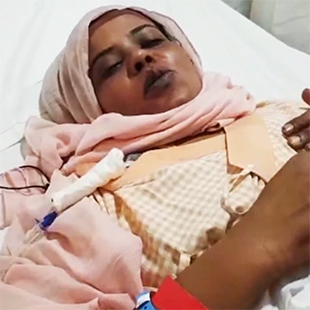
Patient Testimonial: Lobna from Sudan for Successful Open Craniotomy Surgery in India
Mrs. Lobna Salah Hassan
Mrs. Lobna Hasan from Sudan for Open Craniotomy Surgery in India

Lobna (from Sudan) was diagnosed with meningioma, a form of non-cancerous brain tumor. Her family members decided to take her…

Not Sure About Your Treatment Plan? Get a Free Second Opinion

Have your reports reviewed by independent oncology experts to help you make a confident treatment decision, all online within 48 hours.

Upload Your Reports
Free second opinion on your CAR-T plan