Your Notifications
All done, no notifications

Esophagectomy Cost in Thailand

Costs starts from USD20000 to USD40000
Filters

How Much Does Esophagectomy Cost in Thailand?

The cost of an esophagectomy in Thailand generally ranges between USD 20000 - USD 40000, depending on multiple medical and non-medical factors. The final expense may vary based on the type of surgery performed (open or minimally invasive), hospital infrastructure, category of hospital, surgeon expertise, anesthesia and intensive care requirements (ICCU), and the overall complexity and stage of the disease.Additional costs may be influenced by whether the treatment plan includes chemotherapy, radiotherapy, or other adjunct cancer therapies. Expenses often cover pre-operative evaluation, imaging and diagnostic tests, surgical and anesthesia fees, hospital stay including intensive care, medications, post-operative care, follow-up consultations, and supportive treatment.Many international patients prefer Thailand due to the availability of experienced thoracic and gastrointestinal surgeons, modern surgical techniques including minimally invasive approaches, and comparatively affordable treatment packages that maintain high standards of care.

Factors Affecting the Cost of Esophagectomy in Thailand

The total cost of esophagectomy can be influenced by:

Cost of Esophagectomy in Major cities of Thailand

CityMinimum Cost (USD)Minimum Cost (THB)Maximum Cost (USD)Maximum Cost (THB)
BangkokUSD 20000654200USD 65420021398882

Esophagectomy Cost : A Global Comparison

CountryMinimum CostMinimum Local CurrencyMaximum CostMaximum Local Currency
CzechiaUSD 20000CZK 425400USD 40000CZK 850800
HungaryUSD 18000HUF 6008760USD 35000HUF 11683700
IndiaUSD 4500INR 419490USD 9500INR 885590
IsraelUSD 30000ILS 94500USD 60000ILS 189000
LithuaniaUSD 18000LTL 53820USD 35000LTL 104650
MalaysiaUSD 14000MYR 56560USD 26000MYR 105040
PolandUSD 16000PLN 59520USD 32000PLN 119040
Saudi ArabiaUSD 25000SAR 93750USD 45000SAR 168750
SingaporeUSD 35000SGD 45150USD 65000SGD 83850
South AfricaUSD 18000ZAR 306000USD 35000ZAR 595000
South KoreaUSD 28000KRW 42506800USD 50000KRW 75905000
SpainUSD 25000EUR 21750USD 48000EUR 41760
SwitzerlandUSD 50000CHF 40000USD 90000CHF 72000
ThailandUSD 20000THB 655200USD 40000THB 1310400
TunisiaUSD 16000TND 47040USD 28000TND 82320
TurkeyUSD 16000TRY 712000USD 32000TRY 1424000
United Arab EmiratesUSD 28000AED 102760USD 55000AED 201850
United KingdomUSD 32000GBP 27840USD 65000GBP 56550
VietnamUSD 55000VND 1448865000USD 150000VND 3951450000

Need Help Planning Your Treatment Abroad?

Your 24/7 AI Health Assistant

Esophagectomy is a major surgery that removes a portion or all of the oesophagus, typically for oesophageal cancer or cancer of the gastro-oesophageal junction (GEJ). Additionally, it might be advised in some non-cancer disorders including advanced Barrett's oesophagus with high-grade dysplasia, infrequently for non-malignant strictures, or in emergency scenarios like severe esophageal damage or perforation.

Consult a professional if you have progressive difficulty swallowing (dysphagia), particularly with solid foods, unexplained weight loss, chronic reflux/heartburn that is not eased by medication, regurgitation or vomiting, or chest pain/discomfort while swallowing. Additionally, if you get prolonged hoarseness, a chronic cough, blood in your vomit, or black stools, you should get medical help.

Esophagectomy preparation consists of a complete medical fitness assessment, endoscopy with biopsy, CT/PET-CT staging, and, in some cases, EUS, as well as heart testing (ECG/echo), lung function tests (PFT), and blood tests for liver and kidney function.

Esophagectomy is a general anaesthetic procedure that involves removing the diseased section of the oesophagus, as well as any adjacent lymph nodes. The digestive tract is then rebuilt by making a new link (anastomosis) with the residual oesophagus, typically with a stomach pull-up (and in certain circumstances, colon interposition). A feeding tube (jejunostomy) may be inserted to provide nourishment during recovery, and it may be carried out via minimally invasive thoracoscopic/laparoscopic, abdominal–chest, or abdominal–neck techniques.

Depending on the surgical technique (open vs. minimally invasive), the intricacy of the condition, and whether reconstruction is necessary, an esophagectomy typically takes four to eight hours.

A major surgical procedure is an esophagectomy. Among the potential issues are:
  • Bleeding
  • Infection (pneumonia, chest wound infection)
  • Anastomotic leak (surgical connection leak)
  • Breathing difficulties brought on by lung involvement
  • Damage to the vocal cord nerve (hoarseness)
  • Clots of blood (DVT/PE)
  • Narrowing at the anastomosis, or stricture
  • Acid reflux and problems swallowing
  • Delayed emptying of the stomach
  • Chronic nutritional deficiencies

Esophagectomy has several significant advantages, including being a curative therapeutic option for resectable esophageal cancer, removing diseased tissue and thereby lowering the chance of cancer spread, and facilitating swallowing and food transit. It can improve general quality of life after recovery and boost long-term survival in appropriate cancer situations.

Depending on the patient's health, recovery usually entails ICU monitoring for one to three days, followed by an overall hospital stay of seven to fourteen days (longer if complications occur). Pain management, chest physical therapy, and a stepwise eating schedule-beginning with tube feeding, moving on to liquids, soft foods, and finally normal intake-are all part of post-operative care.

The success of an esophagectomy is determined by factors such as cancer stage, the patient's lung function and overall health, hospital and surgeon experience, early diagnosis, and suitable treatment planning. Esophagectomy can offer excellent long-term survival benefits in early and locally advanced cases when paired with chemo-radiotherapy when necessary, particularly in highly specialised centres.

Would you like some help? We are available.

Get Help
Explore Hospitals ( 7 )
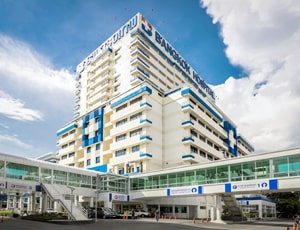
Esophagectomy in Bangkok Hospital: Costs, Top Doctors, and Reviews

Bangkok, Thailand

  • Joint Commission International, or JCI

Bangkok Hospital located in Bangkok, Thailand is accredited by JCI. Also listed below are some of the most prominent infrastructural details:

  • It is recognised for the application of the newest healthcare technology.
  • Blood analysis center that is not just the best in Thailand but in Asia Pacific as well.
  • Biomolecule center that is the seed of healthcare equipment for Thailand and overseas.
  • International affiliations and collaborations with universities and hospitals in Japan and the United States of America.
  • 11 hospitals are recognised as Centers of Excellence.
  • Known excellence in Trauma, Orthopedics, Cardiovascular, Neurology as well as Cancer Care.
  • There is a proper streamlined patient services process followed in Bangkok Dusit Medical Services, Bangkok, Thailand.
  • A well developed research center showcases the intent of the organisation to provide research based treatment opportunities to the patients.
  • The group has several Medical industry partnerships as well to ensure healthcare solutions.
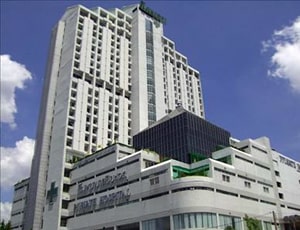
Esophagectomy in Bangpakok 9 International Hospital: Costs, Top Doctors, and Reviews

Bangkok, Thailand

  • Joint Commission International, or JCI

Bangpakok 9 International Hospital located in Bangkok, Thailand is accredited by JCI. Also listed below are some of the most prominent infrastructural details:

  • It would be prudent to summarise the Medical Services provided at the Bangpakok 9 International Hospital (BPK 9), Bangkok, Thailand:
  • Cosmetic Dentistry
  • Dental Implants
  • Electrocardiogram (EKG or ECG)
  • Exercise Stress Test
  • Health Screening
  • Laser Vagina Firming
  • Pediatric Physical Therapy
  • Perfect Slim by Vela II
  • Physical Therapy for Musculoskeletal
  • Prosthodontics
  • The Medical Services are also inclusive of the International Patient Services such as the ones listed here:
  • Thai, English, French, Arabic, Chinese, Myanmar, Cambodia, Bangladeshi, Bahasa and Tagalog are the languages in which there are Translation services available for International Patients.
  • Visa extension related assistance
  • International health insurance related assistance
  • Embassy and international organizations related assistance
  • A variety of meals of choice for International Patients
  • Email consultation services
  • Transfer to either airport and/or hotels
  • Prayer room
  • Four different types of rooms are available such as Deluxe room, two kinds of suites, and a VIP suite.
  • Hospital facilities like The Coffee shop, Food Hall, Cafe and Medical Spa.
  • Complete health and safety protocols are maintained in the various Medical Centers some of whom are as follows:
  • Aesthetic Center
  • 24 Hour Emergency Center
  • Allergy Center
  • Breast Center
  • bSmart Center
  • Checkup Center
  • Dental Center,
  • Happy Long Life Center
  • Medical Fitness Center
  • Psychiatric Center
  • Rehabilitation Center
  • Sleep Disorders Center
Esophagectomy in Phyathai 2 International Hospital: Costs, Top Doctors, and Reviews

Bangkok, Thailand

  • Joint Commission International, or JCI

Phyathai 2 International Hospital located in Bangkok, Thailand is accredited by JCI. Also listed below are some of the most prominent infrastructural details:

  • Fully equipped rooms are available for convenience of the patients- Gold B Room, Gold A Room, Pediatric Gold A, Platinum room, and Prestige ward
  • Nearby accommodations are also available- Abloom Service Apartments, Bangkok Patio, VIB Best Western Sanam Pao, VIC3 Hotel
  • Operating room
  • International Patient Medical Center to assist overseas patients
Esophagectomy in Sikarin Hospital: Costs, Top Doctors, and Reviews

Bangkok, Thailand

  • Joint Commission International, or JCI

Apart from in-detail treatment procedures available, Sikarin Hospital located in Bangkok, Thailand has a wide variety of facilities available for International Patients. Some of the facilities which are provided by them are Airport Transfer, Choice of Meals, Interpreter, SIM, TV inside room. Also listed below are some of the most prominent infrastructural details:

  • Sikarin Hospital has a 258-bed capacity.
  • The hospital caters to the healthcare needs of both local and international patients.
  • Dedicated and skilled, experienced healthcare professionals are the strength of the organization.

It has also received many awards and certifications and some of them are:

  • APSIC CSSD Center of Excellence Award (2017-18)
  • Accreditation by the Joint Commission International
  • HA-Hospital/Healthcare Accreditation
  • HACCP Certificate of Registration
  • The Best Under a Billion Award 
  • ISO 14001 Environment Management System
  • ISO 9001 Quality Management System

The various clinics and centers of Sikarin Hospital are as follows:

  • Pediatric Institute
  • Orthopedic Institute
  • Dental Center
  • Health Check-up Center
  • Heart Disease Center
  • Cerebral and Nervous System Center
  • Internal Medicine Clinic
  • Diagnostic Radiology Center
  • Diagnostic Laboratory
  • Endoscopic Surgery Center
  • International Medical Center
  • Emergency Medical Center
  • Sikarin Beauty Center
  • Eye Center
  • Rehabilitation Center
  • Women’s Health Center
  • Ear, Nose and Throat Center
  • Specialized Internal Medicine Center
  • Center for Gastrointestinal and Liver Diseases

The medical technology present in Sikarin Hospital is outlined here:

  • MRI (Magnetic Resonance Imaging) magnetic resonance imaging
  • Hybrid Operating Room
  • Endoscopic Surgery - Gastrointestinal medical technology with tiny capsules
  • S.R. Laboratory
  • Cardiac Catheterization Lab 
  • Dental Operating Microscope, an innovative endoscopic root canal treatment
  • 128-Slice CT Scan
  • ORTHOPANTOMOGRAPH OP 3D oral X-ray machine
  • Digital Mammogram
  • Optical Coherence Tomography
  • INFRARED (IR) IMAGING Surgical Technology “Cure Cancer” – Direct, Accurate, Fast
  • 3D endoscopic surgery technology
  • Laparoscopic Surgery
  • Dental Aerosol Suction Dental Intraoral Aerosol Remover
  • Comprehensive Dental Center
  • iTeroElement 5D
Esophagectomy in Kasemrad Ramkhamhaeng Hospital: Costs, Top Doctors, and Reviews

Bangkok, Thailand

  • Joint Commission International, or JCI

Apart from in-detail treatment procedures available, Kasemrad Ramkhamhaeng Hospital located in Bangkok, Thailand has a wide variety of facilities available for International Patients. Some of the facilities which are provided by them are Accommodation, Airport Transfer, Choice of Meals, Interpreter, SIM, TV inside room. Also listed below are some of the most prominent infrastructural details:

  • Initially started with 1.5 acres of land and expanded to 3.5 acres
  • 139 beds, 39 Examination Rooms
  • 13 Specialties Departments/Centers
  • 24*7 Emergency Department
  • Accommodation facilities are available- VIP rooms, Single special room, 6-bed dormitory, baby room
Esophagectomy in Piyavate Hospital: Costs, Top Doctors, and Reviews

Bangkok, Thailand

  • Joint Commission International, or JCI
  • ISO 9001

Piyavate Hospital located in Bangkok, Thailand is accredited by JCI. Also listed below are some of the most prominent infrastructural details:

  • Medicine Centre: Piyavate Hospital provides advanced holistic treatment for their patients. They offer a complete range of services and physicians that specialize in various fields like the endocrine system, the nervous system, kidney function, cardiovascular care, respiratory and digestive system. They pride themselves for the familial care that they provide to their patients.

  • Fertility and In-Vitro Fertilization Centre: Helping the couples who walk into the Piyavate Hospital to achieve their dream of having a family. They have a medical team that specializes in male and female fertility. They offer consultation services, fertility check-up for both men and women and complete IVF services. They have advanced IVF cycle treatment facilities that offer a high rate of success.

  • Bone and Joint Institute: Piyavate Hospital houses one of the frontrunners in Orthopaedic health care in all of SouthEast Asia. They offer a wide range of services and surgeries in their bone and joint institute that include hand surgery, hip and knee replacement surgery, spinal cord surgery, upper extremity surgery, arthroscopic surgery and sports medicine.

  • Eye and Lasik Centre: Piyavate Hospital is fully equipped with the latest and most advanced technology for eye care and houses highly skilled ophthalmologists, sub-specialists and qualified nurses.

  • Physical Therapy and Rehabilitation Centre: One of the first hospitals to be equipped with the Hybrid Assistive Limb technology that will help a neurologically challenged patient to control the rehabilitation robot limb with a signal from their brain. The Physical Therapy and Rehabilitation Centre at Piyavate Hospital uses this system encourage patients to regain muscle memory to walk and function normally.

Amenities for Patient’s Family:

Piyavate Hospital also offers additional apartment facilities to house the kin of the patients who come to visit them from distant places. A restaurant, a flower shop and a café are a few of the other amenities provided by the hospital.

These are the most popular services offered by the Piyavate Hospital in Bangkok, Thailand. They also provide a plethora of other medical services that are listed below:

  • Diabetic Foot Centre

  • Check-up centre

  • Urology Centre 

  • Heart Institute

  • Paediatric Centre 

  • Obstetrics and Gynaecology Centre

  • Surgery Centre

  • Ear Nose Throat Centre

  • Haemodialysis Centre 

  • Dental Centre

  • X-Ray Centre

  • Gastroenterology Centre

  • Cancer Centre

  • Neonatal Intensive Care Unit (NICU)

  • Emergency Services and Centre

  • Tele-medicine

Esophagectomy in MALI Interdisciplinary Hospital: Costs, Top Doctors, and Reviews

Bangkok, Thailand

  • National Accreditation Board for Hospitals & Healthcare Providers (NABH)
  • Joint Commission International, or JCI

MALI Interdisciplinary Hospital located in Bangkok, Thailand is accredited by JCI. Also listed below are some of the most prominent infrastructural details:

  • Operating Room
  • X-Ray Department
  • Laboratory
  • Inpatient Department
  • Emergency Department

Need Some Advice From Our Experts?

Request a Call Back Now!

Our team of healthcare experts would be happy to assist you

trusted Patientstrusted Patients+99
Trusted by 50000+ Patients
Required | alphabets and spaces
Required | A valid, working email address
Required | A valid contact

Process Involved for Esophagectomy in Thailand

  • Endoscopy, biopsy, CT/PET, and staging
  • Tumour board multidisciplinary evaluation
  • Optimising diet and pulmonary rehabilitation prior to surgery
  • Neoadjuvant radiation or chemotherapy, if applicable
  • Surgery for an esophagectomy
  • ICU and the healing process after surgery
  • Progression of the diet, rehabilitation, and monitoring
  • Depending on the pathology result, adjuvant therapy may be necessary.
  • Esophageal cancer (adenocarcinoma/squamous cell carcinoma)
  • Cancer of the gastro-oesophageal junction
  • Barrett's esophageal severe dysplasia (selected cases)
  • Rarely, complicated esophageal injuries or strictures

Esophagectomy types include:

  • Esophagectomy Transhiatal
  • Transthoracic Esophagectomy
  • Three-phase esophagectomy (McKeown)
  • Esophagectomy by Ivor Lewis
  • Esophagectomy with Minimal Invasion (MIE)
  • Esophagectomy with robotic assistance

A patient might be eligible for esophagectomy if:

  • Without distant metastases, cancer is localised and treatable.
  • Both general anaesthesia and major surgery are appropriate for this patient.
  • Sufficient lung and cardiac health
  • Nutritional status can aid in healing.
  • Biopsy and endoscopy
  • Placement of a feeding jejunostomy
  • Separation of lymph nodes
  • Chemotherapy/radiation
  • Stricture dilatation (if necessary later)
  • Provides the best probability of cure in resectable instances.
  • Enhances the ability to swallow following recuperation
  • Allows for precise lymph node evaluation staging.
  • Increases survival when paired with cancer treatment.

After esophageal surgery, patients can expect:

  • Progressive improvement in feeding and swallowing
  • Dietary adjustments are required (small, frequent meals)
  • Potential drugs for reflux management
  • Frequent monitoring for recurrence (if cancer-related)
  • Fill out the inquiry form: Fill out the form to provide us with the relevant information about your condition.
  • Consult with Our Healthcare Expert:One of our qualified specialists will contact you for a consultation
  • Receive a Detailed Treatment Plan:After examining your situation, we will provide you with a detailed treatment plan that includes expert views and cost breakdowns for various choices.
  • Choose your preferred option: Choose the treatment option that suits you the best.

Instantly Connect with our Esophagectomy Specialists

Doctor 1
Doctor 2
Doctor 3
Doctor 4
Doctor 5
Doctor 6
Doctor 7
Doctor 8
Our Services to Better your Experience

Opinion & Option

We submit the most accurate opinion and options from one or more countries for your review

Consult Privately

Consult with a certified specialist privately on our telemedicine platform even before you decide to travel

Logistics

We handle flights, visas, transfers, and accommodation—so you can focus on your health.

Recovery

Our In-house rehabilitation service packages to better your recovery and treatment outcome

Other Popular Countries for Esophagectomy

Our network connects you with the leading medical tourism destinations globally, offering a wide range of cities, top doctors, and flexible pricing options.

India
United Arab Emirates
Vietnam
Turkey

Frequently Asked Questions

Initial recovery takes 6-12 weeks, but full strength and nutritional recovery can take many months.However, complete recovery including nutritional stabilization and return to normal daily activities, may take several months. Recovery time can vary depending on the patient’s age, overall health, surgical approach used and presence of any post-operative complications.

In addition to the procedure cost, patients may incur:
  • Pre-treatment tests
  • Medications during recovery
  • Follow-up consultations
  • Depending on recovery and problems, a hospital stay typically lasts between 7 to 14 days. This includes time spent in the ICU for close monitoring followed by transfer to a regular ward.

    Long-term care includes of:
  • Dietary adjustments (little, frequent meals)
  • Reflux and strictures monitoring
  • Physiotherapy and breathing exercises
  • Supplemental nutrition if necessary
  • Frequent monitoring tests for cancer
  • Thailand is chosen for its advanced cancer care infrastructure, availability of professional oncology teams and skilled thoracic surgeons, fairly priced surgery packages, quicker scheduling, and good international patient support services.

    PET-CT and CT scans, upper gastrointestinal endoscopy with biopsy, and blood tests like CBC, LFT, and RFT are important assays. ECG and echocardiogram, pulmonary function tests, and a nutritional assessment may also be necessary, depending on the patient's health.

    Yes. Esophagectomy is a safe procedure that is frequently carried out for patients from other countries in well-equipped institutions with skilled thoracic oncology teams.

    When carried out in specialised facilities, success rates are excellent. The primary determinants of long-term survival are cancer stage and responsiveness to further treatment.

    Author

    Fauzia Zeb Fatima

    M.Pharm

    4 Years of Experience

    Fauzia Zeb is a distinguished medical and scientific content writer with a robust academic foundation in pharmaceutical sciences, holding a B.Pharm and M.Pharm degree from prestigious institutions, including MIT and Jamia Hamdard University. Her comprehensive expertise in pharmacology, clinical sciences, and biomedical research enables her to translate complex medical and scientific concepts into precise, evidence-based content tailored for diverse audiences. Specializing in peer-reviewed articles, clinical blog posts, and research-driven publications, she demonstrates a consistent ability to bridge the gap between advanced medical science and accessible, audience-specific communication. . View More