Your Notifications
All done, no notifications

Transcatheter Aortic Valve Implantation Cost in Bangkok

Costs starts from USD35000 to USD65000
Filters

Cost of Transcatheter Aortic Valve Implantation in Major cities of Thailand

CityMinimum Cost (USD)Minimum Cost (THB)Maximum Cost (USD)Maximum Cost (THB)
BangkokUSD 350001144850USD 650002126150

Need Help Planning Your Treatment Abroad?

Your 24/7 AI Health Assistant

TAVI is a minimally invasive cardiac procedure used to replace a stenotic aortic valve. Instead of open-heart surgery, a catheter-based technique is used, making it a safer alternative for high-risk patients. It is particularly beneficial for elderly patients or those who cannot undergo traditional surgery.

TAVI is performed through a catheter inserted in a blood vessel (usually through the groin or chest). The new valve is delivered to the aortic position and deployed to restore normal blood flow. This procedure offers significant symptomatic relief and improves heart function.

The purpose of TAVI is to treat severe aortic stenosis, a condition in which the aortic valve narrows and prevents blood from flowing from the heart to the body. Untreated heart failure, exhaustion, chest pain, or even abrupt cardiac death may result. Particularly for older patients or those with a high surgical risk, TAVI provides a less invasive option to open heart surgery. TAVI restores normal blood flow, strengthens the heart, and improves quality of life by replacing the constricted valve.

Consult a cardiologist if you experience shortness of breath, chest tightness, light-headedness, fainting spells, or reduced ability to exercise—all common symptoms of aortic stenosis. Elderly individuals or those with known valve disease should undergo regular echocardiograms to monitor valve function. Early referral is crucial once severe narrowing is diagnosed, especially in symptomatic cases.

Pre-procedure preparation involves echocardiography, CT angiography, ECG, and blood tests to evaluate heart anatomy, valve severity, and vascular access. A multidisciplinary “heart team” assesses patient suitability. Medications may need adjustment, and patients are generally advised to fast for 6–8 hours before the surgery. Antiplatelet or anticoagulant medications are reviewed, and preoperative counselling is provided to explain risks and expectations.

TAVI is performed under local anaesthesia with sedation or general anaesthesia:
  • Access Route: The most popular method is transfemoral, which entails putting a catheter into the groin's femoral artery. Depending on anatomy, additional access points can be transapical (through the chest wall) or transaortic (via a little incision in the upper chest).
  • Valve Replacement: A bioprosthetic valve is mounted on a balloon or self-expanding stent and delivered via catheter to the diseased aortic valve. Once positioned, it is expanded to push aside the native valve and take over its function.

TAVI typically takes 1 to 2 hours. Most patients are monitored in a cardiac ICU for 24–48 hours, and the average hospital stay is 2 to 5 days, depending on recovery and underlying health.

  • Vascular injury
  • Stroke
  • Bleeding
  • Arrhythmias or need for pacemaker
  • Valve leakage (paravalvular leak)
  • Kidney dysfunction
  • Infection
  • Rarely, valve malposition or failure

  • Significant improvement in symptoms and daily functioning
  • Lower procedural risk compared to open-heart surgery
  • Shorter hospital stay and faster recovery
  • Increased survival in high-risk and elderly patients
  • Minimally invasive—no need for open chest incision

Recovery is generally fast, especially with transfemoral access. Patients may walk within a day and resume light activity in a few days. Regular follow-up visits and echocardiograms are needed to monitor valve function. Lifestyle changes, cardiac rehabilitation, and medication adjustments are often recommended to optimise heart health.

TAVI has a success rate of 95–98% in appropriately selected patients. It significantly reduces mortality and rehospitalisation rates in severe aortic stenosis. Most patients report a dramatic improvement in symptoms and return to independent living, especially when performed early in the course of the disease.

Would you like some help? We are available.

Get Help
Explore Hospitals ( 3 )
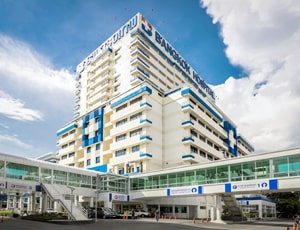
Transcatheter Aortic Valve Implantation in Bangkok Hospital: Costs, Top Doctors, and Reviews

Bangkok, Thailand

  • Joint Commission International, or JCI

Bangkok Hospital located in Bangkok, Thailand is accredited by JCI. Also listed below are some of the most prominent infrastructural details:

  • It is recognised for the application of the newest healthcare technology.
  • Blood analysis center that is not just the best in Thailand but in Asia Pacific as well.
  • Biomolecule center that is the seed of healthcare equipment for Thailand and overseas.
  • International affiliations and collaborations with universities and hospitals in Japan and the United States of America.
  • 11 hospitals are recognised as Centers of Excellence.
  • Known excellence in Trauma, Orthopedics, Cardiovascular, Neurology as well as Cancer Care.
  • There is a proper streamlined patient services process followed in Bangkok Dusit Medical Services, Bangkok, Thailand.
  • A well developed research center showcases the intent of the organisation to provide research based treatment opportunities to the patients.
  • The group has several Medical industry partnerships as well to ensure healthcare solutions.
Transcatheter Aortic Valve Implantation in Phyathai 2 International Hospital: Costs, Top Doctors, and Reviews

Bangkok, Thailand

  • Joint Commission International, or JCI

Phyathai 2 International Hospital located in Bangkok, Thailand is accredited by JCI. Also listed below are some of the most prominent infrastructural details:

  • Fully equipped rooms are available for convenience of the patients- Gold B Room, Gold A Room, Pediatric Gold A, Platinum room, and Prestige ward
  • Nearby accommodations are also available- Abloom Service Apartments, Bangkok Patio, VIB Best Western Sanam Pao, VIC3 Hotel
  • Operating room
  • International Patient Medical Center to assist overseas patients
Transcatheter Aortic Valve Implantation in Kasemrad Ramkhamhaeng Hospital: Costs, Top Doctors, and Reviews

Bangkok, Thailand

  • Joint Commission International, or JCI

Apart from in-detail treatment procedures available, Kasemrad Ramkhamhaeng Hospital located in Bangkok, Thailand has a wide variety of facilities available for International Patients. Some of the facilities which are provided by them are Accommodation, Airport Transfer, Choice of Meals, Interpreter, SIM, TV inside room. Also listed below are some of the most prominent infrastructural details:

  • Initially started with 1.5 acres of land and expanded to 3.5 acres
  • 139 beds, 39 Examination Rooms
  • 13 Specialties Departments/Centers
  • 24*7 Emergency Department
  • Accommodation facilities are available- VIP rooms, Single special room, 6-bed dormitory, baby room

Need Some Advice From Our Experts?

Request a Call Back Now!

Our team of healthcare experts would be happy to assist you

trusted Patientstrusted Patients+99
Trusted by 50000+ Patients
Required | alphabets and spaces
Required | A valid, working email address
Required | A valid contact

Instantly Connect with our Transcatheter Aortic Valve Implantation Specialists

Doctor 1
Doctor 2
Doctor 3
Doctor 4
Doctor 5
Doctor 6
Doctor 7
Doctor 8
Our Services to Better your Experience

Opinion & Option

We submit the most accurate opinion and options from one or more countries for your review

Consult Privately

Consult with a certified specialist privately on our telemedicine platform even before you decide to travel

Logistics

We handle flights, visas, transfers, and accommodation—so you can focus on your health.

Recovery

Our In-house rehabilitation service packages to better your recovery and treatment outcome

Other Popular Countries for Transcatheter Aortic Valve Implantation

Our network connects you with the leading medical tourism destinations globally, offering a wide range of cities, top doctors, and flexible pricing options.

Turkey
Vietnam
Spain
Malaysia

Author

Dr. Vihan Gautam

BPT, MS in Healthcare Mgmt

3 Years of Experience

Dr. Vihan Gautam is a distinguished Rehabilitation Specialist and Healthcare Management Professional, holding a Bachelor of Physiotherapy (BPT) from Rajiv Gandhi University of Health Sciences and a Master of Science in Healthcare Management (MSc) from the prestigious University of London, United Kingdom. With specialized clinical experience and his advanced medical knowledge in neuro-rehabilitation, musculoskeletal disorders, and evidence-based physiotherapy practices, enables him to develop patient-centered rehabilitation protocols and AI-driven care models that deliver measurable functional recovery outcomes. His diverse contributions across international rehabilitation programs, multidisciplinary care, and AI-driven healthcare initiatives uniquely position him as an emerging leader in neuro-rehabilitative care globally. . View More

Reviewer

Dr. Naresh Kumar Goyal

Cardiologist

21 Years of Experience

Dr. Naresh Kumar Goyal is highly trained as a cardiologist with exposure in virtually all aspects of cardiology. He qualified with an MD in internal medicine in 1999 from SMS Medical College, Jaipur, and served in the Cardiology Department as an honorary resident. From this stage, he also started with training in the temporary pacing of the pacemaker as well as interventional services. View More