Affordable World-class Treatment - Accredited Hospitals - Free Treatment Plan in 24 Hrs

Share your details to receive a personalised treatment plan, estimated costs, hospital recommendations, and expert guidance, “completely free.”
Your information is protected with HIPAA-compliant security standards. We only share your details with hospitals after your consent.
| City | Cost (USD) | |
|---|---|---|
| Cape Town | $11,500 – $20,174 | Explore More |
| Durban | $11,500 – $20,174 | Explore More |
| Johannesburg | $11,500 – $20,174 | Explore More |


Our dedicated Medical Patient Advisors are here to answer your questions, help you compare treatment options, estimate costs, and guide you through every step of your healthcare journey.
A pacemaker is a tiny, battery-operated device that ensures your heart beats at the right speed. Surgery is required to implant the pacemaker, usually beneath the skin near your collarbone. It's also known as a cardiac pacing device.
A pacemaker implant is a small device that weighs around 20 g to 50 g and is the size of a matchbox. It has a pulse generator with a battery, a tiny computer circuit, and a few wires called pacing leads. This system is attached to the heart and it emits signals through the wires. The pacing rate or the rate of electrical impulses can be adjusted as per the requirement of the body and be accordingly programmed. It can sense if a heartbeat is missed or if the heart is beating too slowly. Accordingly, it starts sending a steady signal to normalize the beating of the heart. If the beats are normal, then it simply does not send any signal.
A pacemaker is an electrical device that stimulates the heart to maintain a regular beat, speeding it up or slowing it down. The heart's natural electrical system keeps its rhythm normally, but this can become compromised in cases of injury to the heart muscle, certain medications, or genetic conditions. Pacemakers are often needed in some cases of heart failure and for long-standing slow or irregular heart rates.
Consult a doctor if you experience shortness of breath, palpitations, dizziness, fainting, or unexpected fatigue.
Preparation includes a complete assessment, such as an echocardiography, Holter monitor, ECG (electrocardiogram), and blood tests. Your physician may recommend stopping certain medications, including blood thinners, and fasting before the procedure.
Most patients remain in the hospital for a day following the one to two-hour pacemaker procedure. It can take several days to weeks to fully recover and return to normal activities.
After pacemaker implantation, patients must keep their wounds clean, limit arm movement, and avoid strong magnets. The battery is good for five to fifteen years and must be serviced routinely.
Over 95% of individuals who receive a pacemaker implant indicate that they feel better and have improved heart function. Well-selected patients have significantly improved quality of life and long-term survival.
95%
Success rate for successful device implantation and rhythm control1–2 days
Typical hospital stay2–4 weeks
Return to normal daily activities with temporary arm movement restrictionsJohannesburg, South Africa
Our experienced Medical Patient Advisors have supported 100,000+ patients across 120+ countries with personalised treatment plans, hospital recommendations, cost estimates, and travel assistance, all free.
✓ Free Consultation ✓ No Obligation ✓ Personalized Treatment Plan ✓ Response Within 24 Hours
Your medical info is kept HIPAA-style confidential. We never share with hospitals without your consent.

Opinion & Option
We submit the most accurate opinion and options from one or more countries for your review
Consult Privately
Consult with a certified specialist privately on our telemedicine platform even before you decide to travel
Logistics
We handle flights, visas, transfers, and accommodation—so you can focus on your health.
Recovery
Our In-house rehabilitation service packages to better your recovery and treatment outcome

Mr. Hailu Kassa underwent Coronary Artery Bypass Surgery in Vejthani Hospital, Thailand under the supervision of Dr. Piya, Cardio-Thoracic Surgeon

Patient Testimonial: Rod Schaubroeck from United States (U.S.A) underwent heart valve replacement at Fortis Hospital, India
In Johannesburg, the average starting cost for Pacemaker Implantation Surgery is $12500. Many multispeciality hospitals which are JCI certified are approved to operate a Pacemaker Implantation Surgery in Johannesburg.
The Pacemaker Implantation Surgery package cost in Johannesburg varies from one hospital to another and may offer different benefits. There are many hospital who cover the cost of pre-surgical investigations of the patient in the treatment package. The treatment cost usually includes the expenses related to hospitalization, surgery, nursing, medicines, and anesthesia. A prolonged hospital stay due to delayed recovery, new diagnosis and complications after surgery may increase the cost of Pacemaker Implantation Surgery in Johannesburg.
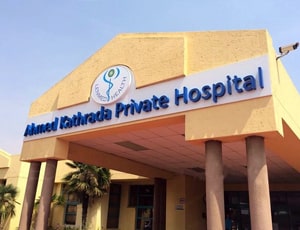
There are several best hospitals for Pacemaker Implantation Surgery in Johannesburg. Some of the best hospitals for Pacemaker Implantation Surgery in Johannesburginclude the following:
After Pacemaker Implantation Surgery in Johannesburg, the patient is supposed to stay in guest house for another 11 days. This duration of stay is recommended to complete all the necessary follow-ups and control tests to ensure that the surgery was successful.
One of the topmost destinations for Pacemaker Implantation Surgery is Johannesburg. It has a variety of accredited hospital, affordable cost of treatment and some of the best medical fraternity. Some of the other destinations that are popular for Pacemaker Implantation Surgery include the following:
There are certain expenses additional to the Pacemaker Implantation Surgery cost that the patient may have to pay for. These charges may vary from 35 USD per person.
The patient has to spend about 3 Days in the hospital after Pacemaker Implantation Surgery for proper recovery and to get clearance for discharge. During the recovery, the patient is carefully monitored and control tests are performed to see that everything is okay. If required, physiotherapy sessions are also planned during recovery in hospital.
Out of all the hospitals in Johannesburg, there are about 1 Hospitals best hospitals for Pacemaker Implantation Surgery in Johannesburg. These hospitals have propoer infrastructure as well as offer good quality of services when it comes to Pacemaker Implantation Surgery surgery. Additionally, these hospitals are known to comply with the international standards as well as local legal requirements for the treatment of patients.
Johannesburg, also known as the “The city of Gold” is located in South Africa and is also fast emerging as a healthcare hub. The Department of Health is in charge of healthcare in Johannesburg. The city lacks a comprehensive healthcare system. Instead, it employs two interconnected systems, a public, and a private healthcare system. The majority of people's care—up to 80% of the population—is under the control of the government. The public healthcare system is underfunded which makes the public prefer the private sector. The private hospitals in Johannesburg have state-of-the-art infrastructure and deliver healthcare as per international standards. Private healthcare is available to everyone in Johannesburg, regardless of nationality. Every year, patients from all over the world especially, the US, the UK, and Europe travel to Johannesburg to receive treatments like heart surgery, hip replacement, and In-vitro fertilization. This could be atttributed to the availability of good quality healthcare at affordable costs in Johannesburg.
The hospitals in Johannesburg have state-of-the-art infrastructure and deliver services as per international standards. Some of the top hospitals in Johannesburg are:
The doctors in Johannesburg are well-trained, competent, and qualified professionals who have completed their education at some of the best universities. Some of the top doctors in Johannesburg are:
You can reach Johannesburg by air, road, or rail. The nearest airport to Johannesburg is the OR Tambo International Airport. If you wish to avail treatment in Johannesburg, then we can help in planning your medical travel.
Johannesburg, also known as the “The city of Gold” is located in South Africa and is also fast emerging as a healthcare hub. The Department of Health is in charge of healthcare in Johannesburg. The city lacks a comprehensive healthcare system. Instead, it employs two interconnected systems, a public, and a private healthcare system. The majority of people's care—up to 80% of the population—is under the control of the government. The public healthcare system is underfunded which makes the public prefer the private sector. The private hospitals in Johannesburg have state-of-the-art infrastructure and deliver healthcare as per international standards. Private healthcare is available to everyone in Johannesburg, regardless of nationality. Every year, patients from all over the world especially, the US, the UK, and Europe travel to Johannesburg to receive treatments like heart surgery, hip replacement, and In-vitro fertilization. This could be atttributed to the availability of good quality healthcare at affordable costs in Johannesburg.
The hospitals in Johannesburg have state-of-the-art infrastructure and deliver services as per international standards. Some of the top hospitals in Johannesburg are:
The doctors in Johannesburg are well-trained, competent, and qualified professionals who have completed their education at some of the best universities. Some of the top doctors in Johannesburg are:
You can reach Johannesburg by air, road, or rail. The nearest airport to Johannesburg is the OR Tambo International Airport. If you wish to avail treatment in Johannesburg, then we can help in planning your medical travel.
Have your reports reviewed by independent oncology experts to help you make a confident treatment decision, all online within 48 hours.
Upload Your Reports