Your Notifications
All done, no notifications

Device Closure of ASD (Amplatzer Septal Occluder) Cost in Saudi Arabia

Costs starts from USD5000 to USD10000
Filters

How Much Does Device Closure of ASD (Amplatzer Septal Occluder) Cost in Saudi Arabia?

The cost of Device Closure of ASD (Amplatzer Septal Occluder) in Saudi Arabia is available on request

Additionally, factors like the duration of treatment, the need for follow-up care, and the use of advanced technologies or specialized treatments can further influence the overall cost.

Factors Influencing the Cost of Device Closure of ASD:

Device closure of an Atrial Septal Defect (ASD) closure is a non-surgical procedure to treat an ASD whereby a faulty septum between the body’s two upper chambers (atria) is sealed. This defect creates a shunt that puts oxygen-rich blood in contact with oxygen-poor blood, which may cause the heart to become enlarged or unsynchronized or cause a stroke. To perform the restoration process, the hole is sealed with a particular object, most of which can be in the form of a plug or an umbrella.

The procedure is generally percutaneous via a catheter introduced into the femoral artery. Then an infiltration stent is advanced within the catheter to the heart the catheter is placed across the ASD and the device is released. After that, the device opens and fixes itself in the heart, sealing the defect.

ASD is closed through tissue which gradually develops to form a cover over the device used to seal the hole permanently. To this effect, device closure is more widely embraced by many patients than traditional surgery because it has minimal complications, a shorter recovery period, and does not require a long hospital stay.

Following is the list of countries and the associated costs for Device Closure of ASD (Amplatzer Septal Occluder):

CountryMinimum CostMinimum Local CurrencyMaximum CostMaximum Local Currency
IndiaUSD 5000INR 415750USD 7000INR 582050
TurkeyUSD 7200TRY 217008USD 8800TRY 265232

Need Help Planning Your Treatment Abroad?

Your 24/7 AI Health Assistant

The procedure closes the atrial septal defect (a hole in the wall between the upper heart chambers). Closing the defect averts potential problems such as right heart enlargement, arrhythmias, stroke, or pulmonary hypertension, especially in moderate to large ASDs.

A visit to the cardiologist is recommended if you experience fatigue, breathlessness, heart palpitations, or recurrent respiratory tract infections. Most ASDs are diagnosed by echocardiography, either in childhood or in adulthood, during one of the evaluations for a murmur or a few symptoms.

The patient may have an echocardiogram (commonly TEE) and chest X-ray; an ECG and blood work are recorded. You will be requested to stop certain medications (if applicable) and fast for about 6 to 8 hours before the procedure. Of course, informed consent is obtained, and the method and its risks will be discussed beforehand.

With sedation or general anesthesia, a catheter is introduced into the groin vein and advanced into the heart. The device is then passed through the ASD and opened to cover the hole. Over time, it becomes incorporated into the septum.

The procedure generally lasts between 1 and 2 hours, and patients undergo monitoring for several hours in recovery. Most patients go home the day after.

  • Device migration
  • Blood clots
  • Arrhythmias
  • Bleeding at the insertion site
  • Rare heart wall erosion

This procedure avoids open-heart surgery, permanently closes the defect, relieves symptoms, averts long-term complications, and thus allows faster rehabilitation into everyday life.

Recovery is fast, and most patients return to normal activities within a week. Blood-thinning agents such as aspirin could be prescribed for several months. Follow-up echocardiography is essential to ensure the device functions properly.

When used for appropriate ASDS, success rates are more than 95%. They provide long-term results as good as surgical closure but with less risk, faster recovery, and fewer complications.

Would you like some help? We are available.

Get Help
Explore Hospitals ( 3 )
Device Closure of ASD (Amplatzer Septal Occluder) in NMC Chronic Care Specialized Hospital: Costs, Top Doctors, and Reviews

Jeddah, Saudi Arabia

NMC Chronic Care Specialized Hospital is a 200-bed long-term acute care (LTAC) facility located in Jeddah, Saudi Arabia. The hospital specializes in providing high-quality inpatient medical and critical care for pediatric, adult, and geriatric patients with long-term and acute healthcare needs. In addition to its inpatient services, NMC Chronic Care operates a stand-alone outpatient dialysis unit, offering specialized care for patients with kidney conditions. The hospital is also known for its comprehensive home healthcare program, delivering essential medical services directly to patients' homes. This includes a range of services such as nursing care, wound care, IV therapy, hemodialysis, physiotherapy, and respiratory care, all tailored to improve the quality of life and promote recovery in the comfort of the patient's environment. With its patient-centered approach and dedicated team of healthcare professionals, NMC Chronic Care Hospital ensures continuous, compassionate care across a variety of medical needs.

Device Closure of ASD (Amplatzer Septal Occluder) in Riyadh Care Hospital: Costs, Top Doctors, and Reviews

Riyadh, Saudi Arabia

  • Joint Commission International, or JCI

Apart from in-detail treatment procedures available, Riyadh Care Hospital located in Riyadh, Saudi Arabia has a wide variety of facilities available for International Patients. Some of the facilities which are provided by them are Accommodation, Airport Transfer, Choice of Meals, Interpreter, SIM, TV inside room. Also listed below are some of the most prominent infrastructural details:

  • This healthcare organisation is equipped with modern and advanced healthcare instruments.
  • Riyadh Care Hospital has a 325 bed capacity.
  • The Department of Emergency and Department of Children Emergency work round the clock to provide the best of emergency care services.
  • Respiratory Therapy and Dialysis Center takes care of the respiratory and renal conditions of the patients.
  • Medical Rehabilitation Center provides the best in class rehabilitation and recovery services to the patients.
  • Laboratory, Blood Bank, Physical Therapy and Radiology departments are also present.
  • Intensive & Medium Care Unit for Children and Newborns and Intensive Care Unit for Cardiac conditions are also worth a mention for the outstanding work they are doing.
  • Pharmacies for inpatients, outpatients and emergencies.
  • The Intensive Care Unit is working to provide care for advanced and critical care.
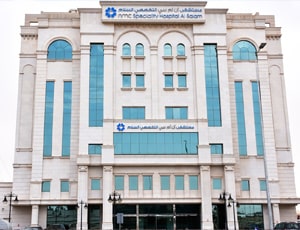
Device Closure of ASD (Amplatzer Septal Occluder) in NMC Specialty Hospital Al Salam: Costs, Top Doctors, and Reviews

Riyadh, Saudi Arabia

Apart from in-detail treatment procedures available, NMC Specialty Hospital Al Salam located in Riyadh, Saudi Arabia has a wide variety of facilities available for International Patients. Some of the facilities which are provided by them are Accommodation, Airport Transfer, Choice of Meals, Interpreter, SIM, TV inside room. Also listed below are some of the most prominent infrastructural details:

  • The hospital is situated at a prime location with easy access from Mecca-Khurais Road and Al-Imam Shafi road
  • 100 Hospital Rooms
  • 25 Intensive Care Units with modern equipment
  • 24-hour Pharmacy
  • 24-hour Emergency Services
  • Laboratory

Need Some Advice From Our Experts?

Request a Call Back Now!

Our team of healthcare experts would be happy to assist you

trusted Patientstrusted Patients+99
Trusted by 50000+ Patients
Required | alphabets and spaces
Required | A valid, working email address
Required | A valid contact

Process Involved for Device Closure of ASD (Amplatzer Septal Occluder) in Saudi Arabia

  • Preoperative Evaluation Stage: Imaging tests are used to detect ASD, its severity is evaluated, and medication may be administered before the surgery.
  • Surgical Planning: Learn about the process, possible risks, and recovery after surgery.
  • Procedure Selection: Anesthesia is given to place the catheter.
  • Device Placement
  • Post-Procedure Monitoring: The patient has a brief hospital stay for observation, during which their vital signs and problems are tracked.
  • Recovery & Follow-Up
  • Atrial Septal Defect (ASD
  • Left-to-Right Shunting
  • Stroke caused by blood clots
  • Right Heart Enlargement
  • Pulmonary Hypertension (Early Stages)
  • Moderate to Large ASD
  • Significant Left-to-Right Shunt
  • shortness of breath, fatigue, irregular heartbeats, or stroke
  • Patients with No Other Major Heart Defects
  • Echocardiography
  • Cardiac Catheterization
  • X-ray Imaging
  • Contrast Echocardiography
  • Electrocardiogram (ECG) Monitoring
  • Minimally Invasive Procedure
  • Prevents Heart Enlargement
  • Lowers Stroke Risk
  • Improves Symptoms & Quality of Life
  • Shorter Hospital Stay & Quick Recovery
  • Interventional Cardiologist
  • Pediatric Cardiologist
  • Radiologist
  • Fill out the inquiry form: Fill out the form to provide us with the relevant information about your condition.
  • Consult with Our Healthcare Expert: One of our qualified specialists will contact you for a consultation.
  • Receive a Detailed Treatment Plan: After examining your situation, we will provide you with a detailed treatment plan that includes expert views and cost breakdowns for various choices.
  • Choose your preferred option: Choose the treatment option that suits you the best.

Instantly Connect with our Device Closure of ASD (Amplatzer Septal Occluder) Specialists

Doctor 1
Doctor 2
Doctor 3
Doctor 4
Doctor 5
Doctor 6
Doctor 7
Doctor 8
Our Services to Better your Experience

Opinion & Option

We submit the most accurate opinion and options from one or more countries for your review

Consult Privately

Consult with a certified specialist privately on our telemedicine platform even before you decide to travel

Logistics

We handle flights, visas, transfers, and accommodation—so you can focus on your health.

Recovery

Our In-house rehabilitation service packages to better your recovery and treatment outcome

Other Popular Countries for Device Closure of ASD (Amplatzer Septal Occluder)

Our network connects you with the leading medical tourism destinations globally, offering a wide range of cities, top doctors, and flexible pricing options.

Malaysia
United Arab Emirates
Singapore
Spain

Frequently Asked Questions

The cost of Device Closure of ASD (Amplatzer Septal Occluder) in Saudi Arabia may differ from one medical facility to the other. The top hospitals for Device Closure of ASD (Amplatzer Septal Occluder) in Saudi Arabia covers all the expenses related to the pre-surgery investigations of the candidate. The comprehensive Device Closure of ASD (Amplatzer Septal Occluder) package cost includes the cost of investigations, surgery, medicines and consumables. Extended hospital stay, complications after the surgery or new diagnosis may affect the overall cost of Device Closure of ASD (Amplatzer Septal Occluder) in Saudi Arabia.

There are several best hospitals for Device Closure of ASD (Amplatzer Septal Occluder) in Saudi Arabia. The following are some of the most renowned hospitals for Device Closure of ASD (Amplatzer Septal Occluder) in Saudi Arabia:

  1. Riyadh Care Hospital
  2. NMC Specialty Hospital Al Salam

After discharge from the hospital, the patient has to stay for another 15 days in the country for complete recovery. During this time, the patient undergoes medical tests and consultations. this is to ensure that the treatment was successful and the patient us safe to return.

While Saudi Arabia is considered to be one of the best destinations for Device Closure of ASD (Amplatzer Septal Occluder) owing to the standard of Hospitals, and expertise of doctors; there are a select few destinations which provide comparable quality of healthcare for this procedure. Some of such countries are:

  1. Poland
  2. Tunisia
  3. Czechia
  4. Turkey
  5. Morocco
  6. Thailand
  7. Singapore
  8. the United Arab Emirates
  9. Malaysia
  10. Switzerland

Apart from the cost of Device Closure of ASD (Amplatzer Septal Occluder), the patient is also required to pay additionally for daily meals and guest house accommodation. These charges may vary starting from USD$ 55 per person.

Device Closure of ASD (Amplatzer Septal Occluder) in Saudi Arabia is offered in almost all metropolitan cities, including the following:

  • Riyadh

The patient has to spend about 3 days in the hospital after Device Closure of ASD (Amplatzer Septal Occluder) for proper recovery and to get clearance for discharge. The doctors team review the patient's recovery during this time with the help of blood tests and imaging scans. Once they feel that everything is on track, the patient is discharged.

Out of all the hospitals in Saudi Arabia, there are about 2 best hospitals for Device Closure of ASD (Amplatzer Septal Occluder). Apart from good services, the hospitals are known to follow all standard and legal guidelines as dictated by the local medical affairs body or organization.

Author

Dr. Abdullah Rahil

MPT (Neuro)

5 Years of Experience

Dr. Abdullah Rahil, M.P.T. (Neurology), is a dedicated physiotherapy professional specializing in orthopedic, neurological, and musculoskeletal rehabilitation. With strong clinical expertise, he focuses on improving patient mobility, reducing pain, and restoring functional independence through evidence-based rehabilitation techniques. He is skilled in advanced therapeutic approaches that support effective rehabilitation and recovery for a wide range of musculoskeletal and neurological conditions, focusing on improving mobility, reducing pain, and restoring functional independence. Dr. Rahil has extensive experience managing diverse rehabilitation cases. His patient-centered approach emphasizes personalized treatment plans, continuous assessment, and comprehensive rehabilitation to achieve optimal recovery outcomes. . View More

Reviewer

Dr. Naresh Kumar Goyal

Cardiologist

21 Years of Experience

Dr. Naresh Kumar Goyal is highly trained as a cardiologist with exposure in virtually all aspects of cardiology. He qualified with an MD in internal medicine in 1999 from SMS Medical College, Jaipur, and served in the Cardiology Department as an honorary resident. From this stage, he also started with training in the temporary pacing of the pacemaker as well as interventional services. View More