Your Notifications
All done, no notifications

CRT - D Cost in South Africa

USD 8000 - USD 30000

Affordable World-class Treatment - Accredited Hospitals - Free Treatment Plan in 24 Hrs

2
Days in Hospital
2-3 hrs
Procedure Time
85 - 95%
Success Rate
JCI/ISO 100,000+ Patients 24X7 Coordinator Visa & Travel handled
Your all-in-one medical travel platform for treatment, recovery & care.

Get Your Personalised Treatment Plan in Just 24 Hours.

Share your details to receive a personalised treatment plan, estimated costs, hospital recommendations, and expert guidance, “completely free.”

Required | alphabets and spaces
Required | A valid, working email address
Required | A valid contact
Connect with an Expert

Your information is protected with HIPAA-compliant security standards. We only share your details with hospitals after your consent.

Estimated Treatment Cost
USD 8000 - USD 30000
All-inclusive • Hospital + Medications + Recovery Assistance + Dedicated Care Coordinator

International Quality. Affordable Care.

What's included in your CRT - D quote?

CRT-D device implantation
fee, CRT-D device, operating room charges
Cardiology consultations
Pre-procedure evaluation, device planning, and post-procedure follow-ups
2–3-day hospital stay
Management
5–7-day in-country follow-up
cardiac assessment, recovery evaluation
Visa & medical-visa invite letter
Airport pickup & transfers

Cost of CRT - D in Major Cities of South Africa

CityCost (USD)
Cape Town $20,000 – $32,000 Explore More
Durban $20,000 – $32,000 Explore More
Johannesburg $20,000 – $32,000 Explore More

Crt D - South Africa Vs the World

$0 - $0
$7k - $25k
$8k - $15k
$10k - $25k
$11k - $25k
$17k - $40k
$17k - $40k
$18k - $32k
$20k - $30k
$25k - $40k
$25k - $40k
$27k - $41k
$35k - $50k
Tanya Bose
Author

MSc Biotechnology

4 Years of Experience

Tanya Bose is a medical content specialist with a strong medical background. She has completed her Bachelor's and Master’s in Biotechnology from Amity University. With a deep understanding of biomedical sciences and research, she develops authoritative and patient-focused medical content covering treatments, surgical procedures, and healthcare innovations. Her writing emphasizes accuracy, clarity, and evidence-based information to help readers better understand complex medical topics. She is dedicated to improving patient awareness and supporting informed healthcare decisions by delivering trustworthy medical insights in a clear and accessible format.
View More
Dr. Naresh Kumar Goyal
Reviewer

Cardiologist

21 Years of Experience

Last Reviewed - June 2026

Dr. Naresh Kumar Goyal is highly trained as a cardiologist with exposure in virtually all aspects of cardiology. He qualified with an MD in internal medicine in 1999 from SMS Medical College, Jaipur, and served in the Cardiology Department as an honorary resident. From this stage, he also started with training in the temporary pacing of the pacemaker as well as interventional services.
View More

Need Help Choosing the Right Treatment? Talk to a Medical Advisor

Our dedicated Medical Patient Advisors are here to answer your questions, help you compare treatment options, estimate costs, and guide you through every step of your healthcare journey.

15 min
Average response time

Serving Patients Worldwide in Multiple Languages.

Certain heart failure patients are managed through cardiac resynchronisation therapy. It enables an improved and organised contraction of the heart's chambers. The heart pumps more effectively into the body due to CRT. To insert a device in the chest for cardiac resynchronisation therapy (CRT), a minimal procedure is required. CRT devices include:

Pacemaker-supported cardiac resynchronisation treatment (CRT-P): This device is designed for patients with abnormal cardiac signals and certain phases of heart failure. It sends signals that make the bottom chambers of the heart beat together. It allows the heart to fill with blood.

Cardiac resynchronisation therapy with a defibrillator (CRT-D).: An implanted cardioverter-defibrillator (ICD) and a pacemaker are employed in this combination device. For patients with heart failure who also are at risk of sudden death, it may be recommended. It can detect and correct life-threatening cardiac rhythms. It can pace the heart or shock the heart out of a life-threatening rhythm.

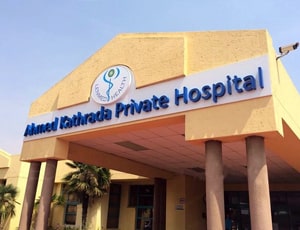
Explore Hospitals ( 4 )

Cape Town, South Africa

212+ Beds · 210+ Procedures
Starting
USD 18000

Johannesburg, South Africa

254+ Beds · 191+ Procedures
COHSASA ISQua
Starting
USD 8000

Johannesburg, South Africa

319+ Beds · 123+ Procedures
COHSASA

Durban, South Africa

4.9 - 1 review · 353+ Beds · 188+ Procedures
Starting
USD 13000

Get Your CRT - D
Plan in 24 hrs.

Our experienced Medical Patient Advisors have supported 100,000+ patients across 120+ countries with personalised treatment plans, hospital recommendations, cost estimates, and travel assistance, all free.

HIPAA-Compliant Data SecurityShared Only with Your Consent

Free Consultation No Obligation Personalized Treatment Plan Response Within 24 Hours

Required | alphabets and spaces
Required | A valid, working email address
Required | A valid contact

Your medical info is kept HIPAA-style confidential. We never share with hospitals without your consent.

Jenny Wilson
Your Dedicated Medical Patient Advisor
Treatment planning • Hospital coordination • Multilingual support • Response within 15 minutes.
Our Services to Better your Experience

Opinion & Option

We submit the most accurate opinion and options from one or more countries for your review

Consult Privately

Consult with a certified specialist privately on our telemedicine platform even before you decide to travel

Logistics

We handle flights, visas, transfers, and accommodation—so you can focus on your health.

Recovery

Our In-house rehabilitation service packages to better your recovery and treatment outcome

Patient Stories

Mr Hailu Kassa : CABG Surgery
Mr Hailu Kassa
Mr Hailu Kassa : CABG Surgery

Mr. Hailu Kassa underwent Coronary Artery Bypass Surgery in Vejthani Hospital, Thailand under the supervision of Dr. Piya, Cardio-Thoracic Surgeon

Rod Schaubroeck
Rod Schaubroeck
Rod Schaubroeck : Double Valve Replacement

Patient Testimonial: Rod Schaubroeck from United States (U.S.A) underwent heart valve replacement at Fortis Hospital, India

Frequently Asked Questions

The cost of cardiac resynchronisation therapy with a defibrillator (CRT-D) in South Africa may vary depending on the type of device, number and type of leads, cardiac condition, complexity of implantation, hospital charges, electrophysiologist’s fees, diagnostic investigations, and follow-up requirements. The overall cost may include cardiac evaluation, device implantation, CRT-D generator and leads, hospitalisation, medications, device programming, and follow-up care.MediGence can help international patients explore suitable cardiac electrophysiology centres and obtain an estimated treatment plan based on the patient’s clinical condition.

The best hospitals in South Africa for CRT-D implantation are those with experienced cardiac electrophysiologists, heart failure specialists, interventional cardiologists, cardiac anaesthesiologists, and multidisciplinary cardiac teams. Patients should consider hospitals with dedicated electrophysiology laboratories, advanced cardiac imaging, device implantation facilities, cardiac intensive care, and long-term device monitoring services.

Patients should choose a cardiac electrophysiologist experienced in CRT-D implantation and the management of heart failure and cardiac rhythm disorders. Important factors include the doctor’s experience with complex device implantation, coronary sinus lead placement, device programming, management of lead-related complications, and long-term follow-up.The treating team should assess left ventricular ejection fraction, QRS duration and morphology, heart failure symptoms, cardiac rhythm, and response to guideline-directed medical therapy before recommending CRT-D.

CRT-D has an overall success rate of approximately 70–80%, depending on the patient’s heart failure severity, left ventricular function, QRS characteristics, cardiac rhythm, underlying heart disease, lead placement, and response to cardiac resynchronisation therapy. Outcomes may include improved ventricular synchrony, reduced heart failure symptoms, and a lower risk of life-threatening ventricular arrhythmias in appropriately selected patients.

Hospitals in South Africa may use fluoroscopy, three-dimensional electroanatomical mapping, intracardiac imaging, coronary sinus venography, advanced lead-delivery systems, and remote device monitoring.CRT-D combines cardiac resynchronisation therapy with an implantable cardioverter-defibrillator. The device coordinates the contraction of the heart’s ventricles through pacing and can detect and treat life-threatening ventricular tachyarrhythmias using antitachycardia pacing or defibrillation therapy.Depending on the patient’s condition, conduction system pacing, including His-bundle pacing or left bundle branch area pacing, may be considered in selected cases.

Possible risks and complications may include:
  • Bleeding, bruising, or haematoma at the implantation site
  • Infection involving the device pocket or leads
  • Lead displacement, fracture, or malfunction
  • Pneumothorax or lung injury
  • Cardiac perforation or pericardial effusion
  • Blood clot formation
  • Inappropriate or unnecessary defibrillator shocks
  • Failure to achieve adequate cardiac resynchronisation
  • Persistent or worsening heart failure symptoms
  • Need for lead revision or device replacement
  • Risks related to sedation or anaesthesia
  • The treating cardiac team will explain the potential risks based on the patient’s heart condition and planned device implantation.

    Patients should share all relevant medical records with the treating cardiac team before travelling. These may include echocardiography reports, electrocardiograms, Holter monitoring reports, cardiac MRI or CT findings, previous device records, heart failure treatment history, blood test results, and information about current medications and allergies.Patients should also discuss the expected hospital stay, device monitoring, wound care, activity restrictions, travel clearance, and follow-up plan before making travel arrangements.

    Yes. International patients can arrange an online consultation with a cardiac electrophysiologist or heart failure specialist before travelling to South Africa. The specialist may review heart failure symptoms, ejection fraction, ECG findings, QRS duration, cardiac rhythm, previous treatments, and overall health to determine whether CRT-D may be appropriate.MediGence can help coordinate online consultations and facilitate the sharing of relevant medical records with suitable specialists.

    International patients should carry a valid passport and relevant medical documents, including:
  • Echocardiography reports
  • Electrocardiogram and Holter monitoring reports
  • Cardiac MRI or CT reports, if available
  • Previous pacemaker, ICD, or device records
  • Heart failure treatment and cardiology records
  • Recent blood test results
  • Current prescriptions and medication details
  • Allergy and medical history records
  • The required stay in South Africa depends on the complexity of device implantation, the patient’s cardiac condition, and postoperative recovery. CRT-D implantation generally involves a short hospital stay followed by device interrogation, lead assessment, wound evaluation, and clinical monitoring.Patients may need to remain in South Africa until the device is functioning appropriately, the implantation site is stable, and the treating team confirms that the patient is fit to travel.

    Recovery after CRT-D implantation is generally gradual. Patients may experience mild discomfort or swelling at the implantation site during the initial recovery period. Temporary restrictions on heavy lifting and excessive arm movement may be advised to allow the leads and device pocket to heal.Regular device checks, medication management, and heart failure follow-up are required. The recovery timeline depends on the patient’s cardiac condition and response to therapy.

    If complications occur, patients should contact the treating cardiac team or seek urgent medical attention. Immediate evaluation may be required for fever, increasing pain, swelling, redness, or discharge at the device site, severe breathlessness, chest pain, fainting, rapid heartbeat, repeated device shocks, or sudden worsening of heart failure symptoms.Patients should receive clear discharge instructions and a detailed device-monitoring and cardiac follow-up plan before returning home.

    International patients can submit their medical details and relevant cardiac reports through the MediGence website. Following an initial review, the MediGence care team can help patients explore suitable cardiac hospitals and experienced electrophysiologists, coordinate consultations, and support treatment and medical travel planning.The final treatment recommendation is made by the treating cardiac team after a detailed clinical evaluation.

    International patients may choose South Africa for access to experienced cardiac electrophysiologists, advanced electrophysiology laboratories, modern CRT-D systems, specialised heart failure programmes, remote device monitoring, and comprehensive cardiac follow-up. The destination should be evaluated based on clinical expertise, device availability, patient safety standards, and long-term monitoring support.

    Treatment options depend on the patient’s heart failure severity, left ventricular function, cardiac rhythm, QRS characteristics, and risk of ventricular arrhythmias. Options may include:
  • Guideline-directed medical therapy for heart failure
  • Cardiac resynchronisation therapy with a pacemaker (CRT-P)
  • Cardiac resynchronisation therapy with a defibrillator (CRT-D)
  • Implantable cardioverter-defibrillator (ICD)
  • His-bundle pacing or left bundle branch area pacing
  • Catheter ablation for selected arrhythmias
  • Coronary revascularisation, when clinically indicated
  • Mechanical circulatory support
  • Heart transplantation in selected patients
  • Cardiac rehabilitation and long-term device monitoring
  • The treating cardiac team will recommend the most appropriate treatment after reviewing the patient’s heart function, ECG findings, symptoms, and overall clinical condition.

    International patients may choose South Africa for access to specialised cardiac electrophysiology centres, experienced device implantation specialists, advanced CRT-D technology, comprehensive heart failure management, and long-term device monitoring services.MediGence can assist with hospital and specialist selection, medical record coordination, consultation scheduling, treatment planning, and travel-related support. The final destination should be selected according to the patient’s cardiac condition, device requirements, follow-up needs, and the hospital’s expertise in CRT-D implantation.

    Not Sure About Your Treatment Plan? Get a Free Second Opinion

    Have your reports reviewed by independent oncology experts to help you make a confident treatment decision, all online within 48 hours.

    Upload Your Reports
    Free second opinion on your CAR-T plan