Your Notifications
All done, no notifications

CABG - Redo Cost in Herzliya

USD 55000 - USD 80000

Affordable World-class Treatment - Accredited Hospitals - Free Treatment Plan in 24 Hrs

7
Days in Hospital
4-8 hrs
Procedure Time
70 - 90%
Success Rate
CABG - High Risk | MediGence
JCI/ISO 100,000+ Patients 24X7 Coordinator Visa & Travel handled
Your all-in-one medical travel platform for treatment, recovery & care.

Get Your Personalised Treatment Plan in Just 24 Hours.

Share your details to receive a personalised treatment plan, estimated costs, hospital recommendations, and expert guidance, “completely free.”

Required | alphabets and spaces
Required | A valid, working email address
Required | A valid contact
Connect with an Expert

Your information is protected with HIPAA-compliant security standards. We only share your details with hospitals after your consent.

Estimated Treatment Cost
USD 55000 - USD 80000
All-inclusive • Hospital + Medications + Recovery Assistance + Dedicated Care Coordinator

International Quality. Affordable Care.
Dr. Vishwas Kaushik
Author

MBBS, MD

7 Years of Experience

Last Reviewed - June 2026

Dr. Vishwas Kaushik is a qualified medical professional holding an MBBS from the prestigious Belgorod State University, Russia, with a strong foundation in clinical medicine and healthcare practice. His comprehensive medical training has equipped him with a profound understanding of evidence-based clinical practices, patient-centered care, and the evolving landscape of modern medicine. With a keen interest in medical research and scientific communication, he consistently translates complex clinical concepts into clear, accurate, and accessible content for diverse audiences. His work reflects a deep commitment to advancing medical knowledge, delivering impactful healthcare insights, and bridging the gap between clinical expertise and accessible medical communication.
View More
Dr. Naresh Kumar Goyal
Reviewer

Cardiologist

21 Years of Experience

Last Reviewed - June 2026

Dr. Naresh Kumar Goyal is highly trained as a cardiologist with exposure in virtually all aspects of cardiology. He qualified with an MD in internal medicine in 1999 from SMS Medical College, Jaipur, and served in the Cardiology Department as an honorary resident. From this stage, he also started with training in the temporary pacing of the pacemaker as well as interventional services.
View More

Need Help Choosing the Right Treatment? Talk to a Medical Advisor

Our dedicated Medical Patient Advisors are here to answer your questions, help you compare treatment options, estimate costs, and guide you through every step of your healthcare journey.

15 min
Average response time

Serving Patients Worldwide in Multiple Languages.

Coronary artery bypass graft surgery (CABG) is performed to address coronary artery disease (CAD), which occurs when the coronary arteries become narrowed due to the accumulation of fatty material within their walls. These arteries are responsible for supplying oxygen and nutrients to the heart muscle. As CAD progresses, it restricts the flow of oxygen-rich blood to the heart, potentially leading to various heart-related complications.

Traditionally, to bypass a blocked coronary artery, surgeons would make a large incision in the chest and temporarily stop the heart. The breastbone (sternum) is then split lengthwise and spread apart to access the heart. Tubes are inserted into the heart to allow blood to be pumped through a heart-lung bypass machine, which maintains circulation while the heart is stopped.

While this traditional open-heart procedure is still commonly performed and may be preferred in many cases, less invasive methods have been developed. Off-pump procedures, introduced in the 1990s, eliminate the need to stop the heart. Additionally, minimally invasive techniques like keyhole surgery (using small incisions) and robotic-assisted procedures (utilizing a mechanical device) offer alternative approaches for bypassing blocked coronary arteries.

Why one might need CABG?

it is necessary to address blockages or narrowing in one or more coronary arteries. When nonsurgical treatments are not viable options, CABG becomes essential to restore proper blood flow to the heart muscle.

Redo CABG is done when previously grafted bypass vessels fail or when new blockages appear in the coronary arteries. In general, the procedure will have to be undertaken if the patient relapses with chest pain and could be at risk of a heart attack or worsening heart disease.

Patients diagnosed with chest pains, breathlessness, fatigue, or any suspected cardiac symptoms after having undergone a previous bypass operation should urgently see a cardiologist; early evaluation will prevent possible complications from occurring.

You may be required to undergo some special medical tests, discontinue some medications, and control other health conditions such as diabetes or hypertension. You are usually advised to fast before surgery and to look for support to help you after the procedure.

CABG procedures are done with the patient under general anesthesia. The surgeon may choose to reopen the old chest incision combined with sternotomy, or any other method deemed suitable. New grafts are put down to bypass the blocked arteries, possibly while the patient is on the heart-lung machine.

Under usual circumstances, the time lies between 4 and 6 hours.

  • Bleeding
  • Infection
  • Stroke or heart attack
  • Kidney dysfunction
  • Graft failure
  • Respiratory issues
  • Arrhythmias
  • Death (rare but higher than first-time CABG)

Studies have suggested that redo CABG may benefit patients by improving blood flow, reducing symptoms, and enhancing the quality of life. Additionally, in many cases, it could lower one's chance of having a heart attack.

Generally, the patient remains in the ICU for 1 to 2 days and in the hospital for about a week. There is a 6- to 12-week period when full recovery occurs, during which cardiac rehab will help build endurance and strength.

The success rate is between 70% and 90%, depending on individual health factors.

85–95%

Success rate for redo CABG in appropriately selected patients

7–10 days

Typical hospital stay

8–12 weeks

Return to normal daily activities depending on recovery and cardiac rehabilitation
Explore Hospitals ( 1 )

Herzliya, Israel

120+ Beds · 213+ Procedures
Starting
USD 40000

Get Your CABG - Redo
Plan in 24 hrs.

Our experienced Medical Patient Advisors have supported 100,000+ patients across 120+ countries with personalised treatment plans, hospital recommendations, cost estimates, and travel assistance, all free.

HIPAA-Compliant Data SecurityShared Only with Your Consent

Free Consultation No Obligation Personalized Treatment Plan Response Within 24 Hours

Required | alphabets and spaces
Required | A valid, working email address
Required | A valid contact

Your medical info is kept HIPAA-style confidential. We never share with hospitals without your consent.

Process Involved for CABG - Redo in Herzliya

  • Evaluation & Preparatory Stage: This includes reviewing the patient's medical history, diagnostic testing, comorbidity assessment, medication optimisation, and surgical approach planning.
  • Redo CABG Procedure: It involves administering anesthesia, performing surgery, and assessing heart function before concluding the procedure.
  • Postoperative Stage: Intensive Monitoring, Pain & Infection Management
  • Rehabilitation & Lifestyle Modification
  • Graft Failure or Occlusion
  • Progression of Native Coronary Artery Disease (CAD)
  • Severe Recurrent Angina
  • Heart Attack
  • Ischemic Heart Failure
  • Progression of Coronary Artery Disease (CAD)
  • Graft Failure
  • Severe Angina
  • Heart Attack
  • Repair or Replacement of Valve
  • Surgical removal of Plaque (Coronary Endarterectomy)
  • Aortic Aneurysm Repair
  • Left Ventricular Assist Device (LVAD) Placement (In advanced heart failure patients)
  • Pacemaker Implantation
  • Restores Blood Flow to the Heart
  • Relieves Chest Pain
  • Prevents Heart Attack
  • Increases Longevity and Quality of Life
  • Improves Heart Function
  • Enhances Energy & Activity Levels
  • Cardiac Surgeon
  • Interventional Cardiologist
  • Perfusionist
  • Intensive Care Specialists
  • Cardiologist ( for follow-up)
  • Physiotherapist
  • Rehabilitation Specialists
  • Fill out the inquiry form: Fill out the form to provide us with the relevant information about your condition.
  • Consult with Our Healthcare Expert: One of our qualified specialists will contact you for a consultation.
  • Receive a Detailed Treatment Plan: After examining your situation, we will provide you with a detailed treatment plan that includes expert views and cost breakdowns for various choices.
  • Choose your preferred option: Choose the therapy option that best suits you.
Jenny Wilson
Your Dedicated Medical Patient Advisor
Treatment planning • Hospital coordination • Multilingual support • Response within 15 minutes.
Our Services to Better your Experience

Opinion & Option

We submit the most accurate opinion and options from one or more countries for your review

Consult Privately

Consult with a certified specialist privately on our telemedicine platform even before you decide to travel

Logistics

We handle flights, visas, transfers, and accommodation—so you can focus on your health.

Recovery

Our In-house rehabilitation service packages to better your recovery and treatment outcome

Patient Stories

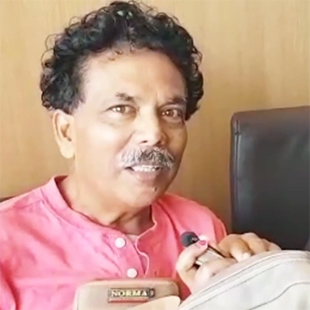
Prithiviraj Bhurtun for Redo-CABG in India
Prithiviraj Bhurtun
Prithiviraj Bhurtun for Redo-CABG in India

This is the testimonial of Mr. Prithiviraj Bhurtun, a heart patient from Mauritius. He had already undergone a Heart Bypass…

Frequently Asked Questions

The cost of CABG - Redo procedure starts from $40000 in Herzliya. JCI are just some of the accreditations which top hospitals in Herzliya hold where a CABG - Redo is conducted.

The cost of CABG - Redo in Herzliya may differ from one medical facility to the other. There are many hospital who cover the cost of pre-surgical investigations of the patient in the treatment package. The treatment cost usually includes the expenses related to hospitalization, surgery, nursing, medicines, and anesthesia. A prolonged hospital stay due to delayed recovery, new diagnosis and complications after surgery may increase the cost of CABG - Redo in Herzliya.

CABG - Redo in Herzliya is offered by multiple hospitals across the country. For quick reference, the following are some of the leading hospitals for CABG - Redo in Herzliya:

The recovery of the patient many vary, depending on several factors. However, on an average, patient is supposed to stay for about 21 days in the country after discharge. This is important to ensure that the surgery was successful. During this time, control and follow-up tests take place to check for medical fitness.

Herzliya is undoubtedly one of the best cities for CABG - Redo in the world. It offers the best medical expertise and good patient experience at an affordable cost. there are a select few destinations that provide comparable quality of healthcare for the procedure. Some of such cities are:

Apart from the CABG - Redo cost, there are a few other daily charges that the patient may have to pay. These charges may vary from 75 USD per person.

After CABG - Redo surgery, the patient is supposed to stay for about 7 Days in the hospital for recovery and monitoring. The patient is subjected to several biochemistry and radiological scans to see that everything is okay and the recovery is on track. After making sure that patient is clinically stable, discharge is planned.

There are about 1 Hospitals CABG - Redo hospitals in Herzliya that are best known for their services. These hospitals have proper infrastructure for the treatment of patients who require CABG - Redo. Also, these hospitals follow the necessary guidelines as required by the medical associations for the treatment of CABG - Redo patients.

Some of the most sought after doctors for CABG - Redo in Herzliya are:

Not Sure About Your Treatment Plan? Get a Free Second Opinion

Have your reports reviewed by independent oncology experts to help you make a confident treatment decision, all online within 48 hours.

Upload Your Reports
Free second opinion on your CAR-T plan