Browse verified doctors or let our care team help you find the doctor best suited to your condition, treatment goals, and budget.

Apollo Hospitals provides dedicated Nephrectomy services with an emphasis on surgical precision, kidney-function preservation, and comprehensive patient care. Established in 1988, the JCI accredited hospital is based in Hyderabad, India and has 550 beds supported by modern urology and renal treatment facilities.
Nephrectomy is commonly used when removal of kidney tissue is necessary because of serious disease or irreversible damage. The extent of surgery depends on the patient's diagnosis, kidney function, and overall health. A partial procedure removes the diseased section while retaining the remaining kidney, whereas a radical procedure removes the complete kidney. Preoperative imaging and laboratory tests help surgeons plan the operation, while follow-up care focuses on recovery and maintaining the function of the remaining renal tissue.
Star Hospitals offers specialized Nephrectomy with experienced urological specialists, advanced operating facilities, and structured postoperative monitoring. Established in 2008, the NABH, NABL accredited hospital is situated in Hyderabad, India and has 435 beds supporting comprehensive surgical services.
Nephrectomy may be considered when a kidney is affected by cancer, extensive injury, serious infection, or another condition that cannot be adequately managed with conservative treatment. Depending on the extent of disease, the surgeon may remove only the affected portion of the kidney or the entire organ. Minimally invasive approaches, including laparoscopic or robotic surgery, may be suitable for selected patients and can help reduce surgical trauma and support recovery.
Choosing Sterling Wockhardt Hospital for Nephrectomy gives patients access to specialist-led kidney surgery, modern diagnostic technology, and coordinated postoperative care. Established in 2001, the NABL accredited hospital is located in Mumbai, India and operates 225 beds with advanced healthcare facilities.
Nephrectomy is performed to surgically remove a kidney or a portion of it when treatment requires removal of diseased tissue. In cases involving localized kidney tumors, partial nephrectomy may help preserve as much healthy kidney tissue as possible. Radical nephrectomy may be required when the disease involves a larger or more extensive portion of the kidney. After surgery, patients are monitored for recovery, kidney function, pain, and other potential complications.
nanavati Super Speciality Hospital provides dedicated Nephrectomy services with an emphasis on surgical precision, kidney-function preservation, and comprehensive patient care. Established in 1950, the NABH accredited hospital is based in Mumbai, India and has 350 beds supported by modern urology and renal treatment facilities.
Nephrectomy is commonly used when removal of kidney tissue is necessary because of serious disease or irreversible damage. The extent of surgery depends on the patient's diagnosis, kidney function, and overall health. A partial procedure removes the diseased section while retaining the remaining kidney, whereas a radical procedure removes the complete kidney. Preoperative imaging and laboratory tests help surgeons plan the operation, while follow-up care focuses on recovery and maintaining the function of the remaining renal tissue.
The London Clinic provides dedicated Nephrectomy services with an emphasis on surgical precision, kidney-function preservation, and comprehensive patient care. Established in , the JCI accredited hospital is based in London, United Kingdom and has 234 beds supported by modern urology and renal treatment facilities.
Nephrectomy is commonly used when removal of kidney tissue is necessary because of serious disease or irreversible damage. The extent of surgery depends on the patient's diagnosis, kidney function, and overall health. A partial procedure removes the diseased section while retaining the remaining kidney, whereas a radical procedure removes the complete kidney. Preoperative imaging and laboratory tests help surgeons plan the operation, while follow-up care focuses on recovery and maintaining the function of the remaining renal tissue.
Farrer Park Hospital offers specialized Nephrectomy with experienced urological specialists, advanced operating facilities, and structured postoperative monitoring. Established in 2016, the accredited hospital is situated in Singapore, Singapore and has 220 beds supporting comprehensive surgical services.
Nephrectomy may be considered when a kidney is affected by cancer, extensive injury, serious infection, or another condition that cannot be adequately managed with conservative treatment. Depending on the extent of disease, the surgeon may remove only the affected portion of the kidney or the entire organ. Minimally invasive approaches, including laparoscopic or robotic surgery, may be suitable for selected patients and can help reduce surgical trauma and support recovery.
Venkateshwar Hospital provides specialized Nephrectomy with a focus on safe kidney removal, precise surgical techniques, and individualized treatment planning. Established in 2016, the NABL, NABH accredited hospital is located in Delhi, India and operates 325 beds with advanced urological and surgical infrastructure.
Nephrectomy involves the surgical removal of part or all of a kidney and may be recommended for conditions such as kidney cancer, severe kidney damage, recurrent infection, or a non-functioning kidney. Depending on the patient's condition, surgeons may perform a partial nephrectomy to preserve healthy kidney tissue or a radical nephrectomy to remove the entire kidney. The procedure may be performed through open or minimally invasive techniques, followed by monitoring of kidney function during recovery.
At Primus Super Speciality Hospital, Nephrectomy is performed using modern surgical approaches and personalized care based on the underlying kidney condition. Established in 2001, the NABH accredited hospital in Delhi, India has 250 beds and provides comprehensive urological and renal care.
Nephrectomy is a surgical procedure used to remove a diseased or damaged kidney, either partially or completely. A partial nephrectomy may be selected when preserving functioning kidney tissue is appropriate, while radical nephrectomy removes the affected kidney and may also involve surrounding tissues depending on the disease. Before surgery, patients generally undergo imaging, blood tests, and kidney-function assessment to help determine the most suitable surgical approach.
Medical Park Trabzon Star Hospital provides dedicated Nephrectomy services with an emphasis on surgical precision, kidney-function preservation, and comprehensive patient care. Established in 2011, the JCI accredited hospital is based in Trabzon, Turkey and has 120 beds supported by modern urology and renal treatment facilities.
Nephrectomy is commonly used when removal of kidney tissue is necessary because of serious disease or irreversible damage. The extent of surgery depends on the patient's diagnosis, kidney function, and overall health. A partial procedure removes the diseased section while retaining the remaining kidney, whereas a radical procedure removes the complete kidney. Preoperative imaging and laboratory tests help surgeons plan the operation, while follow-up care focuses on recovery and maintaining the function of the remaining renal tissue.
At VM Medical Park Ankara, Nephrectomy is performed using modern surgical approaches and personalized care based on the underlying kidney condition. Established in 2014, the JCI accredited hospital in Ankara, Turkey has 327 beds and provides comprehensive urological and renal care.
Nephrectomy is a surgical procedure used to remove a diseased or damaged kidney, either partially or completely. A partial nephrectomy may be selected when preserving functioning kidney tissue is appropriate, while radical nephrectomy removes the affected kidney and may also involve surrounding tissues depending on the disease. Before surgery, patients generally undergo imaging, blood tests, and kidney-function assessment to help determine the most suitable surgical approach.
Avcilar Anadolu Hospital provides dedicated Nephrectomy services with an emphasis on surgical precision, kidney-function preservation, and comprehensive patient care. Established in 1998, the JCI accredited hospital is based in Istanbul, Turkey and has 120 beds supported by modern urology and renal treatment facilities.
Nephrectomy is commonly used when removal of kidney tissue is necessary because of serious disease or irreversible damage. The extent of surgery depends on the patient's diagnosis, kidney function, and overall health. A partial procedure removes the diseased section while retaining the remaining kidney, whereas a radical procedure removes the complete kidney. Preoperative imaging and laboratory tests help surgeons plan the operation, while follow-up care focuses on recovery and maintaining the function of the remaining renal tissue.
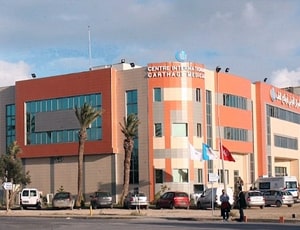
Choosing Carthage International Medical Center for Nephrectomy gives patients access to specialist-led kidney surgery, modern diagnostic technology, and coordinated postoperative care. Established in 2014, the JCI accredited hospital is located in Monastir, Tunisia and operates 120 beds with advanced healthcare facilities.
Nephrectomy is performed to surgically remove a kidney or a portion of it when treatment requires removal of diseased tissue. In cases involving localized kidney tumors, partial nephrectomy may help preserve as much healthy kidney tissue as possible. Radical nephrectomy may be required when the disease involves a larger or more extensive portion of the kidney. After surgery, patients are monitored for recovery, kidney function, pain, and other potential complications.
At Werndale Hospital, Nephrectomy is performed using modern surgical approaches and personalized care based on the underlying kidney condition. Established in 1991, the accredited hospital in Carmarthen, United Kingdom has 19 beds and provides comprehensive urological and renal care.
Nephrectomy is a surgical procedure used to remove a diseased or damaged kidney, either partially or completely. A partial nephrectomy may be selected when preserving functioning kidney tissue is appropriate, while radical nephrectomy removes the affected kidney and may also involve surrounding tissues depending on the disease. Before surgery, patients generally undergo imaging, blood tests, and kidney-function assessment to help determine the most suitable surgical approach.
Ekol provides dedicated Nephrectomy services with an emphasis on surgical precision, kidney-function preservation, and comprehensive patient care. Established in 2000, the ISO accredited hospital is based in Izmir, Turkey and it has adequate bed capacity supported by modern urology and renal treatment facilities.
Nephrectomy is commonly used when removal of kidney tissue is necessary because of serious disease or irreversible damage. The extent of surgery depends on the patient's diagnosis, kidney function, and overall health. A partial procedure removes the diseased section while retaining the remaining kidney, whereas a radical procedure removes the complete kidney. Preoperative imaging and laboratory tests help surgeons plan the operation, while follow-up care focuses on recovery and maintaining the function of the remaining renal tissue.
Arab Medical Center provides dedicated Nephrectomy services with an emphasis on surgical precision, kidney-function preservation, and comprehensive patient care. Established in 1997, the JCI accredited hospital is based in Amman, Jordan and has 243 beds supported by modern urology and renal treatment facilities.
Nephrectomy is commonly used when removal of kidney tissue is necessary because of serious disease or irreversible damage. The extent of surgery depends on the patient's diagnosis, kidney function, and overall health. A partial procedure removes the diseased section while retaining the remaining kidney, whereas a radical procedure removes the complete kidney. Preoperative imaging and laboratory tests help surgeons plan the operation, while follow-up care focuses on recovery and maintaining the function of the remaining renal tissue.
| Speciality | Urology |
| Procedure | Nephrectomy |
| Success Rate | Varies by condition |
| Recovery Time | 4-6 weeks |
| Treatment Time | 2-3 hours |
| Chances of Recurrence | Varies by condition |