Batra Hospital provides specialised transplant-related services, offering comprehensive pre- and post-transplant care. Multidisciplinary teams manage patient evaluation, immunosuppressive therapy, and long-term follow-up. Emphasis is placed on patient safety, continuity of care, and management of transplant-related complications to improve survival and quality of life.

Seven Hills Hospital offers an extensive transplant program covering liver, heart, kidney, bone marrow, and corneal transplants in India. The hospital features dedicated transplant operating rooms and ICUS, equipped with advanced technology to ensure optimal care. With a team of experienced surgeons and specialists, including haematologists for bone marrow transplants, the hospital provides expert care for complex cases. It has accomplished notable milestones, such as over 1,000 successful kidney transplants. Highlighting patient-centric and affordable care, Seven Hills delivers high-quality treatment outcomes.
Accredited by JCI, NABH, and NABL, it upholds international standards of safety and medical excellence in all transplant services for patients worldwide.

The Transplant Department at Wockhardt Hospital, a New Age Hospital in India, manages complex organ transplants, including kidney, liver, heart, lung, pancreas, and intestine.
The process involves thorough recipient evaluation, donor matching (living or cadaveric), and advanced surgical procedures followed by lifelong immunosuppressive therapy to prevent rejection. A multidisciplinary team of transplant surgeons, hepatologists, nephrologists, immunologists, and coordinators ensures comprehensive care. Each transplant type requires specific eligibility assessments, counselling, and nutritional planning. Post-transplant monitoring is essential to manage complications such as rejection, infection, and medication side effects.
Accredited by NABH, JCI, QAI, and NABL, Wockhardt Hospitals in Mumbai uphold world-class standards in transplant care.

Sri Ramachandra Medical Centre offers an extensive transplant program covering liver, heart, kidney, bone marrow, and corneal transplants in India. The hospital features dedicated transplant operating rooms and ICUS, equipped with advanced technology to ensure optimal care. With a team of experienced surgeons and specialists, including haematologists for bone marrow transplants, the hospital provides expert care for complex cases. It has accomplished notable milestones, such as over 1,000 successful kidney transplants. Highlighting patient-centric and affordable care, SRMC delivers high-quality treatment outcomes.
Accredited by JCI, NABH, and NABL, it upholds international standards of safety and medical excellence in all transplant services for patients worldwide.

Jaypee Hospital in Noida offers an extensive transplant program covering liver, heart, kidney, bone marrow, and corneal transplants in India. The hospital features dedicated transplant operating rooms and ICUS, equipped with advanced technology to ensure optimal care. With a team of experienced surgeons and specialists, including haematologists for bone marrow transplants, the hospital provides expert care for complex cases. It has accomplished notable milestones, such as over 1,000 successful kidney transplants. Highlighting patient-centric and affordable care, Jaypee Hospital delivers high-quality treatment outcomes.
Accredited by JCI, NABH, and NABL, it upholds international standards of safety and medical excellence in all transplant services for patients worldwide.

Fortis Hiranandani Hospital offers an extensive transplant program covering liver, heart, kidney, bone marrow, and corneal transplants in India. The hospital features dedicated transplant operating rooms and ICUS, equipped with advanced technology to ensure optimal care. With a team of experienced surgeons and specialists, including haematologists for bone marrow transplants, the hospital provides expert care for complex cases. It has accomplished notable milestones, such as over 1,000 successful kidney transplants. Highlighting patient-centric and affordable care, Fortis Hiranandani Hospital delivers high-quality treatment outcomes.
Accredited by JCI, NABH, and NABL, it upholds international standards of safety and medical excellence in all transplant services for patients worldwide.

The Fortis Hospital, Shalimar Bagh, Delhi, Transplant Department provides full-service organ transplantation, including bone marrow, liver, and kidney transplants.
With its cutting-edge facilities and staff of skilled transplant doctors, the department guarantees high success rates and individualised treatment for transplant recipients.
The hospital has received six JCI and four NABH accreditations, indicating that it upholds strict quality standards in healthcare provision. Its superiority in transplant services has also earned it recognition from MTQUA as one of the world's leading medical tourism destinations.

Aakash Healthcare Super Speciality Hospital offers an extensive transplant program covering liver, heart, kidney, bone marrow, and corneal transplants in India. The hospital features dedicated transplant operating rooms and ICUS, equipped with advanced technology to ensure optimal care. With a team of experienced surgeons and specialists, including haematologists for bone marrow transplants, the hospital provides expert care for complex cases. It has achieved notable milestones, including over 1,000 successful kidney transplants. Highlighting patient-centric and affordable care, Aakash Healthcare Super Speciality Hospital delivers high-quality treatment outcomes.
Accredited by NABH and NABL, it upholds international standards of safety and medical excellence in all transplant services for patients worldwide. It serves individuals worldwide with comprehensive surgical expertise and patient-centred care.

Aster Medcity offers an extensive transplant program covering liver, heart, kidney, bone marrow, and corneal transplants in India. The hospital features dedicated transplant operating rooms and ICUS, equipped with advanced technology to ensure optimal care. With a team of experienced surgeons and specialists, including haematologists for bone marrow transplants, the hospital provides expert care for complex cases. It has accomplished notable milestones, such as over 1,000 successful kidney transplants. Highlighting patient-centric and affordable care, Aster Medcity delivers high-quality treatment outcomes.
Accredited by JCI and NABH, Aster Medcity maintains high standards of quality and patient safety. It serves individuals worldwide with comprehensive surgical expertise and patient-centred care. It is certified for Nursing Excellence and Green Operation Theatres.

Pushpawati Singhania Research Institute (PSRI) offers an extensive transplant program covering liver, heart, kidney, bone marrow, and corneal transplants in India. The hospital features dedicated transplant operating rooms and ICUS, equipped with advanced technology to ensure optimal care. With a team of experienced surgeons and specialists, including haematologists for bone marrow transplants, the hospital provides expert care for complex cases. Since 2004, the hospital has completed 1000 kidney transplants, including complex procedures like ABO-incompatible and swap transplants. Highlighting patient-centric and affordable care, Pushpawati Singhania Research Institute (PSRI) delivers high-quality treatment outcomes.
Accredited by NABH and NABL, PSRI maintains high standards of quality and patient safety. It serves individuals worldwide with comprehensive surgical expertise and patient-centred care. Reflecting its commitment to excellence in healthcare services.

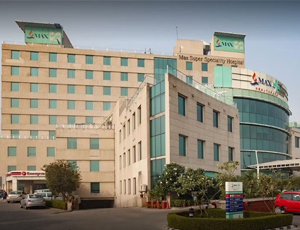
Max Smart Super Speciality Hospital offers an extensive transplant program covering liver, heart, kidney, bone marrow, and corneal transplants in India. The hospital features dedicated transplant operating rooms and ICUS, equipped with advanced technology to ensure optimal care. With a team of experienced surgeons and specialists, including haematologists for bone marrow transplants, the hospital provides expert care for complex cases. It has accomplished notable milestones, such as over 1200 successful kidney transplants. Highlighting patient-centric and affordable care, Max Smart Super Speciality Hospital delivers high-quality treatment outcomes.
Max Smart Super Speciality Hospital in Saket, New Delhi, is accredited by the Joint Commission International (JCI) and the National Accreditation Board for Hospitals & Healthcare Providers (NABH), reflecting its commitment to excellence in healthcare services.

RegenOrthoSport is a JCI-accredited clinic specialising in regenerative therapies to promote natural healing and avoid invasive surgery. Treatments include regenerative hair transplants that combine Follicular Unit Extraction (FUE) with regenerative methods to enhance hair growth. For orthopaedic conditions, they offer therapies like bone marrow concentrate (RegenOrthoSport-Cells), stem cell therapy, and platelet-rich plasma for knee, hip, and spinal pain. These minimally invasive procedures reduce recovery time and discomfort.
Each treatment is personalised based on a detailed evaluation of the patient’s condition and imaging, focusing on restoring function, reducing pain, and enhancing long-term health outcomes.

Max Super Speciality Hospital offers an extensive transplant program covering liver, heart, kidney, bone marrow, and corneal transplants in India. The hospital features dedicated transplant operating rooms and ICUS, equipped with advanced technology to ensure optimal care. With a team of experienced surgeons and specialists, including haematologists for bone marrow transplants, the hospital provides expert care for complex cases. The hospital has completed many kidney transplants, including complex procedures, and bone marrow transplants. Highlighting patient-centric and affordable care, Max Super Speciality Hospital delivers high-quality treatment outcomes.
Max Super Speciality Hospital in Shalimar Bagh, New Delhi, is accredited by JCI and NABH. These accreditations demonstrate its adherence to international standards for healthcare quality and patient safety.

Amrita Hospital is one of India’s emerging hubs for cutting-edge transplant care. Offering comprehensive transplant services, including kidney and liver procedures, the hospital prioritises patient safety and innovation.
The dedicated transplant team comprises skilled surgeons, experts, and support personnel who collaborate to ensure the best possible results. Utilising state-of-the-art technology and evidence-based procedures, Amrita offers individualised pre- and post-transplant care. It is a reputable name in India, expanding the transplant industry because of its dedication to quality. It is committed to providing compassionate transplant services that meet international standards. The hospital is committed to providing compassionate transplant services up to international standards.
Ask your healthcare adviser for the best multiple options and choose the one that meets your expectations

Transplant surgeries, such as kidney, liver, or heart transplants, are now more accessible than ever. They offer world-class care with skilled surgeons and advanced medical technology. India has become a trusted destination for patients seeking high-quality, affordable transplant procedures. The cost-effectiveness of treatments and the expertise of experienced transplant specialists make it a popular choice for international patients.
India provides cutting-edge technology, and hospitals offer excellent post-surgery care and emotional support, ensuring a smooth recovery process. Many regions, including Delhi, Mumbai, Chennai, Bangalore, and Kerala, are renowned for their excellence in transplant procedures, equipped with state-of-the-art facilities and internationally trained surgeons.
Here are some simple reasons why you should go to a transplant hospital in India:
Leading transplant hospitals in India provide exceptional care to international patients, ensuring a seamless and comfortable experience. These dedicated services include:
| Doctor Name | Cost | Book Appointment |
|---|---|---|
| Dr. Vibha Varma | 20 USD | Book Now |
| Dr. Saurabh Kumar Sinha | 23 USD | Book Now |
| Dr. Bhaskar Nandi | 23 USD | Book Now |
| Dr. Shri Ram Kabra | 23 USD | Book Now |
| Dr. Sunil Kumar Gupta | 35 USD | Book Now |

At the young age of 16, Aya Khalifa from Syria was diagnosed with life-threatening health issues, although the condition was congenital. What started as a gradual yellowish tint to her skin and
The best transplant hospital in India usually excels in several critical areas, such as:
In India, hospitals specialising in different fields usually adhere to two primary standards for healthcare accreditation.
These certifications show hospitals' commitment to providing top-notch healthcare and guaranteeing patient safety.
Some of the latest treatment techniques available at transplant hospitals in India are as follows:
These cutting-edge techniques improve success rates, faster recovery, and better long-term outcomes for transplant patients.
When choosing a transplant hospital in any country, consider the following factors:
These factors can help you decide when selecting the best transplant hospital.
Yes, robotic surgeries for transplant treatments are gradually becoming available in India. Although robotic technology is increasingly used in specialities such as cardiology, gynaecology, and urology, its use in transplant procedures is growing.
Robotic-assisted procedures may be used for minimally invasive kidney or liver transplants, helping to reduce recovery time, minimise complications, and improve surgical precision. These advanced techniques allow surgeons to perform complex procedures with greater accuracy, smaller incisions, and faster recovery times.
At transplant hospitals in India, a wide range of diagnostic services is available to ensure patient suitability for transplant surgery and to monitor overall health. These services typically include:
These diagnostic services help select suitable candidates for transplants and ensure the best possible outcomes post-surgery.
Some of the top multispecialty hospitals for transplants in India are as follows:
Hospitals in India offer a range of services for international patients to ensure a smooth and comfortable experience, such as :
These services ensure that international patients receive seamless medical care with minimal stress.
Transplant surgeons in top hospitals in India are often highly experienced; many have trained for years with specialisation in organ transplantation. Many have completed advanced fellowships in transplant surgery after medical school and general surgery residencies. They have considerable years of experience in operating on patients receiving complex transplant procedures, including kidney, liver, heart, and pancreas.
These surgeons might often work in multidisciplinary teams, including immunology, nephrology, cardiology, and other specialised physicians. They are also constantly updated with the latest techniques and research that contribute to better patient success rates and outcomes.
Yes, transplant hospitals in many countries provide comprehensive pre-and post-operative care to ensure the best outcomes for patients.
This comprehensive care ensures the transplant's success and the patient’s long-term recovery.
The duration of a hospital stay for transplant treatment varies depending on the type of transplant and individual patient factors. After a transplant, patients usually remain in the hospital for five to fourteen days. While more complicated surgeries, like heart or multi-organ transplants, may require a more extended stay, simpler transplants, like liver or kidney transplants, may require a shorter stay.
The hospital stay includes time for post-operative monitoring, managing medications, and ensuring proper organ function. Following their initial recovery, patients receive ongoing care under strict observation during follow-up appointments.
Transplant hospitals in many countries offer a variety of treatments and procedures to address organ failure and provide life-saving solutions. Standard treatments and procedures include:
These treatments aim to restore organ function, improve quality of life, and extend survival for patients with severe organ failure.
The other healthcare accreditation is the Joint Commission International, it is a not-for-profit organization that has given certification to numerous healthcare institutions in India and abroad. National Accreditation Board for Hospitals & Healthcare Providers standards (NABH) is one of these. India has two accreditation standards for its healthcare organisations. National Accreditation Board for Hospitals & Healthcare Providers is a much vied for accreditation standard by healthcare providers.
These hospitals can deal with more than one specialty and offer all kinds of surgeries. These wonderful hospitals incorporate even the general medical needs of patients. We list here some of the best multispecialty hospitals in India and they are Fortis Hospital, Noida, Indraprastha Apollo Hospital Delhi, Nanavati Hospital, Mumbai, Max Super Specialty Hospital, Dehi, Medanta Medicity Hospital, Gurgaon, BLK Super Specialty Hospital, Delhi. World-class medical treatment is offered at affordable cost in Indian multispecialty hospitals.
Some of the other important factors that contribute to making India one of the most favored destinations for medical tourism are ease of travel, ease of communication, availability of alternative treatment, and visa assistance. Indian pool of qualified doctors are highly professional, extremely competent and provide treatment with precision and accuracy. Indian healthcare infrastructure is equivalent to international health standards and equate to high end technologies at par with the western world. When we talk of good healthcare and economical prices, we come to India.
They have also been educated at premier educational institutions in the world. Patients treated by doctors in India are a satisfied lot owing to the confidence the doctors have in dealing with newer healthcare challenges. The proficiency of Indian doctors is well considered the world over considering their excellent skills and the precision with which they apply the skills to treat patients. There is a personal touch that Indian doctors and surgeons provide you with and the best of medical care.
When traveling to India for medical treatment, you need to carry documents like medical history, test reports, records, doctor referral notes, passport copies, residence/ driver’s license/ bank statement/ details of Health insurance, if any. When you are traveling to another country, the most important thing is packing. The documents can be country specific so please check the documents before traveling. You can start your travel journey by making a list of things and ensuring that you pack them all before leaving.
Popular procedures that are being performed in India are, Procedures like heart surgeries, orthopaedic procedures, organ transplants and cancer treatment are extremely popular because the good quality of doctors who perform these operations and provide treatments at reasonable costs. The positive evolution towards increasingly advanced techniques and technologies has lead to a steady upgradation in the popular procedures performed in India. Popular procedures being performed in India are on a growth path because of the increasing number of good hospitals and related healthcare facilities.
All medical tourists traveling to India need to get vaccinated before they leave their country to ensure their safety. Rabies, DPT, Measles, Yellow fever, Japanese encephalitis, Typhoid fever, Covid, Hepatitis A & B are all recommended vaccinations that you need to take before coming to India. The travel advisory issued by the Indian government or the hospital is the right source for complete information on vaccination guidelines. When traveling internationally, you need to get vaccinated and immunised with essential medicines.
Some of the facilities available at hospitals in India are room reservation, visa assistance, embassy assistance, hotel services/apartment bookings, language interpretation services, tele-consults, and pre departure evaluation. The hospitals in India have international patient care centers providing all kinds of assistance and care that the patients require. The Indian healthcare sector is capable to provide the safety and comfort that International medical travellers require. Your needs and requirements as a medical traveller in India are met by the hospitals by going the extra mile.
Affordable medical care with world-class facilities, impeccable patient care, and easily available medical visas make the country a foremost choice for international patients. Mumbai, Delhi, Kolkata, Bengaluru and Hyderabad are the leading medical tourism destinations in India. India is most definitely a medical tourism hub owing to its excellent medical services. Both the private sector and the Government of India are making sure to promote in the growth of the medical tourism sector in India and the results are for everyone to see.