Browse verified doctors or let our care team help you find the doctor best suited to your condition, treatment goals, and budget.

With advanced head and neck surgical infrastructure, University Hospital offers Laryngectomy for patients requiring surgical treatment of selected laryngeal conditions. Established in 1842, the SAC accredited hospital is located in Basel, Switzerland, and has 773 beds.
Depending on the disease, surgery may involve removal of part or all of the voice box. The surgical team aims to remove the affected tissue while preserving swallowing and voice function whenever clinically possible. For total laryngectomy, patients require a permanent tracheostoma. Pre-operative assessment also includes planning for speech rehabilitation and post-operative recovery.
Delhi, India
At Max Super Speciality Hospital, Patparganj, patients can access Laryngectomy supported by advanced head and neck surgery facilities and experienced specialists. Established in 2005, the NABH, NABL, AACI accredited hospital is located in Delhi, India, and has 400 beds.
Laryngectomy may be recommended for selected patients with laryngeal or hypopharyngeal cancer, particularly when other treatments are not suitable or have not controlled the disease. A partial procedure preserves some laryngeal function, while a total laryngectomy removes the entire larynx. The treatment plan is developed after comprehensive cancer staging and specialist evaluation.
At The London Clinic, patients can access Laryngectomy supported by advanced head and neck surgery facilities and experienced specialists. Established in , the JCI accredited hospital is located in London, United Kingdom, and has 234 beds.
Laryngectomy may be recommended for selected patients with laryngeal or hypopharyngeal cancer, particularly when other treatments are not suitable or have not controlled the disease. A partial procedure preserves some laryngeal function, while a total laryngectomy removes the entire larynx. The treatment plan is developed after comprehensive cancer staging and specialist evaluation.
Farrer Park Hospital offers advanced Laryngectomy using modern head and neck surgical techniques and internationally accepted treatment protocols. Established in 2016, the accredited hospital is located in Singapore, Singapore, with 220 beds, providing comprehensive care for local and international patients.
Laryngectomy involves the partial or complete removal of the larynx (voice box) and is primarily performed to treat advanced laryngeal cancer. Depending on the extent of disease, the surgeon may perform a partial or total laryngectomy. Before surgery, detailed imaging, biopsy results, and airway and voice assessments help determine the appropriate surgical approach.
Special Neolife Medical Center offers specialised Laryngectomy using modern surgical technology and established head and neck treatment protocols. Established in 2010, the JCI accredited hospital is situated in Istanbul, Turkey, with beds, serving local and international patients.
Laryngectomy is primarily used to treat laryngeal cancer and may involve partial or complete removal of the voice box. The extent of surgery depends on tumour size, location, and spread. Before surgery, the multidisciplinary team reviews biopsy and imaging findings and assesses breathing, swallowing, and voice function. Rehabilitation may include speech therapy and voice restoration options after treatment.
Venkateshwar Hospital provides Laryngectomy using contemporary surgical techniques and evidence-based head and neck cancer care. Founded in 2016, the NABL, NABH accredited hospital is based in Delhi, India, with 325 beds and services for domestic and international patients.
The procedure removes part or all of the larynx to treat certain advanced cancers or other serious laryngeal conditions. In a total laryngectomy, the airway is permanently separated from the mouth and nose, and breathing occurs through a stoma in the neck. Before treatment, specialists evaluate tumour location, stage, swallowing, voice, and overall health.
Medicana International Istanbul offers advanced Laryngectomy using modern head and neck surgical techniques and internationally accepted treatment protocols. Established in 1992, the JCI accredited hospital is located in Istanbul, Turkey, with 186 beds, providing comprehensive care for local and international patients.
Laryngectomy involves the partial or complete removal of the larynx (voice box) and is primarily performed to treat advanced laryngeal cancer. Depending on the extent of disease, the surgeon may perform a partial or total laryngectomy. Before surgery, detailed imaging, biopsy results, and airway and voice assessments help determine the appropriate surgical approach.
NMC Royal Hospital, Khalifa City provides Laryngectomy using contemporary surgical techniques and evidence-based head and neck cancer care. Founded in 2017, the JCI accredited hospital is based in Abu Dhabi, United Arab Emirates, with 500 beds and services for domestic and international patients.
The procedure removes part or all of the larynx to treat certain advanced cancers or other serious laryngeal conditions. In a total laryngectomy, the airway is permanently separated from the mouth and nose, and breathing occurs through a stoma in the neck. Before treatment, specialists evaluate tumour location, stage, swallowing, voice, and overall health.
At Primus Super Speciality Hospital, patients can access Laryngectomy supported by advanced head and neck surgery facilities and experienced specialists. Established in 2001, the NABH accredited hospital is located in Delhi, India, and has 250 beds.
Laryngectomy may be recommended for selected patients with laryngeal or hypopharyngeal cancer, particularly when other treatments are not suitable or have not controlled the disease. A partial procedure preserves some laryngeal function, while a total laryngectomy removes the entire larynx. The treatment plan is developed after comprehensive cancer staging and specialist evaluation.
At Medical Park Trabzon Star Hospital, patients can access Laryngectomy supported by advanced head and neck surgery facilities and experienced specialists. Established in 2011, the JCI accredited hospital is located in Trabzon, Turkey, and has 120 beds.
Laryngectomy may be recommended for selected patients with laryngeal or hypopharyngeal cancer, particularly when other treatments are not suitable or have not controlled the disease. A partial procedure preserves some laryngeal function, while a total laryngectomy removes the entire larynx. The treatment plan is developed after comprehensive cancer staging and specialist evaluation.
Medical Park Usak Hospital offers advanced Laryngectomy using modern head and neck surgical techniques and internationally accepted treatment protocols. Established in 2013, the JCI accredited hospital is located in Usak, Turkey, with 106 beds, providing comprehensive care for local and international patients.
Laryngectomy involves the partial or complete removal of the larynx (voice box) and is primarily performed to treat advanced laryngeal cancer. Depending on the extent of disease, the surgeon may perform a partial or total laryngectomy. Before surgery, detailed imaging, biopsy results, and airway and voice assessments help determine the appropriate surgical approach.
With advanced head and neck surgical infrastructure, Medical Park Tokat Hospital offers Laryngectomy for patients requiring surgical treatment of selected laryngeal conditions. Established in 2015, the JCI accredited hospital is located in Tokat, Turkey, and has 157 beds.
Depending on the disease, surgery may involve removal of part or all of the voice box. The surgical team aims to remove the affected tissue while preserving swallowing and voice function whenever clinically possible. For total laryngectomy, patients require a permanent tracheostoma. Pre-operative assessment also includes planning for speech rehabilitation and post-operative recovery.
At VM Medical Park Ankara, patients can access Laryngectomy supported by advanced head and neck surgery facilities and experienced specialists. Established in 2014, the JCI accredited hospital is located in Ankara, Turkey, and has 327 beds.
Laryngectomy may be recommended for selected patients with laryngeal or hypopharyngeal cancer, particularly when other treatments are not suitable or have not controlled the disease. A partial procedure preserves some laryngeal function, while a total laryngectomy removes the entire larynx. The treatment plan is developed after comprehensive cancer staging and specialist evaluation.
With advanced head and neck surgical infrastructure, Avcilar Anadolu Hospital offers Laryngectomy for patients requiring surgical treatment of selected laryngeal conditions. Established in 1998, the JCI accredited hospital is located in Istanbul, Turkey, and has 120 beds.
Depending on the disease, surgery may involve removal of part or all of the voice box. The surgical team aims to remove the affected tissue while preserving swallowing and voice function whenever clinically possible. For total laryngectomy, patients require a permanent tracheostoma. Pre-operative assessment also includes planning for speech rehabilitation and post-operative recovery.
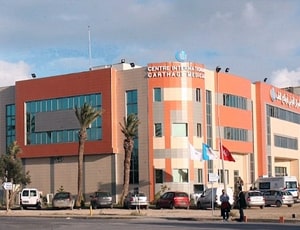
Carthage International Medical Center offers advanced Laryngectomy using modern head and neck surgical techniques and internationally accepted treatment protocols. Established in 2014, the JCI accredited hospital is located in Monastir, Tunisia, with 120 beds, providing comprehensive care for local and international patients.
Laryngectomy involves the partial or complete removal of the larynx (voice box) and is primarily performed to treat advanced laryngeal cancer. Depending on the extent of disease, the surgeon may perform a partial or total laryngectomy. Before surgery, detailed imaging, biopsy results, and airway and voice assessments help determine the appropriate surgical approach.
| Speciality | ENT |
| Procedure | Laryngectomy |
| Success Rate | 80-90% |
| Recovery Time | 4 -6 weeks |
| Treatment Time | 5-6 hours |
| Chances of Recurrence | 5-10% |
A laryngectomy is a surgical procedure that involves the removal of the larynx (the voice box). The larynx plays a crucial role in breathing, swallowing, and producing sound. During the surgery, the surgeon creates a stoma, a small opening in the front of the neck, to allow air to enter the trachea directly.
A laryngectomy is typically performed to treat certain medical conditions, such as Laryngeal Cancer and Severe Laryngeal trauma, that may occur due to a serious injury.
After a laryngectomy, the recovery process can be challenging as patients need to adjust to breathing through the stoma and learn new ways to communicate without a larynx. Speech and swallowing therapy is essential for patients to regain their ability to speak and swallow effectively. Additionally, patients are taught how to care for their stoma and manage potential complications, such as infections. Rehabilitation and support from healthcare professionals and support groups play a vital role in helping patients adapt to the changes and lead fulfilling lives after a laryngectomy.