Your Notifications
All done, no notifications

Bladder Augmentation (Cystoplasty) Cost in Gurgaon

Costs starts from USD3500 to USD7000
Filters

Cost of Bladder Augmentation (Cystoplasty) in Major cities of India

CityMinimum Cost (USD)Minimum Cost (INR)Maximum Cost (USD)Maximum Cost (INR)
AhmedabadUSD 3150293643USD 6300587286
BangaloreUSD 3500326270USD 7000652540
ChennaiUSD 3500326270USD 7000652540
DelhiUSD 3500326270USD 7000652540
FaridabadUSD 3500326270USD 7000652540
GhaziabadUSD 3500326270USD 7000652540
GurgaonUSD 3500326270USD 7000652540
HyderabadUSD 3500326270USD 7000652540
KochiUSD 3500326270USD 7000652540
MumbaiUSD 3500326270USD 7000652540
NoidaUSD 3500326270USD 7000652540
PuneUSD 3150293643USD 6300587286

Need Help Planning Your Treatment Abroad?

Your 24/7 AI Health Assistant

Bladder augmentation is performed to increase bladder capacity and reduce elevated bladder pressure in patients with bladder dysfunction due to neurological or spinal conditions. It helps control urine leakage, relieve urgency and pain, protect the kidneys from damage, and improve bladder function, especially for patients with long-term bladder emptying difficulties who require self-catheterisation.

If you experience ongoing urinary leakage, frequent urgency, bladder pain, difficulty holding urine, repeated urinary tract infections, or reduced bladder capacity that does not improve with medication or catheterisation, you should consult a urologist to discuss the possibility of Bladder Augmentation (Cystoplasty).

You will see a doctor for a comprehensive evaluation before to bladder augmentation, which will include a physical examination, blood tests, imaging investigations, cystoscopy, and urodynamic testing. All prescription, over-the-counter, and herbal medications you take should be disclosed to your doctor because some medications, including aspirin, anti-inflammatory medicines, and specific supplements, may need to be stopped in order to lower the risk of bleeding.

Bladder augmentation is performed either through an open abdominal incision or using a minimally invasive robotic approach. During the procedure, the surgeon creates an opening at the top of the bladder and removes a section of the small or large intestine. This bowel segment is then opened, reshaped, and attached to the bladder to increase its size. The bladder and bowel are carefully stitched together to form a larger, low-pressure bladder. After surgery, tubes are placed in the bladder and abdomen to allow continuous drainage and flushing while the bladder heals.

A bladder augmentation typically takes two to six hours.

  • Complications associated with anesthesia.
  • Healing issues.
  • Infection.
  • Hematoma, a mass of clotted blood.
  • Swelling.
  • Bruises.
  • Unfavourable scarring.
  • Formation of a hernia.

  • Increases bladder size and storage capacity
  • Reduces high bladder pressure and protects kidney function
  • Decreases urine leakage and incontinence episodes
  • Increases the time between catheterisations
  • Improves bladder control and comfort
  • Enhances overall quality of life and daily independence

Following Bladder Augmentation (Cystoplasty), patients typically remain in the hospital for several days for close monitoring. Recovery focuses on pain management, proper catheter care, gradual reintroduction of normal activities, and regular follow-up visits. Full bladder function and adaptation may take additional time, depending on individual healing and overall health, but most patients can resume daily routines within a few weeks.

Bladder augmentation is generally associated with favourable outcomes in appropriately selected patients. Most individuals experience meaningful improvements in bladder capacity and urinary continence, leading to a better quality of life. Results may vary based on the underlying condition and surgical technique, and long-term follow-up is essential to monitor outcomes and manage potential complications.

Would you like some help? We are available.

Get Help
Explore Hospitals ( 3 )
Bladder Augmentation (Cystoplasty) in Max Hospital, Gurgaon: Costs, Top Doctors, and Reviews

Gurgaon, India

  • ISO 9001
  • National Accreditation Board for Hospitals & Healthcare Providers (NABH)
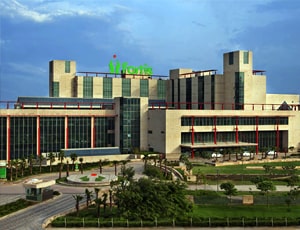
  • Max Hospital Gurugram is a leading multi-speciality healthcare centre in Haryana, renowned for its advanced clinical expertise and patient-focused care.
  • Established in 2007, it is part of the trusted Max Healthcare network and has treated over 500,000 patients across 35+ specialities.
  • The hospital is equipped with modern medical technology, internationally trained doctors, and superior clinical infrastructure.
  • Known for its excellence in Cardiology, Oncology, Neurosciences, Orthopaedics, Gastroenterology, and Women & Child Care, Max Hospital is a preferred choice for both domestic and international patients seeking high-quality treatment with compassionate care.
Bladder Augmentation (Cystoplasty) in Fortis Memorial Research Institute: Costs, Top Doctors, and Reviews

Gurgaon, India

3.5 ( 3 Reviews )
  • Joint Commission International, or JCI
  • National Accreditation Board for Hospitals & Healthcare Providers (NABH)

Fortis Healthcare Limited stands as one of India's largest integrated healthcare providers, managing 33 hospitals across 11 states and operating more than 5,700 beds and 400 diagnostic labs. Four of our hospitals are accredited by JCI and 26 by NABH. With a workforce of over 12,500 healthcare professionals, we combine clinical excellence, a patient-focused approach, and innovation to provide high-quality, affordable, and compassionate healthcare to patients in India.

Bladder Augmentation (Cystoplasty) in Manipal Hospital, Gurugram: Costs, Top Doctors, and Reviews

Gurgaon, India

  • National Accreditation Board for Testing and Calibration Laboratories (NABL)
  • National Accreditation Board for Hospitals & Healthcare Providers (NABH)

Manipal Hospital, Gurgaon, which used to be Columbia Asia Hospital, is a 100-bed, multispecialty facility that was established in 2008. It is recognized by NABH, and offers complete care in six specialties: neurology, cardiology, oncology, gynecology, orthopedics, and psychiatry. By bringing together modern infrastructure, sophisticated technology, and a team of qualified medical and nursing staff as a part of its value system, the hospital emphasizes ethics and high-quality, affordable healthcare. The hospital maintains an integrated and collaborative framework, and is able to provide 24/7 emergency services and critical care, to achieve the best possible outcomes, with patient satisfaction and treatment as a whole being a fundamental feature of the service.

Need Some Advice From Our Experts?

Request a Call Back Now!

Our team of healthcare experts would be happy to assist you

trusted Patientstrusted Patients+99
Trusted by 50000+ Patients
Required | alphabets and spaces
Required | A valid, working email address
Required | A valid contact

Process Involved for Bladder Augmentation (Cystoplasty) in Gurgaon

Diagnosis & Pre-Surgical Evaluation

  • Urology consultation and detailed medical history
  • Physical examination, blood tests, imaging studies (ultrasound, X-ray, CT/MRI)
  • Cystoscopy and urodynamic testing to assess bladder function
  • Assessment of kidney health and overall surgical fitness

Pre-Surgery Preparations

  • Review and adjustment of medications, including those affecting bleeding
  • Pre-anaesthesia evaluation and fasting before surgery
  • Discussion of the surgical approach (open or minimally invasive/robotic) and the bowel segment to be used

Procedure

  • Creation of an opening in the bladder
  • Removal and preparation of a segment of intestine
  • Attachment of the bowel segment to the bladder to increase capacity
  • Performed under general anaesthesia

Post-Surgical Recovery

  • Hospital monitoring, pain management, and catheter care
  • Gradual return to normal activities and bladder training
  • Monitoring for infection, leakage, or other complications

Long-Term Follow-Up

  • Regular urology follow-ups and kidney function monitoring
  • Ongoing bladder management and catheterisation guidance if needed
  • Lifestyle adjustments and long-term monitoring for metabolic or urinary complications
  • Neurogenic bladder caused by spinal cord injury or neurological disorders
  • Congenital bladder abnormalities, such as bladder exstrophy or spina bifida
  • Severely reduced bladder capacity
  • A high-pressure bladder that may damage the kidneys
  • Severe urinary incontinence not responding to medications
  • Chronic bladder dysfunction requiring long-term catheterisation
  • Standard (Open) Cystoplasty: Traditional open surgery to enlarge the bladder using a segment of the intestine.
  • Laparoscopic Cystoplasty: Minimally invasive approach using small incisions and a camera.
  • Robotic-Assisted Cystoplasty: Robot-guided minimally invasive surgery for enhanced precision and faster recovery.
  • Patients with severe or chronic bladder dysfunction not responding to medications or catheterisation
  • Individuals with reduced bladder capacity or high-pressure bladders who risk kidney damage
  • Patients with urinary incontinence, frequent infections, or poor bladder muscle function
  • People who are medically fit for surgery based on overall health and urological evaluation
  • Urodynamic studies for bladder function assessment
  • Cystoscopy for evaluation of bladder structure
  • Urinary catheter placement (temporary or long-term)
  • Creation of a catheterizable stoma (Mitrofanoff procedure), if required
  • Ureteric reimplantation in cases of reflux
  • Postoperative bladder irrigation and training procedures
  • Increased Bladder Capacity
  • Improved Continence
  • Protection of Kidney Function
  • Enhanced Quality of Life
  • Enhanced Quality of Life
  • Reduced UTIs
  • Increased bladder capacity and improved urine storage
  • Reduced urinary leakage and improved continence
  • Lower bladder pressure helps protect kidney function
  • Decreased urinary urgency, frequency, and bladder discomfort
  • Reduced risk of recurrent urinary tract infections in selected patients
  • Improved quality of life and daily independence
  • Better long-term bladder control with appropriate bladder training and follow-up
  • Fill out the inquiry form: Fill out the form to provide us with the relevant information about your condition.
  • Consult with Our Healthcare Expert:One of our qualified specialists will contact you for a consultation
  • Receive a Detailed Treatment Plan:After examining your situation, we will provide you with a detailed treatment plan that includes expert views and cost breakdowns for various choices.
  • Choose your preferred option: Choose the treatment option that suits you the best.

Instantly Connect with our Bladder Augmentation (Cystoplasty) Specialists

Doctor 1
Doctor 2
Doctor 3
Doctor 4
Doctor 5
Doctor 6
Doctor 7
Doctor 8
Our Services to Better your Experience

Opinion & Option

We submit the most accurate opinion and options from one or more countries for your review

Consult Privately

Consult with a certified specialist privately on our telemedicine platform even before you decide to travel

Logistics

We handle flights, visas, transfers, and accommodation—so you can focus on your health.

Recovery

Our In-house rehabilitation service packages to better your recovery and treatment outcome

Other Popular Countries for Bladder Augmentation (Cystoplasty)

Our network connects you with the leading medical tourism destinations globally, offering a wide range of cities, top doctors, and flexible pricing options.

Malaysia
United Arab Emirates
United Kingdom
Thailand

Frequently Asked Questions

Initial recovery usually takes 3-6 weeks, while complete bladder adaptation may take longer, depending on healing and individual condition.

In addition to the procedure cost, patients may incur:
  • Pre-treatment tests
  • Medications during recovery
  • Follow-up consultations
  • The hospital stay typically ranges from 7 to 14 days, depending on recovery and postoperative monitoring needs.

    Long-term care includes regular urology follow-ups, catheterisation if required, bladder training, kidney function monitoring, and lifestyle adjustments.

    India offers advanced urological care, skilled surgeons, modern medical infrastructure, and cost-effective treatment options for patients.

    Tests typically include blood tests, imaging, cystoscopy, urodynamic testing, kidney function tests, and a general fitness evaluation.

    Yes, the procedure is generally safe when performed at accredited hospitals with experienced urology teams and dedicated international patient services.

    Bladder augmentation shows an overall success rate of approximately 70-85%, with many patients achieving significant improvement in bladder capacity and urinary continence. Reported “good outcomes” across studies range from 55-88%, depending on the underlying condition and surgical technique used.

    Author

    Dr. Vishwas Kaushik

    MBBS, MD

    5 Years of Experience

    Dr. Vishwas Kaushik is a qualified medical professional holding an MBBS from the prestigious Belgorod State University, Russia, with a strong foundation in clinical medicine and healthcare practice. His comprehensive medical training has equipped him with a profound understanding of evidence-based clinical practices, patient-centered care, and the evolving landscape of modern medicine. With a keen interest in medical research and scientific communication, he consistently translates complex clinical concepts into clear, accurate, and accessible content for diverse audiences. His work reflects a deep commitment to advancing medical knowledge, delivering impactful healthcare insights, and bridging the gap between clinical expertise and accessible medical communication.. View More