Your Notifications
All done, no notifications

Lumbar Discectomy Cost in Faridabad

Costs starts from USD4500 to USD7500
Filters

Cost of Lumbar Discectomy in Major cities of India

CityMinimum Cost (USD)Minimum Cost (INR)Maximum Cost (USD)Maximum Cost (INR)
AhmedabadUSD 4050346842USD 6750578070
BangaloreUSD 4500385380USD 7500642300
ChennaiUSD 4500385380USD 7500642300
DelhiUSD 4500385380USD 7500642300
FaridabadUSD 4500385380USD 7500642300
GhaziabadUSD 4500385380USD 7500642300
GurgaonUSD 4500385380USD 7500642300
GurugramUSD 4500385380USD 7500642300
HyderabadUSD 4500385380USD 7500642300
KochiUSD 4500385380USD 7500642300
KolkataUSD 4500385380USD 7500642300
MohaliUSD 4050346842USD 6750578070
MumbaiUSD 4500385380USD 7500642300
NoidaUSD 4500385380USD 7500642300
PanjimUSD 4050346842USD 6750578070
PuneUSD 4050346842USD 6750578070

Need Help Planning Your Treatment Abroad?

Your 24/7 AI Health Assistant

A lumbar discectomy is a procedure where the surgeon removes the part of a lower back disc that’s irritating a nearby nerve. This nerve pressure often results in discomfort, tingling, or muscle weakness in the back or legs.

The procedure is done under general anaesthesia. A small incision is made in the back, and the surgeon gently moves soft tissues aside to reach the spine. The damaged or herniated section of the disc is then carefully taken out to ease nerve pressure.

This surgery is usually recommended when symptoms don’t improve with rest, medications, or physical therapy. It is effective in relieving leg pain (sciatica) and improving mobility.

Recovery is often quick, especially if a minimally invasive method is used. Most patients can start walking within a day and return to daily activities within a few weeks, depending on their progress.

Lumbar discectomy is a surgical procedure performed to remove a portion of a herniated or damaged disc in the lower spine that is pressing on nearby spinal nerves. It is commonly used to treat sciatica, which causes pain, numbness, or weakness radiating from the lower back into the legs. The goal is to relieve nerve compression, alleviate pain, improve mobility, and prevent long-term nerve damage by removing the disc material responsible for the pressure.

Consult a spine specialist if you experience:
  • Persistent lower back pain
  • Sharp, radiating leg pain (especially down one leg)
  • Numbness, tingling, or weakness in the leg or foot
  • Difficulty standing, walking, or performing daily activities
  • Loss of bowel or bladder control (a medical emergency)
If these symptoms do not improve with non-surgical treatments like physiotherapy, medications, or spinal injections, a lumbar discectomy may be considered.

Preparation for lumbar discectomy includes:
  • Physical and neurological examination
  • Imaging studies, such asan MRI or CT scan, to confirm disc herniation and its location
  • Review of current medications, especially blood thinners, which may need to be temporarily stopped
  • Fasting for 6–8 hours before the procedure
  • Pre-surgical evaluation by your primary physician or anesthesiologist
  • Discuss allergies, surgical expectations, and potential risks with your surgeon
Patients should also plan for transportation and home support during the early stages of recovery.

The procedure is done under general anesthesia and involves the following steps:
  • A small incision is made in the lower back over the affected disc.
  • Muscles and tissues are gently moved aside to expose the vertebra.
  • The surgeon removes a portion of the herniated disc that is compressing the nerve. In some cases, a small portion of bone (lamina) may also be removed to access the disc.
  • The incision is closed with sutures or surgical glue.
Microdiscectomy, a minimally invasive variation, uses specialised instruments and a microscope for enhanced precision and a faster recovery.

A lumbar discectomy typically takes 45 minutes to 1.5 hours, depending on complexity. Most patients are discharged the same day or after a short overnight hospital stay.

While generally safe, lumbar discectomy carries risks such as:
  • Infection
  • Bleeding
  • Nerve injury
  • Spinal fluid leak
  • Recurrent disc herniation
  • Deep vein thrombosis (DVT)
  • Reaction to anaesthesia
  • In rare cases, persistent or worsening symptoms
These risks are minimised when performed by experienced spinal surgeons.

  • Rapid and often significant relief from leg pain (sciatica)
  • Improved mobility and physical activity
  • Minimally invasive techniques lead to quicker recovery
  • Short hospital stay and early return to everyday life
  • Reduced need for long-term pain medications
  • Prevention of permanent nerve damage
Lumbar discectomy is highly effective, particularly when a herniated disc is identified as the cause of symptoms.

  • Patients are usually up and walking the same day
  • Mild back or leg discomfort is normal and managed with pain medication
  • Light activities can resume within 1 to 2 weeks
  • Avoid bending, twisting, or lifting for at least 4–6 weeks
  • Physical therapy may be advised to strengthen back muscles and improve posture
  • Most people return to work in 2–6 weeks, depending on job type
  • Follow-up appointments are essential to monitor recovery and detect recurrence

Lumbar discectomy has a high success rate, with 80–90% of patients experiencing significant relief from leg pain and improved function. Success is highest in patients with sciatica caused by a single-level herniated disc and who follow post-operative care instructions correctly.

Would you like some help? We are available.

Get Help
Explore Hospitals ( 3 )
Lumbar Discectomy in Asian Institute of Medical Sciences: Costs, Top Doctors, and Reviews

Faridabad, India

  • National Accreditation Board for Testing and Calibration Laboratories (NABL)
  • National Accreditation Board for Hospitals & Healthcare Providers (NABH)

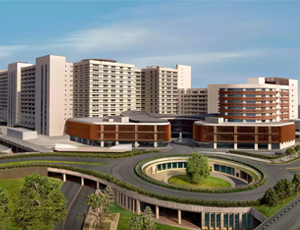
Asian Institute of Medical Sciences located in Faridabad, India is accredited by NABH, NABL. Also listed below are some of the most prominent infrastructural details:

  • 425 bed capacity
  • Preventive and diagnostic sevices of the hospital are its strength.
  • It is also well recognised for the therapeutic and rehabilitative services.
  • For patients who need end process care for advanced healthcare conditions, the palliative services that the hospital provides are a boon.
  • The healthcare delivery of AIMS, Delhi/NCR is focused on patient care.
  • Research focused organisation
  • International Patient care center is present to liason with medical travellers
  • Focus on Academics, various healthcare educational programmes
Lumbar Discectomy in Sarvodaya Hospital and Research Centre: Costs, Top Doctors, and Reviews

Faridabad, India

4.9 ( 4 Reviews )
  • National Accreditation Board for Hospitals & Healthcare Providers (NABH)
  • National Accreditation Board for Testing and Calibration Laboratories (NABL)

Sarvodaya Hospital and Research Centre located in Faridabad, India is accredited by NABH, NABL. Also listed below are some of the most prominent infrastructural details:

  • Sarvodaya Hospital has a 500 bed capacity which is inclusive of 65 ICU beds.
  • A dedicated dialysis unit for people with kidney conditions.
  • The hospital has a cancer center which makes cancer treatment a seamless process.
  • There is an upcoming oncology center in Sarvodaya Hospital Faridabad.
  • Technologies such as 128 Slice CT scan, 500 MA X-Ray, 1.5 Tesla MRI and Mammography facility.
Lumbar Discectomy in Amrita Hospital: Costs, Top Doctors, and Reviews

Faridabad, India

  • National Accreditation Board for Hospitals & Healthcare Providers (NABH)

Founded in 1998 by Mata Amritanandamayi (Amma), the Amrita Institute of Medical Sciences and Research Centre is one of India’s leading healthcare institutions, accredited by ISO, NABH, and NABL. With 2 branches, 7 medical colleges, and a network of 800+ doctors and 2,600+ beds, it offers comprehensive care across 81 specialties and 12 super-specialty departments, supported by 60+ modern operating theatres and 534 critical care beds. The Faridabad campus, a world-class multispeciality facility, houses advanced centers for oncology, neurosciences, cardiac sciences, gastro-sciences, mother and child care, and trauma care, along with India’s most comprehensive infectious disease unit. Guided by a mission of compassion and innovation, Amrita Hospitals combine cutting-edge medicine with humanitarian service to empower communities and promote holistic well-being.

Need Some Advice From Our Experts?

Request a Call Back Now!

Our team of healthcare experts would be happy to assist you

trusted Patientstrusted Patients+99
Trusted by 50000+ Patients
Required | alphabets and spaces
Required | A valid, working email address
Required | A valid contact

Process Involved for Lumbar Discectomy in Faridabad

  • Initial Consultation: The doctor reviews symptoms, performs a physical examination, and may order imaging tests, such as MRI or CT scans, to further assess the condition.
  • Diagnosis and Surgical Planning: Once the disc issue is confirmed, the medical team decides if surgery is necessary and outlines the best approach.
  • Preoperative Preparation: Basic blood work, anaesthesia assessment, and pre-surgery instructions are given to prepare the patient for the procedure.
  • Surgical Procedure: The surgeon removes the portion of the disc pressing on the nerve through either open or minimally invasive techniques.
  • Immediate Postoperative Care: The patient is monitored for several hours to ensure vital signs are stable and pain is effectively managed.
  • Rehabilitation and Recovery: Light activity and physiotherapy begin within days to restore mobility and strength.
  • Follow-up and Long-Term Care: Regular check-ups help track recovery progress and ensure the patient returns to normal activities safely and securely.
  • Bulging or Herniated Disc: A portion of the spinal disc protrudes, putting pressure on nearby nerves and causing discomfort or weakness.
  • Sciatic Nerve Pain: Pain that radiates from the lower back down the leg due to nerve compression, often associated with disc herniation or other issues.
  • Nerve Root Compression: When spinal nerves in the lower back become irritated or squeezed, causing pain, tingling, or numbness.
  • Disc Degeneration: Age-related disc wear can cause spinal instability or nerve irritation, which may require surgical relief.
  • Slipped Disc: A displaced disc that presses on spinal nerves and does not improve with non-surgical treatments.
  • Persistent Symptoms After Non-Surgical Care: When physiotherapy, medication, or rest fail to reduce symptoms, surgery may become necessary.
  • Clinical Assessment and Imaging: The doctor examines the patient and confirms the disc issue using diagnostic tools such as MRI, CT scans, or X-rays.
  • Preparation Before Surgery: Routine blood tests and anaesthesia evaluations are performed, and the patient receives instructions on fasting and medication management.
  • Giving Anaesthesia: General anaesthesia is administered to ensure the patient is asleep and doesn’t feel pain during the procedure.
  • Making the Incision: A small incision is made in the lower back, and the surrounding muscles are gently moved aside to reach the spine.
  • Removing the Disc Material: The surgeon carefully removes the portion of the disc that is compressing the nerve, helping to reduce pain and restore mobility.
  • Closing the Wound: Once the procedure is complete, the area is cleaned and closed with stitches or staples. A dressing is applied to protect the site.
  • Post-Surgical Recovery: The patient is monitored as they wake up from anaesthesia. Most people are encouraged to move around within a few hours.
  • Craniotomy
  • Laminectomy
  • Microdiscectomy
  • Fusion
  • Laminotomy
  • Foraminotomy
  • Myelogram
  • Electromyography
  • Neurostimulation
  • Arthrodesis
  • Decompression
  • Neuroplasty
  • Rehydration
  • Bracing
  • Thermocoagulation
  • Pain Relief: Relieves pressure on the spinal nerve, helping to reduce or eliminate leg and lower back pain.
  • Improved Mobility: Patients often experience better movement and flexibility after recovery.
  • Quick Recovery: Minimally invasive techniques allow a faster return to daily activities.
  • Prevents Further Nerve Damage: Early intervention can prevent worsening symptoms, such as numbness or weakness.
  • Outpatient Possibility: In many cases, patients can be discharged the same day or within 24 hours.
  • Improved Quality of Life: Reduced pain and improved mobility lead to enhanced sleep, mood, and overall daily functioning.
  • Minimally Invasive Options Available: Smaller incisions result in less scarring, a reduced risk of infection, and a smoother recovery process.
False
  • Please complete the form to provide us with relevant information about your condition.
  • Consult with Our Healthcare Expert: One of our qualified specialists will contact you for a consultation.
  • Receive a Detailed Treatment Plan: After examining your situation, we will provide you with a detailed treatment plan that includes expert opinions and a cost breakdown for various options.
  • Select your preferred option: Choose the therapy option that best suits your needs.
  • Seamless Organisation: We will manage all the details, including visas, flights, accommodations, and transfers, for a stress-free journey.

Instantly Connect with our Lumbar Discectomy Specialists

Doctor 1
Doctor 2
Doctor 3
Doctor 4
Doctor 5
Doctor 6
Doctor 7
Doctor 8
Our Services to Better your Experience

Opinion & Option

We submit the most accurate opinion and options from one or more countries for your review

Consult Privately

Consult with a certified specialist privately on our telemedicine platform even before you decide to travel

Logistics

We handle flights, visas, transfers, and accommodation—so you can focus on your health.

Recovery

Our In-house rehabilitation service packages to better your recovery and treatment outcome

Other Popular Countries for Lumbar Discectomy

Our network connects you with the leading medical tourism destinations globally, offering a wide range of cities, top doctors, and flexible pricing options.

Turkey
Malaysia
Vietnam
United Arab Emirates

Frequently Asked Questions

Factors that raise the risk of Lumbar Discectomy in India include: -

  • High prevalence of uncontrolled hypertension.
  • Late diagnosis due to limited access in rural areas.
  • Higher risk of infections in crowded or overburdened hospitals.
  • Limited postoperative rehabilitation facilities are available in some regions.

In India, the procedure is successful in about 85–90% of cases, especially when done at specialised spine centres using modern techniques.

Fortis Hospital and Artemis Hospital are renowned for performing lumbar discectomy with a focus on precision, combining expert neurosurgeons, advanced imaging, and personalised rehabilitation programs.

The following are the precautions to take after a Lumbar Discectomy in India:

  • Avoid long travel or bumpy roads during the early recovery period.
  • Wear a lumbar support belt if advised, especially in high-humidity or crowded areas.
  • Follow-up is crucial due to variable access to physiotherapy in rural regions.

Author

Dr. Vishwas Kaushik

MBBS, MD

5 Years of Experience

Dr. Vishwas Kaushik is a qualified medical professional holding an MBBS from the prestigious Belgorod State University, Russia, with a strong foundation in clinical medicine and healthcare practice. His comprehensive medical training has equipped him with a profound understanding of evidence-based clinical practices, patient-centered care, and the evolving landscape of modern medicine. With a keen interest in medical research and scientific communication, he consistently translates complex clinical concepts into clear, accurate, and accessible content for diverse audiences. His work reflects a deep commitment to advancing medical knowledge, delivering impactful healthcare insights, and bridging the gap between clinical expertise and accessible medical communication.. View More

Reviewer

⁠Dr Rakesh Kumar Dua

Spine & Neurosurgeon

25 Years of Experience

Dr. Rakesh Dua has more than 25+ years of clinical experience in spine surgeries. He is currently providing his services as Director, Neuro & Spine Surgery at Fortis Hospital, Shalimar Bagh. Before joining Fortis Hospital, he was associated with Max super-specialist Hospital, Shalimar Bagh as Director Neurosurgery & Head Neuro Spine, and with UCMS & GTB hospital as head of the neurosurgery department. View More