Affordable World-class Treatment - Accredited Hospitals - Free Treatment Plan in 24 Hrs

Share your details to receive a personalised treatment plan, estimated costs, hospital recommendations, and expert guidance, “completely free.”
Your information is protected with HIPAA-compliant security standards. We only share your details with hospitals after your consent.


Our dedicated Medical Patient Advisors are here to answer your questions, help you compare treatment options, estimate costs, and guide you through every step of your healthcare journey.
A foraminotomy is a type of surgery performed on the spine to relieve a pinched nerve. Your spine is made of small bones stacked on top of each other, and between these bones are small openings called foramina. They are small openings that allow nerves to pass from the spine to various parts of the body.
Sometimes, these openings become too small. This can occur due to conditions such as swelling, the growth of extra bone (known as bone spurs), or a slipped disc. When the opening is too tight, the nerve gets squeezed. That can cause pain, tingling, or weakness in your arms, legs, or back.
In a foraminotomy, the doctor makes a small cut on your back near where the problem is. Then, using specialised tools, they move the muscles aside and carefully remove a small amount of bone or tissue that is pressing on the nerve. This gives the nerve more space and helps it work better again.
The surgery typically lasts only one to two hours. After the operation, you’ll rest in a recovery area while nurses check on you. Most kids and adults can go home the same day or the day after.
Afterwards, you’ll need to rest and avoid heavy lifting. Your doctor may prescribe simple exercises to help your back heal.
This surgery helps many people feel much better and move around more easily without pain.
Foraminotomy is performed to relieve nerve root compression caused by narrowing (stenosis) of the neural foramen , the passageways through which nerves exit the spinal column.
It’s commonly used to treat radiculopathy, where spinal nerves are pinched due to herniated discs, bone spurs, or arthritis.
The procedure alleviates neck/back pain, numbness, tingling, and limb weakness by creating more space for the affected nerves
Consult a spine specialist if you experience persistent nerve-related pain in the arms or legs, numbness, tingling, or weakness, especially if conservative treatments like medications, physical therapy, or injections fail.
If imaging (MRI or CT) shows foraminal stenosis with nerve impingement, surgery may be recommended.
Foraminotomy is indicated when quality of life is significantly impacted by nerve compression.
Preparation includes MRI or CT scan to assess the extent and exact location of the nerve compression.
You’ll undergo routine blood tests and pre-anesthesia evaluations.
Patients are advised to stop blood thinners or anti-inflammatory medications, fast before surgery, and arrange post-op assistance for a few days.
Under general or regional anesthesia, a small incision is made in the back or neck over the affected spinal level.
Using microsurgical or minimally invasive tools, the surgeon removes part of the bone, ligament, or disc material compressing the nerve.
Foraminotomy may be done alone or combined with discectomy or spinal fusion if instability is present.
The surgery usually takes 1 to 2 hours, depending on the number of spinal levels treated and the surgical approach.
It’s often performed as an outpatient or short-stay procedure, and most patients go home the same or next day.
Minimally invasive techniques further reduce operation and recovery time.
Patients can often walk on the same day of surgery.
Initial recovery includes mild pain, soreness, and restrictions on lifting or twisting for 2–4 weeks.
Most return to work within 2–4 weeks, depending on job demands.
Physical therapy may be advised to restore spinal strength and flexibility.
Foraminotomy has a success rate of 85–95% in relieving nerve compression symptoms, especially in well-selected patients.
Outcomes are best when pain is localized to a single nerve root with clear imaging correlation.
Many patients experience long-term relief without needing fusion or further surgeries.
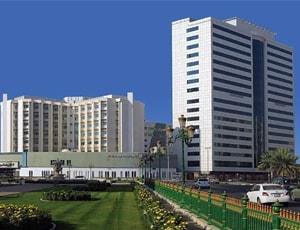
Sharjah, United Arab Emirates
Our experienced Medical Patient Advisors have supported 100,000+ patients across 120+ countries with personalised treatment plans, hospital recommendations, cost estimates, and travel assistance, all free.
✓ Free Consultation ✓ No Obligation ✓ Personalized Treatment Plan ✓ Response Within 24 Hours
Your medical info is kept HIPAA-style confidential. We never share with hospitals without your consent.

Opinion & Option
We submit the most accurate opinion and options from one or more countries for your review
Consult Privately
Consult with a certified specialist privately on our telemedicine platform even before you decide to travel
Logistics
We handle flights, visas, transfers, and accommodation—so you can focus on your health.
Recovery
Our In-house rehabilitation service packages to better your recovery and treatment outcome
Have your reports reviewed by independent oncology experts to help you make a confident treatment decision, all online within 48 hours.
Upload Your Reports