Your Notifications
All done, no notifications

Cervical Fusion Cost in South Korea

USD 14500 - USD 28000

Affordable World-class Treatment - Accredited Hospitals - Free Treatment Plan in 24 Hrs

2
Days in Hospital
12
Post-Hospital
85 - 95%
Success Rate
JCI/ISO 100,000+ Patients 24X7 Coordinator Visa & Travel handled
Your all-in-one medical travel platform for treatment, recovery & care.

Get Your Personalised Treatment Plan in Just 24 Hours.

Share your details to receive a personalised treatment plan, estimated costs, hospital recommendations, and expert guidance, “completely free.”

Required | alphabets and spaces
Required | A valid, working email address
Required | A valid contact
Connect with an Expert

Your information is protected with HIPAA-compliant security standards. We only share your details with hospitals after your consent.

Estimated Treatment Cost
USD 14500 - USD 28000
All-inclusive • Hospital + Medications + Recovery Assistance + Dedicated Care Coordinator

International Quality. Affordable Care.

How Much Does Cervical Fusion Treatment Cost in South Korea?

In South Korea, the price of a cervical fusion procedure can generally vary from USD 14500 - USD 28000. However, it can vary depending on the number of fused vertebrae, the type of implants, the surgeon's skill, and the hospital's location. The cost may go higher for multi-level fusion or minimally invasive procedures.

Additionally, factors like the duration of treatment, the need for follow-up care, and the use of advanced technologies or specialised treatments can further influence the overall cost.

Factors affecting the cost of Cervical Fusion Treatment in South Korea

The following are the factors on which the cost of cervical fusion depends:

  • Hospital & Location: Hospital reputation, facilities, and location affect total cost (prices may be higher in major cities like Delhi, Mumbai, and Bangalore). Generally, private hospitals charge more compared to government hospitals.
  • Surgery Type and Technique: Because of advanced technology, minimally invasive procedures are more expensive. The cost of anterior cervical fusion is generally lower than that of anterior cervical discectomy and fusion (ACDF)
  • Experience & Skill of Surgeons: Spine surgeons with extensive training and expertise charge more. Surgical costs are also affected by the procedure's complexity.
  • Implant and bone graft types: The price is increased by used titanium plates, rods, screws, and artificial discs.
  • Preoperative Diagnostics and Consultation: Blood tests, MRIs, CT scans, X-rays, and expert consultations influence costs.
  • Postoperative Care & Hospital Stay: The cost depends on the length of hospitalisation, the kind of room (private vs. general ward), and the intensive care unit stay. Costs are increased by post-operative physiotherapy and rehabilitation.

What's included in your Cervical Fusion quote?

Cervical fusion surgery
Value: fee, operating room charges
Spine specialist consultations
evaluation, surgical planning, follow-ups
2–5-day hospital stay
Inpatient care, management, monitoring, and recovery
7–14-day in-country follow-up
Wound check, assessment
Visa & medical-visa invite letter
Airport pickup & transfers

Cost of Cervical Fusion in Major Cities of South Korea

City Cost (USD)
Seoul $14,500 – $28,000 Explore More

Cervical Fusion - South Korea Vs the World

$0 - $0
$4k - $9k
$5k - $9k
$6k - $8k
$6k - $12k
$6k - $13k
$6k - $12k
$12k - $24k
$12k - $17k
$14k - $28k
$17k - $30k
$18k - $32k
$22k - $35k
Nimra Haseeb
Author

MSc Biochemistry

4 Years of Experience

Last Reviewed - June 2026

Miss Nimra Haseeb is a medical researcher and a scientific content writer. She holds a Bachelor’s degree in Biotechnology and a Master’s in Biochemistry from Integral University, Lucknow. With strong experience in healthcare research, she specializes in secondary research, clinical data analysis, and evidence-based medical writing. Her work focuses on transforming complex scientific and medical information into clear, accurate, and reliable healthcare content for patients and healthcare audiences. She is also experienced in interpreting medical studies and healthcare trends to deliver well-researched and informative content that supports better health awareness and decision-making.
View More
⁠Dr Rakesh Kumar Dua
Reviewer

Spine & Neurosurgeon

25 Years of Experience

Last Reviewed - June 2026

Dr. Rakesh Dua has more than 25+ years of clinical experience in spine surgeries. He is currently providing his services as Director, Neuro & Spine Surgery at Fortis Hospital, Shalimar Bagh. Before joining Fortis Hospital, he was associated with Max super-specialist Hospital, Shalimar Bagh as Director Neurosurgery & Head Neuro Spine, and with UCMS & GTB hospital as head of the neurosurgery department.
View More

Need Help Choosing the Right Treatment? Talk to a Medical Advisor

Our dedicated Medical Patient Advisors are here to answer your questions, help you compare treatment options, estimate costs, and guide you through every step of your healthcare journey.

15 min
Average response time

Serving Patients Worldwide in Multiple Languages.

A cervical fusion procedure permanently connects two or more vertebrae to support the cervical (neck) spine. It is generally used to treat Degenerative disc disease, herniated discs, spinal stenosis, fractures, and cervical instability.

A bone graft or artificial spacer is inserted between the vertebrae after removing the injured disc or vertebra for better fusion. For extra support, you can use rods, screws, or metal plates. The bones eventually fuse to provide stability, lessen discomfort, and stop additional spinal problems.

A surgical technique called cervical fusion joins two or more vertebrae together to stabilize the cervical spine, or neck. Herniated discs, cervical degenerative disc disease, spinal instability, spinal stenosis, fractures, and deformities are among the disorders that are commonly treated with it. The process relieves pressure on spinal nerves, lessens discomfort, and realigns the spine by removing mobility between the afflicted vertebrae. It is frequently carried out in situations with significant spinal cord compression or following a discectomy.

Neck pain, numbness, muscle weakness, coordination issues, and balance issues may be caused by nerve compression in the cervical spine, requiring medical assessment if medication or therapy fails. When conservative measures don't work or neurological symptoms get worse, cervical fusion could be advised. With MediGence, you may get quick, individualised guidance to help you make treatment decisions and access a well-curated network of knowledgeable spine doctors.

A physical and neurological examination and imaging tests like MRIS, CT scans, or X-rays to assess spinal structure and nerve involvement are all part of the preparation process for cervical fusion. Patients should disclose all drugs to their physician. Usually, six to eight hours of fasting are necessary before surgery.

  • Anaesthesia: General anaesthesia is used to perform the surgery.
  • Incision: Depending on the surgical technique, a small incision is created either in the front of the neck (anterior) or the rear (posterior).
  • Disc/Bone Removal: Damaged discs or bone spurs are removed to ease pressure on the spinal cord or spinal nerves.
  • Fusion: A synthetic spacer, bone graft from the patient, or donor is placed in the vertebrae.
  • Stabilisation: The vertebrae are held in place while the bones fuse together using plates, screws, or rods.
  • Closure: A sterile bandage is placed over the wound, and sutures or surgical glue are used to seal it.

It usually takes two to four hours to execute cervical fusion, depending on how many vertebrae are involved and whether the treatment is done from the front or rear of the neck. While some patients may be released the same day, the majority need a stay of one to two days in the hospital.

  • Infection at the surgery site
  • Excessive bleeding
  • Damage to the spinal cord or nerves
  • Temporary hoarseness or trouble swallowing
  • Blood clots of blood
  • Pseudoarthrosis
  • Implant problems or hardware failure
  • Disease of the adjacent segments (wear and tear on adjacent spinal segments)

By stabilising the spine and lowering nerve pressure, cervical fusion offers substantial relief from neurological symptoms and neck pain. Patients with chronic or progressive spinal problems benefit from improved mobility, posture, and overall quality of life. In addition to providing long-term structural support, the surgery stops additional harm to the spinal cord or nerves.

Following surgery, patients may wear a neck brace for support and are observed for a few hours. During the first few days, mild neck pain, stiffness, or trouble swallowing are typical. During the healing phase, physical activity is limited, and pain is controlled with medication. It is recommended that patients refrain from driving, hard lifting, and physically demanding activities.

About 85–95% of cervical fusion patients report long-lasting pain alleviation and functional improvement, indicating the procedure's high success rate. The degree of the spinal disease, the patient's general health, and compliance with post-operative care all affect the success rate.

Explore Hospitals ( 2 )

Seoul, South Korea

ISO

Get Your Cervical Fusion
Plan in 24 hrs.

Our experienced Medical Patient Advisors have supported 100,000+ patients across 120+ countries with personalised treatment plans, hospital recommendations, cost estimates, and travel assistance, all free.

HIPAA-Compliant Data SecurityShared Only with Your Consent

Free Consultation No Obligation Personalized Treatment Plan Response Within 24 Hours

Required | alphabets and spaces
Required | A valid, working email address
Required | A valid contact

Your medical info has is HIPAA-style confidential. We never share with hospitals without your consent.

Process Involved for Cervical Fusion in South Korea

  • Cervical Spondylosis
  • Herniated Bulging disc
  • Spinal cord compression ( Cervical Myelopathy)
  • Cervical Radiculopathy
  • Degenerative Disc Disease

The following conditions make a patient eligible for Cervical Fusion Treatment. They may qualify for spine fusion treatment:

  • Chronic Neck or Back Pain: Ongoing discomfort from arthritis, spinal stenosis, degenerative disc disease, or herniated discs.
  • Spinal instability refers to disorders that produce aberrant movement in the spine, such as spondylolisthesis or fractures.
  • Neurological symptoms include limb weakness, tingling, or numbness brought on by nerve compression.
  • Spinal Deformities: Disorders that need structural treatment, such as kyphosis or scoliosis.
  • Pain relief
  • Improved Quality of Life
  • Improved Nerve function
  • Minimal Side Effects
  • Enhanced Functionality & Mobility
  • Neurologist:
  • Neurosurgeon:
  • Orthopedic surgeon:
  • Physical therapist:
  • Fill out the inquiry form: Fill out the form to provide us with the relevant information about your condition.
  • Consult with Our Healthcare Expert: One of our qualified specialists will contact you for a consultation.
  • Receive a Detailed Treatment Plan: After examining your situation, we will provide you with a detailed treatment plan that includes expert views and cost breakdowns for various choices.
  • Choose your preferred option: Choose the treatment option that suits you the best.
Jenny Wilson
Your Dedicated Medical Patient Advisor
Treatment planning • Hospital coordination • Multilingual support • Response within 15 minutes.
Our Services to Better your Experience

Opinion & Option

We submit the most accurate opinion and options from one or more countries for your review

Consult Privately

Consult with a certified specialist privately on our telemedicine platform even before you decide to travel

Logistics

We handle flights, visas, transfers, and accommodation—so you can focus on your health.

Recovery

Our In-house rehabilitation service packages to better your recovery and treatment outcome

Patient Stories

Ms Patience: Cosmetic Surgery
Ms Patience
Ms Patience: Cosmetic Surgery

Ms Patience from Uganda travelled to India for cosmetic surgery in May 2017. She got her treatment done in Asian…

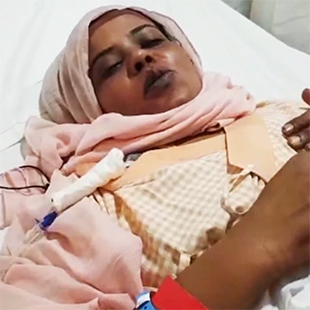
Patient Testimonial: Lobna from Sudan for Successful Open Craniotomy Surgery in India
Mrs. Lobna Salah Hassan
Mrs. Lobna Hasan from Sudan for Open Craniotomy Surgery in India

Lobna (from Sudan) was diagnosed with meningioma, a form of non-cancerous brain tumor. Her family members decided to take her…

Not Sure About Your Treatment Plan? Get a Free Second Opinion

Have your reports reviewed by independent oncology experts to help you make a confident treatment decision, all online within 48 hours.

Upload Your Reports
Free second opinion on your CAR-T plan