A vaginal delivery is a birth through the vaginal canal. It's the most typical way to give birth. Your uterus contracts to narrow and open your cervix, allowing your baby to pass through your vagina (or birth canal) during a vaginal birth.
Because vaginal deliveries are typically the safest for both the fetus and the delivering person, healthcare experts favor them. The most common time for a vaginal delivery to occur is during weeks 37 and 42 of pregnancy.
| Country | Cost | Local_currency |
|---|---|---|
| United Kingdom | USD 4000 | 3160 |
| Turkey | USD 1700 - 3000 | 51238 - 90420 |
| United States | USD 30000 - 50000 | 30000 - 50000 |
| Spain | USD 3000 - 10678 | 2760 - 9824 |
| South Korea | USD 1700 - 9000 | 2282573 - 12084210 |
A vaginal delivery occurs when a person gives birth through the vagina, which is the most common method of childbirth. During vaginal birth, the uterus contracts to thin and open the cervix, allowing the infant to enter the birth canal.
Doctors generally prefer vaginal deliveries as they are generally the safest option for both the baby and the birthing person. Normall deliveries most commonly occur between weeks 37 and 42 of pregnancy.
Stages of Vaginal Delivery
A vaginal delivery can be divided into three stages: labor, birth, and delivering the placenta.
The first stage of labor begins with uterine contractions and ends when the cervix is fully dilated to 10 centimeters and completely effaced.
Labor is further divided into three phases: early labor, active labor, and transitional labor.
Early Labor: This phase starts with the onset of contractions as the cervix begins to dilate and efface. By the end of early labor, the cervix is typically about 5 centimeters dilated.
Active Labor: During this phase, contractions become stronger, lasting up to one minute each and occurring about three minutes apart. Many individuals request an epidural for pain relief during active labor. Healthcare providers may also administer oxytocin to accelerate labor.
Transitional Labor: This is the brief but intense phase just before the cervix is fully dilated to 10 centimeters. Contractions during transitional labor are very strong, come rapidly, and last longer than one minute. This phase may cause sweating, vomiting, or feelings of shakiness. It occurs just before the pushing stage.
Birth
The birthing stage begins when the cervix is fully dilated and ends with the baby’s birth. During this stage, you will experience strong contractions and start pushing. You may feel pressure or the urge to have a bowel movement. Your healthcare provider may coach you through pushing, especially if you've had an epidural and can't feel the contractions. This phase can last from a few minutes to a few hours, often quicker if you've had a prior vaginal delivery.
Delivering the Placenta
The final stage of labor is delivering the placenta, also known as afterbirth. This begins after the baby is born and ends when the placenta is delivered. Your healthcare provider may ask you to push a few more times. This stage typically starts a few minutes after the baby’s birth and can last up to 30 minutes.
It’s important to remember that labor and childbirth vary for each person. Factors such as receiving an epidural, whether it’s your first baby, the size and position of the baby, and the rate of cervical dilation can all influence the duration of a vaginal delivery.
There are different types of vaginal deliveries: spontaneous, induced, and assisted.
Spontaneous Vaginal Delivery: This occurs naturally without the use of labor-inducing drugs.
Induced Vaginal Delivery: In this case, Labor is initiated by using medicines or other techniques to prepare the cervix and start contractions. This is also known as labor induction.
Assisted Vaginal Delivery: This involves the use of forceps or a vacuum device to help deliver the baby. Both spontaneous and induced vaginal deliveries can be assisted if necessary.
Would you like some help? We are available.
Get Help
Kuala Lumpur, Malaysia
Prince Court is a private medical facility in the center of Kuala Lumpur that has 277 individual beds. Our dedication is to provide you with the best treatment possible from the time you arrive until you depart, healthier and happier. We are well-known for our top-notch facilities, cutting-edge technology, and friendly customer service.

Istanbul, Turkey
Acibadem International Hospital located in Istanbul, Turkey is accredited by JCI. Also listed below are some of the most prominent infrastructural details:

Bangkok, Thailand
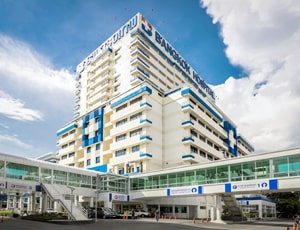
Bangkok Hospital located in Bangkok, Thailand is accredited by JCI. Also listed below are some of the most prominent infrastructural details:

Seoul, South Korea
Asan Medical Centre located in Seoul, South Korea is accredited by ISO. Also listed below are some of the most prominent infrastructural details:

Delhi, India
BLK-Max Super Speciality Hospital, located in New Delhi, is the leading best-in-class healthcare institution in India, providing tertiary and quaternary care. 650 + beds including 162 critical care beds, 22 OTs with 1,500+ clinical professionals allied to health are at the hospital's disposal. JCI, NABH, and NABL accredited. The hospitals are a leader in transplants, cancer care, and robotic surgery education and implementation. Established in1959 by Dr. B.L. Kapur, the hospital combines state-of-the-art technology with patient-centric values including compassion, efficiency, and consistency.

Ankara, Turkey
Memorial Ankara Hospital located in Ankara, Turkey is accredited by JCI. Also listed below are some of the most prominent infrastructural details:

Gurgaon, India
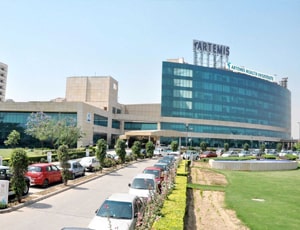
Artemis Hospital, established in 2007 in Gurgaon, India, is a 750+ bed, state-of-the-art multi-speciality hospital and the first in Gurgaon accredited by JCI and NABH. A flagship of the Apollo Tyres Group, it offers advanced care across cardiology, oncology, orthopaedics, neurology, and transplant medicine, supported by modern infrastructure and 60+ world-class operating theatres. Its Centres of Excellence span critical areas like heart, cancer, neurosciences, orthopaedics, and women & child care. Guided by values of Service, Compassion, and Integrity, Artemis combines innovation, technology, and affordability, making it a trusted international healthcare destination for comprehensive and compassionate patient care.

Seoul, South Korea
International St. Mary's Hospital located in Seoul, South Korea is accredited by JCI. Also listed below are some of the most prominent infrastructural details:

Kuala Lumpur, Malaysia
Sunway Medical Centre has initiated a comprehensive expansion plan close to its current hospital facility to enhance its ability to provide services to the global market. The new Cancer Radiosurgery Center and Nuclear Medicine Center, which will also house additional Centers of Excellence like the Digestive Health Center and Dialysis Center, marked the completion of Tower C's first phase in October 2016.

Bangkok, Thailand

Bangpakok 9 International Hospital located in Bangkok, Thailand is accredited by JCI. Also listed below are some of the most prominent infrastructural details:
Need Some Advice From Our Experts?
Our team of healthcare experts would be happy to assist you

+99


Opinion & Option
We submit the most accurate opinion and options from one or more countries for your review
Consult Privately
Consult with a certified specialist privately on our telemedicine platform even before you decide to travel
Logistics
We handle flights, visas, transfers, and accommodation—so you can focus on your health.
Recovery
Our In-house rehabilitation service packages to better your recovery and treatment outcome