Your Notifications
All done, no notifications

Laparoscopic Abdominal Hysterectomy Cost in Gurgaon

Starts from USD 3750

Disclaimer: Cost range is subject to change based on clinical evaluation.

Affordable World-class Treatment - Accredited Hospitals - Free Treatment Plan in 24 Hrs

1
Days in Hospital
1-3 hrs
Procedure Time
95 - 99%
Success Rate
Laparoscopic Abdominal Hysterectomy
JCI/ISO 100,000+ Patients 24X7 Coordinator Visa & Travel handled
Your all-in-one medical travel platform for treatment, recovery & care.

Get Your Personalised Treatment Plan in Just 24 Hours.

Share your details to receive a personalised treatment plan, estimated costs, hospital recommendations, and expert guidance, “completely free.”

Required | alphabets and spaces
Required | A valid, working email address
Required | A valid contact

Your information is protected with HIPAA-compliant security standards. We only share your details with hospitals after your consent.

Estimated Treatment Cost
Starts from USD 3750
All-inclusive • Hospital + Medications + Recovery Assistance + Dedicated Care Coordinator

International Quality. Affordable Care.
The average cost of Laparoscopic Abdominal Hysterectomy in Gurgaon starts from USD 3750.

Cost of Laparoscopic Abdominal Hysterectomy in Major Cities of India

CityCost (USD)
Bangalore Starting $4k Explore More
Calicut Starting $4k Explore More
Chennai Starting $3.5k Explore More
Delhi Starting $3.8k Explore More
Faridabad Starting $3.5k Explore More
Ghaziabad Starting $4k Explore More
Gurgaon Starting $3.8k Explore More
Gurugram Starting $3.5k Explore More
Kochi Starting $3.5k Explore More
Mohali Starting $4k Explore More
Mumbai Starting $4.2k Explore More
Noida Starting $4k Explore More
Panjim Starting $4k Explore More
Dr. Vihan Gautam
Author

BPT, MS in Healthcare Mgmt

4 Years of Experience

Dr. Vihan Gautam is a distinguished Rehabilitation Specialist and Healthcare Management Professional, holding a Bachelor of Physiotherapy (BPT) from Rajiv Gandhi University of Health Sciences and a Master of Science in Healthcare Management (MSc) from the prestigious University of London, United Kingdom. With specialized clinical experience and his advanced medical knowledge in neuro-rehabilitation, musculoskeletal disorders, and evidence-based physiotherapy practices, enables him to develop patient-centered rehabilitation protocols and AI-driven care models that deliver measurable functional recovery outcomes. His diverse contributions across international rehabilitation programs, multidisciplinary care, and AI-driven healthcare initiatives uniquely position him as an emerging leader in neuro-rehabilitative care globally.
View More
Dr. Uma Vaidyanathan
Reviewer

Gynecologist Laproscopic Surgeon

19 Years of Experience

Last Reviewed - June 2026

Dr. Uma Vaidyanathan joined Fortis Healthcare in November 2019 after practising an effective clinical practice in prestigious corporate hospitals.She has previously worked on research initiatives related to maternal mortality and infections during pregnancy at AIIMS, Safdarjung Hospital, and WHO.
View More

Need Help Choosing the Right Treatment? Talk to a Medical Advisor

Our dedicated Medical Patient Advisors are here to answer your questions, help you compare treatment options, estimate costs, and guide you through every step of your healthcare journey.

15 min
Average response time

Serving Patients Worldwide in Multiple Languages.

“Laparoscopic hysterectomy” is a minimally invasive procedure alternative to traditional abdominal hysterectomy. Studies have shown that patients undergoing laparoscopic hysterectomy experience reduced pain, bleeding, and risk of infection, and they typically recover more quickly, returning to work and normal activities sooner compared to those undergoing abdominal hysterectomy.

During laparoscopic hysterectomy, a vaginal hysterectomy is performed using a laparoscope, which is a thin, flexible tube equipped with a video camera. Small incisions are made near the navel, through which thin tubes are inserted. The uterus is then removed either in sections through the laparoscope tube or the vagina.

In “Robot-Assisted Laparoscopic Hysterectomy”, the laparoscope and instruments are inserted using robotic arms controlled by a computer station, allowing for more precise movements and enhanced surgical capabilities.

Following are the various medical conditions treated by Laparoscopic Abdominal Surgery

  • Cancer
  • Fibroids
  • Endometriosis
  • Uterine Prolapse
  • Irregular Vaginal Bleeding
  • Chronic Pelvic Pain
Explore Hospitals ( 6 )

Gurgaon, India

4.1 - 5873 reviews · 750+ Beds · 291+ Procedures
JCI NABH
Starting
USD 4250
Chat with a Medical Advisor

Gurgaon, India

4.2 - 10689 reviews · 1250+ Beds · 280+ Procedures
JCI NABH
Starting
USD 4250
Chat with a Medical Advisor

Gurgaon, India

104+ Beds · 271+ Procedures
ISO NABH NABL
Starting
USD 4250
Chat with a Medical Advisor

Gurgaon, India

4.7 - 15684 reviews · 380+ Beds · 236+ Procedures
NABL NABH
Starting
USD 4250
Chat with a Medical Advisor

Gurgaon, India

3.4 - 39 reviews · 311+ Beds · 273+ Procedures
JCI NABH NABL
Chat with a Medical Advisor

Gurgaon, India

4.5 - 4936 reviews · 250+ Beds · 261+ Procedures
NABH NABL
Starting
USD 3750
Chat with a Medical Advisor

Get Your Laparoscopic Abdominal Hysterectomy
Plan in 24 hrs.

Our experienced Medical Patient Advisors have supported 100,000+ patients across 120+ countries with personalised treatment plans, hospital recommendations, cost estimates, and travel assistance, all free.

HIPAA-Compliant Data SecurityShared Only with Your Consent

✓ Free Consultation ✓ No Obligation ✓ Personalized Treatment Plan ✓ Response Within 24 Hours

Required | alphabets and spaces
Required | A valid, working email address
Required | A valid contact

Your medical info is kept HIPAA-style confidential. We never share with hospitals without your consent.

Process Involved for Laparoscopic Abdominal Hysterectomy in Gurgaon

  • Pre-operative management: Pelvic examination, ultrasound, blood test, and evaluation of an anesthesiologist.
  • Surgical procedure: This is done through small incisions in the abdomen using a laparoscope and surgical instruments to remove the uterus (with or without the cervix and ovaries).
  • Post-operative recovery: Short stay in hospital (1-2 days), reduced pain, faster healing, and return to regular activity within 3-6 weeks.
  • Polypectomy (Endoscopic Removal): This is the Removal of small polyps with a wire loop or snare attached to a colonoscope.
  • Endoscopic Mucosal Resection (EMR): Used for more significant or complicated polyps that are still benign.
  • Transanal Minimally Invasive Surgery (TAMIS): For large polyps that cannot be excreted endoscopically.
  • Open Surgery or Laparoscopy: This is for massive polyps or cancerous ones at deep levels within the rectum.
  • The patient has uterine fibroids, which cause excruciating pain or heavy bleeding. Chronic pelvic pain or very severe endometriosis.
  • Abnormal uterine bleeding that just does not respond to treatment.
  • Diagnosed with uterine prolapse (when the uterus drops down the vaginal canal).
  • Having some forms of very early-stage uterine or cervical cancer.
  • Pelvic Ultrasound
  • Endometrial Biopsy
  • MRI or CT Scan
  • Oophorectomy (Ovary Removal)
  • Pelvic Floor Repair
  • Minimally invasive
  • Faster recovery
  • Less risk of infection and blood loss as compared to open surgery
  • Shorter hospital stay
  • Permanently eliminates painful or heavy periods
  • Gynecologic Surgeon
  • Laparoscopic Surgeon
  • Fill out the inquiry form: Fill out the form to provide us with the relevant information about your condition.
  • Consult with Our Healthcare Expert: One of our qualified specialists will contact you for a consultation.
  • Receive a Detailed Treatment Plan: After examining your situation, we will provide you with a detailed treatment plan that includes expert views and cost breakdowns for various choices.
  • Choose your preferred option: Choose the treatment option that suits you the best.
Jenny Wilson
Your Dedicated Medical Patient Advisor
Treatment planning • Hospital coordination • Multilingual support • Response within 15 minutes.
Our Services to Better your Experience

Opinion & Option

We submit the most accurate opinion and options from one or more countries for your review

Consult Privately

Consult with a certified specialist privately on our telemedicine platform even before you decide to travel

Logistics

We handle flights, visas, transfers, and accommodation—so you can focus on your health.

Recovery

Our In-house rehabilitation service packages to better your recovery and treatment outcome

Patient Stories

Margaret Jeanne
Margaret Jeanne
Margaret Jeanne Underwent Fibroid Removal Surgery in Medeor Hospital, Dubai

I’m happy with the surgical results and the treating physician. The medical professionals and nursing staff at Medeor Hospital, Dubai…

Deborah
Deborah
Deborah from Nigeria Gave Birth to a Beautiful Baby in Dubai

Deborah Omotayo Adeyanju, a patient aged 33, a resident of Nigeria, was diagnosed with pregnancy months back, and she is…

Conditions treated by Laparoscopic Abdominal Hysterectomy

Frequently Asked Questions

The cost of laparoscopic abdominal hysterectomy in Gurgaon is starts from USD 3750, which varies depending on the hospital, surgeon's expertise, type of hysterectomy, surgical technique, anaesthesia, diagnostic investigations, length of hospital stay, and the patient's overall health. If additional procedures are required, such as removal of the ovaries or treatment of endometriosis, the total cost may be higher. A personalised estimate is usually provided after specialist evaluation.

Choose a gynaecologist or minimally invasive gynaecological surgeon with substantial experience in laparoscopic hysterectomy. Consider the surgeon's experience with complex cases, surgical outcomes, use of minimally invasive techniques, and the hospital's facilities for anaesthesia, imaging, intensive care, and postoperative management.

Laparoscopic hysterectomy is generally a highly successful procedure, with success rates ranging between 95 - 99% when performed in appropriately selected patients. Outcomes depend on the underlying condition, uterine size, previous abdominal surgeries, presence of endometriosis or adhesions, and the surgeon's experience. Your doctor can provide a more individualised assessment after reviewing your medical history and imaging.

Laparoscopic hysterectomy may be recommended for conditions such as uterine fibroids, abnormal uterine bleeding, endometriosis, adenomyosis, uterine prolapse, and certain gynaecological cancers. The indication depends on the patient's diagnosis and whether conservative treatments have been unsuccessful or are unsuitable.

Not necessarily. A hysterectomy removes the uterus, while the ovaries may be preserved or removed depending on the patient's age, diagnosis, cancer risk, ovarian health, and surgical plan. The fallopian tubes may also be removed while preserving the ovaries when appropriate.

No. Because the uterus is removed, menstrual periods stop after hysterectomy. However, if the ovaries are retained, they may continue producing hormones until natural menopause occurs.

Yes, although this is not routinely required. If severe bleeding, extensive adhesions, a very large uterus, unexpected findings, or difficulty safely accessing surrounding organs occur, the surgeon may convert to an open abdominal procedure to protect the patient's safety.

Air travel should only be undertaken after the treating surgeon confirms that recovery is adequate. The timing depends on the extent of surgery, postoperative recovery, risk of blood clots, and whether any complications occurred. International patients should allow sufficient time for postoperative review before returning home.

The procedure uses small abdominal incisions, a laparoscope, a high-definition camera, and specialised surgical instruments. Advanced centres may use energy-sealing devices, uterine manipulators, 3D or high-definition laparoscopic imaging, and robotic-assisted techniques where available. The uterus may be removed through the vagina or through a small abdominal incision, depending on its size and the surgical plan.

Potential complications include bleeding, infection, blood clots, anaesthesia-related complications, injury to the bladder, ureters or bowel, urinary problems, and damage to surrounding tissues. Conversion to open surgery may occasionally be necessary if laparoscopic surgery cannot be completed safely. Individual risk depends on the patient's health and the complexity of the procedure.

Before travelling, complete the investigations recommended by your gynaecologist. Bring pelvic ultrasound or MRI reports, blood-test results, previous surgical records, cervical screening results when relevant, medication details, and information about allergies. Your doctor may also recommend medical clearance, optimisation of existing conditions, and specific instructions regarding food, medications, and blood thinners before surgery.

Yes. International patients can generally arrange an online consultation with a gynaecologist before travelling in Gurgaon. The specialist can review imaging, pathology reports, symptoms, previous treatments, and medical history to determine whether laparoscopic hysterectomy is appropriate and advise about any additional tests required before surgery.

Patients should carry their passport and travel documents, along with pelvic ultrasound or MRI reports, pathology reports (if applicable), blood test results, previous surgical records, cervical screening reports, medication lists, allergy information, and relevant medical summaries. Keeping digital copies of important records and imaging can also facilitate consultations.

Hospitalisation after an uncomplicated laparoscopic hysterectomy is often relatively short, with many patients discharged within 1-3 days. International patients generally need to remain in Gurgaon for additional postoperative assessment and follow-up. A stay of approximately 1-2 weeks or longer may be recommended depending on recovery, the complexity of surgery, and the treating doctor's clearance for air travel.

Recovery is generally faster than after an open abdominal hysterectomy. Many patients can gradually resume light activities within a few weeks, while complete recovery commonly takes around 4-6 weeks. Heavy lifting and strenuous activities should be avoided until the surgeon confirms that healing is adequate.

Complications occurring during the hospital stay can be managed by the treating surgical team. Depending on the problem, treatment may include medication, antibiotics, blood transfusion, drainage procedures, additional surgery, or conversion to open surgery. After returning home, patients should maintain follow-up with their local gynaecologist and seek urgent care for severe pain, heavy bleeding, fever, breathing difficulty, or other concerning symptoms.

International patients can begin by submitting their medical history, imaging, pathology reports, and other relevant records for specialist review on the MediGence platform. The hospital can then recommend the appropriate surgical approach, provide an estimated treatment plan and cost, and advise on the required stay. Once the plan is confirmed, the procedure and international-patient arrangements can be scheduled.

Gurgaon may be considered by international patients seeking minimally invasive gynaecological surgery, experienced surgeons, advanced laparoscopic equipment, modern hospitals, and multidisciplinary postoperative care. When selecting a hospital, patients should consider the surgeon's experience with laparoscopic hysterectomy, hospital accreditation and facilities, postoperative support, and the availability of emergency care.

Treatment options depend on the underlying condition and the patient's reproductive and overall health needs. Surgical approaches can include total laparoscopic hysterectomy, laparoscopic-assisted hysterectomy, or laparoscopic hysterectomy with removal of the fallopian tubes and/or ovaries when medically indicated in Gurgaon. In some cases, vaginal or open abdominal hysterectomy may be more appropriate. Non-surgical treatments may also be considered when hysterectomy is not necessary.

FAQ's Related to India

The city of Gurgaon is well-known for offering world-class healthcare facilities at an affordable price to both national and international patients. Gurgaon has one of the largest networks of multi-specialty hospitals in India that have expertise in providing advanced treatments such as kidney transplants, knee replacements, and liver transplants. Around 90% of the healthcare centers in Gurgaon have received international accreditations from JCI and NABH. Most doctors in Gurgaon are well-versed in multiple languages including English. Additionally, the hospitals also have a dedicated translation service and international patients office. This enables patients from different parts of the world to travel comfortably to Gurgaon to avail their treatments. The hospitals are equipped with the most modern facilities such as M6 cyberknife, 3 Tesla MRI, Dual Head Gamma camera, Fan Beam BMD, Brachytherapy from Nucletron, and Radisotope therapies. Thus, allowing patients to receive accurate diagnoses and the latest treatments. The medical staff in Gurgaon are also board-certified with extensive experience in their area of expertise.

Due to their excellence in providing high-quality patient care, most hospitals in Gurgaon are well-recognized internationally. Some of the top hospitals in Gurgaon are:

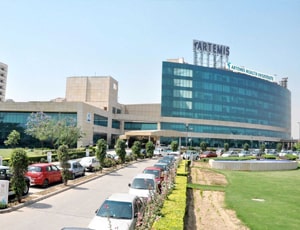
  1. Artemis Hospital: This is the first multi-specialty hospital in Gurgaon to be accredited by NABH and JCI. With more than 600 beds, it offers the most advanced treatments to its patients such as stereotactic body radiotherapy and brain and full body robotic stereotactic radiosurgery. Due to its top-notch inpatient and outpatient services, the hospital attracts many international patients.
  2. Nova Fertility Center: A leading fertility center, it has a high success rate and offers several fertility treatments including intrauterine insemination, in vitro fertilization, and intracytoplasmic sperm injection.
  3. Manipal Hospital: The hospital uses cutting-edge medical technology and a patient-centric approach to deliver the best healthcare to its patients. The hospital provides services in more than 60 specialties.

The doctors in Gurgaon are well-trained and highly professional individuals who have completed their medical training from reputed institutes. Some of the best doctors in Gurgaon are:

  • Dr. Devendra Singh Solanki: He is a qualified orthopedic surgeon with over 21 years of experience in performing procedures such as knee replacement, hip replacement, total arthroscopy, and ACL reconstruction. He is currently practicing at the Artemis Hospital.
  • Dr. Manish Mahajan: He is an acclaimed neurologist with more than 15 years of experience. Dr. Mahajan is a respected member of the American Academy of Neurology and the Indian Academy of Neurology. He is currently a part of Artemis Hospital.
  • Dr. Sabhyata Gupta: With over 25 years of experience, Dr. Gupta is a well-known obstetrician and gynecologist who can provide effective treatments for conditions such as pelvic pain, uterine fibroids, and ovarian cysts. She practices at Medanta- the Medicity.

Gurgaon is a significant healthcare hub and is well-connected to different parts of the world through international airlines. If you wish to avoid the hassle of planning for your medical travel, we can help you with visa, accommodation, airport transfers, and priority appointments.

Not Sure About Your Treatment Plan? Get a Second Opinion

Get your medical reports reviewed by experienced doctors to help you make a confident treatment decision, all online within 48 hours.

Upload Your Reports
Free second opinion on your CAR-T plan